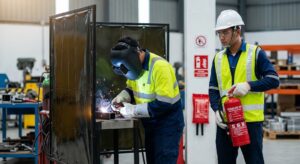

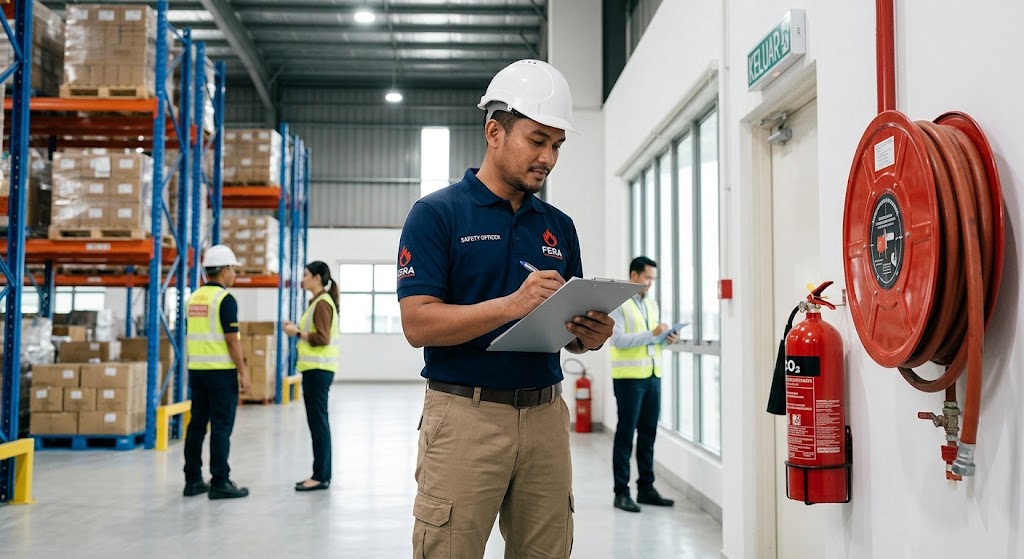
The right fire fighting equipment Malaysia workplaces use can help detect, control and respond to a fire emergency. However, equipment alone cannot protect employees. A business must also inspect each system, maintain clear evacuation routes and train its employees.
Different workplaces face different fire risks. An office may contain paper, electrical equipment and furniture. Meanwhile, a factory may store chemicals, operate machinery or handle flammable materials.
Therefore, employers should select fire safety equipment based on a proper risk assessment. They should not choose equipment based only on price or convenience.
Employees also need practical knowledge. Through FERA’s fire safety training programmes, organizations can develop stronger awareness, response skills and emergency coordination. FERA currently provides training across firefighting, emergency response, first aid and related workplace safety areas.
What Is Fire Fighting Equipment?
Fire fighting equipment refers to tools and systems used to detect, warn, control or suppress a fire.
Some equipment supports an immediate response. For example, a trained employee may use a portable extinguisher on a small, early-stage fire. Other systems operate automatically, such as smoke detectors, fire alarms and sprinkler systems.
A workplace may use both active and passive fire protection.
Active equipment requires activation or responds directly to a fire. Examples include fire extinguishers, alarms, hose reels and sprinklers.
Passive protection helps contain fire and smoke. Examples include fire-rated doors, fire-resistant walls and building compartmentation. FERA’s fire safety facilities training also explains the relationship between active systems and passive protection within a building.
Together, these systems support evacuation and emergency response.
Essential Fire Fighting Equipment Malaysia Workplaces May Need
The equipment required depends on the building, occupancy, layout and activities. Nevertheless, several systems commonly support workplace fire safety.
| Equipment | Main Purpose |
| Portable fire extinguisher | Controls a small fire during its early stage |
| Fire alarm system | Warns occupants and begins the evacuation response |
| Smoke or heat detector | Detects signs of a possible fire |
| Fire hose reel | Provides a continuous water supply for suitable fires |
| Fire sprinkler system | Releases water automatically when heat activates a sprinkler head |
| Emergency lighting | Illuminates escape routes during a power failure |
| Exit signs | Direct occupants towards safe exits |
| Fire blanket | Helps control selected small fires |
| Personal protective equipment | Supports trained response personnel |
| Fire door | Helps slow the spread of fire and smoke |
Businesses should not assume that every workplace needs the same combination. A qualified fire protection specialist should assess the premises and recommend suitable systems.
The Fire and Rescue Department of Malaysia provides official information relating to fire prevention, fire safety and fire protection requirements.
Portable Fire Extinguishers
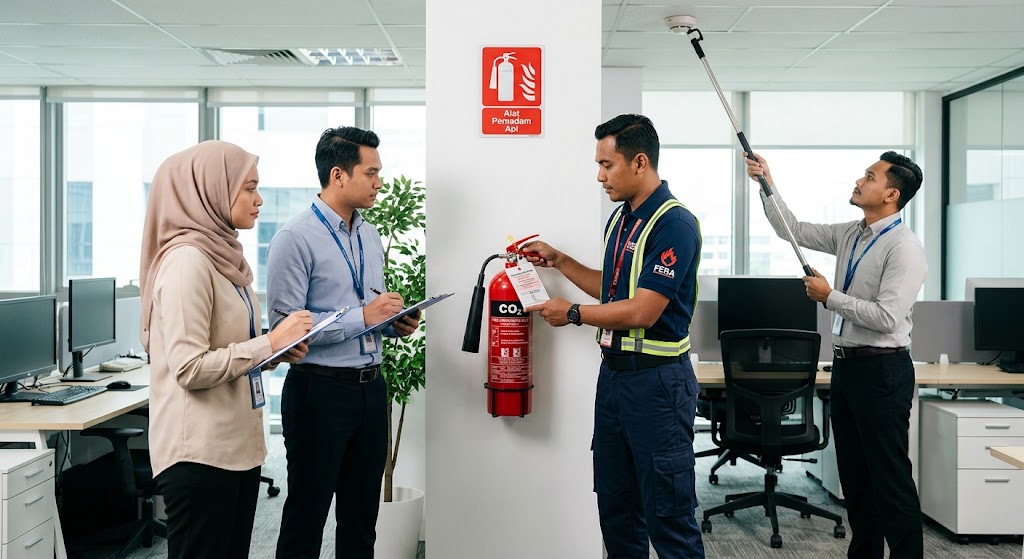
Portable fire extinguishers allow trained employees to respond to a manageable fire before it spreads.
However, each extinguisher contains a different agent. The user must match the extinguisher with the material involved in the fire.
Common options include water, foam, dry powder, carbon dioxide and wet chemical extinguishers.
For example, offices may use suitable equipment for ordinary combustible materials and electrical risks. In contrast, commercial kitchens may need wet chemical protection for cooking oils and fats.
Employees should never use water on energized electrical equipment. They should also avoid fighting a fire when smoke, heat or flames block the escape route.
A fire extinguisher should remain visible and accessible. The organization must also secure it with a suitable bracket, cabinet or stand.
Most importantly, employees should receive practical instruction before using the equipment. FERA’s Basic Fire Safety Training introduces essential fire response skills and workplace safety awareness.
Fire Alarm and Detection Systems
A fire alarm system warns employees and visitors when the building detects a possible fire.
The system may include smoke detectors, heat detectors, manual call points, alarm sounders and visual warning devices.
When the alarm activates, employees should stop work and begin evacuation. They should not wait until they see smoke or flames.
Therefore, employers must ensure that everyone recognizes the alarm signal. This includes new employees, contractors, temporary workers and visitors.
A company should also test whether employees can hear the alarm in noisy areas. Factories and workshops may require additional sounders or visual devices.
Regular inspections can identify detector faults, damaged equipment or low backup batteries. Management should resolve these issues quickly.
Fire Hose Reels
A fire hose reel supplies water through a hose connected to the building’s fire protection system.
It may support the response to selected Class A fires involving paper, wood, fabric and similar materials.
However, a fire hose reel is not suitable for every fire. Employees should not use water on electrical equipment, flammable liquids or cooking oil fires.
The equipment also requires space and safe operating conditions. A person should not attempt to use a hose reel when the fire has already grown beyond control.
Only trained personnel should use fire fighting equipment during an emergency. Other occupants should evacuate and report to the assembly point.
Practical firefighter and emergency response training can help designated personnel understand equipment limitations and safe response procedures. FERA describes this programme as advanced firefighting and rescue training for workplace responders.
Fire Sprinkler Systems
A fire sprinkler system can release water automatically after heat activates an individual sprinkler head.
Contrary to a common misunderstanding, every sprinkler head does not normally activate at the same time. The system responds within the affected area according to its design.
A sprinkler system can help control fire development while occupants evacuate and emergency responders travel to the premises.
However, the organization must maintain the system properly. Closed valves, damaged sprinkler heads or blocked water supplies can affect performance.
Employees should never hang decorations, cables or storage items from sprinkler pipes. They should also maintain enough clearance below each sprinkler head.
A fire sprinkler system does not remove the need for alarms, extinguishers or evacuation training. Instead, it forms part of a coordinated fire protection arrangement.
Emergency Lighting, Exit Signs and Fire Doors
Smoke and power failure can make evacuation more difficult. Therefore, workplaces need clear escape routes and suitable emergency lighting.
Emergency lights help occupants see corridors, stairways and exits when normal lighting fails. Exit signs also guide employees towards a safe route.
Meanwhile, fire doors help slow the movement of fire and smoke between sections of a building.
Employees should not wedge fire doors open. They should also avoid placing stock, furniture or equipment in front of an emergency exit.
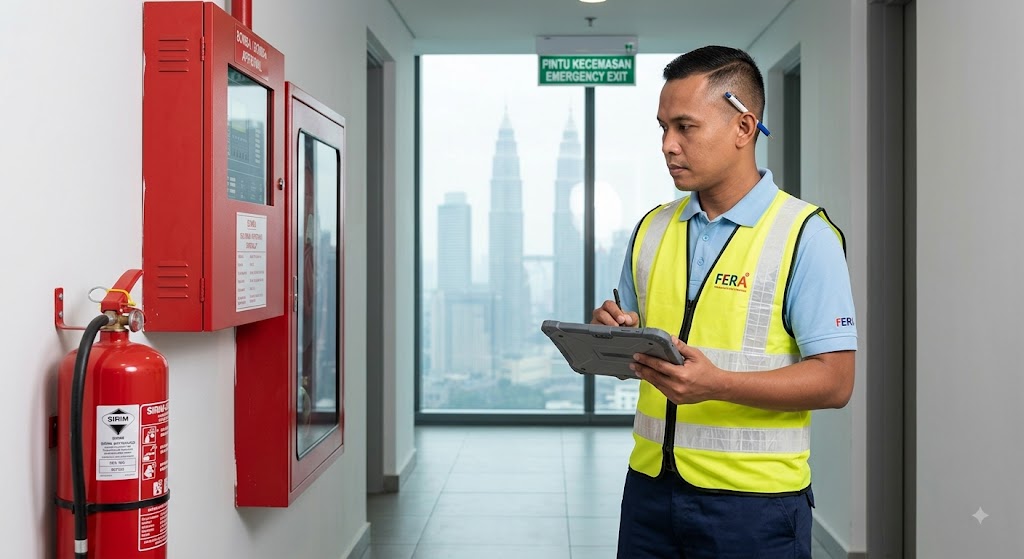
A simple daily inspection can identify blocked walkways, damaged exit signs or unsuitable storage near fire doors.
These issues may appear minor during normal operations. However, they can delay evacuation during a real emergency.
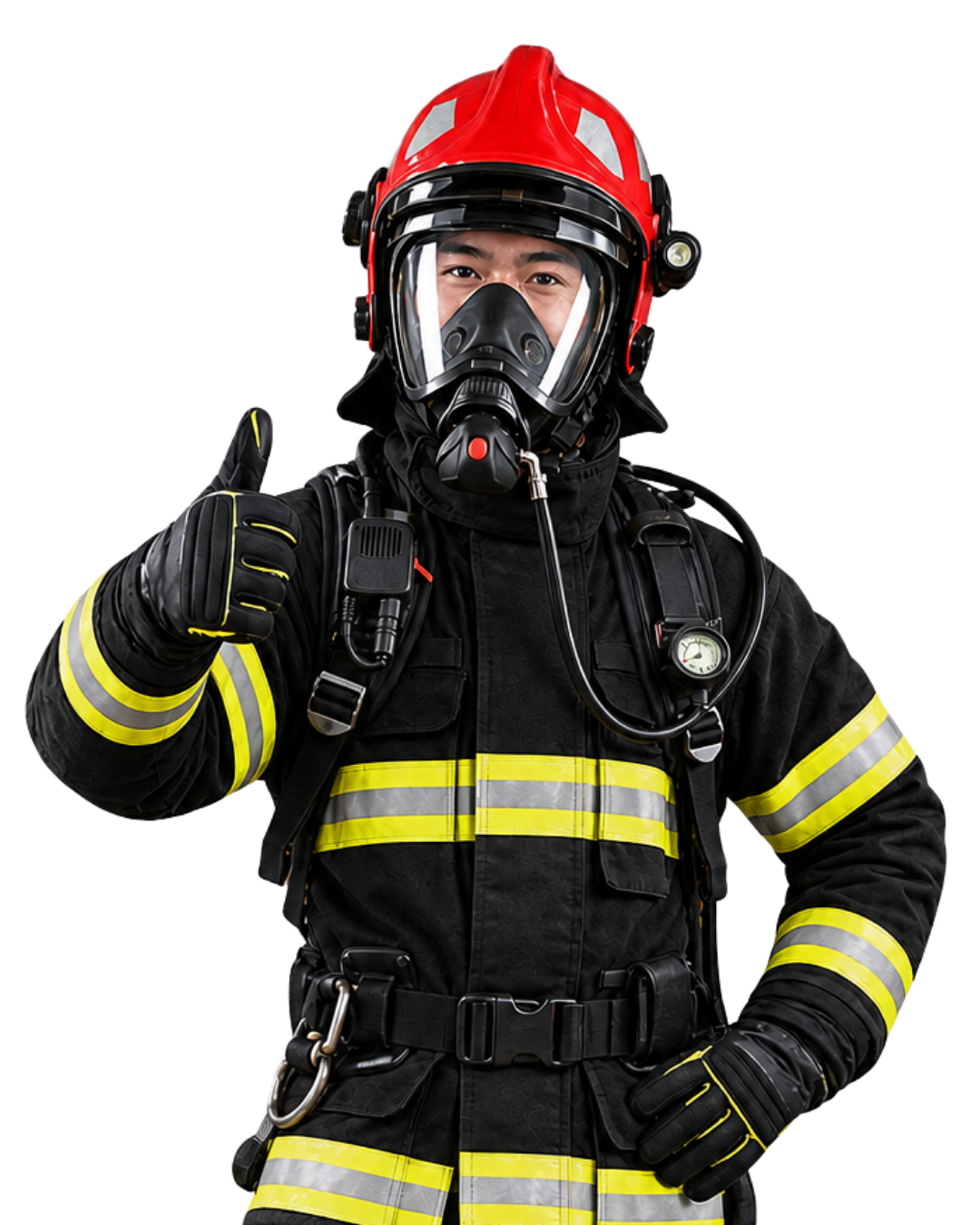
Personal Protective Equipment for Emergency Teams
Emergency Response Team members may require specialized personal protective equipment.
The exact equipment depends on their training, responsibilities and workplace risks. It may include helmets, gloves, protective clothing, safety footwear or respiratory protection.
However, wearing protective equipment does not automatically make an employee competent to enter a dangerous environment.
The organization must define each team member’s role. It should also provide suitable training and practical exercises.
FERA’s Emergency Response Team Training covers emergency planning, communication, equipment use and team responsibilities. FERA states that its ERT programmes include emergency procedures, incident command and practical exercises.
Fire Fighting Equipment Inspection and Maintenance
Fire safety equipment must remain ready for use.
A business should not wait until an emergency to discover that an extinguisher has lost pressure or an alarm has developed a fault.
During routine inspections, management should confirm that:
- Equipment remains in its assigned location
- Employees can access it without obstruction
- Labels and signs remain visible
- Service records remain current
- No obvious damage, leakage or corrosion is present
- Exit routes and fire doors remain clear
A competent service provider should complete technical maintenance according to the system design, manufacturer instructions and applicable requirements.
Management should also keep inspection records. These records help the organization track faults, servicing dates and corrective actions.
In addition, employees should report damaged equipment immediately. They should not assume that another person will notice the problem.
The Department of Occupational Safety and Health Malaysia provides official workplace safety and health information that employers can use when developing broader safety procedures.
Why Fire Fighting Training Matters
Employees may know where the equipment is located. However, they may still use it incorrectly during an emergency.
Practical training helps employees understand which equipment they can use and when they should evacuate.
It also helps them recognize the limits of portable equipment. A small extinguisher cannot control a fire that has already spread across a room.
During training, employees can practice alarm response, evacuation and basic equipment awareness in a controlled environment.
Designated team members may receive more advanced instruction. This can include hose handling, firefighting techniques, rescue support and emergency command.
FERA offers specialized firefighting and HAZMAT training for workplaces that require structured emergency capabilities.
Equipment Must Match the Workplace Risk
A standard office and a chemical facility should not use the same fire safety plan.
An office may focus on electrical equipment, combustible materials and safe evacuation.
Meanwhile, a warehouse may face risks involving packaging materials, forklifts and high storage racks. A factory may also involve machinery, chemicals, gases or production heat.
Therefore, management should review fire safety whenever the organization changes its layout or operations.
The review should also consider new machinery, chemicals, storage areas, contractors and employee numbers.
After identifying the risks, the organization can select suitable equipment and training.
This risk-based approach provides stronger protection than simply buying several extinguishers and placing them around the building.
Fire Fighting Equipment and Emergency Procedures
Equipment forms only one part of an effective emergency plan.
Employees must also understand the following sequence:
- Raise the alarm and alert nearby occupants.
- Contact the appropriate emergency services.
- Begin evacuation through the nearest safe route.
- Report to the assembly point for a headcount.
- Allow trained personnel to manage the emergency.
Employees should not return for personal belongings. They should also avoid re-entering the building until an authorized person confirms that it is safe.
Fire wardens and ERT members require clearly defined duties. Without a clear structure, several people may repeat the same task while other responsibilities remain unmanaged.
FERA’s Fire Warden and Management Training supports employees responsible for evacuation, risk awareness and workplace fire procedures.
Build a Safer Workplace with FERA
Effective fire protection requires the right equipment, trained employees and clear emergency procedures.
Businesses should inspect their systems regularly and correct faults promptly. They should also conduct drills so employees understand what to do when an alarm activates.
FERA provides practical fire safety, firefighting, first aid and Emergency Response Team training for Malaysian organizations. Its programmes support different team roles and workplace risks.
Explore FERA’s complete training modules or contact FERA to discuss a suitable workplace programme.
Frequently Asked Questions About Fire Fighting Equipment Malaysia
What is the most important fire fighting equipment for a workplace?
There is no single answer for every workplace. Most premises need suitable alarms, extinguishers, escape routes and emergency signs. Other buildings may also require hose reels, sprinklers and specialized systems.
Can employees use any extinguisher on any type of fire?
No. Different extinguishing agents suit different fire risks. Using the wrong extinguisher may spread the fire or place the user in danger.
Does a sprinkler system replace portable extinguishers?
No. Sprinklers and portable extinguishers perform different functions. They normally form part of a wider fire protection system.
Who should use a fire hose reel?
Only trained personnel should use a fire hose reel when conditions remain safe. Other occupants should evacuate according to the workplace procedure.
How often should fire fighting equipment be inspected?
Inspection and maintenance schedules depend on the equipment, manufacturer instructions and applicable requirements. Businesses should conduct routine visual checks and use a competent provider for technical servicing.
Why do employees need fire safety training?
Training helps employees recognize alarms, select safe evacuation routes and understand equipment limitations. It also reduces confusion during an emergency.
Does FERA sell fire fighting equipment?
FERA focuses on professional fire safety, firefighting, emergency response and workplace training. Businesses should use qualified specialists for equipment design, installation and servicing.
Where can companies arrange fire fighting training in Malaysia?
Companies can review FERA’s firefighting and emergency training programmes or submit an enquiry through the FERA contact page.
Empowering Fire Safety and Professional Training with FERA
In today’s fast-paced industrial landscape, maintaining rigorous safety standards and continuous professional development is paramount. Whether you are looking to upskill your workforce or ensure compliance with specialized safety regulations, having access to structured training programs and official resources makes all the difference.
For those starting their journey or seeking specific provisions, exploring Special Assistance and the Sample Page offers a great introduction to available offerings. Professionals aiming to enhance their expertise can dive into comprehensive programs such as the Online Course of Firefighting and Rescue alongside hands-on sessions via Basic Practical of Firefighting and Rescue. Additionally, specialized training paths like Hazmat Operation Training, NFPA 1072 Hazardous Material Awareness, and NFPA 1072 Hazardous Material Operations ensure teams are fully equipped to handle hazardous environments safely.
Management and compliance are equally crucial for organizational resilience. Programs like Online Course Fire Drill Management and insights from FSM & FSO help streamline safety protocols. For advanced career progression, certifications such as NFPA 1033 Fire Investigator and NFPA 1001 Fire Fighter I validate high-level technical competency.
To stay updated with industry developments and institutional growth, you can check out the latest updates on the Blog and Updates Archives, browse training categories via Fire System Training Archives, Fire Fighter Archives, Hazmat Archives, and Data Center Archives, or connect directly through Instructor Registration, Emergency Response Service Provider, and View Our Page.