
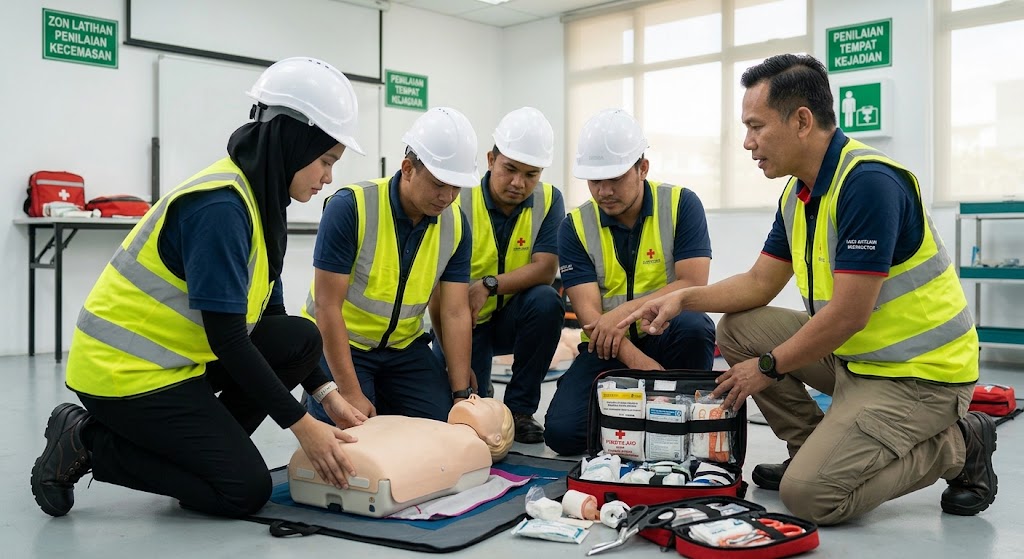
Effective first aider training Malaysia programmes prepare employees to provide immediate assistance during workplace injuries and medical emergencies. A trained first aider can assess the situation, alert emergency services and support the affected person until professional medical help arrives.
Workplace emergencies can occur without warning. An employee may experience a fall, burn, cut, breathing difficulty or sudden illness. Therefore, organizations should not rely only on a first aid box. They also need trained personnel who understand how to respond safely.
A structured first aid course combines theory, demonstrations, practical exercises and competency assessment. This approach helps participants develop the confidence to act under pressure without placing themselves or others at further risk.
Organizations can explore FERA’s workplace rescue and first aid training programmes for employees, supervisors, safety personnel and Emergency Response Team members.
What Is First Aider Training?
First aider training equips participants with the knowledge and practical skills required to provide initial care during an injury or medical emergency.
The first aider does not replace a doctor, paramedic or other healthcare professional. Instead, the person provides immediate assistance while waiting for qualified medical help.
A workplace first aider may need to:
- Assess whether the emergency scene is safe
- Identify the condition of the affected person
- Contact emergency services
- Provide suitable immediate care
- Control access to the emergency area
- Use available first aid equipment
- Communicate with the Emergency Response Team
- Record the incident and treatment provided
- Handover information to medical responders
Proper training helps participants understand the limits of their responsibilities. It also teaches them when they should stop and wait for professional assistance.
Why First Aider Training Malaysia Organizations Need Matters
Employees spend a significant part of their day at work. As a result, workplaces must prepare for injuries and health emergencies that may occur during daily operations.
A trained first aider can support a faster and more organized response. Without training, employees may panic, delay emergency calls or use unsuitable methods.
First aider training helps organizations:
- Improve emergency preparedness
- Build employee confidence
- Support faster emergency communication
- Reduce confusion during an incident
- Strengthen Emergency Response Team capabilities
- Improve the use of first aid facilities
- Identify workplace medical risks
- Support safety and health procedures
- Provide immediate assistance before responders arrive
- Create a stronger workplace safety culture
The official DOSH Guidelines on First Aid in the Workplace help employers and occupational safety personnel plan suitable first aid facilities, equipment and arrangements.
Who Should Attend a First Aid Course in Malaysia?
A workplace should appoint suitable employees who can remain calm, communicate clearly and respond responsibly during an emergency.
First aid training may benefit:
- Appointed workplace first aiders
- Emergency Response Team members
- Safety and health personnel
- Fire wardens
- Supervisors
- Security officers
- Facilities personnel
- Human resource teams
- Factory employees
- Construction workers
- Warehouse teams
- Office employees
- Teachers and childcare personnel
- Hospitality employees
- Event personnel
- Members of the public
Organizations should train employees across different departments and shifts. An emergency may occur when the primary first aider is absent, attending a meeting or working in another area.
Companies with several floors, buildings or work zones may also need first aiders at multiple locations.
What Does a First Aider Training Course Cover?
The exact course content depends on the programme level, training provider, workplace risks and participant responsibilities.
However, a structured first aid course commonly covers the following areas.
Emergency Scene Assessment
Before helping an affected person, the first aider must assess the surrounding area.
Potential hazards may include:
- Moving machinery
- Electricity
- Fire or smoke
- Chemical exposure
- Traffic
- Falling objects
- Slippery surfaces
- Sharp materials
- Unstable structures
- Aggressive behavior
The first aider should not enter an unsafe area without suitable controls, equipment or support.
Scene assessment protects the first aider, the affected person and other employees. It also helps the responder decide whether additional assistance is required.
Emergency Communication
Effective communication can reduce delays during an emergency.
First aiders should know how to:
- Activate the organization’s emergency procedure
- Contact emergency services
- Explain the workplace location
- Describe the emergency clearly
- Provide access instructions
- Alert security personnel
- Request additional equipment
- Communicate with the Emergency Response Team
- Assign someone to guide responders
- Prepare information for handover
Organizations should display emergency contact numbers in visible locations. Employees should also know the full workplace address and the best entrance for emergency vehicles.
Primary Assessment
Training teaches participants to conduct a structured initial assessment.
The first aider may need to check:
- Whether the person responds
- Whether the airway appears clear
- Whether the person is breathing normally
- Whether there is serious bleeding
- Whether immediate professional assistance is needed
Participants learn these steps through demonstrations and controlled practical exercises.
They should follow the methods taught by their qualified instructor rather than relying on unverified online videos.
Cardiopulmonary Resuscitation
CPR forms an important part of many workplace first aid courses.
During practical training, participants learn:
- How to recognize a possible cardiac emergency
- When to request emergency assistance
- How to position themselves safely
- How to perform CPR according to the course protocol
- How to work with another responder
- When to use an AED
- How to continue until professional help arrives
Participants should practice with suitable training equipment under an instructor’s supervision.
The Ministry of Health Malaysia Basic Life Support Training Manual provides an official reference for structured basic life support training.
Automated External Defibrillator Awareness
An automated external defibrillator, or AED, supports emergency response during selected cardiac emergencies.
First aid training may teach participants how to:
- Identify the AED location
- Retrieve the equipment quickly
- Switch on the device
- Follow its voice or visual prompts
- Place the pads according to the training provided
- Keep other people clear during analysis
- Coordinate AED use with CPR
- Return the unit for inspection after use
An AED provides prompts to the responder. Nevertheless, practical training helps employees operate the equipment with greater confidence.
Companies that install an AED should also create a clear inspection, accessibility and maintenance process.
Bleeding and Wound Management
Workplace injuries may involve cuts, punctures or other wounds.
A first aid course may cover:
- Initial wound assessment
- Infection control precautions
- Suitable use of gloves
- Basic bleeding control
- Application of dressings
- Recognition of serious injuries
- Emergency referral procedures
- Safe disposal of contaminated materials
Participants should learn when an injury requires professional medical treatment.
The organization should also keep suitable first aid supplies available based on its workplace risks.
Burns and Scalds
Burns may occur in kitchens, workshops, factories, laboratories and maintenance areas.
Training may help participants identify different causes of burns, including:
- Heat
- Hot liquids
- Steam
- Chemicals
- Electricity
- Hot machinery
- Friction
First aiders should follow the emergency procedure taught during their course. They should also request professional medical assistance for serious or uncertain cases.
Workplaces with chemical or electrical hazards may require additional emergency response planning beyond a general first aid course.
Fractures, Sprains and Strains
Falls, lifting activities and machinery incidents may cause bone, joint or muscle injuries.
Participants may learn how to:
- Identify possible signs of injury
- Avoid unnecessary movement
- Support the affected area
- Request medical assistance
- Monitor the affected person
- Communicate relevant information to responders
A first aider should not attempt procedures outside the person’s training and competency.
Choking Emergencies
A choking emergency can occur in offices, restaurants, schools, factories and public areas.
First aider training helps participants recognize possible choking and respond according to the method demonstrated by the instructor.
Training should also explain the differences between managing an adult, child and infant. Organizations should select a course that matches the people present at their premises.
Medical Emergencies
A first aid course may introduce participants to common workplace medical emergencies.
These may include:
- Fainting
- Seizures
- Breathing difficulties
- Allergic reactions
- Heat-related illness
- Diabetic emergencies
- Suspected heart emergencies
- Suspected stroke
- Sudden collapse
The first aider does not diagnose a medical condition. Instead, the responder observes the signs, activates emergency support and provides appropriate assistance within the training received.
First Aid Kit Management
A first aid kit must remain accessible, organized and properly maintained.
Appointed personnel should regularly check:
- The location of each kit
- Accessibility
- Item quantities
- Expiry dates
- Damaged packaging
- Missing supplies
- Signs and labels
- Usage records
- Replacement requirements
The contents should reflect the number of employees and workplace hazards.
A low-risk office may require different supplies from a factory, construction site, laboratory or chemical facility.
Practical Training and Scenario Exercises
First aid knowledge becomes more useful when participants practice under controlled conditions.
Scenario-based training may simulate:
- An employee collapsing
- A workplace cut
- A minor burn
- A fall
- A choking emergency
- A machinery-related incident
- A medical emergency
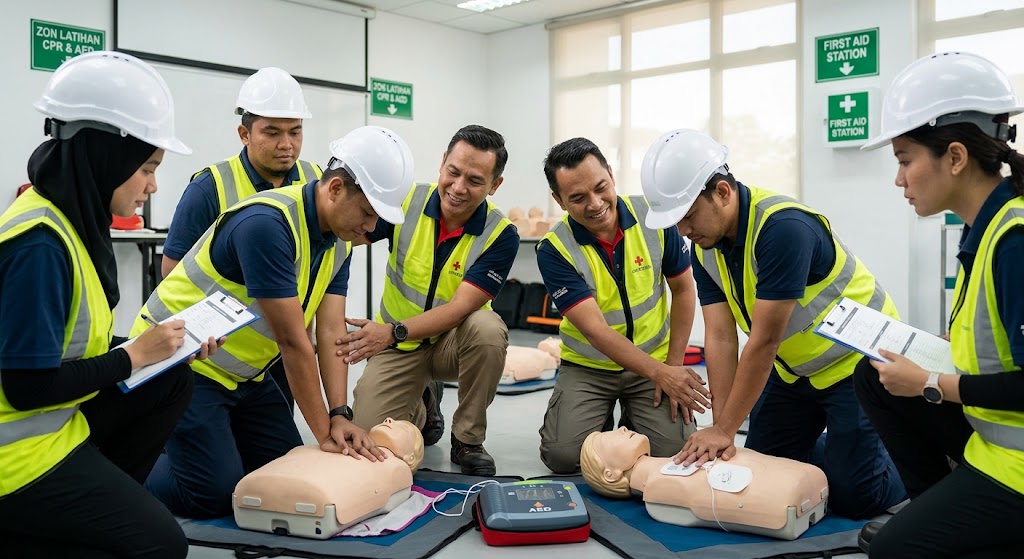
- An emergency requiring CPR and AED awareness
- Communication with the Emergency Response Team
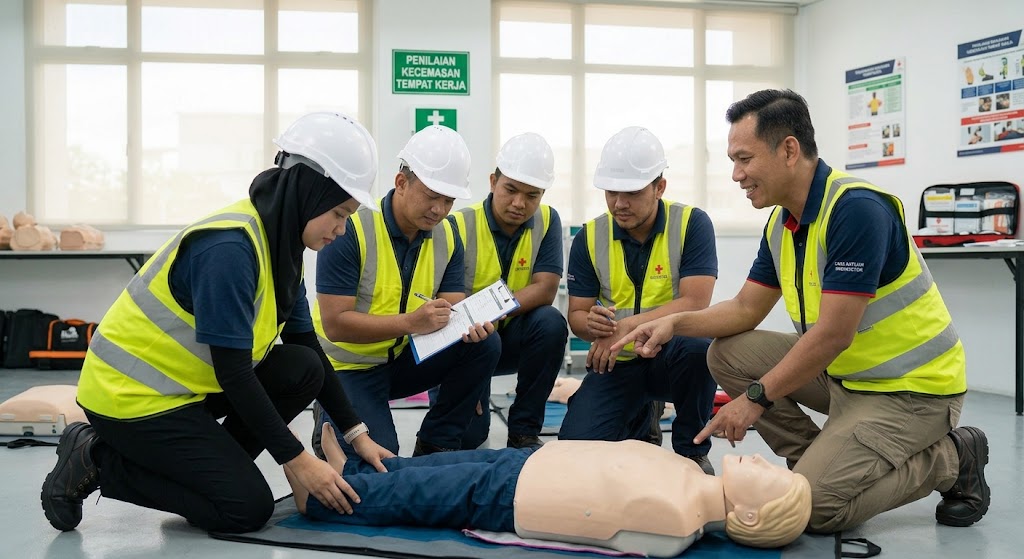
Practical exercises allow instructors to observe participant performance and correct mistakes safely.
FERA’s Basic Occupational First Aid and CPR Training combines first aid knowledge with hands-on CPR, AED and workplace emergency scenarios.
What Is First Aid Certification?
First aid certification provides evidence that a participant completed a recognized training programme and met its stated course requirements.
Depending on the programme, participants may need to:
- Attend the full course
- Complete theory sessions
- Participate in practical activities
- Pass a written assessment
- Demonstrate practical competency
- Meet the trainer’s evaluation requirements
The type of certificate may differ between programmes. A provider may issue a certificate of attendance, completion or competency.
Employers should confirm the certificate type before registering employees.
How Long Does First Aid Certification Remain Valid?
Certification validity depends on the course provider, programme structure and certification body.
Employers should check:
- The certificate issue date
- The stated validity period
- Refresher training requirements
- Reassessment requirements
- Changes to workplace risks
- Employee competency
- Internal company policies
- Client or industry requirements
FERA’s current Basic Occupational First Aid and CPR programme states that successful participants receive a certificate of competency with a three-year validity period.
However, employers should verify the current course information during registration because programme requirements may change.
Why Refresher Training Matters
Employees may forget practical skills when they do not use them regularly.
Refresher training helps participants:
- Review emergency procedures
- Practice CPR and AED skills
- Correct poor techniques
- Learn updated procedures
- Restore confidence
- Review workplace-specific risks
- Understand new equipment
- Reconfirm communication roles
An employer should not wait until a certificate expires when employees no longer feel confident.
Short internal exercises can support awareness. However, they should not replace formal retraining when a recognized programme or reassessment is required.
First Aider Training and Workplace Risk Assessment
Organizations should select training based on their actual risks.
A general office may face:
- Slips and falls
- Cuts
- Fainting
- Choking
- Sudden medical emergencies
A factory may also face:
- Machinery injuries
- Burns
- Chemical exposure
- Electrical incidents
- Heavy-object injuries
- High-noise communication problems
A construction site may face:
- Falls from height
- Falling objects
- Sharp materials
- Vehicle movement
- Remote working areas
A warehouse may face:
- Forklift incidents
- Manual handling injuries
- Falling stock
- Cuts from packaging
- Heat exposure
Therefore, management should review the workplace risk assessment before choosing a first aid course.
FERA can provide customized safety and emergency response training based on the organization’s industry, hazards and employee roles.
How Many First Aiders Does a Workplace Need?
The appropriate number depends on several factors.
Employers should consider:
- Total number of employees
- Number of shifts
- Workplace layout
- Number of floors or buildings
- Distance between work areas
- Types of workplace hazards
- Employee travel requirements
- Remote work locations
- Availability of medical facilities
- Previous incidents
- Employee leave and absence
- Contractor and visitor numbers
The organization should ensure that trained coverage remains available during operating hours.
Appointing only one first aider may create a gap when that employee takes leave, attends off-site duties or becomes involved in the emergency.
Employers should refer to the official DOSH first aid guidance when planning workplace coverage and facilities.
First Aider Training for Emergency Response Teams
An Emergency Response Team may manage several responsibilities during an incident.
The team may include:
- Incident controllers
- Fire response personnel
- Fire wardens
- Evacuation coordinators
- First aiders
- Communication personnel
- Security teams
- Traffic controllers
- HAZMAT responders
First aiders must understand how their role connects with the wider emergency structure.
For example, an ERT member may need to secure the area while the first aider assesses the affected person. Another employee may contact emergency services and guide responders into the building.
FERA’s Emergency Response Team training helps organizations develop clearer roles, communication procedures and practical response capabilities.
First Aid Training for Safety Officers and Supervisors
Safety personnel often support the organization’s emergency planning and workplace inspection processes.
A safety officer or supervisor may need to:
- Identify first aid requirements
- Appoint suitable employees
- Arrange training
- Monitor certificate validity
- Inspect first aid kits
- Maintain records
- Review workplace incidents
- Recommend corrective actions
- Coordinate emergency drills
- Communicate with management
A safety officer course Malaysia programme may cover wider occupational safety responsibilities. However, dedicated first aid training provides practical emergency care skills that require instructor-led practice.
Organizations should combine safety management knowledge with suitable first aid, fire safety and emergency response training.
Employees can review FERA’s guide to choosing a suitable safety course in Malaysia based on their responsibilities.
Can Employers Claim First Aid Training Through HRD Corp?
Eligible employers may be able to claim approved training costs when the provider and programme meet the applicable requirements.
The official HRD Corp Claimable Courses programme supports registered employers in employee retraining and skills development.
Before confirming the course, employers should check:
- Employer eligibility
- Training provider registration
- Programme registration
- Allowable costs
- Required documents
- Application deadlines
- Attendance requirements
- Claim submission procedures
Employers should complete the necessary approval process before training begins.
FERA states that selected programmes may be HRD Corp claimable, subject to current employer and course eligibility.
How to Choose a First Aid Training Provider
Course price should not be the only factor.
Organizations should evaluate:
- Trainer qualifications
- Programme recognition
- Practical training time
- Assessment method
- Course duration
- Participant-to-trainer ratio
- Training equipment
- Workplace relevance
- Certification type
- Certificate validity
- In-house training availability
- Post-training support
- HRD Corp claimability
- Provider experience
The organization should request a complete course outline before registration.
A suitable provider should clearly explain what participants will learn, how the assessment works and what certification they may receive.
In-House First Aid Training or Public Course?
Both formats offer advantages.
An in-house course allows the trainer to deliver the programme at the client’s premises. This approach may suit organizations with larger employee groups or specific workplace risks.
Benefits may include:
- Reduced employee travel
- Customized workplace scenarios
- Familiar training environment
- Easier group coordination
- Discussion of site-specific hazards
- Integration with internal emergency procedures
A public course may suit organizations that only need to train a small number of employees.
Before selecting in-house training, the employer should confirm that the premises provide enough space and suitable facilities for practical exercises.
How to Prepare Employees for First Aid Training
Employers can improve the learning experience through proper preparation.
Before the course, management should:
- Select suitable participants
- Explain why the training matters
- Confirm course dates and duration
- Share relevant workplace risks
- Inform the provider of participant requirements
- Prepare a suitable training area
- Arrange employee shift coverage
- Provide the organization’s emergency procedures
- Confirm assessment requirements
- Record participant and certificate details
Participants should wear suitable clothing for practical activities and inform the instructor of any limitation that may affect participation.
What Should Employers Do After the Course?
Training creates value when the organization applies the knowledge within its safety system.
After the programme, management should:
- Formally appoint trained first aiders
- Update emergency contact lists
- Display first aider names and locations
- Review first aid kit placement
- Record certificate validity dates
- Plan refresher training
- Include first aiders in emergency drills
- Review communication procedures
- Provide suitable protective equipment
- Monitor employee confidence
- Update the emergency response plan
Management should also inform employees how to contact the nearest trained first aider.
Common First Aid Preparedness Mistakes
Organizations should avoid treating first aid as a one-time training exercise.
Common weaknesses include:
- Training only one employee
- Allowing certificates to expire
- Keeping first aid kits in locked rooms
- Failing to replace used supplies
- Using outdated contact lists
- Appointing first aiders without formal communication
- Excluding night-shift employees
- Ignoring contractors and visitors
- Providing no refresher training
- Failing to conduct emergency exercises
- Selecting a course that does not match workplace risks
- Keeping no incident or treatment records
A simple inspection schedule can help management identify and correct these issues.
Build a More Prepared Workplace with FERA
A first aid box cannot respond to an emergency by itself. Organizations need trained employees who understand how to assess the situation, communicate clearly and provide suitable immediate assistance.
A structured first aider training Malaysia programme strengthens employee confidence and supports the organization’s wider emergency response plan.
FERA provides occupational first aid, CPR, AED, firefighting and Emergency Response Team training for Malaysian workplaces.
Organizations can explore FERA’s Rescue and First Aid courses or contact FERA to discuss public training, in-house programmes and workplace-specific requirements.
Frequently Asked Questions About First Aider Training Malaysia
What is first aider training?
First aider training teaches participants how to assess an emergency, request professional help and provide suitable immediate assistance within their level of competency.
Who should attend a first aid course in Malaysia?
Appointed first aiders, ERT members, safety personnel, supervisors, security officers and employees across different shifts can benefit from workplace first aid training.
Does first aid training include CPR and AED?
Many occupational first aid courses include CPR and AED awareness. Employers should check the complete course outline before registration.
Will participants receive first aid certification?
Participants may receive a certificate of attendance, completion or competency depending on the programme and assessment requirements.
How long does a first aid certificate remain valid?
Validity depends on the provider and certification programme. Employers should review the expiry date and arrange refresher training before the certificate becomes invalid.
Can a company arrange in-house first aid training?
Yes. FERA may conduct in-house first aid training at an organization’s premises when the location provides suitable space and facilities for practical activities.
Can first aid training be HRD Corp claimable?
Selected courses may be claimable for eligible employers when the provider, programme and application meet current HRD Corp requirements.
Does a first aider replace professional medical personnel?
No. A first aider provides initial assistance while waiting for qualified medical responders. The person should remain within the limits of the training received.
Where can companies register for first aider training Malaysia programmes?
Companies can review FERA’s Basic Occupational First Aid and CPR Training or submit an enquiry through the FERA contact page.
Empowering Fire Safety and Professional Training with FERA
In today’s fast-paced industrial landscape, maintaining rigorous safety standards and continuous professional development is paramount. Whether you are looking to upskill your workforce or ensure compliance with specialized safety regulations, having access to structured training programs and official resources makes all the difference.
For those starting their journey or seeking specific provisions, exploring Special Assistance and the Sample Page offers a great introduction to available offerings. Professionals aiming to enhance their expertise can dive into comprehensive programs such as the Online Course of Firefighting and Rescue alongside hands-on sessions via Basic Practical of Firefighting and Rescue. Additionally, specialized training paths like Hazmat Operation Training, NFPA 1072 Hazardous Material Awareness, and NFPA 1072 Hazardous Material Operations ensure teams are fully equipped to handle hazardous environments safely.
Management and compliance are equally crucial for organizational resilience. Programs like Online Course Fire Drill Management and insights from FSM & FSO help streamline safety protocols. For advanced career progression, certifications such as NFPA 1033 Fire Investigator and NFPA 1001 Fire Fighter I validate high-level technical competency.
To stay updated with industry developments and institutional growth, you can check out the latest updates on the Blog and Updates Archives, browse training categories via Fire System Training Archives, Fire Fighter Archives, Hazmat Archives, and Data Center Archives, or connect directly through Instructor Registration, Emergency Response Service Provider, and View Our Page.