

FSM and FSO for Hotels, Hospitals, Factories and Shopping Malls
Fire safety is a critical responsibility for any organisation managing buildings with large numbers of occupants, complex operations or significant fire hazards. Hotels, hospitals, factories and shopping malls face different risks, but they share one important requirement: they must be prepared to prevent, manage and respond to fire emergencies.
In Malaysia, qualifying buildings may be classified as designated premises under the Fire Services Act 1988 and the applicable Fire Services regulations. Owners, occupiers or persons having overall management of designated premises may be required to establish a Fire Safety Organisation, commonly known as an Organisasi Keselamatan Kebakaran or OKK.
The organisation generally consists of trained and certified personnel, including a Fire Safety Manager (FSM) and Fire Safety Officers (FSO). Their responsibilities go beyond completing documents for regulatory purposes. They provide an organised system for managing fire risks, maintaining preparedness and protecting occupants before, during and after an emergency.
What Are FSM and FSO?
A Fire Safety Manager and Fire Safety Officer perform complementary roles within a premises’ fire safety management structure.
What Is a Fire Safety Manager?
A Fire Safety Manager, or FSM, is responsible for coordinating and overseeing fire safety management at the premises.
Depending on the applicable requirements and the nature of the premises, the FSM’s responsibilities may include:
- Coordinating the Fire Safety Organisation.
- Developing and reviewing fire safety procedures.
- Preparing or coordinating the Fire and Emergency Response Plan.
- Monitoring fire hazards and recommending corrective measures.
- Ensuring that fire protection systems are inspected and maintained.
- Organising fire drills, exercises and awareness programmes.
- Maintaining relevant fire safety records and reports.
- Coordinating with management, employees, contractors and JBPM.
- Reviewing emergency preparedness after drills or actual incidents.
The FSM acts as a link between senior management, the fire safety team and the relevant authorities.
What Is a Fire Safety Officer?
A Fire Safety Officer, or FSO, supports the FSM in implementing fire safety measures throughout the premises.
An FSO may be responsible for:
- Conducting routine fire safety inspections.
- Identifying and reporting potential fire hazards.
- Checking escape routes, emergency exits and assembly areas.
- Monitoring housekeeping and the storage of combustible materials.
- Assisting with evacuation procedures and fire drills.
- Verifying the accessibility of firefighting equipment.
- Supporting emergency communication and occupant movement.
- Recording deficiencies and following up on corrective action.
- Assisting the FSM in implementing the emergency response plan.
While the FSM provides overall coordination, FSOs help ensure that fire safety procedures are consistently applied across departments, floors, zones or operational areas.
Why Hotels Need FSM and FSO Personnel
Hotels operate around the clock and accommodate guests who may be unfamiliar with the building. Guests may not know the nearest emergency exit, the correct assembly point or the hotel’s emergency procedures.
Hotels also contain multiple areas with different fire hazards, including guestrooms, commercial kitchens, laundry rooms, electrical rooms, function halls, car parks and storage spaces.
Important Fire Risks in Hotels
Common hotel fire risks include:
- Cooking equipment and combustible cooking oils.
- Electrical appliances used in guestrooms.
- Laundry dryers, boilers and heating equipment.
- Smoking in unauthorised areas.
- Obstructed corridors or emergency exits.
- Renovation and contractor activities.
- High occupancy during conferences and events.
- Guests requiring assistance during evacuation.
The FSM and FSO team can coordinate departmental procedures, inspect escape routes, organise staff drills and ensure that employees understand their responsibilities during an emergency.
For hotels, an effective evacuation procedure must consider not only employees but also sleeping guests, children, elderly occupants and persons with disabilities.
Why Hospitals Need FSM and FSO Personnel
Hospitals are among the most complex premises to evacuate during an emergency. Some patients may be unable to walk, while others depend on medical equipment, oxygen supplies or continuous clinical care.
An immediate full evacuation may not always be practical. Hospitals therefore require carefully coordinated procedures involving clinical, engineering, security and facilities-management teams.
Important Fire Risks in Hospitals
Hospital fire hazards may include:
- Medical oxygen and other compressed gases.
- Electrical and diagnostic equipment.
- Laboratories and chemical storage areas.
- Kitchens, laundries and boiler rooms.
- Pharmacy and medical supply storage.
- Maintenance and contractor work.
- Patients with restricted mobility.
- Critical-care areas where evacuation is highly complex.
The FSM and FSO team can help coordinate appropriate emergency procedures, including alarm activation, internal communication, compartmentation strategies, phased evacuation and the movement of patients to safer areas.
Protecting Patients and Medical Operations
Effective hospital fire safety planning should clearly identify:
- Who has authority to initiate an evacuation.
- How patients will be prioritised and moved.
- Which equipment is required for patient evacuation.
- How critical patients will continue receiving care.
- How emergency access will be maintained for JBPM.
- Where patients will be transferred after evacuation.
- How staff will communicate if normal systems fail.
Regular drills and scenario-based exercises help hospital personnel understand their roles without placing patients at unnecessary risk.
Why Factories Need FSM and FSO Personnel
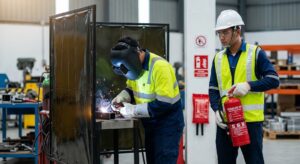
Factories may contain machinery, fuels, chemicals, combustible materials, hot-work activities and high-voltage electrical systems. A small fire can spread quickly when hazards are not properly controlled.
The exact fire risk depends on the manufacturing process. A food-processing facility, electronics plant, plastics factory and chemical facility will each require a different fire safety approach.
Important Fire Risks in Factories
Factory fire hazards may include:
- Flammable liquids, gases and chemicals.
- Combustible dust.
- Welding, cutting and other hot work.
- Overheated machinery.
- Electrical faults and overloaded equipment.
- Improper storage of raw materials.
- Blocked access to firefighting equipment.
- Poor control of contractors.
- Forklift battery-charging areas.
- Failure of process-control or ventilation systems.
FSM and FSO personnel can support routine inspections, permit-to-work controls, emergency planning and coordination between production, engineering, warehouse, security and safety departments.
Managing Different Factory Zones
A large factory may need FSOs assigned to individual operational areas, such as:
- Production lines.
- Warehouses.
- Chemical storage areas.
- Utility and electrical rooms.
- Laboratories.
- Administration buildings.
- Staff accommodation or canteens.
This zonal approach provides faster reporting and clearer accountability when a hazard or emergency is identified.
Why Shopping Malls Need FSM and FSO Personnel
Shopping malls regularly accommodate large and constantly changing crowds. Visitors may include families, children, tourists, elderly people and persons with disabilities who are unfamiliar with the building layout.
Shopping malls also involve multiple tenants, contractors, service providers and event organisers. Fire safety therefore depends on effective coordination between the mall management and every tenant.
Important Fire Risks in Shopping Malls
Common shopping-mall fire risks include:
- Commercial kitchens and food courts.
- Electrical installations within retail lots.
- Temporary decorations and promotional displays.
- Obstructed corridors or escape routes.
- Renovation and fit-out activities.
- Events held in common areas.
- Basement car parks.
- Storage of tenant merchandise.
- High occupancy during weekends and festive seasons.
The FSM and FSO team can monitor common areas, coordinate tenant compliance, organise joint fire drills and ensure that emergency procedures remain effective during peak periods.
Coordinating Tenants During an Emergency
Mall management should ensure that tenants understand:
- How to report a fire or emergency.
- When and how to evacuate.
- Which exits and assembly points to use.
- How to assist customers.
- Who may use portable firefighting equipment.
- Who communicates with the mall control room.
- How persons requiring assistance will be evacuated.
Without proper coordination, tenants may follow different procedures, resulting in confusion and delays.
How Many FSM and FSO Personnel Are Required?
Under Regulation 6B of the Fire Services (Fire Certificate) Regulations, a Fire Safety Organisation for designated premises is generally structured with:
- One certified Fire Safety Manager; and
- At least three certified Fire Safety Officers.
The actual arrangements may depend on the premises’ classification, scale, layout, risk profile and directions issued by the Fire and Rescue Department of Malaysia.
Large hotels, hospitals, factories and shopping malls may benefit from training more than the minimum number of personnel. Additional trained staff can provide coverage across different shifts, departments, floors and operational zones.
Organisations should confirm the requirements applicable to their premises directly with the relevant state JBPM office.
Benefits of Having Trained FSM and FSO Personnel
Training FSM and FSO personnel can deliver benefits beyond regulatory compliance.
Stronger Fire Prevention
Regular inspections and structured reporting help management identify hazards before they develop into serious incidents.
Faster Emergency Response
Trained personnel understand alarm procedures, evacuation responsibilities and the appropriate actions to take while waiting for JBPM to arrive.
Clearer Responsibilities
An established Fire Safety Organisation ensures that employees know who is responsible for inspections, documentation, drills and emergency coordination.
Improved Business Continuity
Effective emergency planning can reduce disruption, property damage and recovery time following an incident.
Better Safety Awareness
FSM and FSO personnel can promote fire safety awareness among employees, tenants, contractors and other building occupants.
Improved Documentation
Proper records of inspections, drills, maintenance and corrective actions provide evidence that fire safety is being actively managed.
What Should Organisations Do Next?
Hotels, hospitals, factories and shopping malls should begin by determining whether their building falls within the definition of a designated premises.
Management should then:
- Review the building’s Fire Certificate status.
- Confirm the applicable requirements with JBPM.
- Identify suitable candidates for the FSM and FSO roles.
- Check that the candidates meet the relevant eligibility requirements.
- Enrol the candidates with a recognised training provider.
- Establish the required Fire Safety Organisation.
- Develop or review the Fire and Emergency Response Plan.
- Conduct regular inspections, drills and training.
- Maintain fire safety records and corrective-action reports.
- Review the organisation whenever operations or building conditions change.
Completion of a training programme should not be treated as the final step. The relevant appointment, certification and premises-related processes remain subject to JBPM requirements and approval.
FSM and FSO Training with FERA Training Center
FERA Training Center provides face-to-face Fire Safety Manager and Fire Safety Officer training for eligible participants and organisations in Malaysia.
The programmes combine essential fire safety knowledge with practical understanding of emergency preparedness, inspections, fire protection systems and workplace response procedures.
Fire Safety Manager Programme
- Duration: 5 days
- Fee: RM4,300 per participant
- Delivery: Face-to-face
- Assessment: Included
- Individual and corporate registration available
- HRD Corp claimable for eligible employers, subject to approval
Fire Safety Officer Programme
- Duration: 4 days
- Fee: RM3,800 per participant
- Delivery: Face-to-face
- Assessment: Included
- Individual and corporate registration available
- HRD Corp claimable for eligible employers, subject to approval
Programme schedules, locations and seat availability are subject to confirmation.
Build a Safer and Better-Prepared Premises
Hotels, hospitals, factories and shopping malls face different operational challenges, but each premises requires structured fire prevention and emergency preparedness.
A properly trained FSM and FSO team helps an organisation identify hazards, coordinate occupants, manage emergency procedures and maintain a safer environment. Preparing qualified personnel today can reduce confusion, delays and preventable losses during a real emergency.
Call to Action
Register for FSM and FSO Training with FERA
Does your hotel, hospital, factory or shopping mall need trained Fire Safety Manager and Fire Safety Officer personnel?
Contact FERA Training Center Sdn. Bhd. for programme schedules, participant eligibility checks, corporate quotations and registration assistance.
Call or WhatsApp:
- +6012-414 0893 – Anugerah
- +6012-273 0893 – Mariah
Email: [email protected]
Website: www.fera.com.my
Enquire today to secure your preferred FSM or FSO training session.