
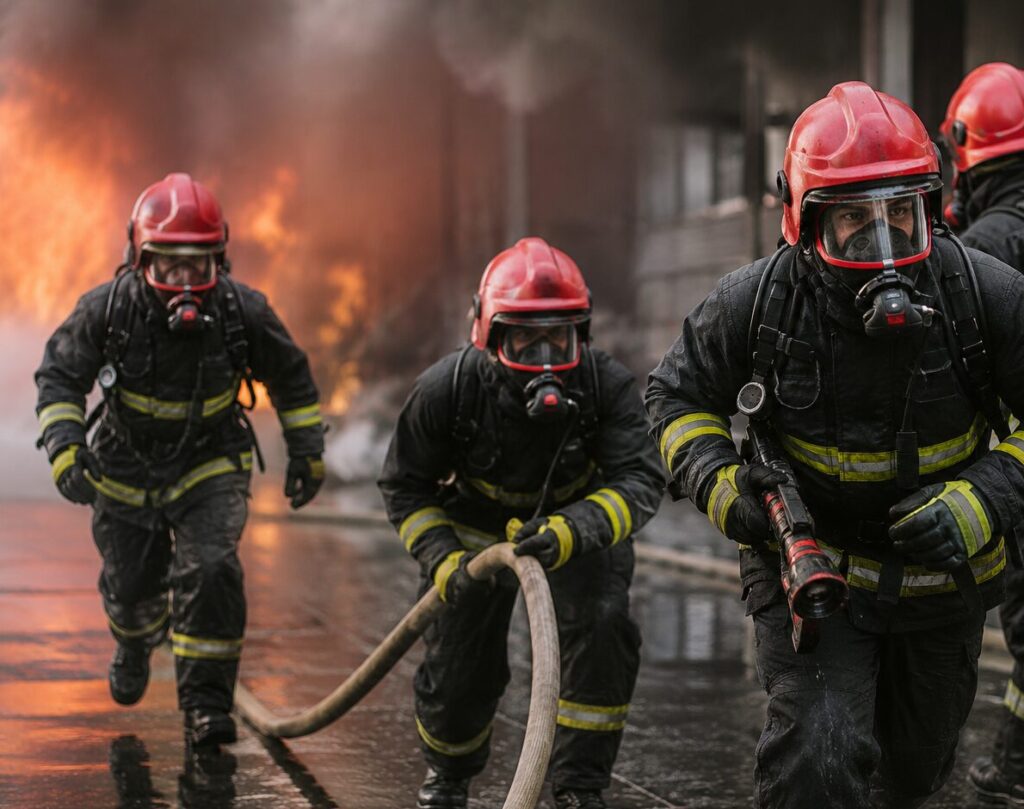
How ERT Supports Workplace Safety Compliance
Workplace safety is no longer just about installing fire extinguishers or conducting annual inspections. Organisations today are expected to prepare their employees to respond effectively during emergencies while complying with legal and industry safety requirements.
One of the most effective ways to achieve this is by establishing a competent Emergency Response Team (ERT).
An Emergency Response Team acts as the organisation’s first line of defence during workplace emergencies. Whether responding to fires, medical incidents, hazardous material spills, gas leaks, or natural disasters, a trained ERT helps minimise injuries, protect assets, and support business continuity.
More importantly, a well-trained ERT demonstrates an organisation’s commitment to workplace safety compliance and emergency preparedness.
What is an Emergency Response Team (ERT)?
An Emergency Response Team (ERT) is a designated group of trained employees responsible for responding to emergencies before external emergency services arrive.
Their responsibilities typically include:
- Fire emergency response
- Evacuation management
- First aid and CPR
- Fire extinguisher operation
- Communication during emergencies
- Assisting persons with disabilities
- Hazard identification
- Spill response
- Crowd control
- Supporting firefighters upon arrival
The objective is not to replace the Fire and Rescue Department but to control incidents safely during the critical first few minutes.
Why Workplace Safety Compliance Matters
Every employer has a duty to provide a safe working environment.
Failure to prepare for emergencies can lead to:
- Employee injuries or fatalities
- Property damage
- Business interruption
- Regulatory penalties
- Increased insurance costs
- Damage to company reputation
Having an effective Emergency Response Team demonstrates that an organisation has taken practical measures to reduce workplace risks and improve emergency readiness.
How ERT Supports Workplace Safety Compliance
1. Improves Emergency Preparedness
Preparedness is one of the most important elements of workplace safety.
ERT members receive structured training that enables them to:
- Identify emergency situations quickly
- Activate emergency procedures
- Coordinate evacuation
- Control small fires safely
- Assist injured personnel
- Communicate with emergency responders
This reduces confusion during real emergencies and improves overall response effectiveness.
2. Supports Fire Safety Compliance
Fire remains one of the highest workplace risks across many industries.
A trained Emergency Response Team helps organisations:
- Conduct fire drills
- Inspect emergency equipment
- Monitor evacuation routes
- Support Fire Wardens
- Respond safely during fire emergencies
These activities contribute significantly towards maintaining an effective workplace fire safety programme.
3. Strengthens Risk Management
ERT members become additional “eyes on the ground.”
Because they receive emergency response training, they are more capable of identifying:
- Unsafe conditions
- Blocked emergency exits
- Faulty fire protection systems
- Hazardous storage practices
- Unsafe work behaviours
Early identification helps prevent incidents before they occur.
4. Reduces Workplace Injuries
The first few minutes after an emergency are often the most critical.
A trained ERT can:
- Provide immediate first aid
- Perform CPR
- Use an AED
- Control bleeding
- Manage burns
- Assist injured workers
Early intervention can significantly reduce injury severity before professional medical responders arrive.
5. Improves Evacuation Efficiency
During emergencies, panic often causes more harm than the incident itself.
ERT members help by:
- Guiding employees calmly
- Checking evacuation routes
- Assisting visitors
- Accounting for personnel
- Reporting missing occupants
This creates a faster, safer and more organised evacuation process.
6. Supports Business Continuity
Emergencies can stop business operations within minutes.
An effective Emergency Response Team helps minimise disruption by:
- Responding immediately
- Protecting critical assets
- Limiting fire spread
- Preventing secondary incidents
- Supporting recovery efforts
The quicker an organisation controls an emergency, the sooner normal operations can resume.
7. Builds a Strong Safety Culture
Workplace safety is everyone’s responsibility.
ERT members become safety champions who encourage:
- Safe work practices
- Hazard reporting
- Emergency awareness
- Participation in drills
- Compliance with company procedures
Over time, this creates a stronger organisational safety culture.
Industries That Benefit from ERT Training
Almost every industry can benefit from an Emergency Response Team, including:
- Manufacturing
- Oil & Gas
- Logistics and Warehousing
- Commercial Buildings
- Healthcare
- Education
- Construction
- Data Centres
- Shopping Malls
- Hotels
- Power Generation
- Chemical Processing
- Food Manufacturing
- Government Agencies
Regardless of industry, emergency preparedness is a critical component of workplace safety.
Key Components of Effective ERT Training
Professional ERT training typically covers:
Fire Fighting
- Fire behaviour
- Portable fire extinguishers
- Hose reel operation
- Fire blanket usage
Emergency Evacuation
- Assembly point management
- Search and rescue basics
- Communication procedures
Medical Emergency Response
- CPR
- AED
- Basic First Aid
- Casualty management
Hazard Recognition
- Workplace hazards
- Risk assessment
- Incident reporting
Practical Emergency Simulations
Participants learn through realistic scenarios, allowing them to build confidence and teamwork under controlled conditions.
Benefits of Investing in ERT Training
Organisations that invest in Emergency Response Team training often experience:
- Improved emergency readiness
- Better workplace safety compliance
- Faster emergency response
- Reduced workplace injuries
- Stronger employee confidence
- Better regulatory preparedness
- Enhanced corporate reputation
- Improved business resilience
Rather than viewing ERT training as a compliance exercise, organisations should see it as an investment in people, safety, and operational continuity.
Why Choose FERA Training Center for ERT Training?
FERA Training Center provides practical, industry-focused Emergency Response Team (ERT) training delivered by experienced trainers with real emergency response backgrounds.
Our programmes combine classroom learning with realistic practical exercises to ensure participants can confidently respond during workplace emergencies.
Our training focuses on:
- Emergency preparedness
- Fire fighting techniques
- Workplace evacuation
- First aid response
- Risk assessment
- Incident management
- Team coordination
- Practical emergency simulations
Whether your organisation is establishing a new Emergency Response Team or enhancing an existing one, FERA Training Center can help build the competencies needed to improve workplace safety and emergency preparedness.
Conclusion
An Emergency Response Team is one of the most valuable investments an organisation can make to strengthen workplace safety compliance.
Beyond meeting regulatory expectations, a competent ERT protects employees, reduces operational risks, minimises business disruption, and promotes a proactive safety culture.
By equipping employees with the knowledge and practical skills to respond effectively during emergencies, organisations can create safer workplaces while demonstrating a genuine commitment to protecting lives and assets.
Equip your employees with the skills to respond confidently during workplace emergencies.
FERA Training Center offers practical, hands-on Emergency Response Team (ERT) Training delivered by experienced trainers with real emergency response backgrounds. Help your organisation strengthen workplace safety, improve emergency preparedness, and build a more resilient workforce.
Contact us today to discuss your in-house or public ERT training requirements.
Phone: +6012-273 0893
Website: https://www.fera.com.my
Email: [email protected]