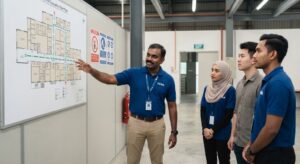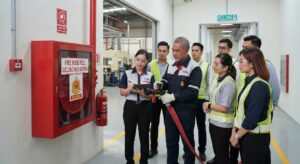


If your building holds a Fire Certificate — or needs one — Bomba now requires you to establish a formal Fire Safety Organisation (OKK) and appoint a certified Fire Safety Manager (FSM). This is not a guideline or a recommendation. Since the Fire Services (Fire Certificate) Amendment Regulations 2020 came into force, it is a legal condition tied directly to your Fire Certificate validity.
Many building owners, facilities managers, and HR teams across Malaysia still do not fully understand what this requirement means, which premises it applies to, what an FSM must actually do once appointed, and what happens when a Fire Certificate renewal arrives without a certified FSM on record.
This guide covers all of it clearly, specifically, and with direct reference to the regulations that apply to your building today.
What Changed in 2020 — Why FSM Appointment Is Now Non-Negotiable
Before 2020, the requirement for a Fire Safety Manager existed within Malaysian fire safety law but lacked consistent enforcement. The Fire Services (Fire Certificate) Amendment Regulations 2020 changed that fundamentally.
Under the amended regulations, every designated premises in Malaysia must now establish an Organisasi Keselamatan Kebakaran — the Fire Safety Organisation, commonly referred to as OKK — and appoint a certified FSM as part of that structure. Critically, Bomba ties this requirement directly to the Fire Certificate process. Specifically, proof of OKK establishment — including a certified FSM appointment — forms part of every Fire Certificate application and renewal.
This means a building without a certified, active FSM on record cannot successfully renew its Fire Certificate. For commercial premises, a lapsed Fire Certificate creates immediate legal exposure, potential operational shutdown, and significant insurance complications.
Furthermore, Bomba conducts inspections to verify that the OKK structure is genuinely active — not simply documented on paper. An FSM who holds a certificate but does not fulfil their responsibilities creates the same compliance risk as having no FSM at all.
Key Point: The 2020 amendment removed ambiguity from FSM appointment. Your Fire Certificate now depends on it. If your building qualifies as a designated premises, establishing your OKK and certifying your FSM is not optional — it is a precondition for continued legal operation.
Which Buildings Qualify as Designated Premises?
The Fire Services (Designated Premises) Order 1998 defines the categories of buildings that carry mandatory fire safety obligations under Malaysian law — including OKK establishment and FSM appointment. Here is a clear breakdown of which premises fall under this requirement:
Buildings Exceeding 18.3 Metres in Height
Any building that exceeds 18.3 metres in height automatically qualifies as a designated premises. In practical terms, this covers most buildings of five storeys or more. Office towers, high-rise residential blocks, hotels, and mixed-use developments above this threshold all fall under the FSM appointment requirement.
Public Assembly Buildings
Buildings that regularly host large gatherings of the public carry heightened fire risk and strict compliance obligations. Consequently, convention centres, cinemas, theatres, houses of worship, and event halls qualify as designated premises regardless of height, provided they meet occupancy thresholds.
Factories and Manufacturing Plants
All factories and manufacturing facilities that operate under a licence or permit in Malaysia qualify as designated premises. This includes light manufacturing units, heavy industrial plants, food processing facilities, electronics assembly plants, and packaging operations across Selangor, Johor, Penang, and other industrial states.
Warehouses and Storage Facilities
Logistics centres, cold storage facilities, bonded warehouses, and distribution hubs qualify as designated premises under the Order. The combination of high stock density, limited occupancy visibility, and often-flammable stored goods makes warehouse fire safety management critical.
Hotels and Accommodation Premises
Any premises that provides paid accommodation — including hotels, serviced apartments, hostels, and budget lodging above specified thresholds — qualifies as a designated premises. The presence of sleeping guests who may be unfamiliar with the building layout creates a specific fire safety obligation that the FSM must address through documented evacuation planning and regular drills.
Hospitals and Healthcare Facilities
Private hospitals, specialist centres, and clinics with inpatient facilities qualify as designated premises. Additionally, the Emergency Response Team (ERT) in a hospital setting must be trained to coordinate fire response alongside ongoing clinical operations — making the FSM role particularly demanding in healthcare environments.
Educational Institutions
Universities, colleges, polytechnics, and large schools that meet occupancy thresholds qualify as designated premises. Student populations represent a high-occupancy, varying-familiarity group that requires structured evacuation planning and regular drill execution — both core FSM responsibilities.
Shopping Complexes and Retail Malls
Shopping complexes attract the highest public occupancy of any commercial building type in Malaysia. Multiple tenants, varied activities — including food courts with live cooking, retail storage, and service areas — and complex internal layouts create fire risks that require active, full-time fire safety management by a certified FSM.
Premises Storing Dangerous Goods
Any premises that stores dangerous goods chemical storage facilities, LPG depots, petroleum storage, and sites handling hazardous materials (HAZMAT) qualifies as a designated premises. Furthermore, these sites carry additional obligations under the CIMAH Regulations 1996 that the FSM must coordinate alongside Bomba fire safety requirements.
What Is an OKK — Fire Safety Organisation?
The Organisasi Keselamatan Kebakaran (OKK) is the formal internal fire safety committee that every designated premises must establish under the 2020 amendment regulations. The OKK is not a document, it is an active, functioning structure responsible for all fire safety operations within the building before and during an emergency.
The OKK must include a minimum composition to satisfy Bomba requirements:
| Role | Minimum Number | Primary Responsibility |
| Fire Safety Manager (FSM) | 1 | Overall fire safety management, Bomba liaison, OKK coordination |
| Fire Safety Officer (FSO) | 3 | Daily inspections, hazard identification, warden supervision |
| Emergency Response Team (ERT) | As required | Fire response, first aid, evacuation execution |
| Fire Wardens | As required per floor or zone | Floor-level evacuation guidance and headcount |
The person with full management control over the designated premises — the building owner, plant manager, or building management company — carries legal responsibility for establishing the OKK and ensuring it remains active and properly staffed.
Bomba inspectors verify OKK composition during Fire Certificate inspections. Specifically, they check that every member holds current certification, that roles are actively filled, and that the OKK has conducted the minimum required drills and inspections within the audit period.
FSM Qualification Requirements — What Bomba Requires
Not anyone can be appointed as an FSM simply by attending a course. Bomba — specifically the Director General of the Fire and Rescue Department of Malaysia (JBPM) — sets the qualification requirements for FSM certification and must recognise the appointment before it carries legal validity.
Education and Experience Requirements
Candidates for FSM certification must meet one of the following criteria:
- A bachelor’s degree in fire safety, fire engineering, occupational safety and health, or a relevant discipline
- Relevant professional experience in fire safety management at the appropriate level for the building type and risk profile
FSM Course Requirements
Candidates must complete an FSM training course delivered by a Bomba-appointed and JBPM-recognised training provider. Completing a course from an unrecognised provider does not satisfy the requirement. Bomba will not recognise the appointment.
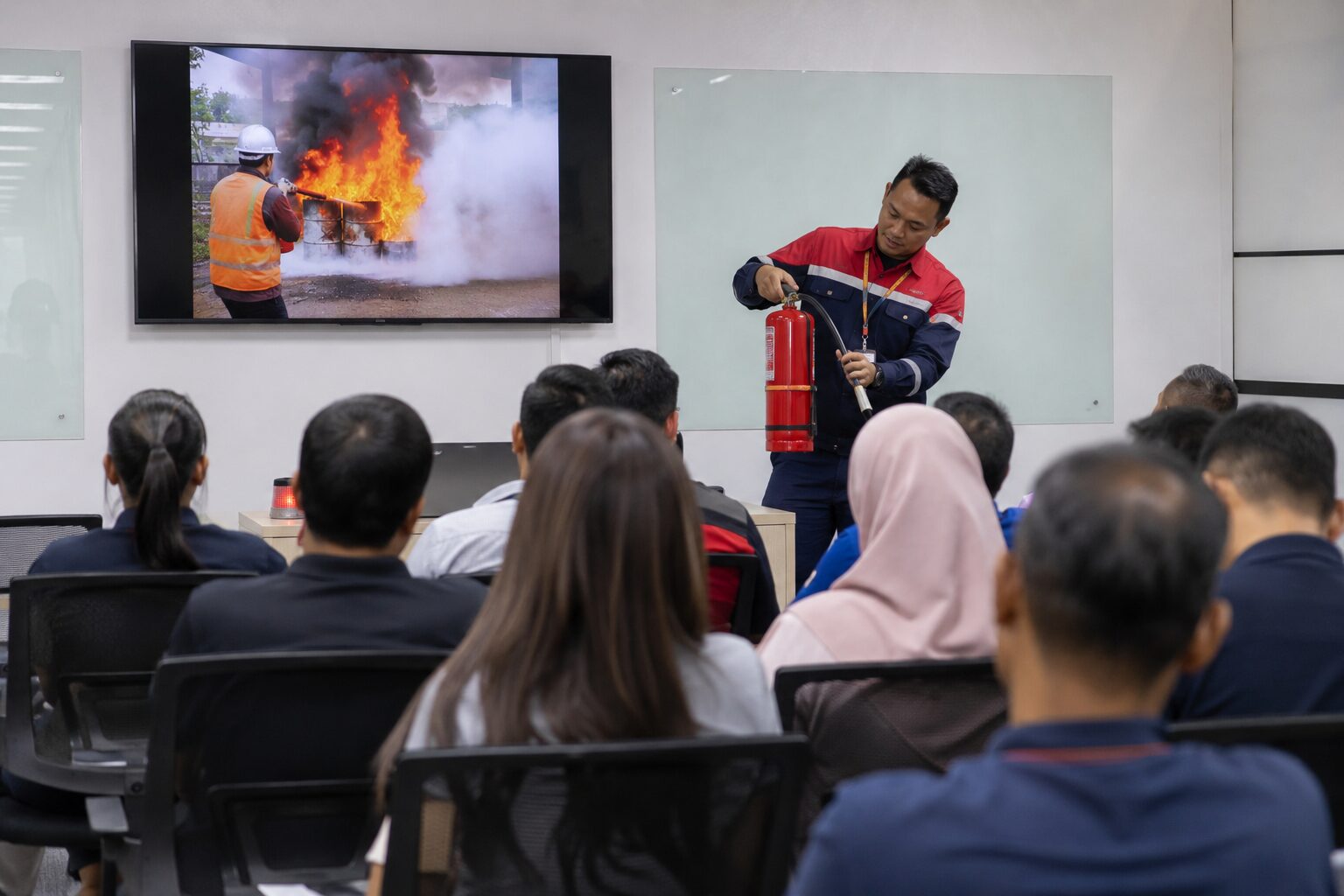
FERA Training Center delivers FSM and FSO training through a programme that meets Bomba and JBPM requirements. Our trainers bring direct Bomba field experience to every session, not just regulatory theory.
Certification Validity and Renewal
| Detail | Requirement |
| Certification validity | 3 years from date of issuance |
| Renewal requirement | Must be renewed before expiry through refresher course or recognised examination |
| Certification authority | Director General of JBPM |
| Consequence of lapsed certification | FSM appointment no longer valid — OKK non-compliant |
Allowing FSM certification to lapse creates an immediate compliance gap. Bomba treats a building with a lapsed FSM certificate the same as a building with no FSM — and the Fire Certificate consequences follow accordingly.
FSO Qualification Requirements
The Fire Safety Officer (FSO) carries a lower qualification threshold than the FSM but still requires formal Bomba-recognised certification. Specifically:
- Minimum education: Sijil Pelajaran Malaysia (SPM) or equivalent
- Must complete an approved FSO training course through a JBPM-recognised provider
- Must receive certification from the Director General of JBPM
- Certification must remain current — renewal required before expiry
The key distinction between FSM and FSO remains one of accountability level. The FSM coordinates, plans, and owns overall fire safety responsibility. The FSO executes, inspects, and supports on a day-to-day basis. For a detailed comparison, read our guide: Fire Safety Manager vs Fire Safety Officer — Key Differences.
FSM Responsibilities — What Bomba Audits Against
Holding an FSM certification creates ongoing operational responsibilities that Bomba verifies during inspections. These responsibilities apply continuously — not just at Fire Certificate renewal time.
Develop and Maintain the Fire and Emergency Action Plan
The FSM must develop a documented Fire and Emergency Action Plan essentially the building’s Fire Emergency Response Plan (FERP) covering evacuation routes, assembly points, emergency contacts, response procedures, and roles during an incident. Importantly, this plan must be reviewed annually and updated whenever the building undergoes significant modification, change of use, or change in occupancy.
Conduct Regular Fire Drills
The FSM must plan, execute, and document fire evacuation drills involving all building occupants. Most designated premises must conduct at least one full drill annually, while higher-risk premises must run drills more frequently. After each drill, the FSM must document the outcome, record any problems, and implement corrective actions before the next inspection.
Inspect and Maintain Fire Safety Systems
The FSM carries responsibility for ensuring all fire protection systems stay operational and properly maintained. This includes suppression systems, detection and alarm systems, emergency lighting, evacuation signage, and portable fire fighting equipment such as extinguishers and hose reels. Additionally, the FSM must maintain service records for each system — Bomba inspectors review these records during audits.
Supervise FSOs and Fire Wardens
The FSM directs the entire OKK structure — including Fire Safety Officers and fire wardens. This includes ensuring FSOs conduct their daily and weekly inspections, that fire wardens understand their evacuation responsibilities, and that all OKK members hold current, valid certifications.
Liaise Directly with Bomba
The FSM serves as the building’s primary point of contact with Bomba during inspections, Fire Certificate applications and renewals, incident investigations, and any enforcement action. Consequently, the FSM must maintain a working relationship with the local Bomba district office and respond promptly to any inspection findings or notices issued.
Maintain Complete Fire Safety Records
Bomba inspectors audit records during every visit. The FSM must ensure the following are current, accurate, and immediately accessible:
- OKK composition records and certification copies for all members
- Fire drill records — dates, participant numbers, observations, corrective actions
- Fire safety system inspection and service logs
- Incident and near-miss reports
- Fire and Emergency Action Plan — current version with revision history
- Fire Certificate and all associated conditions
What Happens When Your FSM Certification Lapses or Your OKK Is Non-Compliant?
The consequences of FSM non-compliance compound quickly once Bomba identifies the gap:
Fire Certificate non-renewal. Bomba withholds Fire Certificate renewal until the OKK is fully compliant and the FSM holds current certification. A commercial building operating with a lapsed Fire Certificate faces immediate legal exposure.
Stop-work or stop-use orders. For serious or persistent non-compliance, Bomba has the authority to issue stop-use orders — preventing the building from operating until compliance is restored.
Criminal prosecution. Under the Fire Services Act 1988, building owners who persistently fail to meet fire safety requirements face criminal prosecution and potential fines or imprisonment.
DOSH enforcement. DOSH can issue independent enforcement action under OSHA 1994, including fines of up to RM50,000 per offence, separate from Bomba’s own enforcement powers.
Insurance complications. Malaysian insurers increasingly require evidence of OKK compliance and current FSM certification as a condition of commercial fire insurance coverage. A fire incident in a non-compliant building creates significant grounds for a disputed or reduced insurance claim.
How to Establish Your OKK and Get Your FSM Certified
Follow these steps to bring your designated premises into full OKK compliance:
Step 1 — Confirm your designated premises status. Check your Fire Certificate conditions or contact Bomba to confirm that your premises falls under the designated premises requirement. If your building type matches any category listed above, assume the requirement applies.
Step 2 — Identify your FSM candidate. Select a candidate who meets the education or experience requirements. Ideally, this is an existing facilities manager, HSE manager, or senior safety personnel who already understands the building and carries management authority.
Step 3 — Enrol in a Bomba-recognised FSM course. Your FSM candidate must complete training through a JBPM-recognised provider. FERA Training Center delivers FSM certification training that meets Bomba and JBPM requirements, contact FERA to confirm the next available intake.
Step 4 — Certify your FSOs. Identify and certify a minimum of three FSOs through a recognised FSO training programme. FERA delivers both FSM and FSO training your entire OKK can be certified through one provider.
Step 5 — Establish and document your OKK. Formally document the OKK structure names, roles, certification dates, and expiry dates for every member. Submit OKK documentation as part of your Fire Certificate application or renewal.
Step 6 — Develop your Fire and Emergency Action Plan. Your FSM leads the development of the building’s FERP. Ensure it covers all floors, all tenancy zones, and all shift patterns relevant to your building.
Step 7 — Conduct your first fire drill. Schedule and execute the first documented fire drill under your certified FSM’s leadership. Document the outcome and file the report for Bomba review.
Step 8 — Build your ERT and fire warden structure. Beyond the FSM and FSO, your OKK needs trained ERT members and fire wardens in sufficient numbers to cover your building’s occupancy and floor area. FERA delivers training for all these roles.
Why FERA for FSM and FSO Certification?
Several training providers offer FSM and FSO courses in Malaysia. Here is why organisations across Peninsular Malaysia choose FERA:
Bomba-experienced trainers. FERA’s training team includes former Bomba officers who have personally conducted Fire Certificate inspections, led major fire emergency responses, and implemented OKK structures across a wide range of designated premises types. Participants learn what Bomba actually checks, not just what the regulations say.
Full OKK training coverage. FERA delivers FSM training, FSO training, fire warden training, ERT training, and HAZMAT training (NFPA 472) meaning your entire OKK structure can be built and certified through one trusted provider.
HRDCorp registered. FERA holds active HRDCorp registration, making FSM and FSO training fully claimable under the SBL-Khas scheme for eligible employers. For most organisations, this makes OKK certification a zero out-of-pocket investment.
In-house training available. FERA delivers training at your premises across Peninsular Malaysia allowing us to contextualise the programme to your specific building type, occupancy profile, and Bomba inspection history.
NFPA-accredited programmes. Beyond FSM and FSO, FERA delivers NFPA-accredited certification programmes giving your fire safety team internationally recognised qualifications that carry weight beyond Malaysian compliance requirements.

Frequently Asked Questions — Bomba FSM Requirements Malaysia
Q1: Is a Fire Safety Manager required for all buildings in Malaysia?
No only for designated premises under the Fire Services (Designated Premises) Order 1998. However, the categories are broad and cover most commercial, industrial, hospitality, healthcare, and educational buildings above specified size and occupancy thresholds. If your building holds or needs a Fire Certificate, it almost certainly qualifies as a designated premises and requires a certified FSM.
Q2: How long is FSM certification valid in Malaysia?
FSM certification issued by the Director General of JBPM is valid for three years from the date of issuance. The FSM must complete a renewal course or recognised examination before the certification expires. A lapsed FSM certificate invalidates the OKK appointment and puts your Fire Certificate at risk.
Q3: What is the minimum OKK composition required by Bomba?
The minimum OKK composition under the 2020 amendment regulations requires one certified FSM, three certified FSOs, and sufficient ERT members and fire wardens to cover the building’s occupancy and operational requirements. Contact Bomba or FERA for guidance on the specific composition required for your building type and size.
Q4: Can an FSO be promoted to FSM without additional training?
No. An FSO holds a different certification from an FSM. Regardless of experience level, an FSO who takes on the FSM role must complete a formal, Bomba-recognised FSM certification course and receive certification from the Director General of JBPM before the appointment carries legal validity.
Q5: What happens if my FSM resigns or leaves the company?
You must appoint and certify a replacement FSM as quickly as possible. A gap in FSM appointment creates an immediate OKK compliance failure. Contact FERA to discuss priority intake for replacement FSM certification — our team can advise on the fastest compliant path to restoring your OKK.
Q6: Is FSM training HRDCorp claimable?
Yes. FERA holds active HRDCorp registration and FSM and FSO training programmes qualify for SBL-Khas claims for eligible employers. Contact FERA to confirm eligibility and get assistance with the claims process before your training date.
Get Your OKK Compliant — Start with FERA
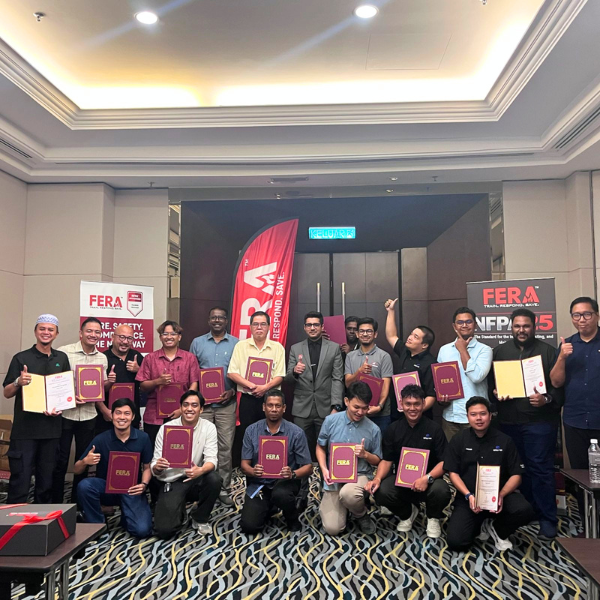
Whether you are establishing your OKK for the first time, replacing a departing FSM, or bringing lapsed certifications back into compliance, FERA Training Center delivers the FSM and FSO certification your building needs fast, Bomba-aligned, and fully HRDCorp claimable.
Our programmes cover every OKK role your building requires:
- Fire Safety Manager (FSM) certification
- Fire Safety Officer (FSO) certification
- Fire warden training
- Emergency Response Team (ERT) training
- HAZMAT training — NFPA 472
- NFPA-accredited certification programmes
Do not wait for a Bomba inspection notice or a Fire Certificate renewal deadline to take action. Contact FERA today.
WhatsApp: 019-303 4001
Email: [email protected]
Website: fera.com.my/fsm-fso-training