

Industrial fire safety training Malaysia workplaces provide should reflect the actual hazards employees, supervisors and emergency teams face.
Basic fire safety remains an important foundation.
Employees should understand alarms, evacuation routes, assembly points and the limits of first-response firefighting.
However, factories, plants, warehouses and other industrial workplaces can involve much more complex risks.
These may include:
- Electrical hazards
- Hot work
- Hazardous chemicals
- Combustible materials
- Machinery
- Fire protection systems
- Production processes
- Emergency response activities
This is why industrial workplaces need several layers of competency rather than one general fire safety course.
Basic Fire Safety Is Only the Beginning
General employees need fundamental fire safety awareness.
They should know:
- How to raise the alarm
- Which evacuation route to use
- Where the assembly point is located
- Who to report to
- When first-response firefighting may be appropriate
- When evacuation is the safer option
However, employees with specialist responsibilities require additional knowledge.
A Fire Watcher does not perform the same role as a Fire Warden.
An ERT member does not have the same responsibilities as an FSM.
An electrical technician faces different hazards from a building manager.
Training should therefore follow responsibility.
FSM and FSO Support Structured Fire Safety Management
Fire Safety Managers and Fire Safety Officers can form an important part of the organisation’s fire safety structure.
Their responsibilities may involve:
- Inspections
- Monitoring
- Documentation
- Emergency planning
- Fire safety coordination
- Reporting
- Fire drills
- Communication with management and technical personnel
FERA’s Fire Safety Manager and Fire Safety Officer guide provides a more detailed explanation of these responsibilities.
However, FSMs and FSOs still need support from specialists.
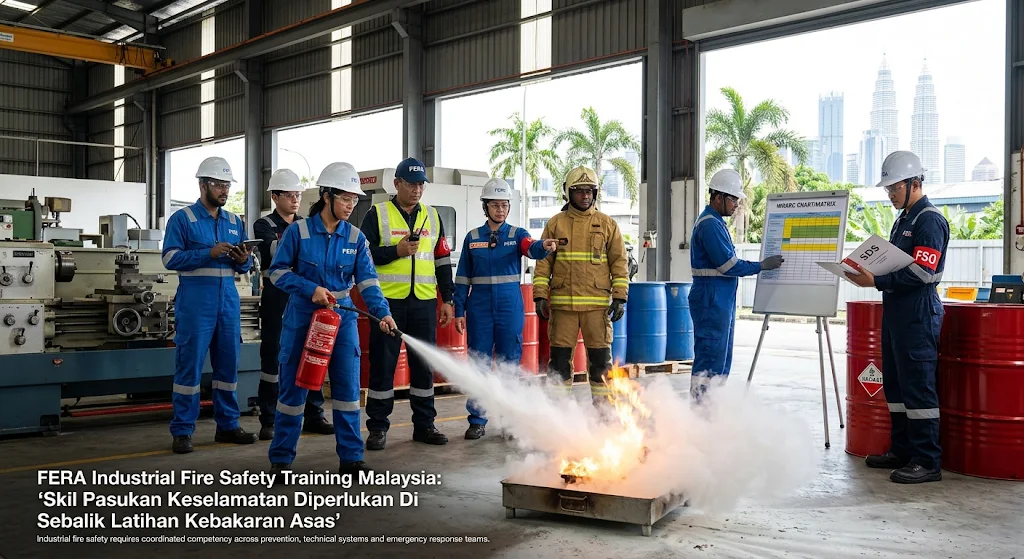
Industrial fire safety may require cooperation between:
- HSE teams
- Engineers
- Facility personnel
- Maintenance teams
- Fire Watchers
- ERT members
- Contractors
- Management
The strongest safety programme connects these functions.
Hot Work Creates a Specific Fire Risk
Welding, cutting, grinding and similar hot-work activities can generate sparks, heat and molten material.
These ignition sources may ignite combustible materials in the surrounding area.
A proper hot-work arrangement may involve:
- Work-area preparation
- Removal or protection of combustible materials
- Permit-to-work procedures
- Appropriate firefighting equipment
- Fire Watcher arrangements
- Communication
- Post-work monitoring
FERA’s Fire Watcher Malaysia guide explains how the Fire Watcher supports hot-work fire prevention.
Fire Watchers need to recognise changing conditions and understand when unsafe work should stop.
Chemical Safety Must Connect with Fire Safety
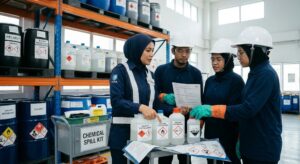
Industrial workplaces may handle solvents, fuels, cleaning agents, process chemicals and other hazardous substances.
Some may be flammable.
Others may react dangerously with heat or incompatible materials.
Safety Data Sheets can provide important information about:
- Chemical hazards
- Handling
- Storage
- PPE
- Firefighting measures
- Spill response
- Stability
- Incompatible materials
FERA’s Safety Data Sheet Malaysia guide provides further guidance for workplace teams.
Keeping an SDS file alone is not enough.
Employees need to understand which information applies to their responsibilities.
HIRARC Connects Hazards with Controls
Industrial workplaces change.
New machinery may be introduced.
Production methods may change.
Different chemicals may be used.
Maintenance activities can introduce temporary hazards.
HIRARC helps workplaces identify hazards, assess risk and determine suitable controls.
The official DOSH HIRARC Guidelines provide a structured Malaysian reference for:
- Hazard identification
- Risk assessment
- Risk control
FERA also provides HIRARC, HIRADC and JSA training for workplace teams developing practical risk-assessment competency.
This approach helps organisations identify problems before they become incidents.
Emergency Response Teams Need Practical Competency
Prevention should remain the priority.
However, workplaces also need to prepare for incidents that still occur.
Depending on the organisation, an Emergency Response Team may support:
- Initial firefighting
- Rescue
- First aid
- HAZMAT response
- Emergency communication
- Evacuation support
- Incident coordination
FERA’s Emergency Response Team training supports organisations developing workplace emergency capability.
An ERT organisation chart alone does not demonstrate readiness.
Team members need suitable training, clear responsibilities and practical exercises.
Emergency Leadership Matters
Industrial incidents can develop quickly.
As an incident becomes more complex, emergency teams also need clear leadership.
An On-Scene Commander may need to:
- Assess conditions
- Establish priorities
- Deploy teams
- Manage resources
- Maintain communication
- Monitor responder safety
- Escalate the incident
- Order withdrawal when necessary
- Coordinate handover to external responders
This creates another competency layer beyond basic firefighting.
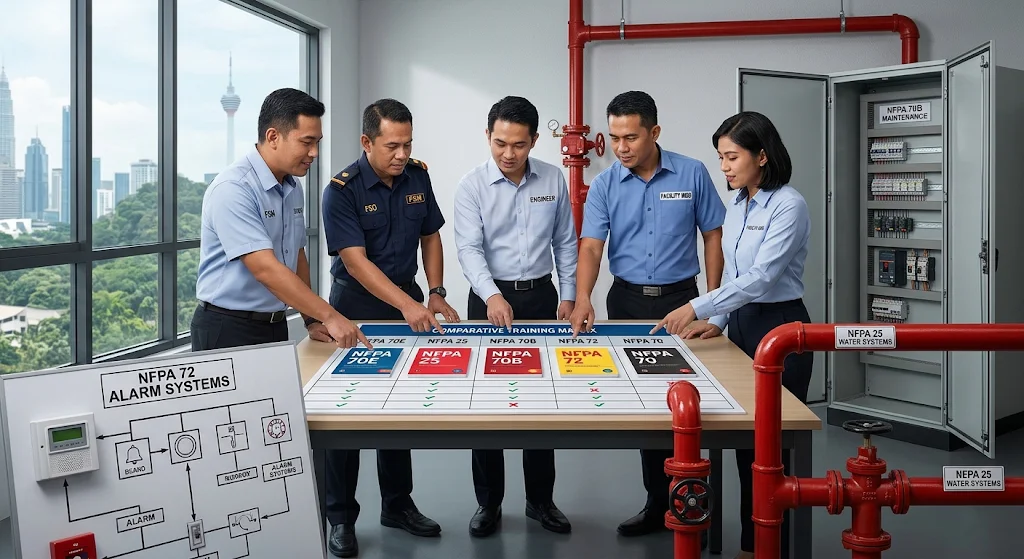
Technical Fire Protection Knowledge Supports Better Decisions
Industrial facilities may depend on technical systems such as:
- Fire alarms
- Detection systems
- Sprinklers
- Fire pumps
- Electrical installations
- Emergency communication systems
FSMs and FSOs do not necessarily repair these systems.
However, stronger technical awareness can help them recognise deficiencies, understand reports and communicate with facility teams and competent contractors.
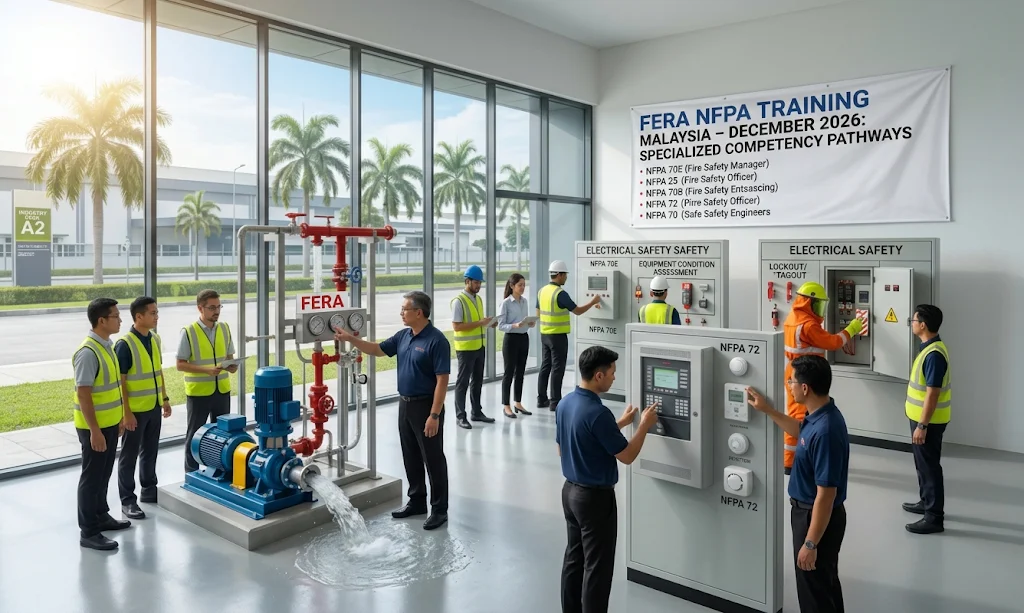
NFPA Training for Technical Teams
Specialised NFPA training can complement wider industrial fire safety competency.
For example:
- NFPA 70E addresses electrical safety-related work practices.
- NFPA 25 addresses inspection, testing and maintenance of water-based fire protection systems.
- NFPA 72 covers fire alarm, detection, signalling and emergency communications.
FERA provides NFPA Standards Training programmes for professionals whose roles involve these technical areas.
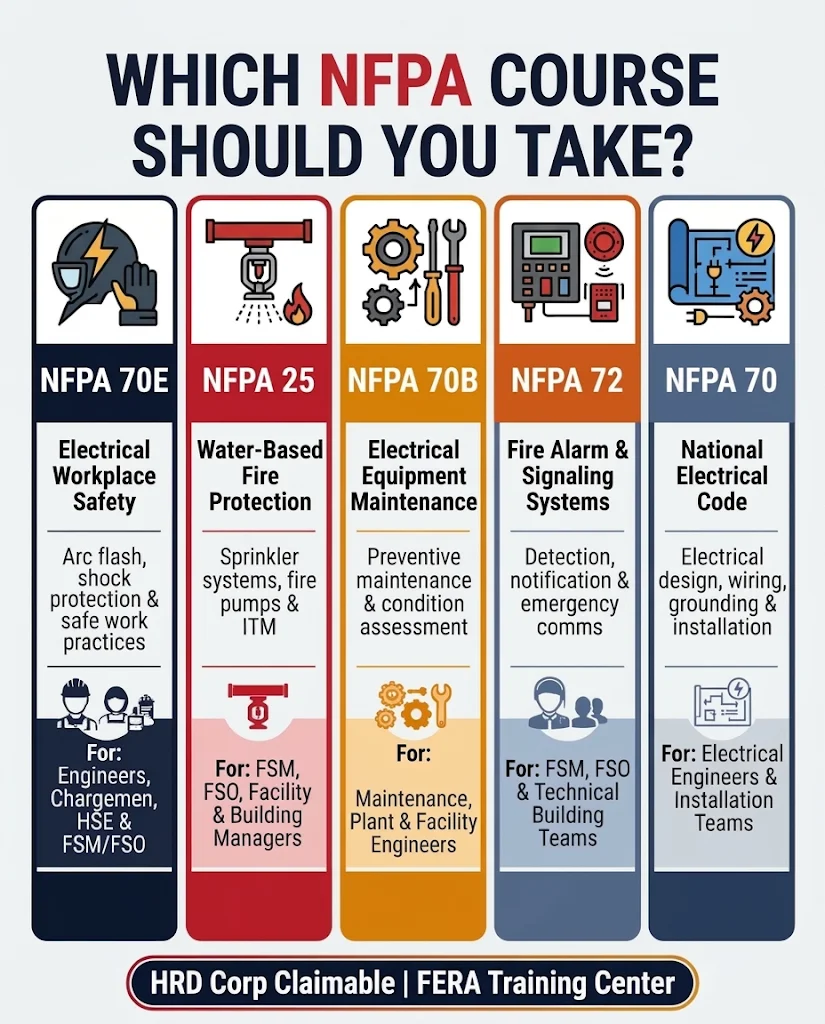
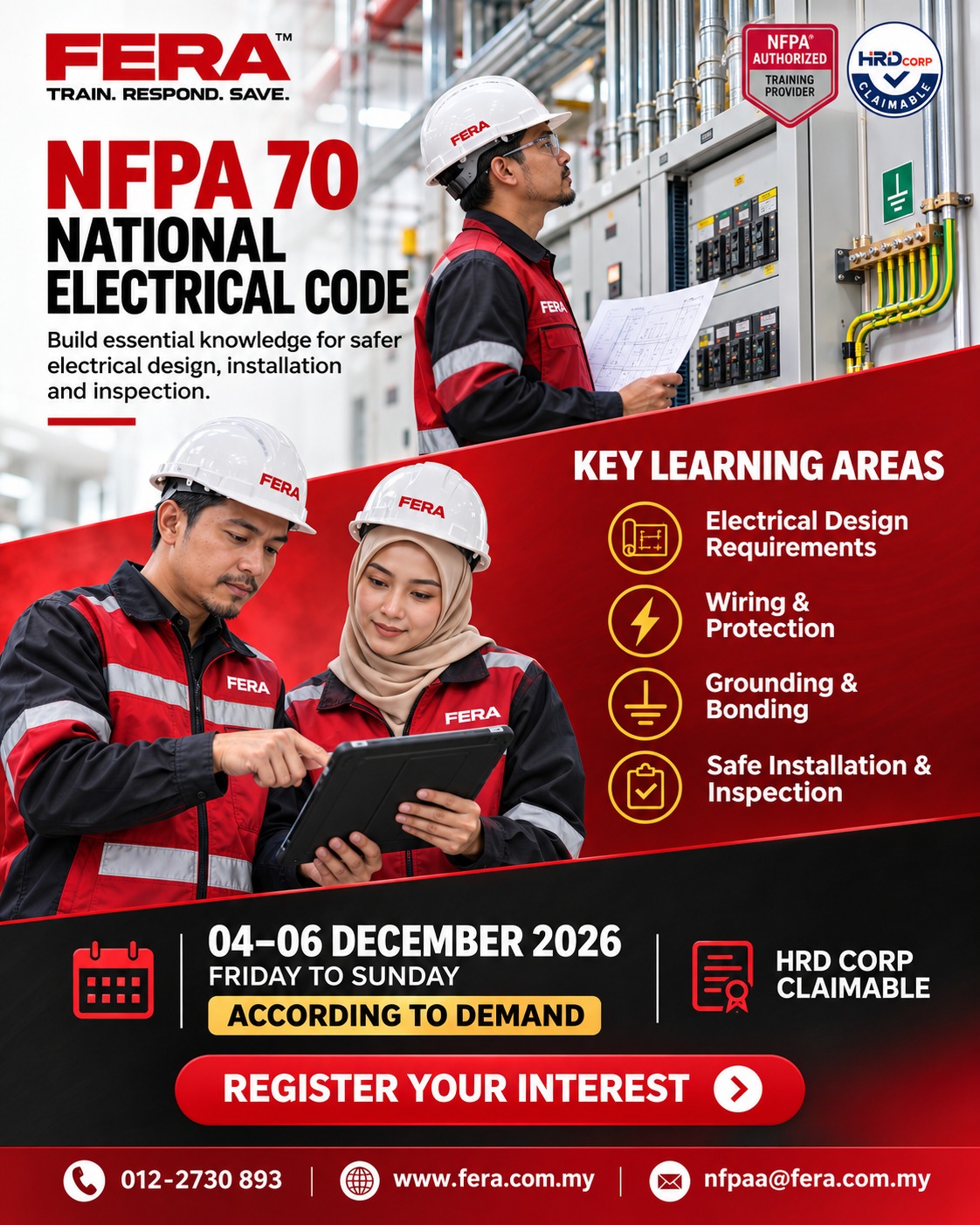
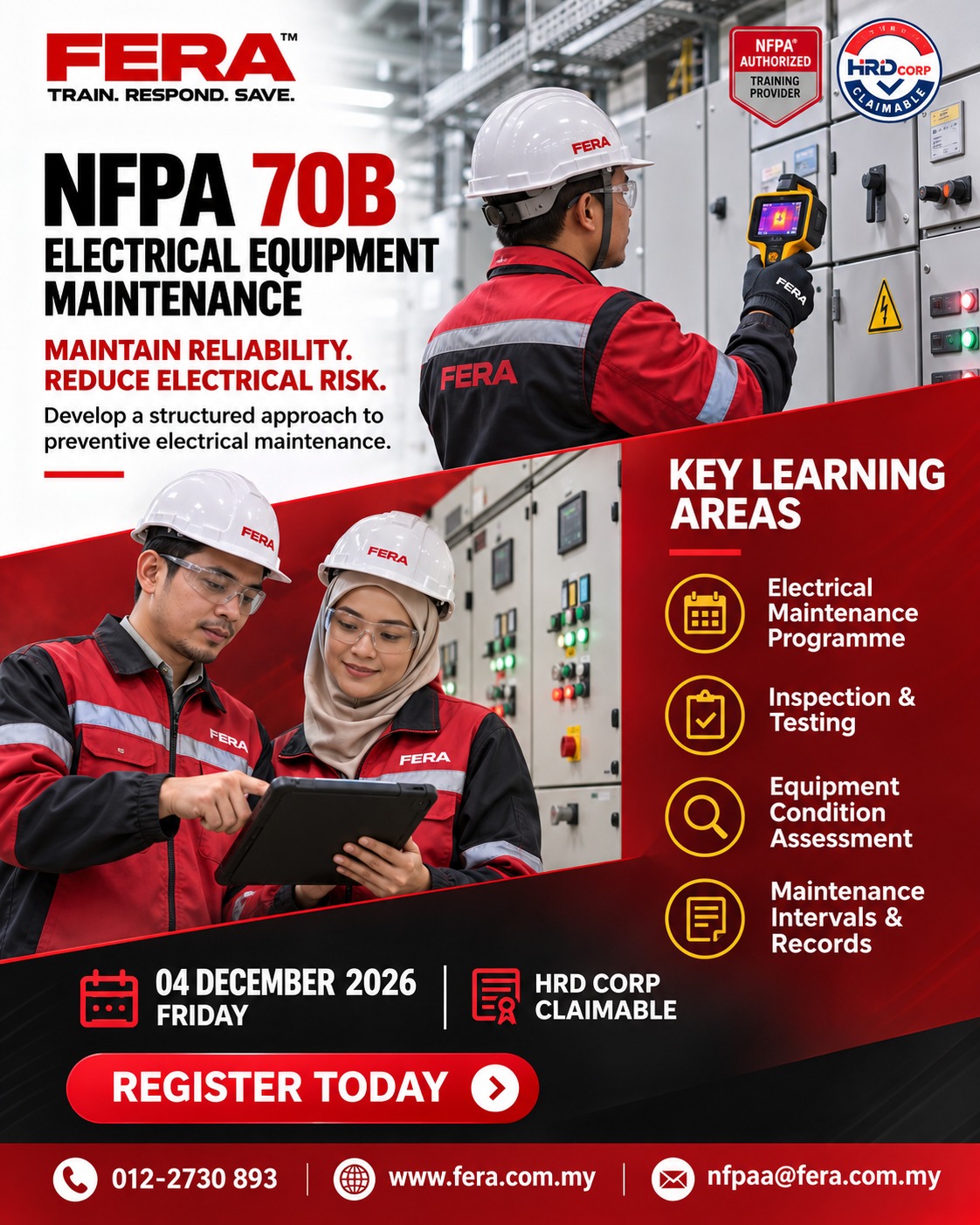
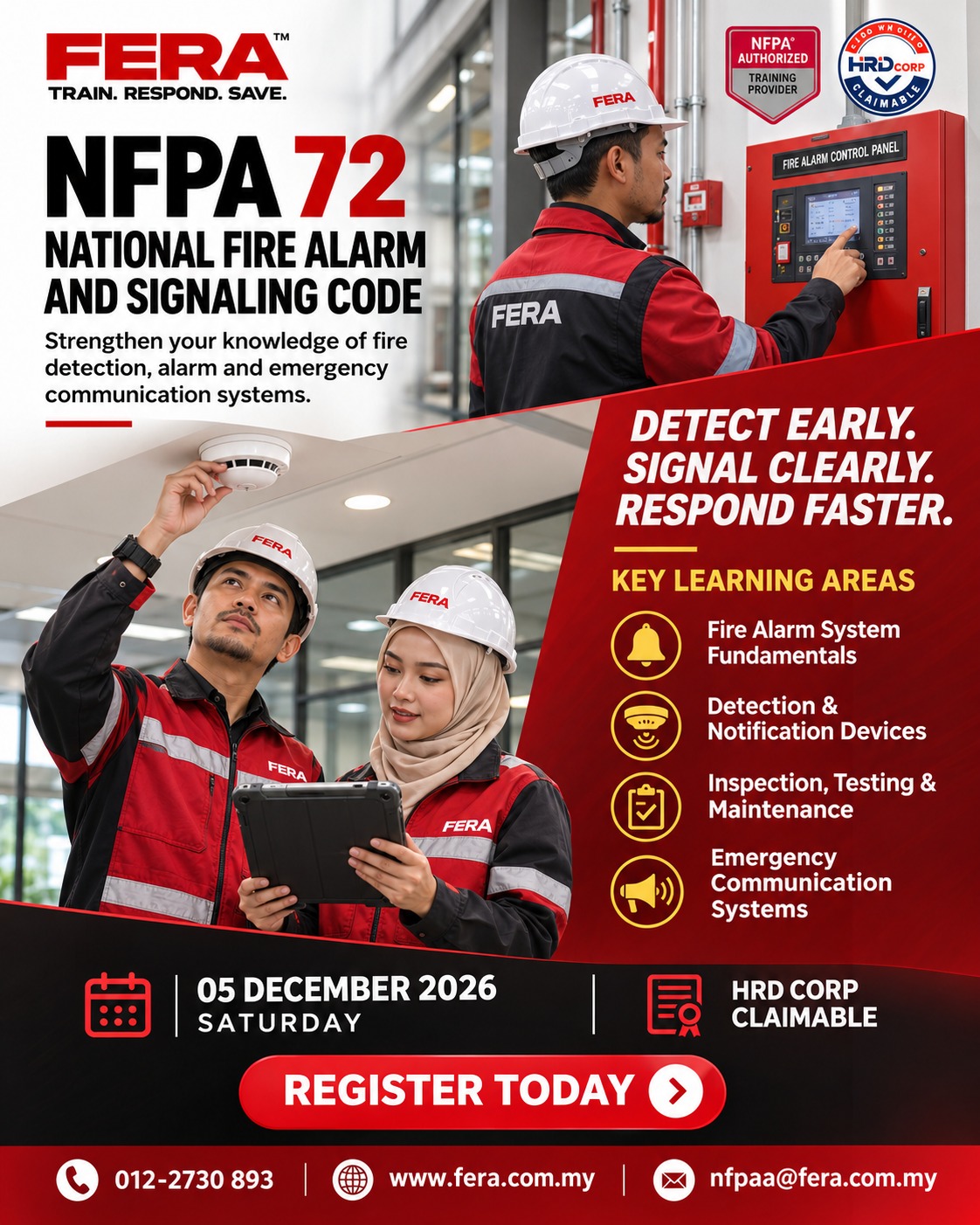
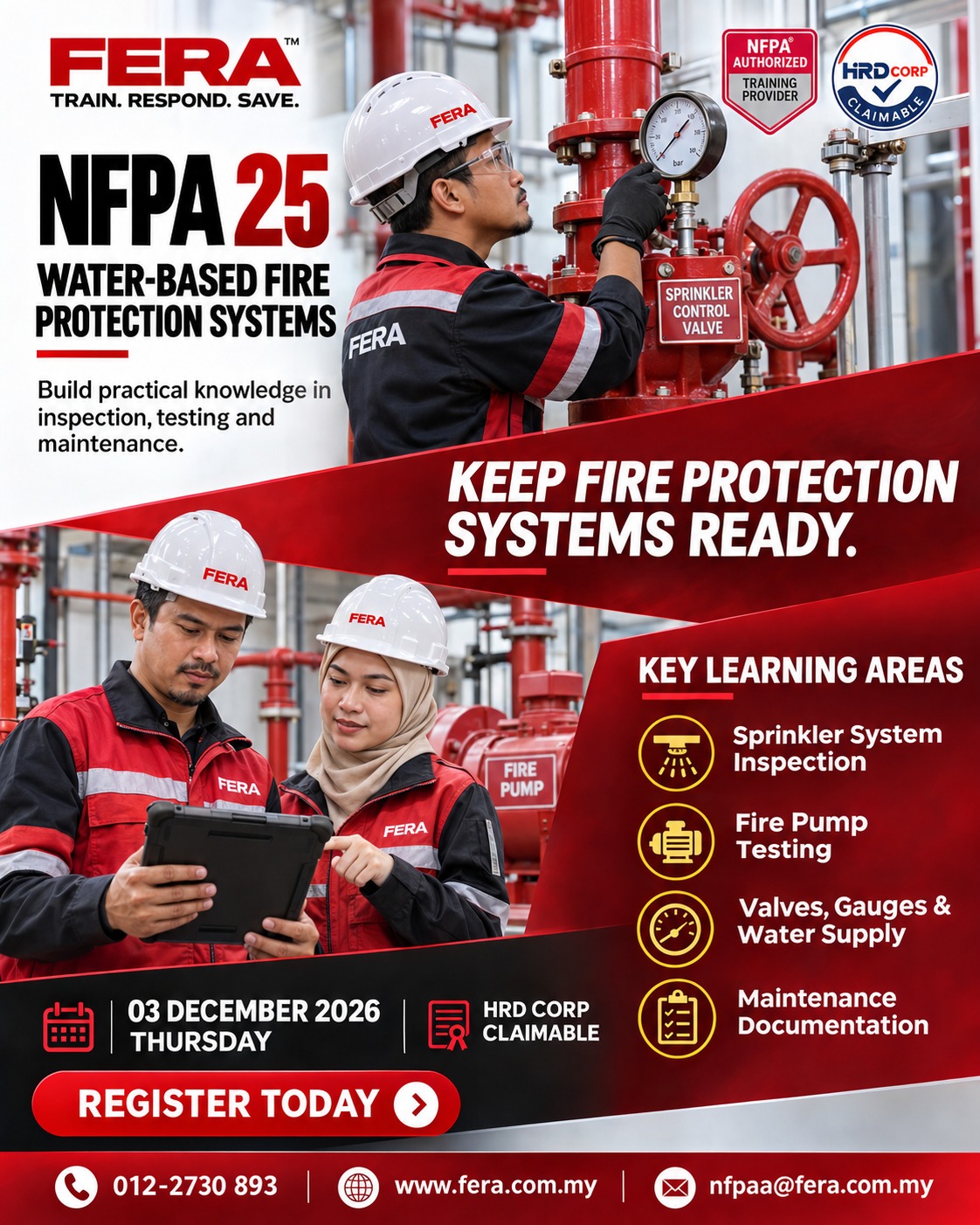
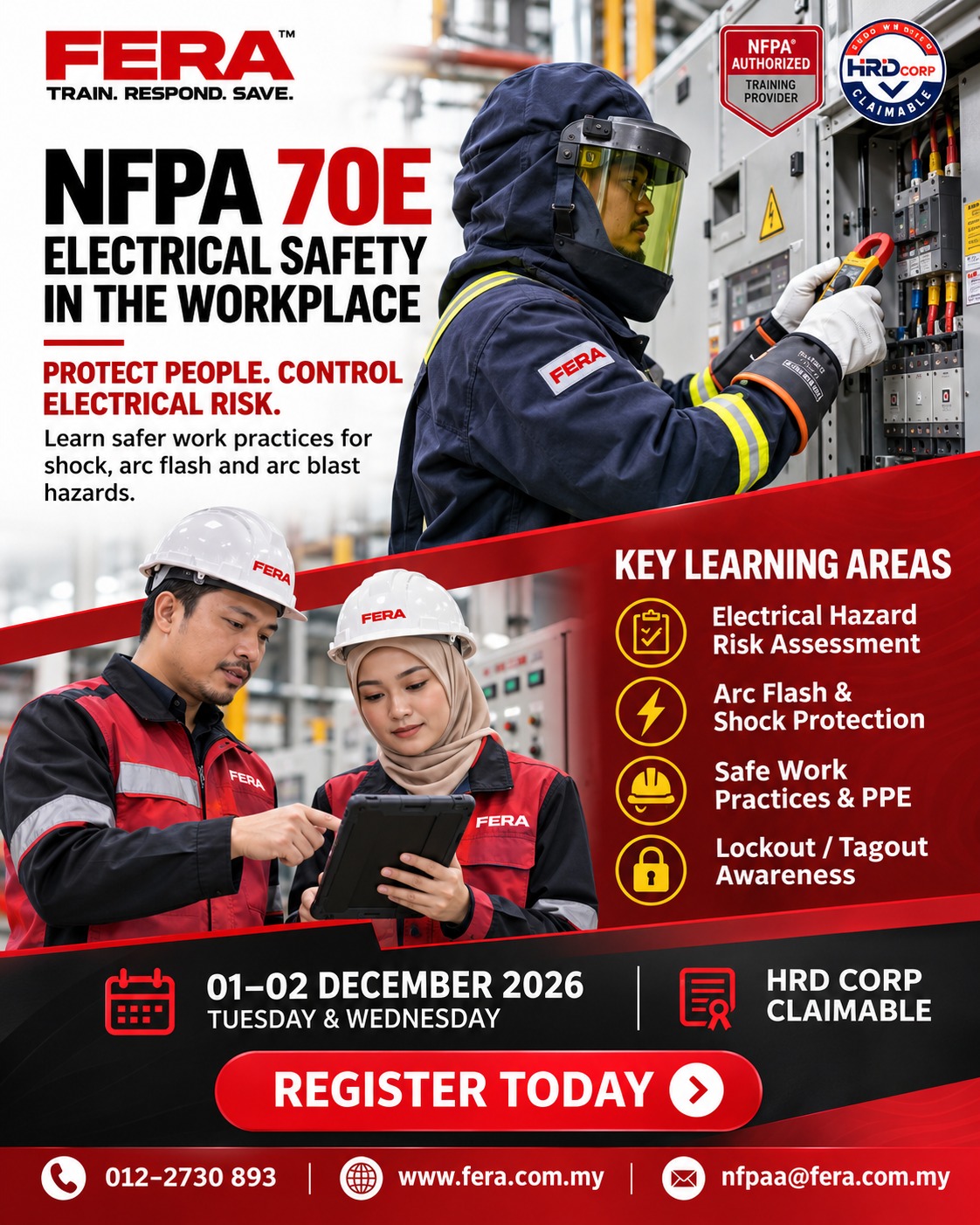
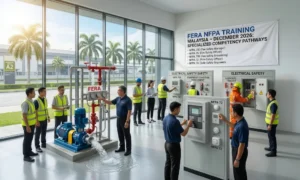
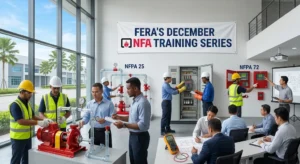
Explore FERA’s December 2026 NFPA Training Intake Poster
Match Technical Training to the Employee
Different employees require different competencies.
Electrical teams may need stronger electrical hazard and safe-work knowledge.
Facility teams may need to understand fire pumps, sprinklers and alarms.
FSMs and FSOs may need enough technical awareness to monitor and coordinate.
Maintenance teams may need stronger equipment-maintenance competency.
Engineers may require deeper knowledge of electrical systems and installations.
There is little value in sending every employee to every course.
Instead, distribute competency across the organisation.
Build an Industrial Safety Training Matrix
A simple training matrix can help.
For each role, identify:
- Main responsibilities
- Workplace hazards
- Technical systems
- Emergency duties
- Existing training
- Competency gaps
- Required development
A practical structure may look like this:
FSM / FSO
→ Fire safety management, monitoring and coordinationFire Warden
→ Evacuation and occupant managementFire Watcher
→ Hot-work fire preventionERT
→ Emergency responseHSE Team
→ Hazard identification and risk controlsFacility Team
→ Fire protection system readinessElectrical Team
→ Electrical safety and equipment managementMaintenance Team
→ Equipment condition and preventive maintenanceTraining can then target the gaps found for each role.
Industrial Fire Safety Goes Beyond Building Systems
Some industrial hazards come directly from manufacturing and production processes.
Fine particles may be generated during:
- Cutting
- Grinding
- Milling
- Sanding
- Mixing
- Processing
- Conveying
- Material handling
Depending on the material, some dust can become combustible.
Dust can also accumulate on machinery, structural surfaces, beams or inside process equipment.
When an ignition source is present, the consequences can become serious.
Combustible Dust Can Be an Overlooked Industrial Hazard
Employees may become accustomed to seeing dust as part of normal production.
However, certain fine combustible materials can create significant fire or explosion hazards.
Potential concerns include:
- Dust accumulation
- Poor housekeeping
- Poor extraction
- Hot work
- Electrical ignition sources
- Process equipment
- Hidden dust deposits
- Inappropriate cleaning methods
This is a good example of why industrial fire safety requires more than basic extinguisher training.
Workplaces need to understand both the hazard and the controls required.
When the next article is published, internally link this section to:
Combustible Dust Fire Safety Malaysia: A Workplace Guide for Factories and Industrial Sites
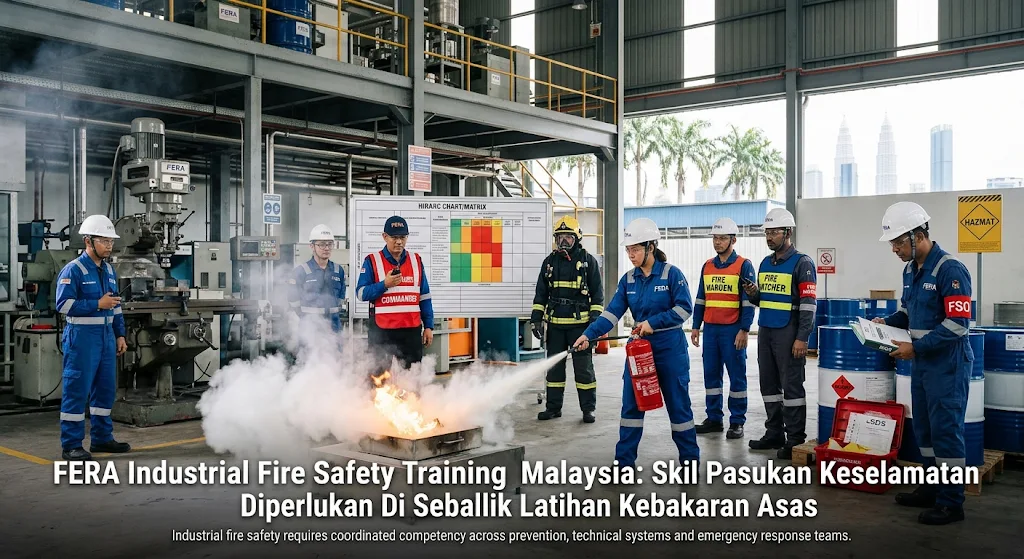
Why Internal Competency Matters
Fire protection equipment alone cannot manage every workplace hazard.
Employees need to understand:
- What hazards exist
- Which controls are required
- Who is responsible
- What needs to be reported
- When work should stop
- When emergency response should begin
- When specialist assistance is required
Training helps convert procedures into practical workplace decisions.
Build a Connected Industrial Fire Safety System
A stronger programme connects different areas of competency.
FSM and FSO personnel provide structured oversight.
Fire Watchers support hot-work controls.
HIRARC helps identify and assess hazards.
SDS knowledge strengthens chemical awareness.
ERT members prepare for emergency response.
NFPA training provides deeper technical knowledge.
Facilities and maintenance teams help keep critical systems ready.
These areas should support one another rather than operate independently.
Develop Industrial Fire Safety Competency with FERA
Every industrial workplace has a different risk profile.
The strongest training pathway therefore depends on the actual work, hazards, systems and emergency responsibilities within the organisation.
FERA provides training across fire safety, emergency response, workplace risk, HAZMAT and specialised NFPA standards.
Explore FERA’s available training programmes and NFPA Standards Training.
Organisations unsure where to begin should first identify their key workplace hazards and the personnel responsible for managing them.
Training can then be selected around actual competency requirements.
Explore FERA’s NFPA Standards Training programmes for the available technical learning pathways.
For the current December 2026 intake, contact FERA Training Center to confirm programme suitability, availability and registration.
Phone: 012-2730 893
Email: [email protected] or
WhatsApp FERA
Conclusion
Industrial fire safety training should extend beyond one general fire safety course.
Different employees manage different hazards.
FSMs and FSOs may need management and technical awareness.
Fire Watchers need hot-work competency.
ERT members require practical emergency-response capability.
Employees working with hazardous substances need chemical safety awareness.
Electrical and facility personnel may require specialised technical knowledge.
A role-based competency strategy helps organisations strengthen prevention, monitoring and emergency preparedness.
It also prepares safety teams to identify less obvious industrial risks.
One important example is combustible dust, where ordinary production activities can create hidden fire and explosion hazards if dust accumulation, ignition sources and work practices are not properly controlled.
Questions & Answers
What is industrial fire safety training?
Industrial fire safety training develops competency for hazards found in factories, plants, warehouses and other complex workplaces.
Is basic fire safety training enough for factories?
Basic training provides an important foundation, but employees with specialised roles may require additional competency.
What training can FSM and FSO personnel take next?
Possible pathways include NFPA, ERT, HAZMAT, HIRARC, Fire Watcher, first aid and other specialist programmes depending on workplace responsibilities.
Why is Fire Watcher training important?
Fire Watchers help monitor hot work for changing fire hazards and unsafe conditions.
How does HIRARC support industrial fire safety?
HIRARC helps organisations identify hazards, assess risks and select suitable controls before incidents occur.
Why is SDS knowledge important?
SDS information helps workplace teams understand chemical hazards, storage, PPE, firefighting measures and emergency response.
Why is NFPA training useful for industrial workplaces?
NFPA training can strengthen technical knowledge in areas such as electrical safety, water-based fire protection and fire alarm systems.
Why is combustible dust a fire safety concern?
Certain fine combustible materials can create serious fire or explosion hazards when dust accumulates or becomes airborne near an ignition source.