

Appointing a certified Fire Safety Manager (FSM) satisfies a Bomba compliance requirement but it only solves half the problem. The other half is ensuring your FSM actually performs the full scope of duties that Malaysian law requires, day in and day out, throughout the year.
Many buildings in Malaysia have a certified FSM on paper but fail Bomba inspections because the role is treated as a title rather than an active function. Inspectors do not simply check whether an FSM exists they audit records, review drill documentation, inspect maintenance logs, and verify that the OKK structure is genuinely operational. A passive FSM appointment protects nobody.
This guide provides a complete breakdown of Fire Safety Manager responsibilities under Malaysian law, structured as a practical checklist that every FSM, building manager, and facilities team can use to assess their current compliance position and identify gaps before the next Bomba inspection arrives.

The Legal Basis for FSM Responsibilities in Malaysia
Before diving into the checklist, understanding where FSM responsibilities come from matters. Three pieces of legislation define what an FSM must do in Malaysia:
The Fire Services Act 1988 establishes Bomba’s authority over fire safety in designated premises and empowers Bomba to audit and enforce FSM responsibilities during Fire Certificate inspections. Under this Act, the FSM is the building’s primary fire safety accountable person the individual Bomba holds responsible for the building’s fire safety outcomes.
The Fire Services (Fire Certificate) Amendment Regulations 2020 codified OKK establishment and FSM appointment as mandatory conditions for Fire Certificate validity. Specifically, the amended regulations define the minimum OKK structure, the FSM’s role within it, and the documentation requirements that Bomba audits during inspections.
OSHA 1994, under Section 15, places an independent obligation on employers to ensure the safety and health of all employees including providing trained safety personnel, documented emergency procedures, and regular safety training. DOSH can enforce these obligations separately from Bomba, meaning FSM non-compliance potentially triggers enforcement from two regulatory bodies simultaneously.
Key Point: FSM responsibilities in Malaysia are not industry guidelines or best practice recommendations. They are statutory obligations defined by the Fire Services Act 1988, the 2020 amendment regulations, and OSHA 1994. Failing to fulfil them creates legal exposure — not just audit risk.
The Complete Fire Safety Manager Responsibilities Checklist
The following checklist covers every core FSM responsibility under Malaysian law and Bomba’s inspection framework. Use it to assess your current position, identify gaps, and build your FSM’s annual compliance calendar.
1. Establish and Maintain the OKK Structure
The FSM’s first and foundational responsibility is building and maintaining a compliant Organisasi Keselamatan Kebakaran (OKK) — the Fire Safety Organisation that the 2020 amendment regulations require for every designated premises.
Specifically, the FSM must ensure the OKK maintains the following minimum composition at all times:
- One certified FSM that is, themselves with a current, valid certification from the Director General of JBPM
- A minimum of three certified Fire Safety Officers (FSO) with current, valid certifications
- A trained Emergency Response Team (ERT) in sufficient numbers to cover the building’s occupancy and operational requirements
- Trained fire wardens covering every floor and zone during all operational hours
Beyond simply appointing OKK members, the FSM must document the full OKK structure — names, roles, certification dates, and expiry dates — and keep this documentation current. Furthermore, the FSM must track certification renewal dates for every OKK member and arrange timely renewals before any certification lapses.
OKK checklist:
- OKK composition document current and accurate
- All FSM, FSO, ERT, and fire warden certifications valid and not approaching expiry
- OKK structure covers all floors, zones, and operational shifts
- Replacement plan in place for any OKK member who resigns or is absent

2. Develop, Maintain and Test the Fire Emergency Response Plan (FERP)
The Fire Emergency Response Plan commonly called the FERP is the master document that defines exactly what happens during a fire emergency in the building. Developing it is one of the FSM’s most critical responsibilities, and maintaining it is an ongoing obligation throughout the year.
A compliant FERP must cover:
- Primary and secondary evacuation routes for every floor and zone
- Assembly point locations and headcount procedures
- Roles and responsibilities of every OKK member during an emergency
- Procedures for alerting Bomba (dial 994) and other emergency services
- Communication protocols between the FSM, FSOs, fire wardens, and ERT
- Procedures for assisting mobility-impaired occupants
- Shut-down procedures for critical building systems during evacuation
- Post-evacuation procedures accounting for all occupants, liaising with Bomba on arrival
Additionally, the FSM must review and update the FERP at least annually and immediately following any significant change to the building renovation, layout change, change of tenancy, or change in occupancy pattern. Consequently, a FERP that accurately described the building two years ago may no longer reflect current reality and therefore fails to meet the standard Bomba inspectors apply.
FERP checklist:
- FERP documented, dated, and accessible to all OKK members
- FERP reviewed and updated within the past 12 months
- FERP updated following any building modification or tenancy change
- All OKK members familiar with their specific FERP roles
- Copies of FERP accessible at key locations — security post, FSM office, assembly point
3. Plan and Conduct Fire Drills
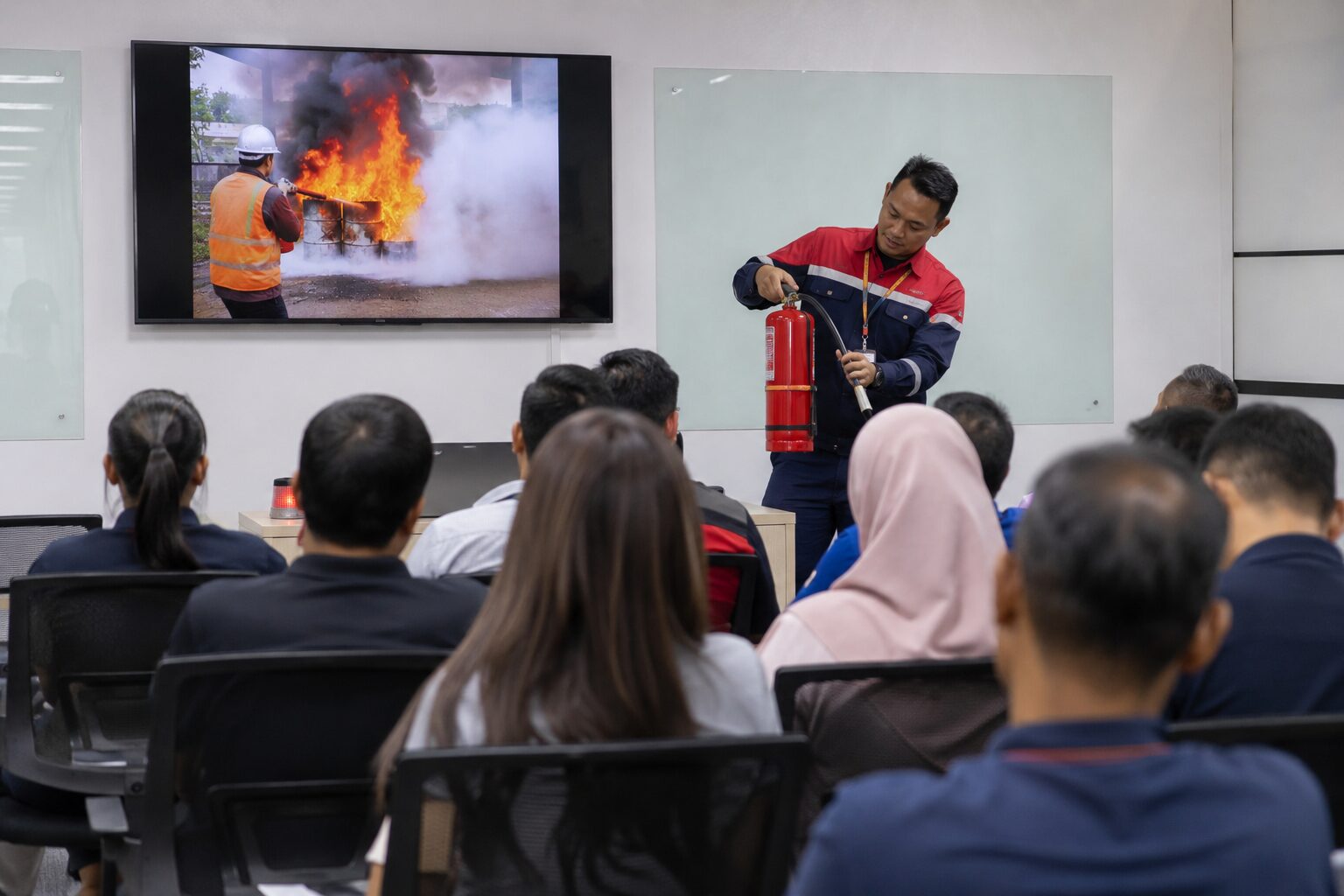
Fire drills are the practical test of everything the FERP describes and Bomba treats drill records as primary evidence of an active, functional fire safety management system. Planning, executing, and documenting drills is therefore one of the FSM’s most visible compliance responsibilities.
Under Bomba’s requirements, most designated premises must conduct at least one full fire evacuation drill annually. High-risk premises including buildings under CIMAH 1996, hospitals, and premises storing hazardous materials must conduct drills at least twice annually.
A compliant fire drill must:
- Involve all building occupants, not just selected staff or the OKK team
- Test primary and secondary evacuation routes
- Verify assembly point procedures and headcount accuracy
- Assess the coordination between FSOs, fire wardens, and the ERT
- Test communication between the FSM and Bomba notification procedures
After each drill, the FSM must complete a formal drill report documenting the date, number of participants, evacuation time, problems identified, and corrective actions planned. Bomba inspectors specifically request drill reports a missing or incomplete record raises immediate compliance concerns.
Fire drill checklist:
- Minimum one full drill conducted and documented within the past 12 months
- Drill involved all building occupants, not selected participants only
- Drill report completed — date, participants, evacuation time, observations
- Corrective actions from previous drill documented and implemented
- Next drill scheduled and communicated to OKK team
4. Inspect and Maintain All Fire Protection Systems
The FSM carries direct responsibility for ensuring every fire protection system in the building stays operational and properly maintained. This responsibility does not transfer to the building contractor, the equipment supplier, or the maintenance team the FSM must oversee it and maintain the records that prove it.
Fire protection systems the FSM must manage include:
- Suppression systems — sprinkler systems, gaseous suppression systems, kitchen suppression systems — must be inspected, tested, and serviced on schedule
- Detection and alarm systems — smoke detectors, heat detectors, manual call points, and the main fire alarm panel — must be tested regularly and faults rectified immediately
- Emergency lighting — all emergency lighting must function correctly during a mains power failure — tested monthly for function and annually for full duration
- Evacuation signage — all exit signs, directional signage, and assembly point markers must be visible, lit, and unobstructed at all times
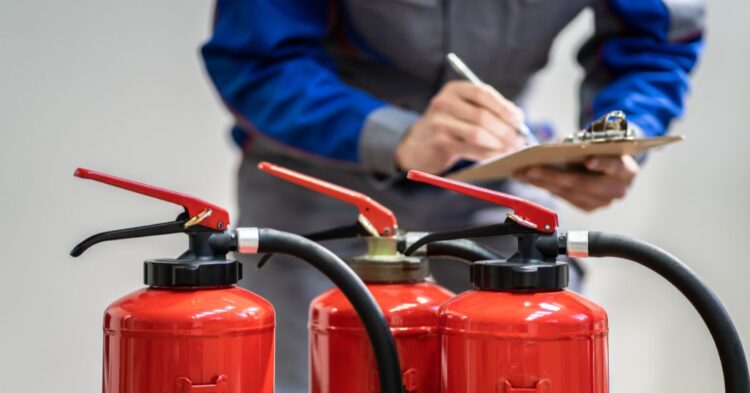
- Portable fire fighting equipment — all fire extinguishers and hose reels must be inspected monthly and serviced annually by a qualified contractor
Furthermore, the FSM must maintain service records for every system including contractor details, service dates, findings, and remedial actions taken. Bomba inspectors review these records during audits, and gaps in service history raise immediate compliance concerns.
Fire protection systems checklist:
- Sprinkler and suppression systems serviced within the past 12 months
- Alarm and detection system tested — faults logged and rectified
- Emergency lighting tested monthly — annual full-duration test completed
- All exit signs and evacuation signage visible and unobstructed
- All fire extinguishers inspected monthly — annual service certificate current
- Hose reels inspected and flow-tested within the past 12 months
- All service records filed and accessible for Bomba inspection
5. Conduct Fire Risk Assessments
A fire risk assessment is a systematic process of identifying fire hazards within the building, evaluating the risk they create, and implementing controls to reduce that risk to an acceptable level. The FSM must conduct or commission a fire risk assessment and ensure findings drive actual changes — not simply documentation.
Fire risk assessments for Malaysian buildings must cover:
- Sources of ignition — electrical systems, cooking equipment, industrial processes, human behaviour
- Sources of fuel — stored materials, furnishings, waste accumulation, flammable liquids
- Sources of oxygen — ventilation systems, open windows, air conditioning
- People at risk — building occupants, visitors, mobility-impaired individuals, shift workers
- Existing fire protection measures and their adequacy
- Emergency procedures and evacuation arrangements
The FSM must review the fire risk assessment annually and immediately following any significant change to the building, its use, or its occupancy. Additionally, following any fire incident or near-miss, the FSM must conduct a post-incident risk review and update the assessment accordingly.
Fire risk assessment checklist:
- Current fire risk assessment document exists and is dated within the past 12 months
- Assessment covers all areas, floors, and zones of the building
- Risk controls identified in previous assessment have been implemented
- Assessment updated following any building modification or incident
- High-risk areas chemical storage, kitchen, plant room specifically addressed
6. Manage Fire Safety Training for All Building Occupants
The FSM carries overall responsibility for ensuring that every person who regularly occupies the building receives appropriate fire safety training. This goes beyond the OKK team it includes all employees, contractors, regular vendors, and in some cases frequent visitors.
Specifically, the FSM must ensure:
- All staff receive basic fire safety awareness training covering fire prevention, alarm procedures, evacuation routes, and their role during an emergency
- New employees and contractors receive fire safety induction before starting work in the building
- Fire wardens receive dedicated warden training covering their specific evacuation leadership responsibilities
- ERT members receive structured emergency response training appropriate to the building’s risk profile
- Training records are maintained for every participant — dates, content covered, and trainer details
For buildings that handle hazardous materials, the FSM must also ensure relevant staff receive HAZMAT awareness training covering safe handling, emergency response, and evacuation procedures specific to HAZMAT incidents.
Additionally, the FSM must ensure all training programmes meet the standards that DOSH and Bomba apply during inspections. Training delivered by unrecognised providers or without proper documentation does not satisfy the requirement.
Fire safety training checklist:
- All staff completed fire safety awareness training within the past 12 months
- New staff received fire safety induction before starting work
- Fire wardens completed dedicated warden training — certifications current
- ERT members completed structured emergency response training
- Training records maintained — dates, participants, content, trainer
- HAZMAT-specific training completed for staff in relevant roles
7. Maintain Complete Fire Safety Records
Bomba inspectors audit records during every Fire Certificate inspection. Incomplete, missing, or outdated records create compliance findings — even if the physical fire safety systems are fully operational. Record maintenance is therefore one of the most practically important FSM responsibilities.
The FSM must maintain current, accurate, and immediately accessible records covering:
- OKK composition — names, roles, certifications, and expiry dates for all members
- Fire drill records — dates, participant numbers, evacuation times, observations, corrective actions
- Fire safety system inspection and service logs — all systems, all service dates, all findings
- Fire risk assessment — current version with revision history
- FERP — current version with revision history and distribution list
- Staff fire safety training records — all participants, all sessions
- Incident and near-miss reports — dates, descriptions, investigations, corrective actions
- Fire Certificate and all conditions attached to it
- Correspondence with Bomba — inspection reports, notices, and responses
Furthermore, records must be organised so that the FSM can produce any document within minutes during an unannounced Bomba inspection. A disorganised record system even if every document technically exists creates a poor impression and may result in adverse inspection findings.
Records checklist:
- OKK records current — all certifications valid, expiry dates tracked
- Drill records filed — past three years minimum
- All system service records filed — contractor details, dates, findings
- Current FERP on file — revision history maintained
- Training records filed — all staff, all sessions
- Fire Certificate on file — conditions reviewed and acted upon
- Incident reports filed — all incidents and near-misses documented
8. Liaise Directly with Bomba
The FSM serves as the building’s primary point of contact with Bomba — before, during, and after Fire Certificate inspections, and in the event of any fire incident or enforcement action.
Specifically, the FSM must:
- Respond promptly to all Bomba inspection notices and attend inspections personally
- Present all required documentation to inspectors clearly and without delay
- Respond to any inspection findings within the timeframe specified by Bomba
- Submit Fire Certificate renewal applications on time a lapsed Fire Certificate creates immediate legal exposure
- Notify Bomba of any significant change to the building that affects its fire safety profile
- Coordinate with the local Bomba district office on any community fire safety obligations tied to the premises
- In the event of a fire incident, cooperate fully with Bomba’s post-incident investigation
Maintaining a professional, cooperative relationship with the local Bomba district office is practically valuable beyond the formal compliance requirements. FSMs who are known to Bomba officers as proactive and responsive consistently experience smoother inspections and more constructive enforcement relationships.
Bomba liaison checklist:
- Fire Certificate renewal date tracked application submitted on time
- All previous Bomba inspection findings addressed and documented
- Bomba contact details for local district office on file
- FSM contact details registered with local Bomba district office
- Post-incident notifications and cooperation requirements understood
FSM Responsibilities at a Glance — Annual Calendar
Building an annual compliance calendar helps ensure no FSM responsibility falls through the gaps:
| Month | Key FSM Actions |
| January | Annual fire safety training all staff · Review and update FERP |
| February | Fire risk assessment review · Update OKK records and certification expiry tracker |
| March | Fire warden refresher training · ERT drill |
| April | Full fire evacuation drill · Document and file drill report |
| June | Mid-year fire protection system inspection check · Review service records |
| July | New staff fire safety induction review · Update training records |
| September | Second fire drill (high-risk premises) · Review corrective actions from April drill |
| October | Fire Certificate renewal check — confirm upcoming expiry date |
| November | Annual compliance review — all records current and accessible |
| December | Review and update Fire Emergency Response Plan for next year |
What Happens When an FSM Fails to Fulfil These Responsibilities?
An FSM who holds certification but does not actively perform these duties creates the same compliance exposure as a building with no FSM at all. The consequences of FSM responsibility failure include:
- Adverse Bomba inspection findings and enforcement notices
- Fire Certificate non-renewal or suspension
- Stop-use orders preventing the building from operating
- Criminal prosecution under the Fire Services Act 1988 for building owners
- Independent enforcement by DOSH under OSHA 1994
- Increased insurance liability or voided coverage in the event of a fire incident
Beyond the legal and financial consequences, a building whose FSM has not maintained active fire safety management is genuinely less safe. Evacuation failures, unserviced suppression systems, and untrained staff produce real casualties in real fire emergencies.
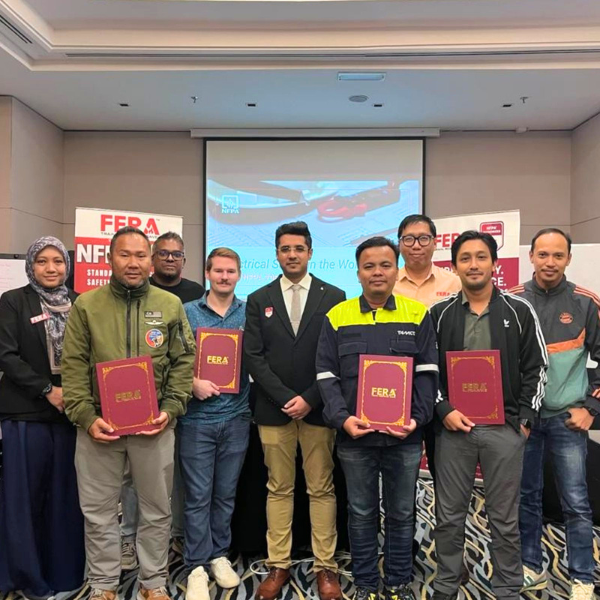
Get Your FSM Trained and Ready with FERA
FERA Training Center delivers FSM and FSO certification programmes that prepare fire safety managers to fulfil every responsibility on this checklist not just to pass an exam, but to actively manage fire safety in Malaysian buildings with confidence and competence.
Our trainers bring real Bomba inspection experience to every session. Participants leave knowing exactly what Bomba audits, what records to maintain, and how to build and run an OKK that genuinely works.
We also deliver:
- Fire Safety Officer (FSO) training
- Fire warden training
- Emergency Response Team (ERT) training
- HAZMAT training — NFPA 472
- NFPA-accredited fire safety certification
Your entire OKK can be built and certified through one trusted provider, HRDCorp registered and fully claimable.
WhatsApp: 019-303 4001
Email: [email protected]
Website: fera.com.my/fsm-fso-training
Frequently Asked Questions — FSM Responsibilities Malaysia
Q1: What are the main responsibilities of a Fire Safety Manager in Malaysia?
The FSM’s core responsibilities include establishing and maintaining the OKK structure, developing and updating the FERP, planning and conducting fire drills, managing all fire protection system maintenance, conducting fire risk assessments, overseeing fire safety training for all building occupants, maintaining complete compliance records, and liaising directly with Bomba during inspections and Fire Certificate renewals.
Q2: How often must an FSM conduct a fire drill in Malaysia?
Most designated premises must conduct at least one full fire evacuation drill annually. High-risk premises including CIMAH-regulated sites, hospitals, and buildings storing hazardous materials must conduct drills at least twice annually. Every drill must be documented with a formal drill report for Bomba audit purposes.
Q3: What records must an FSM maintain for Bomba inspections?
The FSM must maintain OKK composition records, fire drill reports, fire protection system service logs, the current FERP, staff training records, fire risk assessment documents, incident reports, the current Fire Certificate, and all correspondence with Bomba. All records must be current, organised, and immediately accessible during an unannounced inspection.
Q4: Can the FSM delegate responsibilities to the FSO?
Yes, the FSM can delegate operational tasks daily inspections, drill coordination support, record-keeping to FSOs. However, the FSM retains overall legal accountability for the building’s fire safety outcomes and cannot delegate that accountability. If a delegated task is not performed, the FSM is still the person Bomba holds responsible.
Q5: How does FERA’s FSM training prepare participants for these responsibilities?
FERA’s FSM training programme directly addresses every responsibility on this checklist FERP development, drill planning and documentation, fire risk assessment methodology, OKK management, fire protection system oversight, and Bomba inspection preparation. Participants train with former Bomba officers who bring real inspection experience to every session.