
Understanding Fire Classes and the Correct Fire Extinguisher
Fire emergencies can happen anywhere offices, factories, warehouses, shopping malls, hospitals, and even at home. While having fire extinguishers installed is an essential safety measure, knowing which extinguisher to use for each type of fire is equally important.
Using the wrong extinguisher may not only fail to control the fire but can also make the situation significantly worse, putting lives and property at greater risk.
This guide explains the different fire classes and the correct fire extinguisher for each one, helping individuals and organisations improve their emergency preparedness and workplace fire safety.
What Are Fire Classes?
Fire classes are categories used to identify the type of fuel involved in a fire. Different fuels require different extinguishing methods.
Understanding these classifications allows firefighters, Emergency Response Teams (ERT), Fire Wardens, and employees to respond safely during emergencies.
Class A Fires
What Causes Class A Fires?
Class A fires involve ordinary combustible materials such as:
- Wood
- Paper
- Cardboard
- Cloth
- Rubber
- Plastics
These are among the most common fires found in offices, schools, warehouses, hotels, and residential buildings.
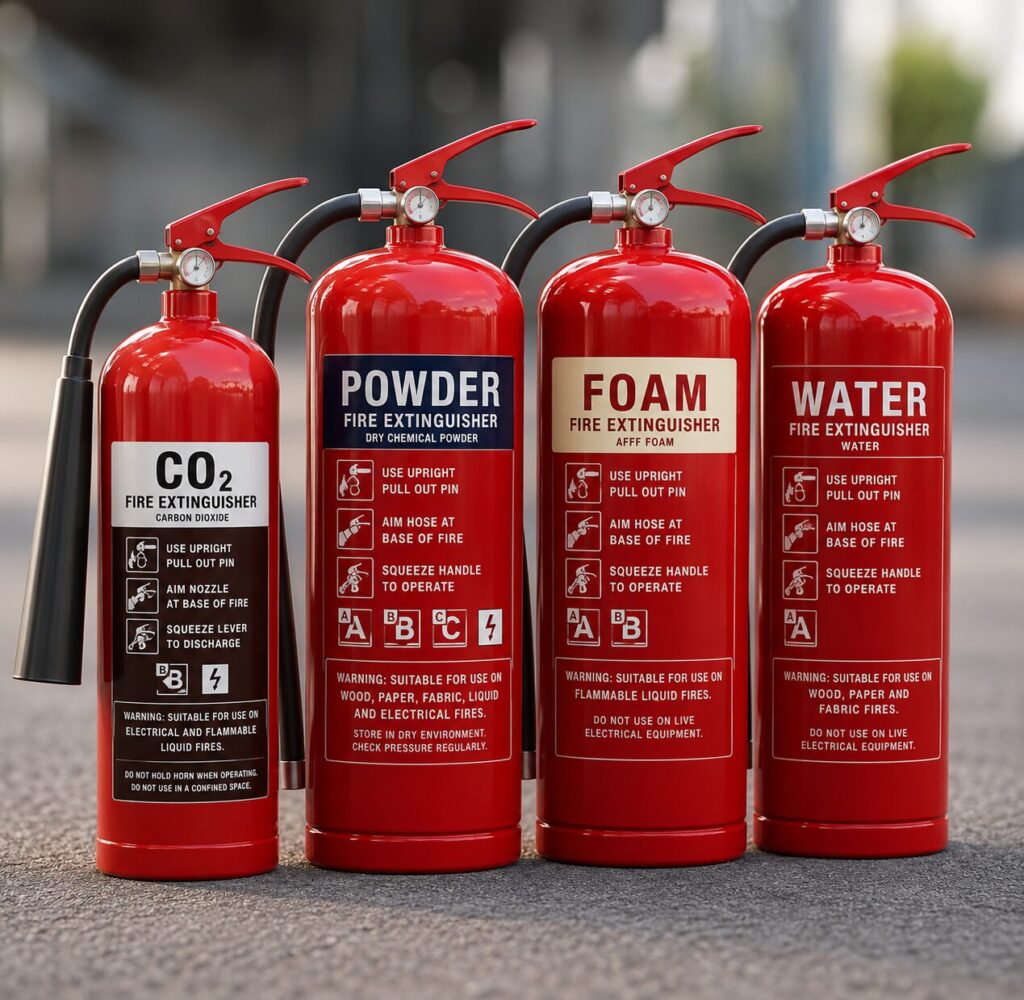
Suitable Fire Extinguishers
– Water
– Foam
– ABC Dry Powder
Class B Fires
What Causes Class B Fires?
Class B fires involve flammable liquids, including:
- Petrol
- Diesel
- Paint
- Solvents
- Alcohol
- Thinners
- Oils
These fires are common in:
- Manufacturing plants
- Automotive workshops
- Chemical facilities
- Fuel storage areas
Suitable Fire Extinguishers
– Foam
– Dry Powder
– Carbon Dioxide (CO₂)
Never use water on flammable liquid fires, as it can spread the burning liquid and increase the fire.
Class C Fires
What Causes Class C Fires?
Class C fires involve flammable gases such as:
- LPG
- Butane
- Propane
- Methane
These fires often occur due to gas leaks or damaged gas pipelines.
Suitable Fire Extinguishers
– Dry Powder
The gas supply should always be isolated before attempting to extinguish the fire whenever it is safe to do so.
Class D Fires
What Causes Class D Fires?
Class D fires involve combustible metals, including:
- Magnesium
- Titanium
- Sodium
- Potassium
- Aluminium powder
These fires are extremely dangerous because certain metals react violently with water.
Suitable Fire Extinguisher
– Special Dry Powder (Class D)
Never use water, foam, or CO₂ extinguishers on combustible metal fires.
Class F Fires
What Causes Class F Fires?
Electrical fires originate from:
- Electrical panels
- Switchboards
- Servers
- Wiring
- Electrical equipment
- Machinery
Although electrical fires are not officially classified as a separate fire class under some international standards, the term “Class E” is still widely used throughout Malaysia for practical fire safety purposes.
Suitable Fire Extinguishers
– Carbon Dioxide (CO₂)
– Dry Powder
Water-based extinguishers should never be used on live electrical equipment due to the risk of electric shock.
Class F Fires
What Causes Class F Fires?
Class F fires involve cooking oils and fats commonly found in:
- Commercial kitchens
- Restaurants
- Hotels
- Food courts
- Industrial kitchens
Cooking oil fires burn at extremely high temperatures and can reignite easily.
Suitable Fire Extinguisher
– Wet Chemical
Never use water on cooking oil fires because it can cause a dangerous fireball and rapidly spread the flames.
Fire Class and Suitable Fire Extinguisher Table
| Fire Class | Fuel Source | Suitable Extinguisher |
|---|---|---|
| Class A | Paper, Wood, Cloth | Water, Foam, ABC Powder |
| Class B | Flammable Liquids | Foam, CO₂, Dry Powder |
| Class C | Flammable Gases | Dry Powder |
| Class D | Combustible Metals | Class D Powder |
| Class E | Electrical Equipment | CO₂, Dry Powder |
| Class F | Cooking Oil & Fat | Wet Chemical |
Why Choosing the Correct Fire Extinguisher Matters
Selecting the appropriate extinguisher helps to:
- Control small fires before they spread
- Prevent injuries during emergency response
- Reduce property damage
- Protect critical business operations
- Improve compliance with workplace fire safety requirements
- Increase confidence during emergencies
Having the correct extinguisher can make the difference between a minor incident and a major disaster.
Proper Fire Extinguisher Usage: Remember PASS
Whenever you need to operate a portable fire extinguisher, remember the PASS technique.
Pull
Pull the safety pin.
Aim
Aim the nozzle at the base of the fire.
Squeeze
Squeeze the operating handle.
Sweep
Sweep from side to side until the fire is extinguished.
Only attempt to extinguish a fire if it is safe to do so and you have received proper fire safety training.
Fire Safety Training Saves Lives
Owning fire extinguishers is only one part of workplace fire protection. Employees should also understand:
- Fire classes
- Fire extinguisher selection
- Emergency evacuation
- Fire alarm procedures
- Emergency Response Team (ERT) responsibilities
- Fire warden duties
- Initial firefighting techniques
Regular training ensures everyone knows how to respond quickly and safely during an emergency.
Learn Fire Safety with FERA Training Center
At FERA Training Center, we provide practical and industry-focused fire safety training delivered by experienced instructors, including former firefighters.
Our training programmes include:
- Basic Fire Fighting
- Fire Warden Training
- Emergency Response Team (ERT)
- Fire Drill Management
- Fire Safety Manager (FSM)
- Fire Safety Officer (FSO)
- Active & Passive Fire Protection System
- Fire Risk Assessment
Our programmes combine classroom learning with realistic practical exercises to build confidence and competence during real emergencies.
What fire extinguisher should be used for electrical fires?
A Carbon Dioxide (CO₂) or Dry Powder extinguisher should be used for electrical fires. Never use water on live electrical equipment.
Can one fire extinguisher be used for every fire?
No. Different fire classes require different extinguishing agents. Using the wrong extinguisher can increase the danger.
What is the most common fire extinguisher in workplaces?
ABC Dry Powder extinguishers are commonly installed because they are effective against multiple fire classes, including Class A, B, and electrical fires.
How often should employees receive fire safety training?
Most organisations should conduct fire safety awareness, fire drills, and practical extinguisher training regularly, or whenever there are significant changes to workplace risks or personnel.
Understanding fire classes is the first step toward preventing fire emergencies. The next step is ensuring your team has the practical skills to respond safely and effectively.
FERA Training Center offers comprehensive fire safety programmes delivered by experienced instructors with real operational firefighting experience. Whether you need Basic Fire Fighting, Emergency Response Team (ERT), Fire Warden, or Fire Safety Manager (FSM) and Fire Safety Officer (FSO) training, we are ready to support your organisation.