
How to Use a First Aid Kit During Emergencies
Introduction
Emergencies can happen anytime at the workplace, at home, during travel, or in public areas. Knowing how to use a first aid kit during emergencies can help reduce injuries, prevent complications, and even save lives before professional medical help arrives.
A properly stocked first aid kit combined with basic emergency response knowledge allows individuals to respond quickly and effectively during accidents, burns, cuts, bleeding, fractures, or sudden medical emergencies.
This guide explains the essential steps, proper usage, and important items inside a first aid kit to help you stay prepared during critical situations.
Why First Aid Knowledge is Important During Emergencies
First aid is the immediate assistance given to an injured or ill person before medical professionals arrive. Quick action during emergencies can:
- Reduce the severity of injuries
- Prevent infections and complications
- Stabilize victims until ambulance arrives
- Improve survival chances
- Increase workplace and public safety readiness
Whether in offices, factories, schools, hotels, or construction sites, proper first aid response is an important part of emergency preparedness.
What Should Be Inside a First Aid Kit?
A standard first aid kit should contain essential medical supplies for handling common emergencies.
Basic First Aid Supplies
Typical items include:
- Adhesive bandages
- Sterile gauze pads
- Medical tape
- Antiseptic wipes
- Alcohol swabs
- Disposable gloves
- Scissors
- Tweezers
- CPR face shield
- Burn dressing
- Elastic bandage
- Eye wash solution
- Instant cold pack
- Triangular bandage
- First aid manual
For workplaces and industrial environments, additional emergency equipment may also be required depending on risk exposure.
Steps on How to Use a First Aid Kit During Emergencies
1. Assess the Situation Safely
Before helping the victim:
- Check for dangers such as fire, electricity, chemicals, or traffic
- Ensure the area is safe for both rescuer and victim
- Call emergency services if necessary
Never place yourself in danger while providing first aid.
2. Wear Protective Gloves
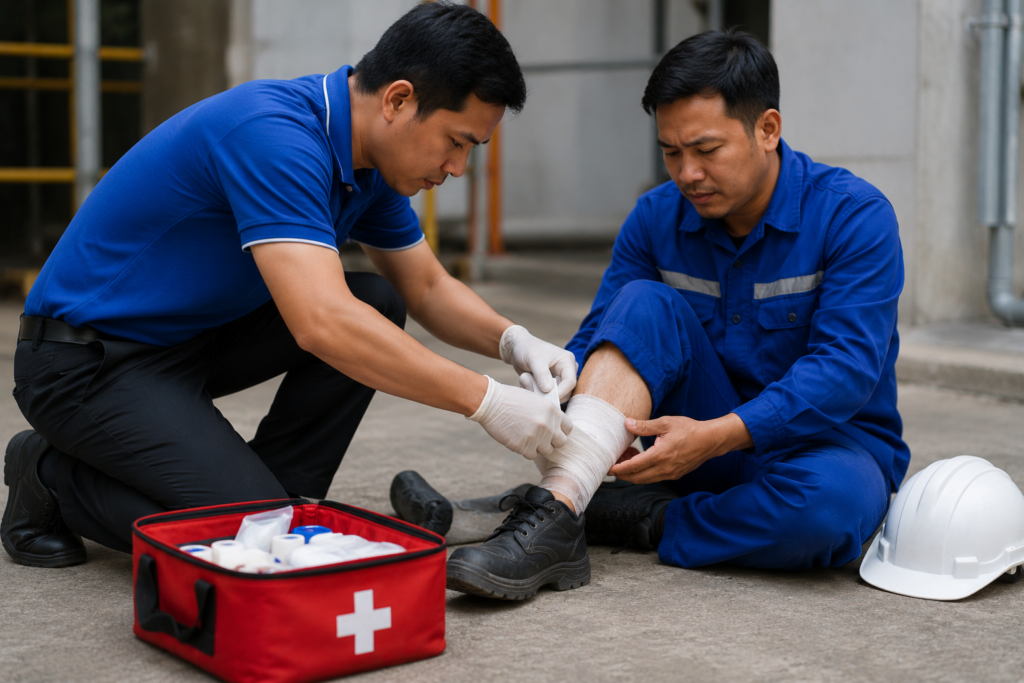
Always wear disposable gloves from the first aid kit to reduce the risk of infection or contamination.
This is especially important when dealing with:
- Bleeding
- Open wounds
- Bodily fluids
- Burns
3. Stop Bleeding
For cuts or wounds:
- Apply direct pressure using sterile gauze
- Elevate the injured area if possible
- Secure dressing using bandage or tape
Seek medical attention if bleeding is severe or does not stop.
4. Clean and Dress Wounds Properly
Use antiseptic wipes or saline solution to clean minor wounds carefully.
After cleaning:
- Apply antiseptic cream if available
- Cover the wound with sterile dressing
- Secure with medical tape or bandage
Proper wound care helps prevent infection.
5. Treat Burns Correctly
For minor burns:
- Cool the burn under running water for at least 10 minutes
- Apply burn dressing from the first aid kit
- Avoid applying ice or toothpaste
Serious burns require immediate medical assistance.
6. Manage Sprains or Fractures
Use elastic or triangular bandages to immobilize the injured area temporarily.
Avoid moving victims unnecessarily if fractures are suspected.
7. Perform CPR if Necessary
If the victim is unconscious and not breathing:
- Call emergency services immediately
- Use CPR barrier mask from the kit
- Start CPR if trained
Immediate CPR can significantly improve survival during cardiac emergencies.
Common Emergency Situations Requiring a First Aid Kit
A first aid kit can be used during:
- Workplace accidents
- Fire emergencies
- Cuts and bleeding injuries
- Burns and scalds
- Fainting incidents
- Sports injuries
- Chemical exposure
- Minor fractures
- Road accidents
Having quick access to a first aid kit improves emergency response efficiency.
Importance of First Aid Training
Owning a first aid kit alone is not enough. Individuals should also attend proper first aid and CPR training to gain confidence and practical skills during emergencies.
Professional training helps participants learn:
- CPR and AED usage
- Bleeding control
- Emergency assessment
- Burn management
- Choking response
- Workplace emergency procedures
Proper training creates safer workplaces and communities.
How Often Should First Aid Kits Be Checked?
First aid kits should be inspected regularly to ensure:
- Expired items are replaced
- Supplies are complete
- Equipment remains clean and usable
- Emergency contact numbers are updated
Workplaces should conduct routine checks as part of safety compliance and emergency preparedness programs.
Conclusion
Knowing how to use a first aid kit during emergencies is an essential life-saving skill. Fast and proper response can reduce injury severity, stabilize victims, and improve safety outcomes before professional help arrives.
Whether at home, in offices, industrial facilities, or public spaces, emergency preparedness begins with proper first aid knowledge, accessible medical supplies, and practical hands-on training.
Investing in first aid awareness today could help save lives tomorrow.
Equip your team with essential life-saving skills through professional first aid and emergency response training by FERA Training Center.
Hands-On Practical Training
CPR & AED Certification
Workplace Emergency Preparedness
HRD Corp Claimable Courses
Conducted by Experienced Industry Trainers
Email: [email protected]
WhatsApp: https://wa.me/60122730893
Visit: FERA Training Center Official Website