

One of the most common compliance mistakes Malaysian employers make is assuming that appointing a Safety Officer covers their fire safety obligations or conversely, that a certified Fire Safety Manager (FSM) removes the need for a Safety Officer. Both assumptions are wrong, and both create real compliance gaps that DOSH and Bomba can each independently enforce.
The Fire Safety Manager and the Safety Officer are two distinct roles, defined under two different pieces of legislation, enforced by two different regulatory bodies, and covering two different scopes of workplace safety. In many Malaysian workplaces particularly factories, large commercial buildings, and industrial facilities both roles are legally required simultaneously.
This guide breaks down exactly what separates the FSM from the Safety Officer, what each role legally requires, who needs to appoint them, and how both roles work together to keep a Malaysian workplace genuinely safe and fully compliant.
The Core Distinction — Two Roles, Two Regulators, Two Legal Frameworks
Before comparing specific duties and qualifications, understanding the fundamental difference in how these two roles sit within Malaysian law matters most.
The Fire Safety Manager (FSM) exists under the Fire Services Act 1988 and the Fire Services (Fire Certificate) Amendment Regulations 2020. The FSM’s appointment is a condition of Fire Certificate validity for designated premises. Specifically, Bomba the Fire and Rescue Department of Malaysia creates, regulates, and enforces the FSM requirement.
The Safety Officer (SO), formally referred to in Malaysian law as a Safety and Health Officer (SHO), exists under the Occupational Safety and Health Act 1994 (OSHA 1994) and the Occupational Safety and Health (Safety and Health Officer) Regulations 1997. The SHO’s appointment is a condition of OSHA 1994 compliance for qualifying workplaces. Specifically, DOSH the Department of Occupational Safety and Health creates, registers, and enforces the SHO requirement.
In practical terms, this means:
- A building can fail a Bomba inspection because it has no FSM regardless of whether it has a Safety Officer
- A workplace can receive a DOSH enforcement notice because it has no Safety Officer regardless of whether it has a certified FSM
- Both failures can occur simultaneously and each regulatory body enforces independently
Key Point: The FSM and the Safety Officer are not substitutes for each other. They serve different functions, answer to different regulators, and fulfil different legal requirements. In many Malaysian workplaces, both appointments are compulsory at the same time.
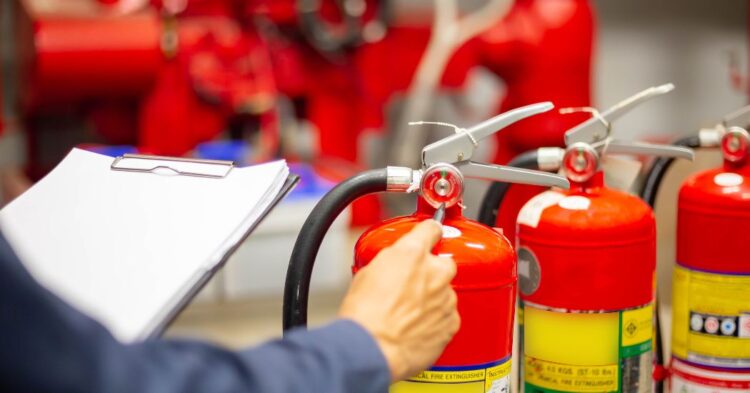
What Is a Fire Safety Manager (FSM)?
A Fire Safety Manager carries statutory responsibility for managing the complete fire safety system of a designated premises in Malaysia. The FSM owns and operates the building’s Organisasi Keselamatan Kebakaran (OKK) the Fire Safety Organisation that the 2020 amendment regulations require and answers directly to Bomba for the building’s fire safety outcomes.
The FSM’s scope of responsibility is specifically and exclusively focused on fire safety. Consequently, the FSM does not manage general workplace safety, chemical exposure, machinery hazards, or ergonomic risk unless those hazards directly intersect with fire risk.
Specifically, FSM responsibilities include:
- Developing and maintaining the Fire Emergency Response Plan (FERP)
- Managing all fire protection systems — suppression, detection, emergency lighting, signage
- Planning and conducting fire drills to Bomba standards
- Supervising Fire Safety Officers (FSO) and fire wardens
- Managing Fire Certificate compliance and liaising directly with Bomba
- Conducting fire risk assessments across all building zones
- Maintaining complete fire safety records for Bomba audit
For a full breakdown, read our guide: Fire Safety Manager Responsibilities — Full Checklist for Malaysian Buildings.
What Is a Safety Officer (Safety and Health Officer / SHO)?
A Safety and Health Officer (SHO) commonly called a Safety Officer carries responsibility for managing the broader occupational safety and health (OSH) management system of a workplace under OSHA 1994. The SHO’s scope covers all workplace hazards and risks not just fire and answers to DOSH for OSH compliance outcomes.
The SHO role is significantly broader than the FSM role in terms of hazard coverage. Specifically, the Safety Officer manages:
- Conducting workplace risk assessments across all hazard categories — physical, chemical, biological, ergonomic, and psychosocial
- Developing and implementing the workplace’s OSH management system
- Investigating workplace accidents, incidents, and near-misses
- Ensuring compliance with OSHA 1994, the Factories and Machinery Act 1967, and all relevant subsidiary regulations
- Coordinating Chemical Health Risk Assessments (CHRA) for workplaces with hazardous chemical exposure
- Planning and delivering occupational safety training programmes for all staff
- Liaising with DOSH during inspections, accident investigations, and enforcement actions
- Maintaining the workplace’s OSH records — accident reports, risk assessments, training records, inspection logs
- Advising management on OSH compliance obligations and improvement priorities
In summary, the Safety Officer sees the entire workplace safety picture fire safety forms one component of that picture, not the whole of it.
FSM vs Safety Officer — Direct Comparison
| Fire Safety Manager (FSM) | Safety Officer (SHO) | |
| Governing legislation | Fire Services Act 1988 · Fire Certificate Regulations 2020 | OSHA 1994 · SHO Regulations 1997 |
| Enforcing body | Bomba (JBPM) | DOSH |
| Scope of responsibility | Fire safety only | All workplace OSH hazards |
| Appointment trigger | Designated premises requiring a Fire Certificate | Workplaces with 100+ workers (manufacturing) or 500+ (other sectors), or as directed by DOSH |
| Minimum qualification | Degree in relevant field + FSM certification from JBPM | Diploma or degree in OSH + DOSH registration |
| Certification authority | Director General of JBPM | Director General of DOSH |
| Certification validity | 3 years | Must maintain active DOSH registration |
| Key output | Fire Emergency Response Plan (FERP) · Fire Certificate compliance | OSH Management System · DOSH compliance |
| Supervision | Supervises FSO and fire wardens | Advises management on all safety matters |
| Bomba liaison | Direct — primary Bomba contact | Indirect — only when fire incidents involve OSH investigation |
| Reports to | Building owner / top management | Employer / top management |
| Can one substitute for the other? | No | No |

Who Must Appoint an FSM in Malaysia?
Under the Fire Services (Designated Premises) Order 1998, buildings in the following categories must establish an OKK and appoint a certified FSM:
- Buildings exceeding 18.3 metres in height — office towers, high-rise commercial buildings
- Public assembly buildings — convention centres, cinemas, theatres, places of worship
- Factories and manufacturing plants above specified floor area thresholds
- Warehouses and logistics facilities above specified size thresholds
- Hotels, serviced apartments, and accommodation premises above occupancy thresholds
- Hospitals, private medical centres, and healthcare facilities with inpatient wards
- Educational institutions — universities, colleges, polytechnics, large schools
- Shopping complexes and retail malls
- Premises storing dangerous goods — chemical facilities, LPG depots, petroleum storage
If your building falls within any of these categories and holds or requires a Fire Certificate, FSM appointment is mandatory. For a full breakdown of which buildings qualify, read our guide: Is Your Building Required to Appoint a Fire Safety Manager?
Who Must Appoint a FSO in Malaysia?
Under OSHA 1994 and the SHO Regulations 1997, workplaces must appoint a registered Safety and Health Officer when they meet specific worker threshold criteria:
- Manufacturing sector — workplaces with 100 or more workers must appoint at least one registered SHO
- Other sectors — workplaces with 500 or more workers must appoint at least one registered SHO
- DOSH directive — DOSH can require any workplace to appoint an SHO regardless of worker numbers if the workplace presents a significant hazard profile
Additionally, certain high-risk industries petrochemical, construction, and chemical manufacturing face lower thresholds and additional SHO requirements under sector-specific regulations.
Importantly, the SHO must be registered with DOSH. Registration requires completing an accredited OSH diploma or degree programme and passing DOSH’s registration examination. An individual who holds a safety-related qualification but is not DOSH-registered cannot legally be appointed as the workplace’s SHO.
Can One Person Hold Both the FSM and FSO Roles?
This is one of the most frequently asked questions from Malaysian HR managers and facilities teams and the answer requires careful consideration.
Technically, yes with conditions. Nothing in Malaysian law explicitly prohibits one person from holding both the FSM certification and DOSH registration as a Safety and Health Officer, provided they hold the required qualifications and certifications for both roles independently.
Practically, it depends on building and workplace complexity. In a small-to-medium premises where both roles are relatively straightforward, one competent individual with both certifications can cover both functions. However, in larger or more complex environments, the combined workload of active FSM and SHO duties becomes genuinely unmanageable for one person:
- The FSM must conduct daily fire protection system oversight, manage OKK coordination, and handle Bomba liaison alongside annual drill planning and FERP maintenance
- The SHO must conduct workplace risk assessments across all hazard categories, manage accident investigations, coordinate CHRA processes, and handle DOSH liaison
Attempting to perform both roles actively in a large manufacturing plant, hospital, or shopping complex creates coverage gaps in both functions — and Bomba and DOSH may each independently assess that the individual’s actual performance in their respective role is insufficient.
The practical recommendation: For workplaces above 200 employees or buildings with complex fire safety requirements, appointing separate certified individuals for the FSM and SHO roles is strongly advisable.
How the FSM and FSO Work Together
In workplaces where both roles are present, the FSM and Safety Officer are not competing functions they are complementary ones. Effective collaboration between both roles produces the strongest safety outcomes and the most comprehensive compliance record.

Specifically, effective FSM and SHO collaboration includes:
Joint risk assessment contribution. The SHO conducts the broader workplace risk assessment — including identification of fire hazards as part of the overall hazard picture. The FSM conducts the dedicated fire risk assessment in greater depth. Sharing findings between both roles produces a more complete risk picture than either achieves alone.
Shared training coordination. Both the FSM and SHO carry responsibility for ensuring staff receive appropriate safety training. Coordinating training calendars particularly for fire safety awareness, ERT training, and HAZMAT training avoids duplication and ensures comprehensive coverage without scheduling conflicts.
Unified incident response. When a fire incident or near-miss occurs, both the FSM and SHO carry reporting and investigation responsibilities the FSM to Bomba and the SHO to DOSH. Coordinating the investigation and reporting process ensures consistent information reaches both regulatory bodies.
Combined inspection preparation. Bomba inspects fire safety systems and OKK records. DOSH inspects the broader OSH management system. Both inspections may occur in the same building — sometimes in the same period. A coordinated preparation approach ensures both record sets are current and accessible simultaneously.
Qualifications Required — FSM vs FSO
Both roles require specific, formally recognised qualifications. Here is a side-by-side comparison:
FSM Qualifications
- Bachelor’s degree in fire safety, fire engineering, or a relevant discipline or relevant professional experience in fire safety management
- Completion of an FSM training course through a JBPM-recognised provider such as FERA Training Center
- FSM certification issued by the Director General of JBPM valid for three years
- Renewal through refresher course or examination before certification expiry
Safety and Health Officer Qualifications
- Diploma or degree in occupational safety and health, or a related discipline recognised by DOSH
- Completion of the DOSH SHO registration examination
- Active registration with DOSH — registration must be maintained through continuing professional development (CPD) requirements
- For green book SHO holders — must maintain active status through prescribed CPD hours annually
What Happens If Your Workplace Has Neither?
A workplace that lacks both a certified FSM and a registered Safety Officer when both are legally required faces enforcement from two separate regulatory bodies simultaneously. The compounded consequences include:
- Bomba — Fire Certificate non-renewal, non-compliance notice, stop-use order, and potential prosecution under the Fire Services Act 1988 for the absence of a certified FSM
- DOSH — Enforcement notice, fines of up to RM50,000 per offence, stop-work order, and potential prosecution under OSHA 1994 for the absence of a registered SHO
- Insurance — Commercial property and liability insurers increasingly treat both FSM and SHO certification gaps as grounds for reduced or voided coverage in the event of an incident
- Human cost — A workplace without active fire safety management and without a functioning OSH management system is genuinely more dangerous — not just legally more exposed
Get Your Team Certified with FERA
FERA Training Center delivers FSM and FSO certification programmes that prepare fire safety managers and officers to fulfil their full legal responsibilities under the Fire Services Act 1988 and Bomba’s OKK requirements.
Our programmes are delivered by trainers with real Bomba field experience, fully aligned with JBPM requirements, and HRDCorp claimable for eligible employers. We also deliver the full suite of OKK training ensuring your FSM, FSOs, fire wardens, and ERT team can all be certified through one trusted provider.
Additionally, for workplaces that need HAZMAT training alongside fire safety certification particularly in manufacturing, chemical, and oil and gas environments FERA delivers NFPA 472-accredited HAZMAT programmes that satisfy both Bomba and DOSH training requirements for hazardous material response.
WhatsApp: 019-303 4001
Email: [email protected]
Website: fera.com.my/fsm-fso-training
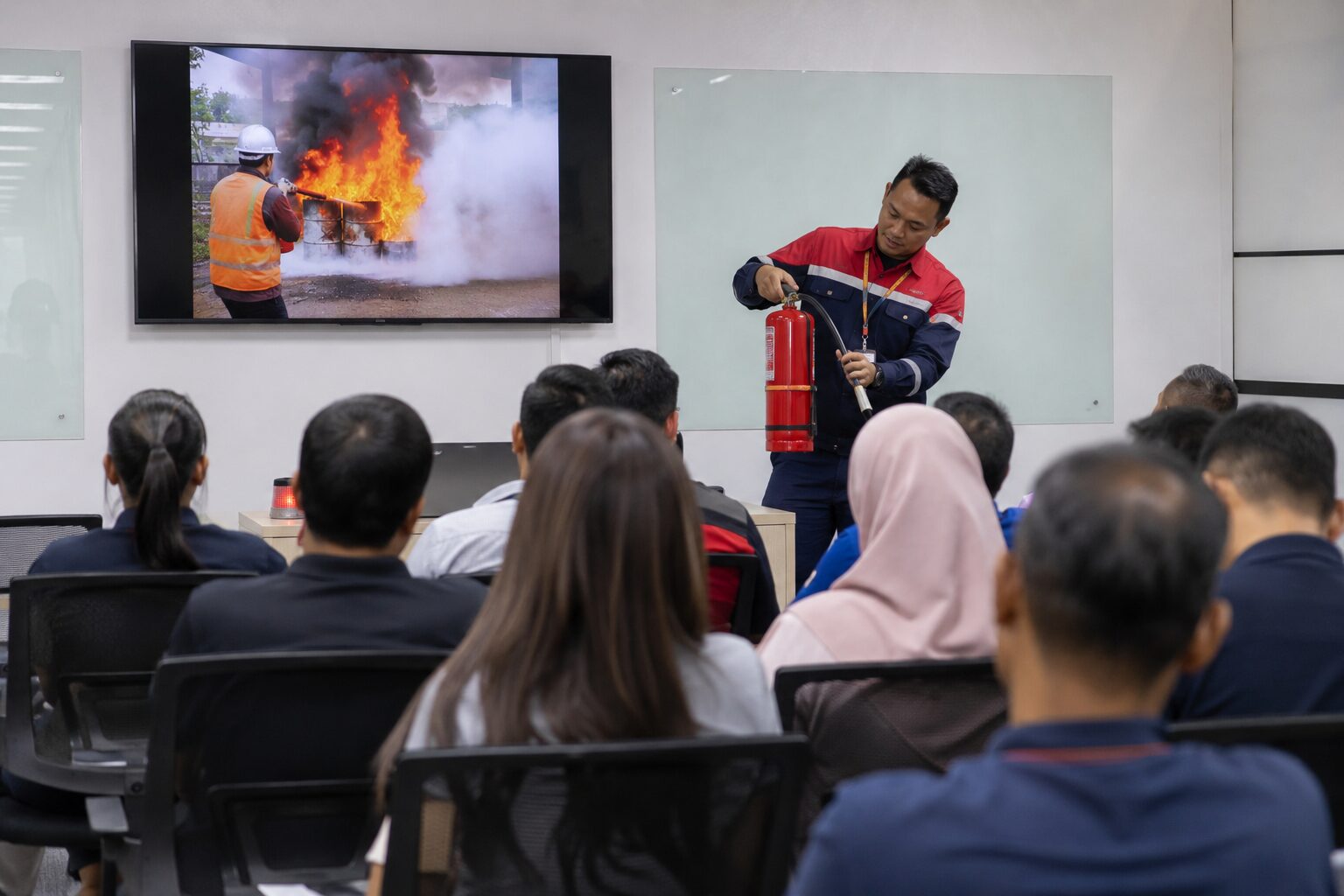
Frequently Asked Questions — FSM vs FSO
Is a Fire Safety Manager the same as a Safety Officer in Malaysia?
No. The FSM and Safety Officer are two distinct roles under two different pieces of legislation. The FSM is appointed under the Fire Services Act 1988 and regulated by Bomba, with responsibility specifically for fire safety management. The Safety Officer (SHO) is appointed under OSHA 1994 and regulated by DOSH, with responsibility for the full scope of occupational safety and health. Neither substitutes for the other.
Does my workplace need both an FSM and a Safety Officer?
Possibly yes and for many Malaysian workplaces, the answer is definitely yes. If your premises is a designated building under the Fire Services Act 1988 and your workforce meets the OSHA 1994 threshold for SHO appointment, both roles are legally required simultaneously. Contact Bomba and DOSH to confirm the specific requirements for your premises and workforce size.
Can a Safety Officer perform FSM duties without FSM certification?
No. Regardless of how experienced or qualified a Safety Officer is in general OSH matters, they cannot legally fulfil the FSM role without completing a JBPM-recognised FSM certification course and receiving certification from the Director General of JBPM. The FSM certification is a specific, mandatory prerequisite — professional experience alone does not satisfy it.
Who enforces FSM requirements and who enforces Safety Officer requirements?
FSM requirements are enforced by Bomba primarily through Fire Certificate inspections and renewals. Safety Officer requirements are enforced by DOSH through workplace inspections, accident investigations, and compliance audits. Both bodies operate independently and can issue enforcement action simultaneously.
How do I get my FSM certified in Malaysia?
Your FSM candidate must complete an FSM training course through a JBPM-recognised provider and receive certification from the Director General of JBPM. FERA Training Center delivers FSM certification training that meets all Bomba and JBPM requirements. Contact FERA to confirm the next available intake and discuss in-house delivery options for your organisation.