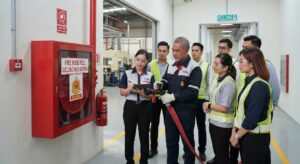




Every designated premises in Malaysia must appoint a minimum of three certified Fire Safety Officers (FSO) as part of its Organisasi Keselamatan Kebakaran (OKK). However, appointing FSOs and certifying them is only the beginning. The real question — and the one Bomba inspectors ask during every Fire Certificate audit — is whether those FSOs are actively performing their duties every single day.
Many buildings across Malaysia have FSOs on paper but fail inspections because the role exists as a title rather than a function. The FSO is not a passive appointment. Specifically, the FSO carries hands-on, daily responsibility for implementing the fire safety management system that the Fire Safety Manager (FSM) establishes and owns.
This guide provides a complete breakdown of Fire Safety Officer duties under Malaysian law, structured as a practical checklist covering daily, weekly, monthly, and annual responsibilities. Use it to assess whether your FSOs are genuinely fulfilling their role or simply holding a certificate.
The Legal Basis for FSO Duties in Malaysia
FSO duties derive from the same legal framework that governs the entire OKK structure. Understanding the basis makes clear why these duties carry genuine legal weight — not merely professional expectations.
The Fire Services (Fire Certificate) Amendment Regulations 2020 formally established the FSO as a mandatory OKK role, with a minimum of three FSOs required for every designated premises. Under these regulations, the FSO’s active performance of inspection, supervision, and drill support duties directly supports the Fire Certificate compliance obligations of the building owner.
The Fire Services Act 1988 empowers Bomba to audit FSO performance records during inspections. Specifically, Bomba inspectors review inspection logs, hazard reports, drill participation records, and training documentation that FSOs are responsible for producing and maintaining.
OSHA 1994, under Section 15, creates an independent obligation on employers to maintain trained safety personnel who actively fulfil their roles. An FSO who is certified but inactive does not satisfy this requirement and DOSH can enforce independently of Bomba.
Key Point: FSO duties are not a job description created by management. They are statutory obligations tied to Fire Certificate compliance and enforced by Bomba and DOSH. An FSO who does not perform these duties creates genuine legal exposure for the building owner — regardless of whether the certification is current.
FSO vs FSM — Understanding Where FSO Duties Fit
Before covering the checklist, clarifying how FSO duties relate to FSM responsibilities helps establish the right accountability framework. For a full comparison, read our guide: Fire Safety Manager vs Fire Safety Officer — Key Differences.
In summary:
- The FSM sets strategy, owns the system, and carries overall legal accountability
- The FSO implements, monitors, and enforces fire safety procedures operationally every day
- The FSO reports to the FSM — escalating hazards, incidents, and compliance issues promptly
- The FSM cannot be everywhere at once — the FSO is the FSM’s operational eyes and hands on the ground
In larger buildings with multiple floors, zones, or shifts, each FSO typically covers a specific area of responsibility — ensuring continuous coverage across the entire premises during all operational hours.
Daily FSO Duties – What Must Happen Every Working Day
Daily duties form the backbone of the FSO’s role. These are the tasks that keep the building’s fire safety status current, identify emerging hazards before they become incidents, and ensure evacuation routes and equipment remain functional at all times.
Daily Visual Inspection of Fire Exits and Evacuation Routes
Every FSO must conduct a daily walkthrough of their assigned zone to verify that all fire exits, escape routes, and stairwells are clear, unobstructed, and accessible. Specifically, the FSO checks:
- All fire exit doors open freely and are not locked, wedged, or blocked
- Escape corridors are free from stored goods, waste, or temporary obstructions
- Emergency exit signage is illuminated and clearly visible
- Fire doors are not propped open — they must self-close in a fire situation
- Assembly point access routes remain clear of parked vehicles or barriers
Any obstruction found during a daily inspection must be resolved immediately. If resolution requires action beyond the FSO’s authority, it must be escalated to the FSM on the same day not deferred to the next scheduled meeting.
Daily Check of Fire Alarm Panels and Call Points
The FSO must check the fire alarm control panel daily to confirm no fault indicators, trouble signals, or zone isolations are active. Additionally, a quick visual check of manual call points on each floor confirms they remain accessible, unobstructed, and undamaged.
Any fault condition on the alarm panel must be reported to the FSM and the maintenance contractor immediately. Leaving an alarm fault unresolved even for one day is a serious compliance failure that Bomba treats severely during inspections.
Daily Hazard Identification Walkthrough
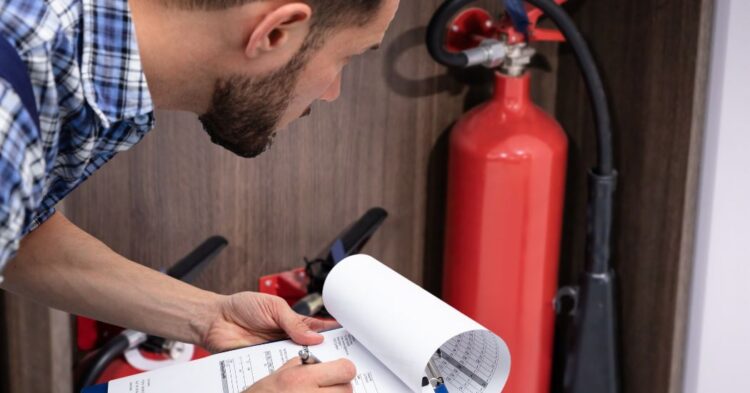
Beyond checking specific systems, the FSO must maintain general fire hazard awareness during daily movements through the building. Consequently, FSOs should note and report:
- Accumulation of combustible waste near ignition sources
- Electrical equipment left switched on or unattended overnight
- Unauthorised use of heat-generating equipment in office or storage areas
- Flammable materials stored incorrectly or outside designated areas
- Any damage to fire protection equipment — broken extinguisher seals, damaged hose reels
Daily duties checklist:
- All fire exits clear, unobstructed, and opening freely
- Escape routes and corridors free from blockages
- Emergency exit signage illuminated and visible
- Fire doors not propped open
- Alarm panel checked — no active faults or isolations
- Manual call points accessible and undamaged
- Hazard walkthrough completed — findings logged or escalated
What Must Happen Every Week
Weekly duties go deeper than the daily visual checks — they involve active testing, more thorough inspections, and documentation that forms part of the compliance record Bomba reviews during audits.
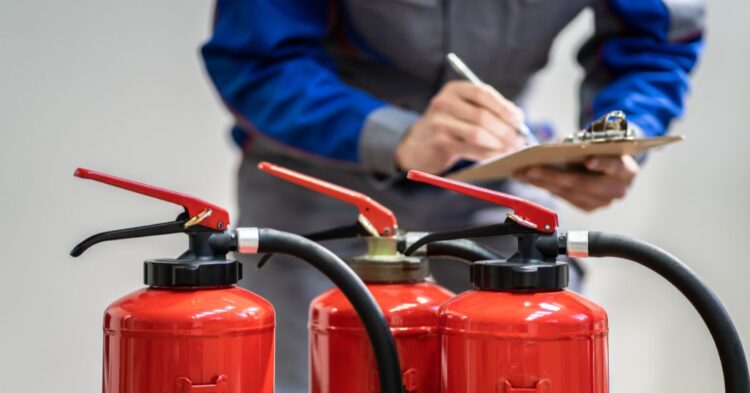
Weekly Fire Extinguisher Visual Inspection
Every week, the FSO must visually inspect all portable fire extinguishers within their zone. This inspection does not require discharging or servicing the extinguisher — it verifies that each unit is in its designated location, the tamper seal is intact, the pressure gauge reads within the operational range, and the body shows no visible damage or corrosion.
Any extinguisher that fails a visual check must be taken out of service immediately and reported to the FSM for replacement or servicing. Additionally, the FSO must ensure a replacement unit is in place before removing a defective one from its designated location.
Weekly Test of Emergency Lighting
Emergency lighting must function correctly during a mains power failure the moment it is needed most. Weekly FSO checks involve activating the test function on emergency light units to confirm the battery backup and lamp function correctly. Units that fail the weekly test must be reported immediately for repair or replacement.
Weekly Review of Fire Safety Hazard Reports
The FSO must review any hazard reports submitted by staff during the preceding week, confirm that reported hazards have been addressed, and update the hazard log accordingly. Outstanding hazards must be escalated to the FSM with a recommended resolution timeline.
Furthermore, the FSO should conduct a brief fire safety awareness reminder with floor occupants weekly reinforcing awareness of exit routes, alarm procedures, and the importance of not obstructing fire exits. This does not need to be a formal training session; a short floor announcement or brief team reminder is sufficient.
Weekly duties checklist:
- All fire extinguishers visually inspected — location, seal, pressure, condition
- Emergency lighting tested — all units functioning on battery backup
- Hazard report log reviewed — outstanding items escalated to FSM
- Staff fire awareness reminder communicated
Monthly FSO Duties
The duties involve more thorough system checks, documentation reviews, and coordination with the FSM on upcoming compliance requirements.
Fire Protection Equipment Inspection
Beyond the weekly visual check, the FSO must conduct a more thorough monthly inspection of all fire protection equipment within their zone. This includes:
- Verifying that all fire extinguishers display a current monthly inspection tag
- Checking hose reel cabinets are unlocked, hoses are undamaged, and the reel rotates freely
- Confirming that sprinkler heads are unobstructed — nothing stored within the exclusion zone below each head
- Checking that fire blankets in kitchen or laboratory areas are accessible and undamaged
Monthly Review of FSO Inspection Records
At the end of each month, the FSO must compile and submit a summary inspection report to the FSM. This report covers findings from daily and weekly checks, hazards identified and resolved, outstanding issues requiring FSM action, and any incidents or near-misses that occurred during the month.
This monthly report forms part of the building’s compliance record. Bomba inspectors request these reports during audits to verify that FSOs are actively performing their duties throughout the year — not only in the weeks before an inspection.
Monthly Coordination with Fire Wardens
The FSO must meet with fire wardens in their zone at least monthly to review evacuation procedures, address any questions or concerns, confirm warden contact details are current, and communicate any changes to the FERP or evacuation routes. Additionally, the FSO must track fire warden certification expiry dates and alert the FSM when renewals are approaching.
Monthly duties checklist:
- Full fire protection equipment inspection completed and logged
- Monthly summary inspection report submitted to FSM
- Fire warden coordination meeting completed
- Warden certification expiry dates reviewed
- Outstanding issues from previous month reviewed and updated
Annual FSO Duties — What Must Happen Every Year
Annual duties involve active participation in the building’s formal fire safety management cycle drills, training, risk assessment support, and system servicing coordination.
Active Participation in Annual Fire Drill
The FSO plays a critical operational role during the building’s annual fire drill. Specifically, the FSO must:
- Brief fire wardens before the drill on their specific roles and timing
- Supervise floor evacuation confirming all occupants have left their zone and reached the assembly point
- Conduct floor sweep to confirm no occupants remain after evacuation
- Assist the FSM in documenting drill observations evacuation time, problems identified, warden performance
- Participate in the post-drill debrief and contribute findings from their zone
For high-risk premises that conduct drills twice annually, the FSO performs this role in both drills.
Annual Fire Safety Training Completion
Every FSO must complete their annual fire safety training to maintain competency and satisfy DOSH and Bomba requirements. Additionally, FSOs must ensure their certification renewal is submitted to the Director General of JBPM before the three-year validity period expires.
Furthermore, FSOs play an active role in delivering basic fire safety briefings to new staff and contractors throughout the year. Consequently, FSOs must stay current with the building’s FERP and evacuation procedures so they can brief others accurately.
Support the Annual Fire Risk Assessment
The FSO supports the FSM in conducting the annual fire risk assessment by providing ground-level observations from their zone. Specifically, FSOs contribute:
- Identification of new or emerging fire hazards identified during the year
- Assessment of areas where occupant fire safety behaviour has been poor
- Confirmation of areas where previous risk controls have been implemented effectively
- Observations about fire protection equipment performance or reliability issues
Coordinate Annual Fire Protection System Servicing
The FSO must coordinate with the FSM and building maintenance team to ensure all fire protection systems in their zone are serviced by qualified contractors within the annual service schedule. After servicing, the FSO must verify that service records are correctly filed and that any deficiencies identified by the service contractor have been addressed.
Annual duties checklist:
- Active participation in annual fire drill — floor sweep, warden briefing, debrief
- Annual fire safety training completed — certification renewal tracked
- Contribution to annual fire risk assessment documented
- All fire protection systems in zone serviced within annual schedule
- Service records filed and deficiencies addressed

FSO Duties During a Real Fire Emergency
Beyond the scheduled inspection and maintenance duties, the FSO carries specific responsibilities during an actual fire emergency. These duties are defined in the FERP and must be practised during drills so they execute automatically under pressure.
During a real fire emergency, the FSO must:
- Activate the alarm — immediately on discovery or confirmation of fire, activate the nearest manual call point if the automatic alarm has not activated
- Contact the FSM — notify the FSM immediately and confirm the location and apparent nature of the incident
- Direct fire wardens — activate fire wardens in their zone and confirm evacuation has begun on all floors within their area
- Conduct floor sweep — sweep all areas within their zone to confirm all occupants have evacuated, paying particular attention to toilets, meeting rooms, and enclosed spaces
- Assist mobility-impaired occupants — coordinate with designated personnel to assist anyone who requires physical help to evacuate
- Report to assembly point — confirm headcount with fire wardens and report zone status to the FSM at the assembly point
- Liaise with Bomba on arrival — provide arriving Bomba officers with information on the fire location, building layout, and any occupants unaccounted for
- Support post-incident procedures — assist the FSM in completing the post-incident report and identifying corrective actions
What Happens When FSO Duties Are Not Performed?
An FSO who holds certification but does not actively perform their daily, weekly, monthly, and annual duties creates serious compliance exposure for the building owner. Specifically:
- Bomba inspectors who find no inspection logs, no drill participation records, and no monthly reports from FSOs issue adverse findings immediately
- Fire Certificate renewal becomes problematic when inspection records demonstrate FSO non-performance
- If a fire incident occurs in a building where FSO duties were not performed, the building owner faces significantly increased legal and insurance liability
- DOSH can issue enforcement notices independently, citing failure to maintain active safety personnel as required under OSHA 1994
Beyond compliance consequences, a building where FSOs are not performing daily checks is a building where fire hazards go undetected, equipment faults go unreported, and evacuation procedures go untested until the day they are needed most.
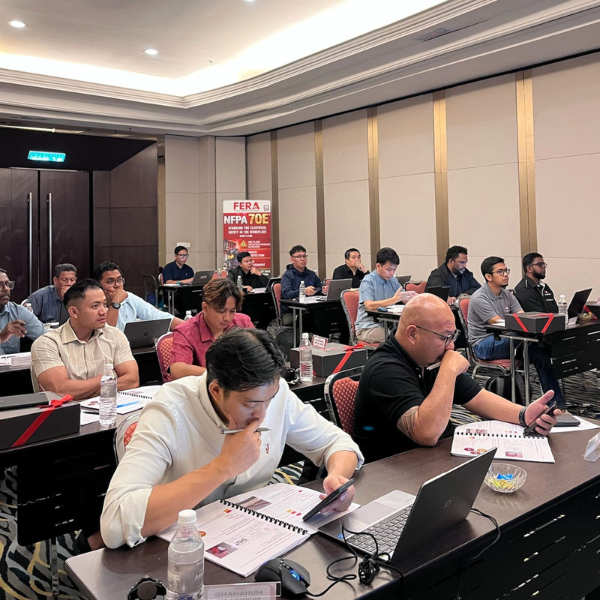
Get Your FSOs Properly Trained with FERA
FERA Training Center delivers FSO certification training that prepares Fire Safety Officers to fulfil every duty on this checklist with real competency, not just certification. Our trainers bring direct Bomba inspection experience to every session, ensuring participants know exactly what inspectors look for and how to build an inspection record that demonstrates active, ongoing FSO performance.
We also deliver:
- Fire Safety Manager (FSM) training
- Fire warden training
- Emergency Response Team (ERT) training
- HAZMAT training — NFPA 472
- NFPA-accredited fire safety certification
Your entire OKK, FSM, FSOs, ERT, and fire wardens can be trained and certified through one HRDCorp-registered provider.
WhatsApp: 019-303 4001
Email: [email protected]
Website: fera.com.my/fsm-fso-training
Frequently Asked Questions:
What are the main duties of a Fire Safety Officer in Malaysia?
The FSO’s core duties include conducting daily inspections of fire exits, evacuation routes, and alarm systems, performing weekly fire extinguisher and emergency lighting checks, submitting monthly inspection reports to the FSM, supervising fire wardens, supporting fire drills, coordinating annual fire protection system servicing, and responding operationally during real fire emergencies. All duties must be documented and filed for Bomba audit purposes.
How many Fire Safety Officers does a building need?
Under the Fire Services (Fire Certificate) Amendment Regulations 2020, every designated premises must appoint a minimum of three certified FSOs as part of its OKK. Larger buildings with multiple floors, zones, or operational shifts typically need more than three FSOs to ensure adequate coverage at all times. Contact Bomba or FERA for guidance specific to your building.
What is the difference between an FSO and a fire warden?
The FSO is a formally certified role within the OKK, responsible for operational fire safety management — inspections, system checks, warden supervision, and Bomba compliance documentation. A fire warden is a floor-level role responsible specifically for leading evacuation in their assigned area during a fire drill or real emergency. FSOs supervise fire wardens — they are not the same role.
Does an FSO need to be a full-time fire safety role?
Not necessarily. In many buildings, the FSO role is held by an existing employee — a facilities coordinator, safety officer, or department supervisor — who carries FSO duties alongside their primary role. However, the FSO must have sufficient time in their working week to genuinely perform daily inspections, weekly checks, and monthly reporting. An FSO whose primary workload prevents them from performing these duties creates a compliance risk.
How does FERA’s FSO training prepare participants for these duties?
FERA’s FSO training programme covers every duty on this checklist — inspection procedures, equipment checks, documentation standards, warden coordination, drill participation, and emergency response procedures. Participants train with former Bomba officers who bring real-world inspection experience, ensuring FSOs graduate knowing exactly what active duty performance looks like in practice.