

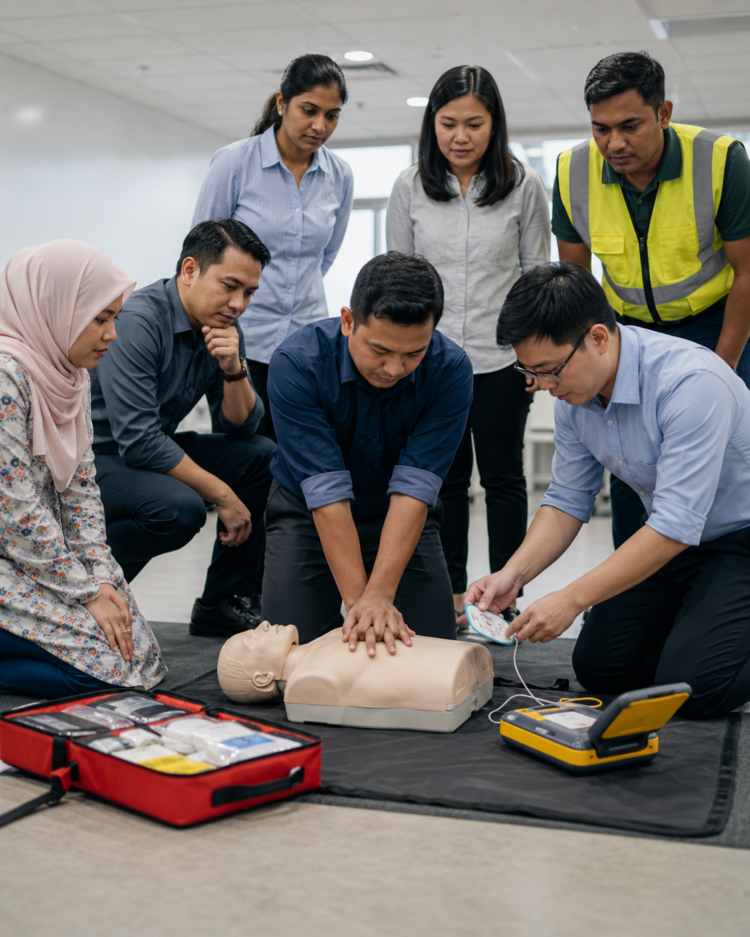
Why CPR and AED Training Is Essential for Workplace Safety
Workplace emergencies can happen anytime cardiac arrest, choking, or sudden collapse. In these critical moments, immediate response can mean the difference between life and death.
This is why CPR (Cardiopulmonary Resuscitation) and AED (Automated External Defibrillator) training is no longer optional it is essential for every organization that prioritizes safety, compliance, and employee wellbeing.
What Is CPR and AED Training?
CPR (Cardiopulmonary Resuscitation)
CPR is a life-saving technique that helps maintain blood flow and oxygen to the brain during cardiac arrest.
AED (Automated External Defibrillator)
An AED is a portable device that delivers an electric shock to restore a normal heart rhythm.
Together, CPR and AED significantly increase survival chances during sudden cardiac arrest.
Why CPR and AED Training Matters in the Workplace
1. Cardiac Arrest Can Happen Anywhere
Sudden cardiac arrest doesn’t only happen in hospitals. It can occur in offices, factories, shopping malls, or even meeting rooms.
Without immediate response:
- Brain damage can begin within 4–6 minutes
- Survival rate drops by 10% every minute without CPR
2. Employees Become First Responders
Before emergency services arrive, trained employees can:
- Perform CPR immediately
- Use AED effectively
- Stabilize the victim
This early intervention is often the key factor in survival.
3. Saves Lives and Reduces Fatalities
Workplaces equipped with trained personnel and AED devices:
- Increase survival rates up to 2–3 times
- Reduce long-term injury risks
- Improve emergency response outcomes
4. Supports Legal & Safety Compliance
In Malaysia, organizations are encouraged under workplace safety regulations and best practices to:
- Provide emergency preparedness training
- Ensure first aid readiness
- Maintain safe working environments
Having CPR and AED-trained staff strengthens compliance and reduces liability.
5. Builds a Strong Safety Culture
Training employees in life-saving skills:
- Creates awareness and responsibility
- Improves confidence during emergencies
- Strengthens teamwork and readiness
A prepared team is a safer team.
Key Benefits of CPR and AED Training
- Immediate response during emergencies
- Increased survival rate of cardiac arrest victims
- Reduced workplace risks and downtime
- Compliance with safety standards
- Boost employee confidence and morale
Who Should Attend CPR and AED Training?
CPR and AED training is essential for:
- Safety & HSE personnel
- Office staff and administrators
- Factory workers and technicians
- Security teams
- Facility and building managers
In reality, everyone in the workplace should have this skill.
What You Will Learn in CPR and AED Training
Practical Life-Saving Skills
- Correct CPR techniques (adult & child)
- AED operation and safety
- Choking response
Emergency Response Knowledge
- Scene assessment
- Calling for help effectively
- Managing workplace emergencies
Hands-On Practice
- Realistic simulations
- Guided instructor practice
- Confidence-building exercises
Why Every Workplace Should Invest in This Training
A workplace without trained responders is vulnerable.
Investing in CPR and AED training means:
- Protecting your employees
- Reducing risk and liability
- Demonstrating commitment to safety
Because in an emergency, every second counts and your team must be ready.
Equip your team with essential life-saving skills today.
Call / WhatsApp: https://wa.me/60122730893
Email: [email protected]