

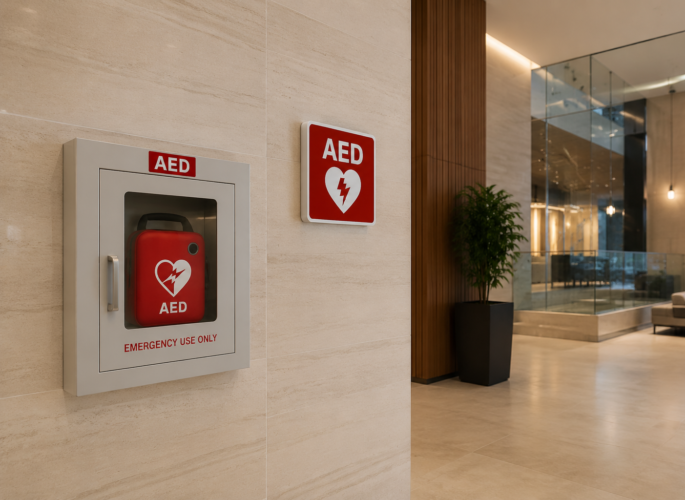
What Is an AED and Why Its Location Matters
An Automated External Defibrillator (AED) is a life-saving device used to restore a normal heart rhythm during sudden cardiac arrest (SCA). In emergency situations, every second counts. Immediate access to an AED can significantly increase survival rates before medical professionals arrive.
Placing AEDs in strategic, visible, and accessible locations is critical. When people know where to find them, response time is reduced and lives can be saved.
Common Locations of AEDs in Public Places
1. Shopping Malls and Retail Centers
AEDs are commonly installed in:
- Main entrances
- Information counters
- Near escalators or elevators
High foot traffic makes malls one of the most important locations for AED placement.
2. Airports and Transportation Hubs
Airports, train stations, and bus terminals are equipped with AEDs due to large crowds and long waiting times.
Typical placement areas include:
- Departure and arrival halls
- Boarding gates
- Security checkpoints
3. Office Buildings and Corporate Facilities
Many organizations install AEDs as part of workplace safety compliance.
Common areas:
- Reception or lobby
- Pantry or common areas
- Near emergency exits
4. Hotels and Convention Centers
Hotels prioritize guest safety by placing AEDs in:
- Lobby areas
- Fitness centers
- Conference halls
5. Sports Facilities and Gyms
Physical activity increases the risk of cardiac events.
AEDs are usually found in:
- Gym floors
- Stadium seating areas
- Swimming pools
6. Schools, Universities, and Educational Institutions
Educational facilities are increasingly equipped with AEDs.
Common placements:
- Administrative offices
- Assembly halls
- Sports complexes
7. Public Transport and MRT/LRT Stations
In Malaysia, AEDs are being installed at major transit points such as:
- Platform areas
- Ticket counters
- Control rooms
8. Government Buildings and Public Offices
Government facilities provide AEDs for both staff and visitors.
Typical locations:
- Main lobby
- Service counters
- Waiting areas
How to Identify an AED in Public Areas
AEDs are usually:
- Stored in a wall-mounted cabinet
- Clearly marked with a heart symbol and lightning bolt
- Placed in visible and accessible areas
- Accompanied by signage for easy identification
Some locations may also include alarms on cabinets to alert others when opened.
Why Awareness of AED Locations Is Critical
Knowing where AEDs are located can:
- Reduce response time during emergencies
- Increase survival chances of cardiac arrest victims
- Empower bystanders to take immediate action
In many cases, using an AED within the first 3–5 minutes can dramatically improve survival rates.
Tips for Organizations Installing AEDs
For effective deployment, AEDs should be:
- Easily accessible within 1–3 minutes
- Installed in visible, high-traffic areas
- Regularly maintained and inspected
- Supported with trained personnel
Organizations should also conduct regular drills and awareness training.
Conclusion
AEDs are strategically placed in public areas where large numbers of people gather from shopping malls and airports to offices and schools. However, their effectiveness depends not only on placement but also on public awareness.
Understanding where AEDs are located and how to use them can make the difference between life and death in an emergency.
Join our Basic Occupational First Aid, CPR & AED Training and gain the confidence to respond during emergencies.
HRD Corp Claimable
Certified Training
Hands-on Practical Session
Register now: https://wa.me/60122730893