

Why Every Workplace Should Have an AED
A workplace emergency can happen without warning. An employee, visitor, contractor or customer may suddenly collapse and become unresponsive due to sudden cardiac arrest.
During this type of emergency, the first few minutes are critical. Calling emergency medical services is essential, but people at the scene must also be ready to provide immediate assistance.
This is where an Automated External Defibrillator, commonly known as an AED, becomes important.
An AED allows trained employees and members of the public to provide early defibrillation while waiting for professional emergency responders. When combined with effective CPR, early AED use can significantly improve a person’s chance of survival. The American Heart Association states that immediate CPR and AED use may double or even triple survival rates following cardiac arrest.
For organisations that take workplace safety seriously, having an AED is not simply about purchasing equipment. It is about building a complete cardiac emergency response system that includes accessible equipment, trained personnel, regular maintenance and a clear response plan.
What Is an AED?
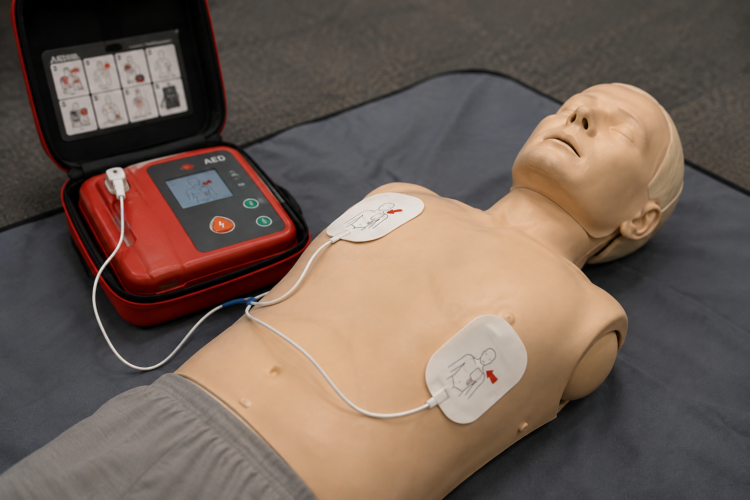
An Automated External Defibrillator is a portable medical device used to assist a person experiencing sudden cardiac arrest.
The device analyses the person’s heart rhythm and determines whether an electrical shock is required. When a shockable rhythm is detected, the AED provides clear instructions to the responder before delivering the shock.
AEDs are designed to be easy to operate. Most devices provide visual instructions, voice prompts or both. The device will only advise a shock when its analysis determines that defibrillation is appropriate.
However, organisations should not depend on the equipment alone. Employees must understand how to recognise a cardiac emergency, activate the emergency response system, perform CPR and use the AED safely.
Why Every Workplace Should Have an AED
1. Sudden Cardiac Arrest Can Happen Without Warning
Sudden cardiac arrest occurs when the heart unexpectedly stops pumping blood effectively. A person may suddenly collapse, become unresponsive and stop breathing normally.
It can affect people in offices, factories, warehouses, construction sites, educational institutions, commercial buildings and other workplaces. Some individuals may not show clear warning signs before the incident.
Therefore, workplaces should prepare for cardiac emergencies even when their employees appear healthy or the organisation is considered low risk.
An AED provides employees with an important response tool when a person experiences cardiac arrest at work.
2. Every Minute Without Assistance Matters
When cardiac arrest happens, waiting without taking action can reduce the person’s chance of survival.
The American Heart Association recommends beginning CPR and using an AED as soon as it becomes available. CPR helps maintain blood and oxygen circulation, while an AED may help restore an effective heart rhythm.
An AED located within the workplace can reduce the time required to begin defibrillation. This is especially important in large buildings, factories, warehouses and remote worksites where professional emergency responders may take longer to reach the casualty.
3. An AED Helps Bridge the Response-Time Gap
Emergency medical teams provide professional treatment, but they are not usually present when a cardiac emergency first occurs.
The people already at the workplace are often the first potential responders. They may include:
- Trained first aiders
- Emergency Response Team members
- Safety and health personnel
- Security personnel
- Supervisors
- Fire wardens
- Other trained employees
A readily available AED allows these individuals to begin an organised response before professional medical assistance arrives.
OSHA recognises AEDs as an important life-saving technology that can play a significant role in workplace cardiac emergencies. It also encourages organisations to consider accessible AED placement and proper employee training.
4. AEDs Are Designed to Support the Responder
People may hesitate during a cardiac emergency because they are afraid of doing something wrong.
Modern AEDs help reduce this uncertainty by providing step-by-step voice or visual prompts. The AED analyses the heart rhythm and determines whether a shock should be delivered.
The responder does not independently decide whether the casualty requires a shock. The device performs the analysis and provides the appropriate instruction.
Nevertheless, formal CPR and AED training remains important. Training helps employees understand how to:
- Recognise sudden cardiac arrest
- Check responsiveness and breathing
- Activate the workplace emergency procedure
- Perform effective CPR
- Position AED pads correctly
- Follow the AED’s instructions
- Coordinate with other responders
- Continue assistance until professional help arrives
Employees who have practised these steps are more likely to respond calmly and confidently during an actual emergency.
5. It Protects More Than Employees
Workplace safety arrangements should consider everyone who enters the premises.
Depending on the organisation, this may include customers, clients, contractors, delivery personnel, trainees, students, tenants and members of the public.
An AED installed in an accessible location can support a cardiac emergency response involving any person on the premises.
This is especially important for workplaces with:
- Large numbers of employees
- Frequent visitors
- Physically demanding work
- Remote or isolated locations
- Multiple floors or large operating areas
- Older employees or visitors
- High public traffic
- Sports or fitness facilities
An organisation cannot predict who may experience cardiac arrest. However, it can prepare its people and facilities to respond.
6. It Strengthens Workplace Emergency Preparedness
An AED programme encourages the organisation to review its overall emergency readiness.
Installing an AED should involve more than placing a device on a wall. The organisation should determine:
- Who is trained to respond
- Where the AED will be located
- How employees will summon assistance
- Who will contact emergency medical services
- How responders will guide medical personnel to the casualty
- How the AED will be inspected and maintained
- How incidents will be documented and reviewed
These preparations can also improve teamwork, communication and confidence during other workplace emergencies.
Organisations can strengthen this capability through Emergency Response Team Training, which prepares designated personnel to coordinate workplace emergency actions.
7. It Demonstrates a Strong Safety Culture
A strong workplace safety culture is visible through practical action.
Providing an AED shows that the organisation is willing to invest in employee welfare and emergency preparedness. It also sends a clear message that safety is a shared responsibility.
Employees who receive CPR and AED training may become more aware of emergency procedures and more confident in helping others.
This awareness can extend beyond the workplace. The same skills may assist employees when responding to emergencies at home or in the community.
Which Workplaces Should Consider Having an AED?
Every organisation should assess its own workforce, location, operating environment and emergency response time.
AED placement is particularly valuable in:
Offices and Corporate Buildings
Large offices may have hundreds of employees and visitors across several floors. An AED should be positioned where it can be reached quickly without requiring access through locked rooms.
Factories and Manufacturing Facilities
Factories may involve physical work, heat exposure, large production areas, shift work and locations far from the main entrance. More than one AED may be necessary for a large facility.
Warehouses and Distribution Centres
Warehouses often cover extensive floor areas. The AED should be positioned based on response time rather than convenience alone.
Construction and Remote Worksites
Remote locations may experience longer emergency response times. An AED, trained personnel and a reliable communication system can strengthen onsite medical preparedness.
Hotels, Shopping Centres and Public Buildings
These premises receive many visitors each day. Clear AED signage and trained personnel can support a faster response to emergencies involving employees or members of the public.
Schools, Universities and Training Centres
Educational facilities serve students, teachers, employees, parents and visitors. AEDs are commonly positioned near offices, halls, sports facilities and other high-traffic areas.
Where Should an AED Be Placed?
An AED must be visible, accessible and easy to retrieve.
It should not be stored inside a locked office, cabinet or storeroom that may be inaccessible during an emergency.
Suitable locations may include:
- Reception or main lobby
- Security station
- First aid room
- Main production area
- Employee common area
- Lift or stairwell area
- Control room
- Sports or recreation area
- Other clearly marked, high-traffic locations
Large or multi-storey workplaces may require several AED units. The organisation should evaluate how long it would take an employee to retrieve the device and return to the casualty.
Clear signage should also be installed so employees and visitors can identify the AED location quickly.
Having an AED Is Only the First Step
Purchasing an AED does not automatically make a workplace prepared.
A complete workplace AED programme should include the following elements.
CPR and AED Training
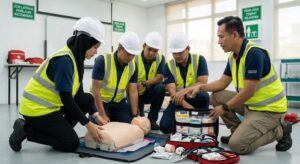
Selected employees should receive practical training from a qualified training provider.
Training should include casualty assessment, CPR, AED operation, communication and team coordination. Scenario-based exercises can help employees apply these skills under realistic conditions.
FERA’s Basic Occupational First Aid & CPR Training covers CPR, AED operation and essential workplace first aid response.
Organisations may also explore FERA’s complete Rescue and First Aid programmes for workplace emergency response preparation.
A Cardiac Emergency Response Plan
The organisation should create a clear plan for responding to sudden cardiac arrest.
The plan should identify:
- The workplace emergency number
- Trained responders
- AED locations
- Roles during the emergency
- Access routes for emergency medical personnel
- Communication and reporting procedures
The plan should be shared with employees and included in relevant workplace emergency exercises.
Routine Inspection and Maintenance
The AED must remain ready for use.
A responsible person should regularly inspect:
- Battery condition
- Electrode pad expiry dates
- Device status indicators
- Cabinet condition
- Signage
- Accessories
- Inspection records
The manufacturer’s instructions should always be followed. Pads, batteries and other components must be replaced when required.
Refresher Training and Emergency Drills
Skills can become less familiar when they are not practised.
Refresher training helps employees review CPR techniques, AED placement, communication and response procedures.
Short workplace drills can also identify practical problems, such as:
- Employees not knowing the AED location
- Difficulty contacting the response team
- Locked access routes
- Unclear roles
- Delays retrieving the AED
- Poor communication between departments
These weaknesses should be corrected before a real emergency occurs.
Common Workplace AED Mistakes
Organisations should avoid the following mistakes:
Buying an AED Without Training Employees
Employees may hesitate or lose valuable time when they have never practised using the equipment.
Keeping the AED in a Locked Location
An AED must be available immediately. Access should not depend on finding a particular key holder.
Failing to Install Clear Signage
Employees and visitors should be able to recognise the AED location from a distance.
Ignoring Expiry Dates
AED pads and batteries have limited operating periods. Expired or damaged components may affect emergency readiness.
Training Only One Employee
The trained employee may be absent, on leave, working another shift or located far from the casualty. Organisations should train an appropriate number of employees across departments and shifts.
Failing to Include the AED in Emergency Drills
Practical exercises help confirm whether employees can retrieve and use the AED within an effective response time.
How to Start a Workplace AED Programme
An organisation can begin by following a structured approach:
- Assess the workplace’s size, layout, workforce and emergency response risks.
- Identify suitable AED locations based on accessibility and retrieval time.
- Select appropriate AED equipment and accessories.
- Appoint personnel responsible for inspections and maintenance.
- Train employees in first aid, CPR and AED operation.
- Develop a written cardiac emergency response procedure.
- Install visible AED signs.
- Conduct drills and refresher training.
- Review the programme after every exercise or actual emergency.
The objective is not only to own an AED. The objective is to make sure the right people can locate it, retrieve it and use it without unnecessary delay.
Frequently Asked Questions About Workplace AEDs
Can Someone Without Medical Experience Use an AED?
AEDs are designed to provide clear instructions and analyse the heart rhythm automatically. However, CPR and AED training is strongly recommended because it improves confidence, coordination and response quality.
Can an AED Shock Someone Who Does Not Need It?
An AED analyses the person’s heart rhythm before advising a shock. It will only recommend a shock when it detects an appropriate shockable rhythm.
Is CPR Still Necessary When an AED Is Available?
Yes. CPR and AED use work together during a cardiac arrest response. CPR should begin as soon as possible, while another responder retrieves and prepares the AED. Responders should continue following the AED instructions until professional assistance takes over.
How Many AEDs Does a Workplace Need?
The answer depends on the size and layout of the workplace.
A small office may only require one strategically placed AED. A large factory, warehouse, campus or multi-storey building may require several devices to ensure the AED can reach the casualty quickly.
The assessment should consider distance, access restrictions, working shifts and the number of people on the premises.
Conclusion
Sudden cardiac arrest can occur at any workplace and without warning.
Having an accessible AED, trained employees and a clear emergency response plan allows an organisation to take immediate action during the critical period before professional medical assistance arrives.
An AED should not be viewed as equipment that is purchased and forgotten. It must be supported by proper placement, routine inspection, employee awareness, practical training and regular emergency exercises.
By investing in CPR and AED preparedness, organisations can build a safer workplace, strengthen their emergency response capabilities and give their teams the confidence to act when every second matters.
Call to Action
Prepare Your Workplace Before an Emergency Happens
Equip your employees with practical first aid, CPR and AED response skills through FERA Training Center.
Our workplace training programmes combine essential knowledge with hands-on exercises to help participants recognise medical emergencies, perform CPR and operate an AED confidently.
Explore our training programmes:
https://fera.com.my/all-training/
Register or request a corporate quotation:
https://fera.com.my/contact/
Email: [email protected]
WhatsApp: 012-273 0893
Website: www.fera.com.my