


NFPA 70B: The Importance of Electrical Maintenance for Safety
Electrical systems are among the most critical components in any building, factory, industrial facility, or commercial premises. Almost every operation relies on electricity to power machinery, control systems, lighting, communications, safety systems, and production processes.
However, having a properly installed electrical system alone is not enough. Electrical equipment must also be inspected, tested, maintained, and managed systematically throughout its service life.
This is where NFPA 70B – Standard for Electrical Equipment Maintenance plays an important role.
NFPA 70B provides requirements and guidance for the maintenance of electrical equipment and systems to help organizations maintain equipment in a safe and reliable condition.
A structured electrical maintenance program is not only about keeping equipment operational. It is also an important part of reducing electrical failures, operational disruption, equipment damage, and workplace electrical hazards.
What Is NFPA 70B?
NFPA 70B is a standard published by the National Fire Protection Association (NFPA) that focuses specifically on Electrical Equipment Maintenance.
The standard provides a structured approach for organizations to develop and implement an electrical maintenance program so that electrical equipment can remain safe, reliable, and properly maintained throughout its operating life.
NFPA 70B covers important areas such as:
- Electrical Maintenance Programs
- Equipment condition
- Inspection and testing
- Preventive maintenance
- Maintenance intervals
- Condition of maintenance
- Maintenance documentation
- Electrical equipment reliability
- Maintenance planning
- Safety considerations during maintenance activities
The purpose is to encourage organizations to move away from a purely reactive approach of repairing equipment only after failure and instead adopt a more proactive and systematic maintenance strategy.
Why Is Electrical Maintenance Important?
Electrical equipment can deteriorate over time due to operating conditions, age, electrical loading, environmental exposure, dust, moisture, contamination, mechanical stress, and other factors.
Without a proper maintenance program, minor defects may remain unnoticed until equipment fails or creates a larger safety or operational problem.
1. Reduces the Risk of Equipment Failure
Electrical maintenance helps organizations identify signs of deterioration before they develop into major failures.
Scheduled inspections, testing, and maintenance activities allow maintenance personnel to assess whether electrical equipment remains in acceptable condition or requires corrective action.
A preventive maintenance approach can also reduce dependence on emergency repairs after equipment has already failed.
2. Improves Worker Safety
The condition of electrical equipment has a direct relationship with worker safety.
Electrical safety is not only about Personal Protective Equipment, procedures, and safe working practices. The actual condition of the electrical equipment itself also plays an important role.
Properly maintained equipment can help reduce the likelihood of abnormal operating conditions and unexpected equipment failures that may expose workers to electrical hazards.
NFPA 70, NFPA 70B, and NFPA 70E are commonly viewed as interconnected parts of electrical safety management.
In simple terms:
NFPA 70 = Safe Installation
NFPA 70B = Safe Maintenance
NFPA 70E = Safe Work Practices
Together, these standards support a more comprehensive electrical safety approach.
3. Reduces Unplanned Downtime
In industrial operations, a failure in a single electrical component may cause equipment, machinery, or an entire process to stop unexpectedly.
Depending on the importance of the system, electrical failures may affect:
- Production output
- Operational schedules
- Maintenance resources
- Customer deliveries
- Productivity
- Equipment availability
- Business continuity
A preventive electrical maintenance program allows organizations to identify critical equipment and plan maintenance activities before unexpected failures occur.
Planned maintenance can be scheduled during appropriate periods instead of waiting for equipment to fail while operations are running.
4. Improves Electrical System Reliability
An electrical system consists of many interconnected components.
These may include:
- Switchgear
- Transformers
- Circuit breakers
- Electrical panels
- Motors
- Protective devices
- Cables
- Control systems
- Electrical distribution equipment
Failure in one component may affect other parts of the system.
For this reason, NFPA 70B emphasizes a systematic maintenance program rather than carrying out maintenance only when a problem becomes visible.
A structured maintenance approach supports better equipment reliability and operational stability.
5. Supports Better Electrical Asset Management
Electrical equipment represents a significant investment for many organizations.
Through systematic inspection, testing, and maintenance records, organizations can develop a clearer understanding of the condition and maintenance history of their electrical assets.
This information can help management decide:
- Whether equipment remains suitable for operation
- When maintenance should be scheduled
- Whether additional testing is required
- When replacement should be considered
- Which equipment should receive higher priority
- How maintenance budgets should be allocated
Electrical maintenance therefore becomes part of effective asset management, rather than simply being a technical repair activity.
Key Elements of NFPA 70B
NFPA 70B emphasizes structured maintenance practices based on equipment condition, operational requirements, and reliability.
Electrical Maintenance Program
Organizations should establish a structured approach for managing and maintaining electrical equipment.
An Electrical Maintenance Program should consider factors such as:
- Type of equipment
- Equipment condition
- Operational importance
- Environmental conditions
- Maintenance history
- Inspection requirements
- Testing requirements
- Equipment criticality
A well-developed maintenance program provides clearer responsibilities and a more consistent approach to electrical maintenance.
Condition of Maintenance
One of the important concepts in electrical safety is the condition of maintenance.
Electrical equipment may have been properly installed when it was first commissioned, but its condition can change over time if it is not adequately maintained.
Maintenance should therefore be considered a continuous process throughout the equipment’s service life.
Organizations should regularly evaluate equipment condition and take appropriate action when signs of deterioration or abnormal conditions are identified.
Inspection and Testing
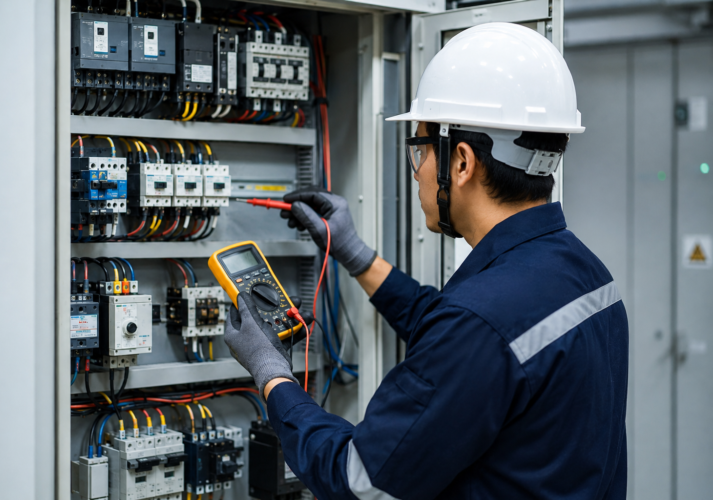
A proper maintenance program normally includes inspection and testing based on the type, condition, application, and criticality of electrical equipment.
The purpose is to obtain useful information about the condition of the equipment and identify abnormal conditions that may require further action.
Inspection and testing activities may help identify:
- Physical deterioration
- Abnormal operating conditions
- Loose connections
- Signs of overheating
- Contamination
- Mechanical damage
- Performance deterioration
- Components requiring corrective maintenance
Electrical inspection and testing should always be carried out by competent and authorized personnel in accordance with the organization’s safety procedures and applicable requirements.
Maintenance Intervals
Not all electrical equipment operates under the same conditions or level of risk.
For this reason, maintenance intervals should not be established arbitrarily.
Factors that may influence maintenance intervals include:
- Equipment type
- Equipment condition
- Operating environment
- Equipment criticality
- Manufacturer recommendations
- Previous maintenance history
- Operating history
- Frequency of operation
- Exposure to harsh conditions
A risk-based and condition-based approach allows organizations to prioritize maintenance activities more effectively.
Documentation and Record Keeping
Maintenance activities should be properly documented.
Without accurate records, it becomes difficult to understand the history and condition of electrical equipment.
Maintenance documentation may include:
- Inspection records
- Test results
- Maintenance activities performed
- Equipment condition
- Abnormal findings
- Corrective actions
- Repair history
- Replacement history
- Maintenance dates
Good record keeping also allows organizations to identify trends and make better maintenance decisions in the future.
NFPA 70, NFPA 70B and NFPA 70E – What Is the Difference?
Although the three standards are related to electrical safety, each has a different primary focus.
NFPA 70 – National Electrical Code
NFPA 70 focuses primarily on safe electrical installation.
In simple terms:
NFPA 70 = Safe Installation
It addresses how electrical systems and equipment should be installed to support electrical safety.
NFPA 70B – Electrical Equipment Maintenance
NFPA 70B focuses on how electrical equipment should be maintained after installation.
In simple terms:
NFPA 70B = Safe Maintenance
It supports the development of a structured electrical maintenance program to maintain equipment condition and reliability.
NFPA 70E – Electrical Safety in the Workplace
NFPA 70E focuses on workplace electrical safety practices.
In simple terms:
NFPA 70E = Safe Work Practices
It addresses electrical hazards and safe work practices intended to help protect personnel who work on or near electrical equipment.
Together, these standards support a more complete electrical safety management approach.
Who Should Understand NFPA 70B?
NFPA 70B is relevant to organizations that own, operate, manage, or maintain electrical equipment.
Professionals who may benefit from understanding NFPA 70B include:
- Electrical Engineers
- Electrical Technicians
- Maintenance Engineers
- Maintenance Managers
- Facility Managers
- Reliability Engineers
- HSE and Safety Professionals
- Plant Engineers
- Operations Managers
- Asset Management Personnel
- Electrical Maintenance Personnel
- Technical Supervisors
Effective electrical maintenance often requires cooperation between engineering, maintenance, operations, facilities, and safety departments.
Electrical maintenance should therefore not be viewed as the responsibility of only one department.
Industries That Can Benefit from NFPA 70B
NFPA 70B can be particularly relevant to facilities with significant electrical infrastructure or operations that depend heavily on electrical reliability.
Industries and facilities that may benefit include:
- Manufacturing
- Oil and Gas
- Petrochemical
- Utilities
- Data Centres
- Hospitals
- Commercial Buildings
- Warehouses
- Transportation Facilities
- Power Generation
- Industrial Plants
- Critical Infrastructure
- Large Facilities
The more critical electrical equipment is to business operations, the more important it becomes to establish a structured maintenance strategy.
Reactive Maintenance vs Preventive Maintenance
One of the most important improvements an organization can make is moving from a reactive maintenance culture toward a more proactive approach.
Reactive Maintenance
Reactive maintenance happens when an organization takes action only after equipment has already failed or developed an obvious problem.
A typical sequence may look like this:
Equipment Failure → Operational Disruption → Troubleshooting → Repair → Restart
Although reactive maintenance may appear simpler, unexpected equipment failures can result in operational disruption, additional costs, and safety concerns.
Preventive Electrical Maintenance
Preventive electrical maintenance focuses on identifying and addressing equipment conditions before an unexpected failure occurs.
A typical preventive maintenance approach may include:
Inspect → Test → Assess → Maintain → Document → Monitor
This allows maintenance teams to identify potential problems earlier and make more informed maintenance decisions.
NFPA 70B provides a structured framework that supports this proactive approach to electrical equipment maintenance.
Electrical Maintenance Is Part of a Strong Safety Culture
Electrical safety does not begin only when a technician opens an electrical panel or starts maintenance work.
It begins much earlier through proper management of electrical equipment.
A strong electrical safety culture should consider:
- Equipment management
- Maintenance planning
- Worker competency
- Risk assessment
- Documentation
- Inspection
- Testing
- Safe work procedures
- Management commitment
- Equipment reliability
Organizations with a mature safety culture understand that equipment reliability and worker safety are closely connected.
Electrical equipment should be properly installed, operated, maintained, and worked on using appropriate safety procedures.
Why Is NFPA 70B Training Important?
Electrical maintenance standards can be complex if personnel only read technical documents without understanding how the requirements and principles can be applied in real operating environments.
NFPA 70B training can help engineers, technicians, facility personnel, and safety professionals understand the key principles of electrical equipment maintenance in a more structured way.
Training can also help participants understand the relationship between:
Equipment Condition → Maintenance → Reliability → Electrical Safety
For technical and safety personnel, this knowledge can support better communication and planning between maintenance, engineering, operations, and safety departments.
Conclusion
NFPA 70B is not simply about repairing electrical equipment when something goes wrong.
It emphasizes the importance of establishing a systematic maintenance approach to help keep electrical equipment in an acceptable and reliable condition throughout its service life.
A properly structured electrical maintenance program can help organizations:
- Reduce the likelihood of equipment failure
- Improve equipment reliability
- Reduce unplanned downtime
- Improve maintenance planning
- Support worker safety
- Improve electrical asset management
- Strengthen electrical safety culture
- Support business continuity
In modern operations where businesses depend heavily on electrical systems, preventive electrical maintenance should be viewed as an investment in safety, reliability, and operational continuity.
CTA: Strengthen Your Electrical Maintenance Knowledge with FERA
Want to better understand how NFPA 70B – Electrical Equipment Maintenance can support safer, more reliable, and more structured electrical maintenance practices?
Develop your technical team’s knowledge through NFPA training programmes with FERA Training Center Sdn Bhd.
Suitable for:
✔ Electrical Engineers and Technicians
✔ Maintenance and Facility Personnel
✔ HSE and Safety Professionals
✔ Plant and Reliability Engineers
✔ Technical and Operations Personnel
Explore NFPA Standards Training with FERA and strengthen your organization’s approach to electrical safety, maintenance, and equipment reliability.
📧 Email: [email protected]
📱 WhatsApp: 012-273 0893
🌐 Website: www.fera.com.my
FERA Training Center
Train. Respond. Save.