
Fire Prevention Tips for Offices, Factories and Warehouses
A workplace fire can happen without warning. Therefore, every organisation must take fire prevention seriously.
Offices, factories and warehouses face different fire risks. For example, offices may have overloaded sockets. Factories may use hot machinery and flammable materials. Meanwhile, warehouses often store large amounts of combustible products.
Good fire prevention protects employees, visitors, property and equipment. It can also reduce business disruption after an emergency.
This guide shares practical fire prevention tips for different workplaces.
Why Is Workplace Fire Prevention Important?
A fire can cause serious damage within minutes. It may injure employees, destroy equipment and interrupt business operations.
In addition, a workplace fire can lead to:
- Loss of important documents
- Damage to machinery and stock
- Temporary business closure
- Financial losses
- Legal and safety concerns
- Damage to the company’s reputation
For this reason, fire safety should be part of daily workplace management. It should not only receive attention during inspections or fire drills.
Common Fire Hazards in the Workplace
Every workplace has different hazards. Therefore, employers should assess the activities, materials and equipment used at the premises.
Common Fire Hazards in Offices
Offices may appear safe. However, electrical equipment and combustible materials can still create fire risks.
Common office fire hazards include:
- Overloaded electrical sockets
- Damaged cables and plugs
- Faulty laptop chargers
- Overheated printers and photocopiers
- Pantry appliances left switched on
- Paper stored near electrical equipment
- Blocked emergency exits
- Poorly maintained fire alarms
- Smoking in unauthorised areas
Office layouts may also change after renovation. Therefore, evacuation maps and exit routes should be reviewed regularly.
Common Fire Hazards in Factories
Factories often have higher fire risks. This is because they use machinery, chemicals and heat-producing equipment.
Common factory fire hazards include:
- Overheated machinery
- Electrical faults
- Welding and cutting activities
- Flammable liquids
- Oil and fuel leaks
- Combustible dust
- Improper chemical storage
- Sparks from machinery
- Blocked firefighting equipment
- Poor contractor control
As a result, factories need regular inspections and strong safety procedures.
Common Fire Hazards in Warehouses
Warehouses often store large amounts of stock. A small fire can spread quickly through boxes, plastic packaging and pallets.
Common warehouse fire hazards include:
- Stock blocking emergency exits
- Storage too close to sprinkler heads
- Damaged electrical wiring
- Unsafe battery-charging areas
- Improper chemical storage
- Excessive cardboard and plastic waste
- Blocked fire extinguishers
- Smoking near storage areas
- Unsafe storage heights
- Poor housekeeping
Therefore, warehouse storage must be planned carefully.
12 Fire Prevention Tips for Workplaces
1. Conduct a Fire Risk Assessment
A fire risk assessment helps identify hazards before an emergency happens.
The assessment should review:
- Electrical equipment
- Machinery
- Flammable materials
- Chemical storage
- Hot work activities
- Emergency exits
- Fire alarms
- Fire extinguishers
- Hose reels
- Sprinkler systems
After the assessment, record each hazard. Then, assign corrective actions to the responsible person.
For additional guidance, read FERA’s internal article on a fire safety audit checklist in Malaysia.
2. Maintain Good Housekeeping
Good housekeeping reduces the amount of material that can burn.
Therefore, employees should:
- Remove waste regularly
- Clear cardboard and plastic packaging
- Clean oil and chemical spills
- Keep electrical rooms free from storage
- Keep corridors clear
- Remove unnecessary items
- Store materials safely
In addition, fire extinguishers and hose reels must remain visible.
3. Prevent Electrical Fires
Electrical faults are a common cause of workplace fires.
To reduce electrical risks:
- Avoid overloading sockets
- Replace damaged cables
- Stop using faulty equipment
- Switch off unused appliances
- Keep electrical panels accessible
- Keep combustible items away from panels
- Use approved electrical equipment
- Arrange regular inspections
Employees should also report unusual heat, sparks or burning smells immediately.
4. Store Flammable Materials Safely
Factories and warehouses may use fuel, paint, solvents and chemicals. These materials can catch fire easily.
Therefore, organisations should:
- Use suitable containers
- Label every container clearly
- Keep materials away from heat
- Store them in designated areas
- Separate incompatible chemicals
- Check containers for leaks
- Follow the relevant safety data sheet
Only keep the amount needed for daily work in the operational area.
5. Control Hot Work Activities
Hot work includes welding, cutting, grinding and soldering. These activities can produce flames, sparks and heat.
Before hot work begins:
- Inspect the work area
- Remove combustible materials
- Protect nearby equipment
- Prepare suitable fire extinguishers
- Appoint a trained fire watcher
- Inform nearby employees
- Inspect the area after completion
In addition, organisations should use a proper hot work permit system.
6. Keep Emergency Exits Clear
Emergency exits must remain clear at all times.
Do not place boxes, furniture, machines or pallets along escape routes. Furthermore, do not lock or block exit doors.
Employers should check that:
- Exit signs are visible
- Emergency lights work
- Exit doors open easily
- Corridors remain clear
- Staircases remain clear
- Fire doors are not held open
- Assembly points are marked
- Evacuation maps are current
Blocked exits can delay evacuation. Therefore, staff should report any obstruction immediately.
Learn more about common emergency exit safety mistakes.
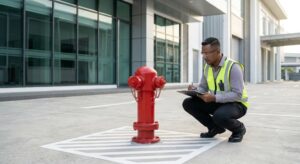
7. Inspect Fire Protection Equipment
Fire protection equipment must work during an emergency.
Regular inspections should cover:
- Fire alarms
- Smoke detectors
- Heat detectors
- Manual call points
- Fire extinguishers
- Fire hose reels
- Sprinkler systems
- Fire pumps
- Emergency lights
- Exit signs
- Fire doors
Report damaged or missing equipment as soon as possible.
In addition, do not place stock in front of firefighting equipment.
8. Control Smoking Areas
Smoking should only take place in approved areas.
A designated smoking area should be away from:
- Chemical storage
- Fuel storage
- Production areas
- Loading bays
- Combustible waste
- Flammable products
Provide suitable cigarette disposal containers. In addition, display clear no-smoking signs around high-risk areas.
9. Train Employees in Fire Safety
Employees must know how to respond during a fire.
Fire safety training should cover:
- Common workplace fire hazards
- How to raise the alarm
- Emergency exit routes
- Assembly point procedures
- Fire extinguisher awareness
- Fire Warden responsibilities
- Emergency Response Team duties
- Hazard reporting procedures
New employees should receive this information during induction.
Furthermore, existing employees should attend refresher training.
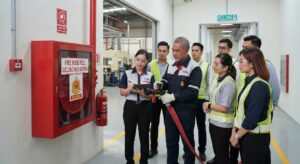
FERA provides Fire Warden and Management Training for employees who manage evacuation duties.
Organisations can also consider Emergency Response Team Training.
10. Prepare an Emergency Response Plan
An emergency response plan explains what employees must do during a fire.
The plan should include:
- Alarm procedures
- Emergency contact numbers
- Evacuation routes
- Alternative exit routes
- Assembly point locations
- Fire Warden duties
- ERT responsibilities
- Attendance checking
- Visitor assistance
- Shutdown procedures
- Communication procedures
The plan should be easy to understand.
Therefore, review it whenever the workplace layout or operations change.
11. Conduct Regular Fire Drills
A fire drill allows employees to practise evacuation procedures.
During the drill, management should observe:
- How quickly employees react
- Whether employees use the correct exits
- Whether Fire Wardens perform their duties
- Whether assembly points are suitable
- Whether attendance is checked correctly
- Whether communication is effective
After the drill, hold a short review.
Then, record weaknesses and corrective actions.
12. Create a Fire Hazard Reporting System
Employees may notice hazards before management does.
For example, they may see:
- Damaged electrical cables
- Blocked exits
- Missing extinguishers
- Leaking chemical containers
- Faulty emergency lights
- Unsafe storage arrangements
Therefore, create a simple reporting process.
Employees should know who to contact. This may include supervisors, safety officers, Fire Wardens or ERT members.
Fire Prevention Tips for Offices
Office fire prevention should focus on electrical equipment and escape routes.
Office management should:
- Avoid permanent use of extension cords
- Switch off pantry appliances
- Keep paper away from electrical equipment
- Inspect laptop chargers
- Keep server rooms clear
- Update evacuation maps
- Appoint Fire Wardens
- Brief new employees
- Maintain visitor records
In addition, employees should keep personal electrical appliances to a minimum.
Fire Prevention Tips for Factories
Factories should include fire prevention in production and maintenance activities.
Factory management should:
- Inspect machinery regularly
- Repair oil and fuel leaks
- Maintain electrical panels
- Control hot work
- Remove combustible dust
- Store chemicals safely
- Separate ignition sources
- Prepare shutdown procedures
- Train supervisors
- Establish an ERT
- Conduct realistic fire drills
Contractors should also receive a site safety briefing before work begins.
Fire Prevention Tips for Warehouses
Warehouse fire prevention depends on safe storage and good housekeeping.
Warehouse management should:
- Keep aisles clear
- Maintain emergency access routes
- Keep stock below sprinkler heads
- Control storage height
- Inspect warehouse racking
- Separate incompatible chemicals
- Remove damaged packaging
- Control battery-charging areas
- Keep loading bays clear
- Display exit signs
- Review stock changes
The fire risk may change when new products enter the warehouse.
Therefore, review the risk assessment whenever storage arrangements change.
Workplace Fire Prevention Checklist
Use this checklist during routine inspections.
Electrical Safety
- Are plugs and cables in good condition?
- Are sockets used safely?
- Are electrical panels accessible?
- Has faulty equipment been removed?
Housekeeping
- Is waste removed regularly?
- Are exits clear?
- Are corridors clear?
- Are spills cleaned quickly?
- Are electrical rooms free from storage?
Fire Protection Equipment
- Are fire extinguishers accessible?
- Are hose reels clear?
- Do fire alarms work?
- Do emergency lights work?
- Are fire doors in good condition?
Storage and Chemicals
- Are flammable materials stored correctly?
- Are containers labelled?
- Are chemicals separated?
- Is stock arranged safely?
- Are sprinkler heads clear?
Emergency Preparedness
- Is the emergency plan current?
- Do employees know the evacuation procedure?
- Are Fire Wardens appointed?
- Is an ERT available?
- Are evacuation maps displayed?
- Are assembly points marked?
- Are fire drills conducted?
What Should Employees Do During a Fire?
Employees should follow the workplace emergency plan.
In general, they should:
- Raise the alarm.
- Inform the emergency team.
- Contact the emergency services.
- Use the nearest safe exit.
- Do not use the lift.
- Go to the assembly point.
- Report for attendance checking.
- Wait for further instructions.
- Do not enter the building again.
Only trained employees should use firefighting equipment.
Most importantly, they must have a safe escape route. Evacuation should always remain the main priority.
Build a Strong Fire Safety Culture
Fire prevention is a shared responsibility.
Management must provide equipment, training and procedures. Meanwhile, supervisors must enforce safe practices.
Employees must also report hazards and follow emergency instructions.
A strong workplace fire prevention programme should:
- Identify hazards
- Control ignition sources
- Manage combustible materials
- Maintain fire systems
- Keep exits clear
- Train employees
- Conduct fire drills
- Review safety procedures
As a result, the workplace will be safer and better prepared.
Improve Your Workplace Fire Safety with FERA
FERA Training Center provides fire safety and emergency response training for offices, factories, warehouses and industrial facilities.
Available programmes include:
- Basic Firefighting Training
- Fire Warden and Management Training
- Emergency Response Team Training
- Fire Drill and Emergency Evacuation Training
- Fire Safety Awareness Training
- Customised In-House Fire Safety Training
FERA combines classroom learning with practical activities.
Therefore, participants can understand workplace hazards and practise emergency procedures.
Here is a updated draft incorporating all 24 orphan links seamlessly into a single comprehensive paragraph:
As a certified Emergency Response Service Provider, FERA delivers a comprehensive range of training modules, including our specialized Special Assistance program, the ONLINE Course of Firefighting and Rescue, and hands-on sessions like the Basic Practical of Firefighting and Rescue. Qualified personnel can complete their Instructor Registration or explore our main offerings to View Our Page, while professionals seeking accredited qualifications can register for NFPA 1072 Hazardous Material Awareness, NFPA 1072 Hazardous Material Operations, HAZMAT Operation Training, or review details for FSM & FSO. For testing or preview purposes, feel free to inspect our Sample Page, browse through our Fire System Training Archives, Fire Fighter Archives, Hazmat Archives, or review emergency protocols in the data center Archives. Safety managers can also enroll in the ONLINE Course Fire Drill Management, examine full curriculum standards such as the Curriculum Description NFPA 1033 Fire Investigator and Curricullum Description NFPA 1001 Fire Fighter I, or read expert articles on our Blog. Finally, stay updated by exploring our Industry Updates Archives, general Updates Archives, and Reference Archives, check the upcoming timetable for October 2026, and finalize your enrollment via Student Registration.
Contact FERA Training Center
Protect your employees, property and business operations before an emergency happens.
Explore FERA’s fire safety training programmes or contact FERA Training Center to request a quotation.
FERA Training Center Sdn Bhd
1-2, Jalan Nova K U5/K,
Subang Bestari,
40150 Shah Alam, Selangor
Email: [email protected]
Website: www.fera.com.my
WhatsApp: +60 12-273 0893