

First Aid Guide for Unconscious Victims
Why Immediate Action Matters
When someone becomes unconscious, every second counts. The brain can start to suffer damage within minutes if oxygen supply is interrupted.
Knowing what to do in this critical moment can mean the difference between life and death. Whether it happens at the workplace, home, or public area, your response must be fast, calm, and correct.
Common Causes of Unconsciousness
Understanding possible causes helps guide your response.
Medical Conditions
- Cardiac arrest
- Stroke
- Diabetic emergencies
- Seizures
Injuries
- Head trauma
- Falls or accidents
- Electric shock
Environmental Factors
- Heatstroke
- Lack of oxygen
- Poisoning
Step-by-Step First Aid Response
1. Check for Danger
Ensure the area is safe for you and the victim. Do not approach if there are hazards like fire, electricity, or traffic.
2. Check Responsiveness
Gently tap the victim and shout:
“Are you okay?”
If there is no response, treat the situation as an emergency.
3. Call for Help
Immediately:
- Call emergency services (999 in Malaysia)
- Ask someone nearby to assist
- Request for an AED if available
4. Open Airway and Check Breathing
Tilt the head back and lift the chin to open the airway.
Check for breathing:
- Look for chest movement
- Listen for breath sounds
- Feel for airflow
5. If Breathing Normally
Place the victim in the recovery position:
- Turn them onto their side
- Keep airway open
- Monitor continuously
6. If NOT Breathing
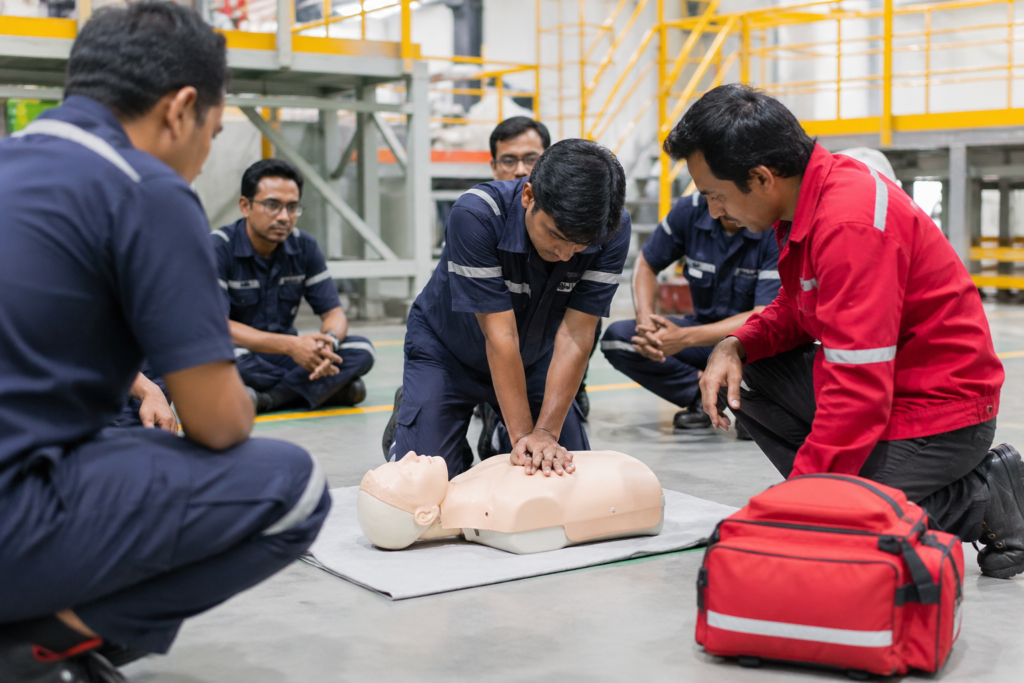
Start CPR immediately:
- 30 chest compressions
- 2 rescue breaths
- Continue until help arrives or AED is used
Recovery Position Explained
The recovery position helps prevent choking and keeps the airway clear.
Key Benefits
- Prevents airway blockage
- Reduces risk of aspiration
- Maintains breathing
What NOT to Do
Avoid these common mistakes:
- Do not shake the victim aggressively
- Do not give food or drink
- Do not leave the person alone
- Do not delay calling emergency services
Importance of First Aid Training
Reading is helpful, but real emergencies require confidence and hands-on skills.
Proper training ensures you can:
- Perform CPR correctly
- Use an AED safely
- Handle real-life emergency situations
- Stay calm under pressure
Be Prepared Before Emergencies Happen
Emergencies are unpredictable. Preparation is your best defense.
Equip yourself and your team with:
- First aid knowledge
- Emergency response skills
- Confidence to act immediately
Join FERA’s Basic Occupational First Aid, CPR & AED Training and gain real, life-saving skills that can protect your team, your workplace, and your community.
Register now via WhatsApp: https://wa.me/60122730893