

The First 4 Minutes: Why AED Is Critical for Survival
When a person suddenly collapses due to cardiac arrest, every second matters. The first four minutes are known as the “golden window” a critical period where immediate action can mean the difference between life and death.
Without early intervention, survival chances decrease rapidly. This is where an Automated External Defibrillator (AED) becomes a life saving device.
What Happens During Cardiac Arrest?
Cardiac arrest occurs when the heart suddenly stops beating effectively, cutting off blood flow to the brain and vital organs.
Within minutes:
- Brain damage can begin in as little as 4 minutes
- Irreversible injury may occur after 6-10 minutes
- Survival rates drop by 7-10% every minute without defibrillation
This makes immediate response absolutely critical.
Why the First 4 Minutes Matter Most
The first 4 minutes represent the window before brain damage begins. If CPR and AED are applied within this timeframe, survival rates can increase significantly.
Key reasons:
- Oxygen supply to the brain is still recoverable
- Heart rhythm may still be shockable
- Higher chances of full recovery without complications
Delaying response reduces survival probability drastically.
How an AED Saves Lives
An AED is designed to restore a normal heart rhythm by delivering an electric shock during life-threatening arrhythmias.
Key Functions of an AED
- Detects abnormal heart rhythms automatically
- Provides clear voice instructions for users
- Delivers shock only when necessary
- Safe for use by trained and untrained responders
AEDs are built for public use meaning anyone can step in and save a life.
The Survival Chain: CPR + AED
Survival from cardiac arrest depends on a rapid response chain:
- Early recognition and call for help
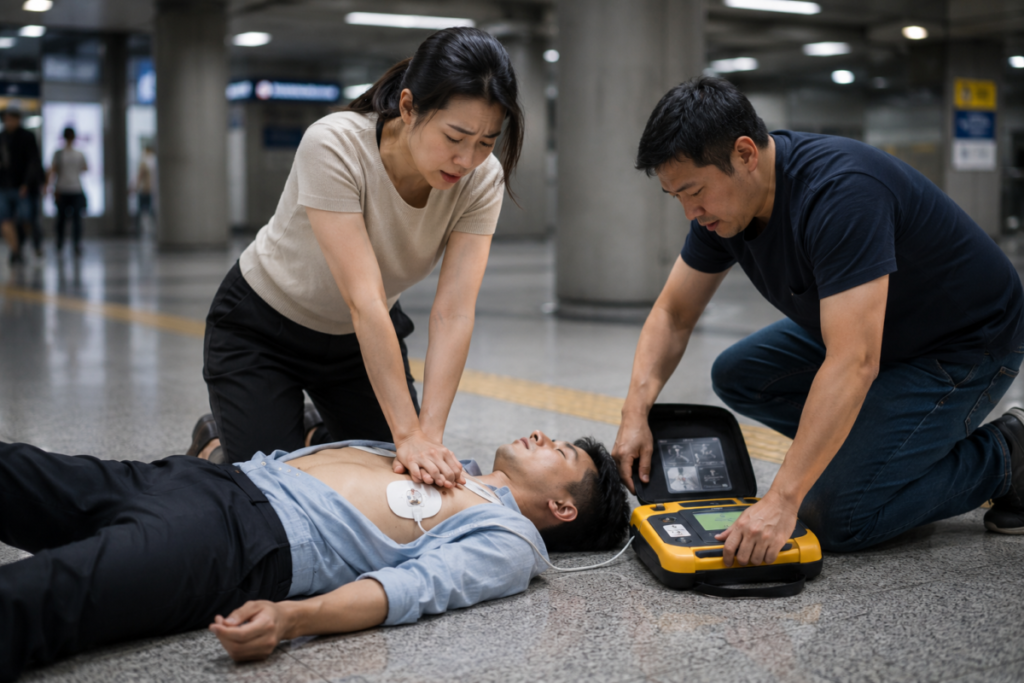
- Immediate CPR
- Early defibrillation using AED
- Advanced medical care
Combining CPR with AED within the first 4 minutes can double or even triple survival rates.
Common Misconceptions About AED
“Only medical professionals can use AED”
False. AEDs are designed for the public with step by step voice guidance.
“AED can harm the victim”
No. It will only deliver a shock if needed.
“I might do it wrong”
Doing something is always better than doing nothing during cardiac arrest.
Why Every Workplace Needs an AED
In many workplaces, emergency medical response may take more than 10 minutes to arrive. Having an AED on-site ensures immediate action can be taken.
Benefits:
- Protect employees and visitors
- Improve workplace safety compliance
- Demonstrate duty of care
- Increase survival chances before ambulance arrival
For high-risk environments, AED is not just recommended it is essential.
Training Makes the Difference
While AEDs are easy to use, proper training increases confidence and response speed.
Through structured training like:
- Basic Occupational First Aid, CPR & AED
- Emergency Response Team (ERT) Training
Participants gain hands on experience to act effectively during real emergencies.
Conclusion: Every Second Counts
The first 4 minutes after cardiac arrest are the most critical window for survival.
Without immediate action, chances decrease rapidly. But with CPR and AED, lives can be saved even before emergency responders arrive.
Being prepared is not optional. It is a responsibility.
- https://fera.com.my/kenapa-cpr-penting-dalam-menyelamatkan-nyawa/
- https://fera.com.my/basic-occupational-first-aid-cpr-aed-training/
Be the one who makes the difference when it matters most.
Equip your workplace with life-saving skills and knowledge today.
Register for CPR & AED Training:
https://fera.com.my/basic-occupational-first-aid-cpr-aed-training/
WhatsApp us now:
https://wa.me/60122730893
Train. Respond. Save.