
Searching for a safety officer course Malaysia programme can become confusing because several workplace roles use similar titles. A company may need a Safety and Health Officer, an OSH Coordinator, a Fire Safety Officer or an employee trained to support general workplace safety.
However, these roles do not carry the same responsibilities. They may also follow different legal requirements, training structures and appointment processes.
Therefore, employers should identify the role they need before registering an employee for a course. The right training should match the organization’s industry, number of employees, workplace hazards and emergency responsibilities.
FERA provides several workplace safety and emergency response training programmes for organizations that want to improve employee competency and emergency readiness.
Why the Term “Safety Officer” Can Be Confusing
Many employers use “safety officer” as a general term for anyone who manages workplace safety. In practice, Malaysia has several distinct roles.
A Safety and Health Officer, commonly known as an SHO, focuses on occupational safety and health compliance. An OSH Coordinator helps an employer coordinate workplace safety and health matters. Meanwhile, a Fire Safety Officer focuses specifically on fire prevention, fire protection systems and emergency readiness.
Fire wardens and Emergency Response Team members also support workplace safety. However, they do not automatically become an SHO, OSH Coordinator or FSO after completing a short emergency response course.
The following comparison provides a simple overview:
| Role | Main Area | Typical Responsibility |
| Safety and Health Officer | Occupational safety and health | Supports legal compliance and promotes safe work practices |
| OSH Coordinator | Workplace OSH coordination | Coordinates documents, reporting, hazards and safety activities |
| Fire Safety Officer | Fire safety management | Monitors fire risks, equipment, evacuation and fire procedures |
| Fire Warden or ERT Member | Emergency response | Supports evacuation and initial workplace emergency actions |
The organization should confirm the applicable requirements with the relevant authorities before making an official appointment.
Safety and Health Officer Course
A Safety and Health Officer manages broad occupational safety and health matters.
The role may involve workplace inspections, risk control, incident investigation, employee training and communication with management. An SHO may also monitor whether the organization follows its safety policies and legal responsibilities.
Under Section 29 of the Occupational Safety and Health Act 1994, an SHO must possess the qualifications or training determined through the relevant requirements. The person must also follow the registration process administered by the Department of Occupational Safety and Health.
Therefore, attending a general safety seminar does not automatically qualify someone as a registered SHO.
Anyone planning to become an SHO should review the current information on the official DOSH Safety and Health Officer portal. The applicant should verify the recognized course, examination, experience and registration requirements before paying a training provider.
OSH Coordinator Course
An OSH Coordinator supports employers that need a structured person to coordinate occupational safety and health matters but may not fall within a workplace category that requires an SHO.
Section 29A of the Occupational Safety and Health Act requires an employer with five or more employees to appoint an employee as an OSH Coordinator when the workplace does not fall within a class that requires an SHO. An employer that has already appointed an SHO is treated as meeting this requirement.
The OSH Coordinator may help the employer organize safety records, identify hazards, promote safe work practices and coordinate relevant workplace actions.
However, the coordinator does not replace every function of a registered SHO. The two roles have different scopes and appointment requirements.
DOSH states that an OSH Coordinator should complete the prescribed course through a training center registered with the department.
Employers can review FERA’s OSH Coordinator training programme to understand the available course structure. Before registration, the company should confirm the latest provider status, course recognition and participant requirements.
Fire Safety Officer Course
A Fire Safety Officer concentrates on fire prevention and emergency preparedness within a building or facility.
The FSO may monitor fire protection equipment, inspect escape routes, support fire drills and report fire safety problems. The person may also assist a Fire Safety Manager in implementing the organization’s fire safety programme.
An FSO does not perform exactly the same role as an SHO. The SHO manages wider occupational safety and health matters, while the FSO concentrates on fire-related risks and building readiness.
The Fire and Rescue Department of Malaysia manages fire safety matters and publishes official information relating to FSM, FSO and fire safety organization requirements.
Organizations can review FERA’s FSM and FSO training updates for current programme information. Since implementation and registration details may change, employers should confirm the latest status before making an appointment or course payment.
Which Safety Officer Course Malaysia Employers Should Choose
The correct course depends on the duty that the employee will perform.
A company should choose an SHO pathway when the workplace falls within the relevant legal category or when it requires a registered professional to manage wider occupational safety and health compliance.
Meanwhile, an eligible workplace may appoint an OSH Coordinator to coordinate basic OSH matters under Section 29A. This role may suit smaller organizations that do not fall within a class requiring a full-time SHO.
A building may require an FSO when the organization needs a person to support daily fire safety management. The employee may inspect fire equipment, maintain evacuation readiness and assist the Fire Safety Manager.
In addition, an organization may train fire wardens or ERT members when it needs employees to support emergency evacuation and initial response. These roles strengthen operational readiness but do not automatically replace a legally required SHO, OSH Coordinator or FSO.
What Should a Good Safety Officer Course Cover?
A useful course should develop practical skills instead of relying only on presentation slides.
The content should reflect the participant’s role and workplace. For example, an OSH Coordinator course should focus on workplace hazard coordination and safety documentation. In contrast, an FSO course should focus more heavily on fire prevention, protection systems and emergency planning.
A relevant programme may cover:
- Legal responsibilities connected to the role
- Hazard identification and risk assessment
- Workplace inspections and reporting
- Emergency planning and communication
- Incident documentation and corrective action
Practical activities also help participants understand how to apply the lessons at work.
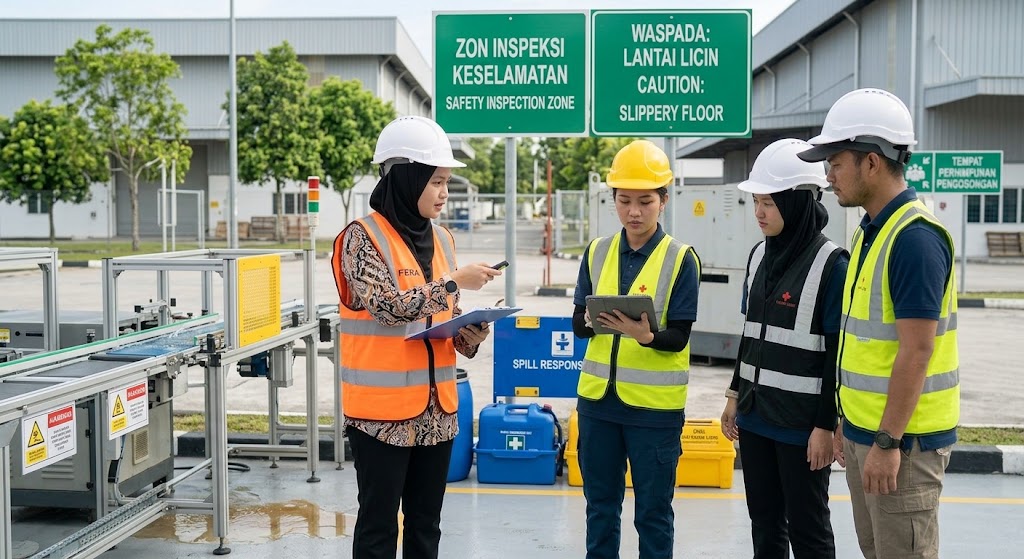
For example, participants may inspect a simulated workplace, identify hazards or prepare a basic action plan. Fire safety participants may also practice evacuation management and inspect fire protection equipment.
Safety Officer Training for Different Industries
A safety officer course should reflect the risks present in the organization.
An office may focus on electrical hazards, ergonomics, emergency evacuation and first aid. Meanwhile, a factory may need stronger coverage of machinery, chemicals, production processes and fire protection systems.
A warehouse may face risks involving forklifts, storage racks, loading activities and combustible packaging. Hotels and public buildings may need to priorities visitor evacuation, high occupancy and fire alarm procedures.
Therefore, employers should share relevant workplace information with the training provider. This information helps the trainer prepare examples and exercises that reflect real operational risks.
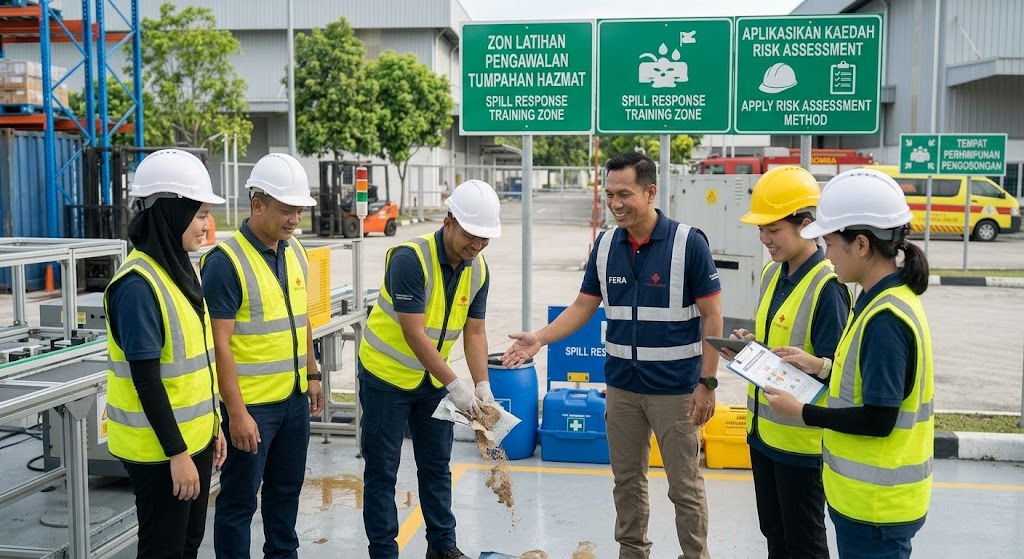
FERA offers fire safety, first aid, HAZMAT and Emergency Response Team training that organizations can combine with their wider safety management plan.
The Difference Between a Course Certificate and Professional Registration
A participant may receive a certificate after completing a course. However, that certificate does not always mean the person has completed a professional registration process.
A certificate of attendance normally confirms that the participant attended the programme. A certificate of completion may show that the participant finished the required modules. Meanwhile, a certificate of competency may require an assessment.
Professional registration may involve additional conditions, such as recognized qualifications, examinations, work experience, applications and approval from the relevant authority.
Therefore, employers should ask the training provider several questions before registering:
What certificate will the participant receive? Does the course support a regulated appointment? Does the participant need additional assessment or registration? Which authority recognizes the programme?
These questions help the organization avoid paying for a course that does not match its intended purpose.
Can Safety Officer Training Be HRD Corp Claimable?
Eligible employers may be able to claim approved training costs through HRD Corp.
However, claimability depends on the employer, training provider, programme registration and current claim requirements.
Employers should review the official HRD Corp Claimable Courses information before the programme begins. They should also request the required course documents from the provider.
A company should not assume that every safety course automatically qualifies for a claim.
How Employers Can Prepare Before Training
First, management should define the employee’s intended role. The company should decide whether it needs an SHO, OSH Coordinator, FSO, fire warden or ERT member.
Next, management should review the workplace risk assessment. This step helps the employer select training that reflects actual hazards instead of choosing a generic programme.
The organization should also identify employees who can communicate well and manage responsibility. After training, management must give them enough authority and support to perform their duties.
Finally, the employer should update appointment letters, emergency procedures and workplace records where required. Training alone will not improve safety when the organization never applies what participants learned.

Why Companies Need More Than One Safety Role
One employee may not have enough time or competency to manage every safety responsibility.
For example, an SHO may oversee broad occupational safety matters. An OSH Coordinator may manage records and activities within a smaller workplace. An FSO may concentrate on fire protection, while fire wardens guide occupants during evacuation.
An Emergency Response Team may then manage initial firefighting, first aid or HAZMAT actions according to its training.
When these roles work together, the organization creates a stronger safety structure. Employees understand their duties, while management receives clearer information about hazards and emergency readiness.
FERA provides Emergency Response Team training for organizations that want to develop clearer response roles and practical team coordination.
Conclusion
Choosing a safety officer course Malaysia programme starts with understanding the role that the organization actually needs.
An SHO, OSH Coordinator and Fire Safety Officer perform different functions. They may also follow different legal, training and registration requirements.
Therefore, employers should not select a course based only on its title, price or duration. They should review the workplace category, employee numbers, hazards and intended appointment before registration.
The correct programme can help an employee perform the assigned role with greater confidence. More importantly, the organization must support the person after training through clear responsibilities, updated procedures and regular safety activities.
Organizations can contact FERA to discuss OSH Coordinator, fire safety, first aid, ERT or customized workplace training requirements.
Frequently Asked Questions About Safety Officer Course Malaysia
Is a Safety and Health Officer the same as an OSH Coordinator?
No. An SHO and an OSH Coordinator have different scopes and appointment requirements. An SHO normally manages wider occupational safety and health compliance, while an OSH Coordinator coordinates OSH matters within eligible workplaces.
Is a Fire Safety Officer the same as a Safety and Health Officer?
No. A Fire Safety Officer focuses mainly on fire prevention, fire systems and emergency preparedness. A Safety and Health Officer covers broader occupational safety and health matters.
Can a short safety course make someone a registered SHO?
Not automatically. SHO registration follows specific qualification, training and application requirements administered by DOSH.
Who should attend an OSH Coordinator course?
An employer may select an employee who can coordinate workplace safety documentation, hazards, communication and improvement activities. The employer should confirm whether Section 29A applies to the workplace.
Does every company need a Fire Safety Officer?
Not every workplace follows the same requirement. The need depends on the premises, fire safety requirements and the organization’s appointment structure. Employers should confirm the latest position with BOMBA or a qualified adviser.
Can one employee become both an OSH Coordinator and a fire warden?
An employee may receive training for more than one function when the appointments and workload remain suitable. However, management must clearly define each responsibility.
What should employers check before registering for a course?
Employers should confirm the course recognition, trainer credentials, syllabus, assessment, certificate type, registration requirements and HRD Corp eligibility.
Where can organizations arrange safety training in Malaysia?
Organizations can explore FERA’s training programmes for OSH Coordinator, fire safety, firefighting, first aid, HAZMAT and emergency response training.