
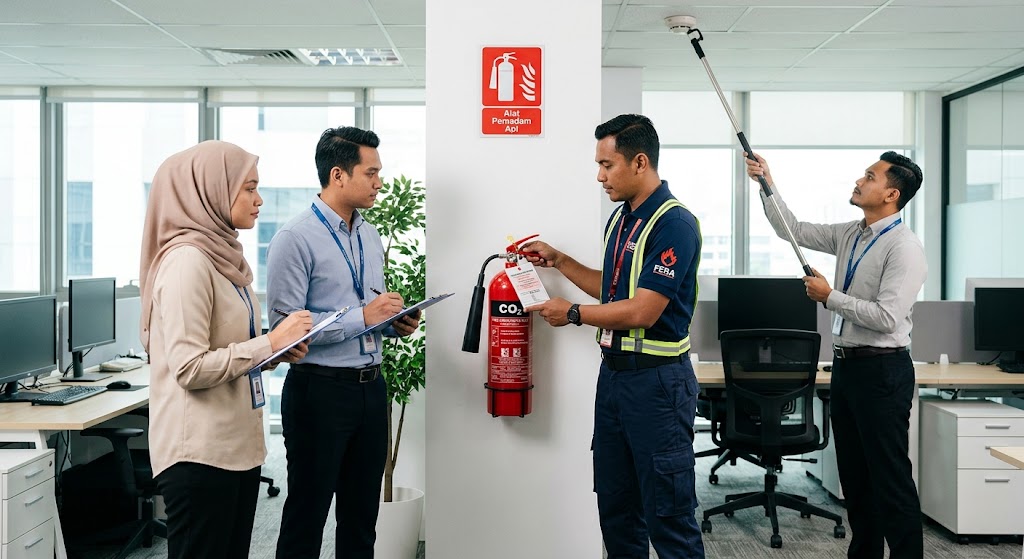
Choosing the correct fire extinguisher Malaysia businesses need can help employees respond effectively during an early-stage fire. However, every extinguisher uses a different extinguishing agent. Therefore, companies must match each unit with the fire risks found in the surrounding area.
For example, an office may face risks involving paper, furniture and electrical equipment. Meanwhile, a commercial kitchen may face fires involving cooking oils and fats. Factories may also handle machinery, chemicals, combustible materials and flammable liquids.
Companies should not select an extinguisher based on price alone. Instead, they should identify workplace hazards, install suitable fire fighting equipment and train employees to use it safely.
Organizations can strengthen their emergency preparedness through professional fire safety and emergency response training by FERA.
Why the Correct Fire Extinguisher Matters
A fire extinguisher can help control a small fire before it spreads. Nevertheless, employees must use the correct equipment and maintain a safe escape route throughout the response.
Using the wrong extinguisher may:
- Spread burning liquids across a wider area
- Expose the user to electrical shock
- Create dangerous fumes
- Reduce visibility
- Damage sensitive equipment
- Delay evacuation
- Place employees at unnecessary risk
Therefore, every organization should assess the materials, equipment and daily activities within its premises.
Fire extinguishers also form only one part of a complete fire protection system. A workplace may still require fire alarms, emergency lighting, exit signs, fire doors, hose reels, sprinkler systems and clear evacuation procedures.
The Fire and Rescue Department of Malaysia also provides official information relating to fire prevention and public fire safety.
Understanding the Main Classes of Fire
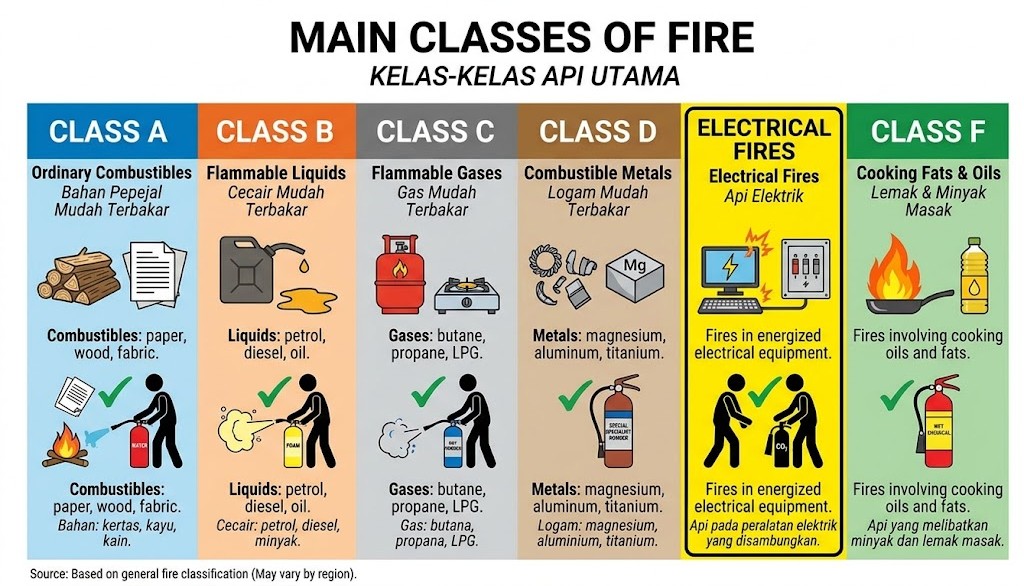
Fire classes identify the type of material or fuel involved in a fire. Employees must understand these classes before they attempt to operate an extinguisher.
- Class A fires involve ordinary combustible materials such as paper, wood, cardboard, fabric and selected plastics.
- Class B fires involve flammable liquids such as petrol, diesel, solvents and paint.
- Class C fires involve flammable gases such as propane, butane and liquefied petroleum gas.
- Class D fires involve combustible metals. These fires require specialist extinguishing agents and trained responders.
- Class F fires involve cooking oils and fats commonly found in restaurants, cafeterias and commercial kitchens.
Electrical equipment requires an extinguishing agent that is safe for energized systems. Employees should never assume that every extinguisher can control an electrical fire.
Main Types of Fire Extinguishers in Malaysia
Different workplaces require different types of extinguishers. The correct selection depends on the materials, machinery, electrical systems and operational risks found within the premises.
The following are among the most common types of fire extinguishers in Malaysia.
Water Fire Extinguisher
A water extinguisher usually supports Class A fire protection. It cools burning materials and reduces the likelihood of the fire reigniting.
Businesses may install water extinguishers in areas containing:
- Paper
- Cardboard
- Wood
- Fabric
- General office materials
However, employees must not use water extinguishers on live electrical equipment, flammable liquids or cooking oil fires.
A water-based Class A fire extinguisher may suit offices, schools, storerooms and selected commercial areas. Nevertheless, companies should complete a fire risk assessment before installing any unit.
Foam Fire Extinguisher
Foam extinguishers can support selected Class A and Class B fire risks. The foam forms a layer over burning liquid and helps reduce contact with oxygen.
Businesses may use foam extinguishers in areas involving:
- Petrol
- Diesel
- Paint
- Solvents
- Flammable liquids
- Combustible solid materials
Employees should always read the cylinder label before use. They must also keep a safe distance and maintain direct access to an exit.
Dry Powder Fire Extinguisher
Dry powder extinguishers offer flexible protection across several types of fire. Depending on the product classification, they may support Class A, Class B and Class C risks.
Businesses commonly consider dry powder extinguishers for:
- Workshops
- Industrial premises
- Warehouses
- Outdoor areas
- Vehicles
- Areas containing flammable gases
Many vehicle owners also choose a dry powder unit as a fire extinguisher for car use.
However, powder can reduce visibility and leave substantial residue. It may also damage computers, electrical systems and sensitive machinery.
Therefore, businesses should assess whether dry powder suits enclosed offices, server rooms or areas containing expensive electronic equipment.
A car fire extinguisher should also use a secure mount. A loose cylinder can move dangerously during sudden braking or an accident.
Carbon Dioxide Fire Extinguisher
A carbon dioxide or CO₂ extinguisher commonly supports electrical equipment risks and selected flammable liquid fires.
Businesses often position CO₂ extinguishers near:
- Electrical panels
- Computers
- Server rooms
- Laboratories
- Machinery control systems
- Electronic equipment
A CO₂ extinguisher does not leave powder, foam or water residue. Therefore, it may suit sensitive electrical environments.
However, users should avoid touching the discharge horn during operation unless the product design allows safe handling. The horn may become extremely cold when the extinguisher releases carbon dioxide.
When choosing a fire extinguisher for electrical equipment, businesses should review the product rating and seek advice from a qualified fire safety provider.
Wet Chemical Fire Extinguisher
Wet chemical extinguishers primarily support Class F fire risks. Restaurants, hotels, cafeterias and food production facilities commonly install them near commercial cooking areas.
Wet chemical agents help control fires involving:
- Cooking oil
- Deep-fat fryers
- Vegetable oil
- Animal fats
- Commercial kitchen equipment
Employees should never pour water onto burning cooking oil. Water can spread the hot oil and create a much larger fire.
Kitchen employees should receive practical training on equipment shutdown, evacuation and the safe use of appropriate fire fighting equipment.
Clean Agent Fire Extinguisher
Clean agent extinguishers may protect sensitive systems where powder, foam or water could cause serious damage.
Businesses may consider clean agent protection for:
- Data centres
- Telecommunications rooms
- Control rooms
- Laboratories
- High-value electronic equipment
- Specialist industrial environments
A professional fire risk assessment should determine the correct extinguishing agent, cylinder capacity and installation arrangement.
How to Choose a Fire Extinguisher Malaysia Businesses Need
There is no single extinguisher that suits every workplace. Therefore, companies should select equipment based on the specific hazards found in each area.
An office may need protection for paper, furniture and electrical equipment. As a result, the organisation may install a combination of water-based and CO₂ extinguishers.
A factory may require several extinguisher types because it handles machinery, packaging materials, chemicals, electrical panels and flammable liquids.
Meanwhile, a commercial kitchen may need wet chemical protection in addition to the building’s other fire safety equipment.
Businesses should consider:
- Materials stored within the area
- Types of machinery used
- Electrical equipment
- Flammable liquids or gases
- Cooking activities
- Chemical risks
- Room size and layout
- Distance to the nearest exit
- Employee competency
- Existing fire protection systems
Companies should also provide suitable basic fire safety training so employees can identify hazards and respond correctly during an emergency.
How to Use a Fire Extinguisher Safely
Employees should only attempt to control a small, early-stage fire when they have received suitable training and can maintain a safe escape route.
A common operating method follows the PASS principle:
- Pull the safety pin
- Aim the nozzle towards the base of the fire
- Squeeze the operating handle
- Sweep the extinguishing agent from side to side
Before operating an extinguisher, the employee should:
- Activate the fire alarm
- Alert nearby occupants
- Contact the emergency services
- Confirm that the correct extinguisher is available
- Keep an exit behind them
- Maintain a safe operating distance
- Monitor smoke and heat conditions
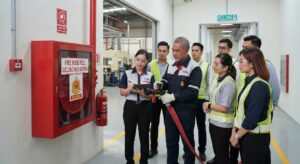
Employees who learn how to use a fire extinguisher through practical training can develop better confidence and decision-making skills.
FERA provides structured fire fighter training in Malaysia for organizations that need practical firefighting and emergency response knowledge.
When Should Employees Avoid Using an Extinguisher?
Employees should evacuate immediately when:
- The fire has spread beyond its original area
- Thick smoke reduces visibility
- Heat prevents a safe approach
- The correct extinguisher is unavailable
- The fire involves unknown chemicals
- The fire blocks the escape route
- The extinguisher becomes empty
- The employee has not received training
Life safety must remain the priority. Employees should never continue fighting a fire when conditions become unsafe.
Instead, they should follow the organisation’s emergency evacuation procedures and move towards the designated assembly point.
Fire Extinguisher Placement and Mounting
A fire extinguisher should remain visible, accessible and properly secured.
Businesses should not hide extinguishers behind:
- Furniture
- Machinery
- Storage boxes
- Curtains
- Locked doors
- Decorative panels
A suitable fire extinguisher and mount arrangement helps prevent the cylinder from falling or becoming damaged.
Organisations should:
- Install clear extinguisher signs
- Keep access free from obstruction
- Position units along normal access routes
- Use appropriate wall brackets or cabinets
- Protect outdoor units from weather
- Record every unit in an inspection register
Employees should be able to identify and reach an extinguisher quickly without moving towards the fire.
Fire Extinguisher Inspection and Servicing
Buying an extinguisher does not complete the organisation’s fire safety responsibility. The equipment must remain serviceable and ready for use.
A routine visual inspection should check:
- Whether the extinguisher remains in its assigned location
- Whether employees can access it easily
- Whether the safety pin and seal remain intact
- Whether the pressure indicator shows the correct range
- Whether the hose and nozzle show damage
- Whether the cylinder has corrosion, dents or leakage
- Whether the service label remains readable
- Whether anyone has discharged the extinguisher
A qualified provider should inspect and maintain the equipment according to applicable requirements and manufacturer recommendations.
Businesses searching for a service fire extinguisher provider should review the provider’s competency, documentation, replacement parts and maintenance process.
The organization should also record every inspection, service and corrective action.
Does a Fire Extinguisher Have an Expiry Date?
The expiry date of a fire extinguisher depends on several factors. These include the cylinder condition, extinguishing agent, manufacturer’s instructions, servicing history and inspection requirements.
An extinguisher should not remain in service simply because the cylinder still appears clean.
Internal pressure loss, corrosion, damaged components or previous partial discharge can affect its performance.
Businesses should arrange servicing or replacement when:
- The servicing period has passed
- The pressure reading is outside the correct range
- The cylinder shows corrosion
- The hose or nozzle is damaged
- The extinguisher has been discharged
- The safety seal is broken
- The service provider identifies a failed component
- The manufacturer recommends replacement
Companies should maintain a register containing the location, serial number, inspection date, service date and condition of every extinguisher.
What Affects Fire Extinguisher Prices in Malaysia?
The price of a fire extinguisher depends on more than its cylinder size.
Several factors may affect the total cost:
- Type of extinguishing agent
- Cylinder capacity
- Product approval
- Manufacturer
- Mounting bracket or cabinet
- Installation requirements
- Delivery
- Inspection package
- Maintenance service
- Number of units ordered
Businesses should avoid choosing an extinguisher based on price alone.
A cheaper product that does not match the workplace risk may provide inadequate protection. Therefore, companies should evaluate the equipment, installation, documentation, servicing and after-sales support together.
Fire Extinguishers Are Part of a Larger Safety System
Fire extinguishers cannot replace a complete fire safety programme.
Depending on the premises, an organisation may also need:
- Fire alarm systems
- Smoke detectors
- Heat detectors
- Fire hose reels
- Sprinkler systems
- Emergency lighting
- Exit signs
- Fire doors
- Assembly points
- Emergency response procedures
- Trained fire wardens
- First aid equipment
- Emergency Response Team members
The Department of Occupational Safety and Health Malaysia provides official workplace safety and health information for Malaysian employers.
Companies should inspect all fire protection equipment regularly. They should also document every test, service, drill and corrective action.
Why Practical Fire Safety Training Matters
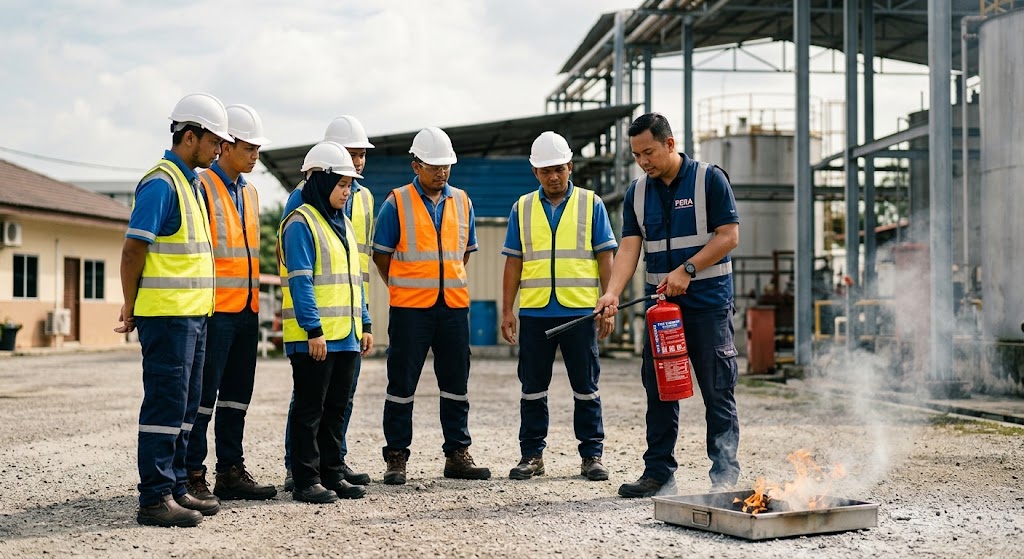
Employees may understand basic fire safety in theory. However, an actual emergency can create fear, confusion and time pressure.
Practical training helps employees learn how to:
- Identify the correct extinguisher
- Maintain a safe distance
- Operate the equipment
- Assess whether the fire remains manageable
- Protect the escape route
- Communicate during an emergency
- Stop the response when conditions become dangerous
- Evacuate towards the assembly point
Fire safety personnel may also need to coordinate emergency teams, conduct drills, check equipment and brief management.
In addition, organizations should combine fire response preparation with CPR and first aid training so trained employees can provide immediate assistance while waiting for emergency responders.
Strengthen Workplace Fire Preparedness with FERA
The correct extinguisher can help control an early-stage fire. However, equipment alone cannot guarantee a safe response.
Employees need practical knowledge, clear procedures and confidence to make the right decision under pressure. They must also recognize when to stop firefighting and begin evacuation.
FERA provides professional training in fire safety, firefighting, emergency response, evacuation and first aid.
Organizations can explore FERA’s fire safety training programmes to develop a course that reflects their workplace risks, industry and employee responsibilities.
Frequently Asked Questions About Fire Extinguisher Malaysia
What are the main types of fire extinguishers in Malaysia?
Common options include water, foam, dry powder, carbon dioxide, wet chemical and clean agent extinguishers. Each type supports different fire risks.
Which extinguisher is suitable for electrical equipment?
A CO₂ extinguisher commonly supports electrical equipment risks because it does not leave water or powder residue. However, businesses should confirm the equipment rating before installation.
Can employees use a water extinguisher on an electrical fire?
No. Water may conduct electricity and expose the user to electrical shock. Employees must use an extinguisher suitable for energized electrical equipment.
What fire extinguisher should a vehicle carry?
Many vehicle owners consider a compact dry powder extinguisher. However, the correct choice depends on the type of vehicle and its risks. The cylinder should also remain securely mounted.
How often should businesses service fire extinguishers?
The servicing schedule depends on manufacturer instructions, applicable requirements and equipment condition. Businesses should conduct routine visual checks and use a qualified provider for maintenance.
Should every employee learn how to operate an extinguisher?
Every employee should understand basic fire safety and evacuation procedures. Employees expected to use extinguishers should receive practical training.
Can fire extinguishers replace alarms and sprinkler systems?
No. Extinguishers form only one part of a complete fire protection system. Buildings may also require alarms, detectors, sprinklers, hose reels, emergency lighting and evacuation procedures.
Where can businesses arrange fire safety training in Malaysia?
Businesses can arrange practical fire safety, firefighting, evacuation, emergency response and first aid training through FERA.