

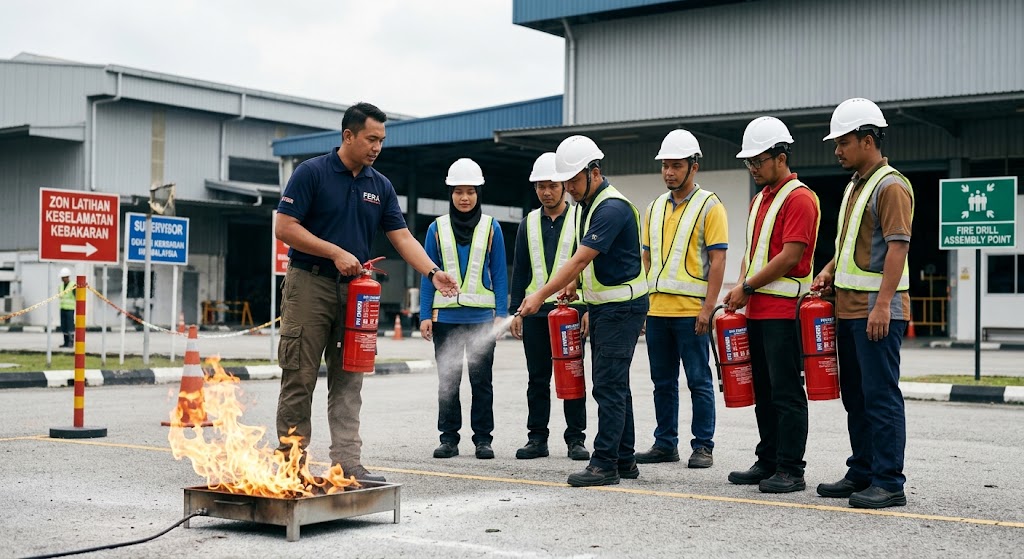
Effective fire drill training Malaysia programmes help organizations prepare employees to respond quickly during a fire emergency. A drill allows employees to practice evacuation routes, recognize alarm signals and move towards the correct assembly point.
However, a fire drill should involve more than sounding an alarm. The organization must plan the exercise, assign clear responsibilities and evaluate employee performance after the drill.
A well-managed exercise can identify blocked exits, communication problems, slow evacuation times and confusion among employees. Management can then correct these weaknesses before a real emergency occurs.
Organizations that need structured practical guidance can arrange Basic Fire Drill Management and First Aid Training with FERA.
What Is Fire Drill Training?
Fire drill training is a planned exercise that simulates a fire emergency within a workplace or building.
During the exercise, employees follow the organization’s emergency procedures. They respond to the alarm, leave their work areas, use designated escape routes and report to an assembly point.
The drill allows management to assess whether the emergency plan works under realistic conditions.
A complete workplace fire drill may involve:
- Activating the fire alarm
- Alerting employees and visitors
- Assigning fire wardens
- Evacuating different work areas
- Checking rooms and common spaces
- Controlling movement at stairways
- Assisting individuals who need support
- Conducting a headcount
- Communicating with the Emergency Response Team
- Recording the evacuation time
- Reviewing performance after the exercise
A fire drill does not aim to create panic. Instead, it helps employees understand what they need to do during an emergency.
Why Fire Drill Training Malaysia Programmes Matter
Employees may understand evacuation procedures during a briefing. However, they may respond differently when an alarm sounds unexpectedly.
Some employees may stop to collect personal belongings. Others may use the wrong exit, wait for further instructions or return to their work areas.
Regular training helps employees respond with greater confidence.
Fire drill training can help an organization:
- Test its emergency response plan
- Familiarize employees with alarm signals
- Confirm whether escape routes remain accessible
- Train fire wardens and Emergency Response Team members
- Measure evacuation performance
- Test communication procedures
- Identify employees who require assistance
- Check the suitability of assembly points
- Improve coordination between departments
- Strengthen workplace fire safety awareness
The Department of Occupational Safety and Health includes training, drills, exercises, evacuation, rescue and first aid within its emergency preparedness guidance.
Therefore, organizations should treat a workplace fire drill as part of a complete emergency management programme.
Fire Drill Training Is More Than an Evacuation Exercise
An evacuation drill focuses on moving people safely out of a building. However, fire drill management covers a wider range of responsibilities.
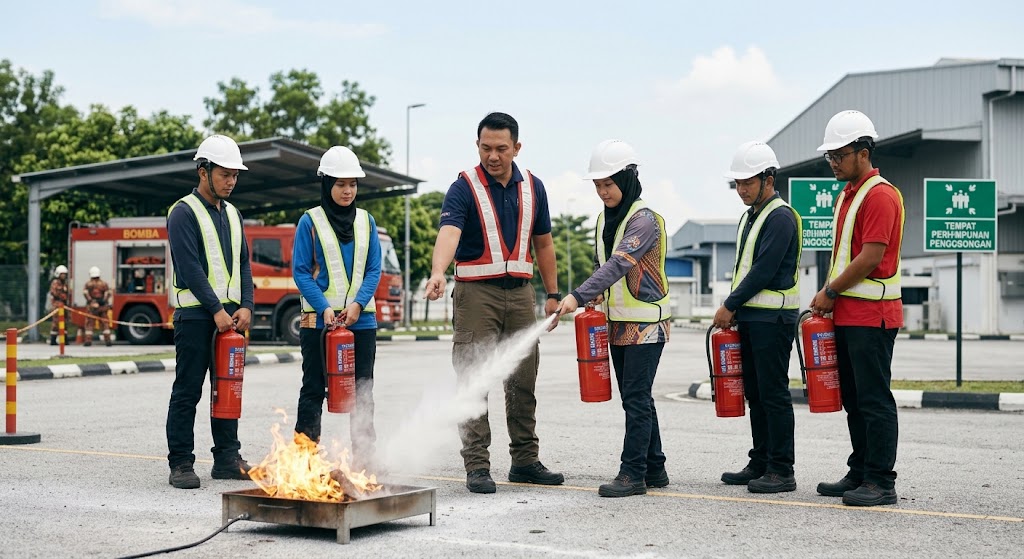
Management should also evaluate:
- Fire alarm effectiveness
- Emergency communication
- Employee behavior
- Fire warden performance
- Visitor evacuation
- Contractor awareness
- Emergency shutdown procedures
- Assembly point control
- Headcount accuracy
- Coordination with emergency responders
- Post-drill reporting
A successful drill should produce measurable findings. Management can use these findings to improve the emergency response plan.
FERA’s Emergency Response Team training covers emergency planning, communication procedures, response roles, equipment use and practical exercises.
Who Should Participate in a Workplace Fire Drill?
Every person inside the premises should understand how to respond during a fire alarm.
Participants may include:
- Full-time employees
- Part-time employees
- Management
- Security personnel
- Cleaning teams
- Contractors
- Temporary workers
- Visitors
- Fire wardens
- First aiders
- Emergency Response Team members
- Facilities personnel
The organization should not limit training to its safety department. A real fire may occur when a safety officer is unavailable.
Therefore, all employees should understand basic evacuation actions. Designated personnel should receive additional training for their specific roles.
Roles in Fire Drill Management
Clear responsibilities help the organization conduct an orderly evacuation.
Each organization may use a different emergency structure. However, the following roles commonly support a workplace fire drill.
Emergency Controller
The emergency controller coordinates the overall response.
This person may:
- Confirm the type of emergency
- Activate the emergency plan
- Communicate with response teams
- Receive updates from fire wardens
- Coordinate emergency shutdown actions
- Confirm the evacuation status
- Communicate with external emergency services
- Authorize the end of the exercise
The organization should appoint an alternate controller in case the primary person is absent.
Fire Wardens
Fire wardens guide employees during evacuation.
Their responsibilities may include:
- Directing occupants towards safe exits
- Checking assigned areas
- Preventing employees from using lifts
- Assisting with crowd movement
- Reporting hazards
- Closing doors when appropriate
- Reporting the status of their zones
- Supporting the headcount process
Employees appointed to this role should receive practical Fire Warden training before leading an evacuation.
Emergency Response Team
The Emergency Response Team or ERT manages assigned emergency tasks.
Depending on the workplace, its members may support:
- Initial emergency assessment
- Fire extinguisher response
- Hazard isolation
- Search and rescue
- First aid
- Emergency communication
- Traffic control
- Spill response
- Incident command
ERT members need practical skills that reflect the risks within their workplace.
FERA provides Emergency Response Team training that covers team structure, risk assessment, decision-making and scenario-based response.
First Aiders
First aiders support anyone who becomes injured or unwell during an emergency.
Their duties may include:
- Assessing the affected person
- Providing immediate first aid
- Using available first aid equipment
- Communicating with medical services
- Recording treatment provided
- Supporting emergency responders upon arrival
Organizations should position first aiders at a safe location instead of placing them near the simulated fire area.
Employees can strengthen these skills through Basic Occupational First Aid and CPR Training.
Visitors and Employees
Employees should follow instructions and move directly towards the assembly point.
They should not:
- Stop to collect personal items
- Use lifts
- Return to their work areas
- Block escape routes
- Ignore the alarm
- Leave the assembly point without permission
The organization should also assign someone to guide visitors, customers and contractors.
How to Plan Fire Drill Training Malaysia Organizations Can Use
A fire drill requires careful preparation. Poor planning can create unnecessary disruption or expose participants to hazards.
The following process can help organizations conduct a structured exercise.
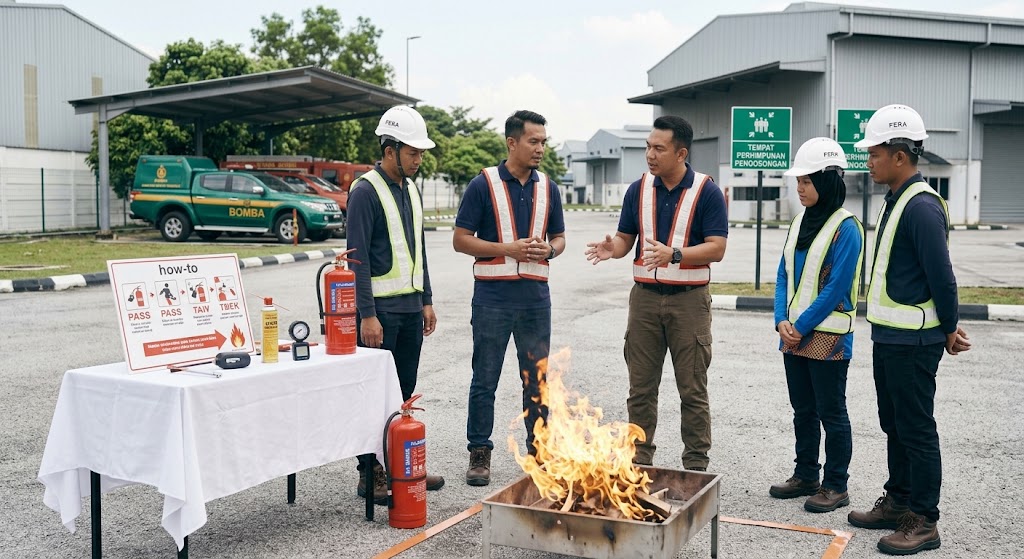
Step 1: Review the Emergency Response Plan
Management should review the emergency response plan before scheduling the drill.
The plan should identify:
- Alarm activation procedures
- Emergency contact numbers
- Evacuation routes
- Emergency exits
- Assembly points
- Emergency team structure
- Employee responsibilities
- Headcount procedures
- First aid arrangements
- Shutdown procedures
- Communication methods
- Procedures for employees who need assistance
The official DOSH Emergency Response Plan checklist covers plan maintenance, organizational roles, evacuation, rescue, first aid, alarms and emergency equipment.
Step 2: Define the Drill Objectives
Every exercise should have clear objectives.
For example, the organization may want to:
- Test a new evacuation route
- Evaluate fire warden performance
- Measure evacuation time
- Test an alarm system
- Assess night-shift readiness
- Practice department headcounts
- Test communication with security teams
- Evaluate support for employees with limited mobility
- Practice an emergency shutdown
- Test an alternative assembly point
Clear objectives make the post-drill evaluation more useful.
Step 3: Select a Realistic Scenario
The exercise should reflect the actual risks within the workplace.
Possible scenarios include:
- A fire in an office pantry
- Smoke near an electrical room
- A warehouse packaging fire
- A fire near a production line
- A chemical incident
- A blocked primary exit
- An alarm during a meeting
- A fire involving a contractor work area
- An emergency during a shift change
The scenario should remain safe and controlled.
Planners should avoid unnecessary effects that could cause panic, breathing problems or physical harm.
Step 4: Inspect Evacuation Routes
Before the drill, the safety team should inspect all evacuation routes.
They should check:
- Exit doors
- Stairways
- Emergency lighting
- Exit signs
- Walkways
- Fire doors
- Assembly points
- Access for emergency responders
- Obstructions
- Slippery surfaces
- Storage near escape routes
Management should correct serious hazards before starting the drill.
Employees can also review FERA’s guide to emergency evacuation procedures to understand the main stages of a workplace evacuation.
Step 5: Brief Key Personnel
The organization should brief fire wardens, ERT members, security personnel, first aiders and observers before the exercise.
The briefing should explain:
- The exercise objectives
- The planned scenario
- Safety precautions
- Observer positions
- Communication methods
- Emergency stop procedures
- Headcount responsibilities
- Reporting requirements
- Actions during a real emergency
Key personnel should understand that a real emergency may occur during the planned exercise.
The organization should use a clear phrase or communication method to distinguish a real incident from the drill.
Step 6: Activate the Fire Alarm
The alarm should be clear and audible throughout the premises.
Employees must recognize the signal and begin evacuation without unnecessary delay.
During the drill, observers should record:
- How quickly employees respond
- Whether employees follow instructions
- Whether anyone tries to use a lift
- Whether fire wardens check their zones
- Whether exit routes become congested
- Whether alarms remain audible
- Whether visitors receive assistance
The drill should test real behavior instead of becoming a simple walk towards the assembly point.
Step 7: Conduct an Orderly Evacuation
Employees should leave through the nearest safe exit.
They should walk calmly and follow the directions provided by fire wardens.
During evacuation:
- Keep corridors clear
- Do not run
- Do not push
- Do not use lifts
- Do not return for belongings
- Help anyone who needs assistance
- Close doors when instructed
- Move away from the building
- Report directly to the assembly point
Fire wardens should not place themselves in danger while checking an area.
Step 8: Complete the Headcount
The organization must confirm whether everyone has reached the assembly point.
Department representatives may use:
- Attendance lists
- Staff registers
- Visitor records
- Contractor records
- Access control data
- Digital attendance systems
Employees should remain with their departments or assigned groups.
When someone appears missing, the headcount coordinator should report the person’s name and last known location to the emergency controller.
Untrained employees should never re-enter the building to search for someone.
Step 9: End the Drill Safely
Only the authorized person should announce the end of the exercise.
Employees should not return to the building until management confirms that it is safe.
The organization should also ensure that:
- Alarm systems return to normal
- Emergency doors remain functional
- Equipment returns to its correct location
- Production activities restart safely
- Traffic routes reopen
- Observers submit their findings
Step 10: Conduct a Post-Drill Review
The post-drill review helps the organisation convert observations into improvements.
Management should ask:
- Did everyone hear the alarm?
- Did employees respond promptly?
- Did fire wardens understand their duties?
- Did any exit become congested?
- Did employees use the correct routes?
- Did visitors receive assistance?
- Was the headcount accurate?
- Did communication systems work?
- Did any employee return for personal items?
- Did the assembly point remain organized?
- Did the emergency team coordinate effectively?
- Were there any safety incidents during the drill?
The organization should record every major finding.
Common Fire Drill Problems
A fire drill often reveals weaknesses that employees do not notice during normal operations.
Common problems include:
- Employees ignoring the alarm
- Confusion over alarm signals
- Blocked emergency exits
- Incorrect assembly points
- Outdated employee lists
- Missing visitor records
- Unclear fire warden roles
- Slow department headcounts
- Employees using lifts
- Poor communication
- Congested stairways
- Employees returning to their desks
- Inadequate support for people who require assistance
- Unclear emergency shutdown procedures
Management should assign an owner and deadline to every corrective action.
How Often Should a Workplace Conduct a Fire Drill?
The correct frequency depends on the organization’s risk level, building use, workforce and applicable requirements.
Management should consider:
- The number of employees
- Workplace fire risks
- Shift arrangements
- Employee turnover
- Building size
- Changes to the layout
- New equipment or processes
- Previous drill findings
- Regulatory requirements
- Client or insurer requirements
An organization should also consider an additional drill after:
- Moving into a new building
- Changing evacuation routes
- Renovating the premises
- Introducing new hazards
- Appointing new emergency team members
- Identifying major weaknesses during a previous drill
A risk-based schedule provides more value than conducting an exercise only to complete a checklist.
Announced and Unannounced Fire Drills
An announced fire drill gives employees advance notice. This approach works well for initial training because employees can learn the correct procedures without unnecessary confusion.
An unannounced drill tests how people respond without prior preparation.
Both approaches offer value.
Organizations may begin with an announced exercise. After employees understand the procedures, management can introduce a more realistic drill.
However, planners should consider employees with medical conditions, customers, visitors, sensitive operations and high-risk activities before conducting an unannounced exercise.
Safety must remain the main priority.
Fire Drill Training for Different Workplaces
Every workplace needs a drill that reflects its environment.
Offices
Office drills should address:
- High-rise evacuation
- Stairway use
- Visitor management
- Meeting rooms
- Pantry risks
- Electrical equipment
- Employees with mobility needs
Factories
Factory exercises may need to include:
- Production shutdown
- Machinery isolation
- Flammable materials
- Chemical hazards
- Shift workers
- Noise that affects alarm audibility
- Contractor evacuation
Warehouses
Warehouse drills should consider:
- High storage racks
- Forklift routes
- Loading bays
- Packaging materials
- Large floor areas
- Temporary workers
- Multiple exits
Hotels and Public Buildings
These premises should plan for:
- Visitors who do not know the building
- High occupancy
- Children or elderly occupants
- Language differences
- Public announcements
- Room and floor checks
Schools and Educational Facilities
Educational premises should manage:
- Student movement
- Classroom headcounts
- Teachers’ responsibilities
- Assembly point control
- Support for young children
- Communication with parents
A customized fire drill creates more realistic learning than a generic exercise.
Should Organizations Include First Aid in Fire Drill Training?
A fire emergency may involve smoke exposure, burns, falls or medical conditions caused by stress.
Therefore, the organization should test its first aid arrangements during selected drills.
A combined exercise may evaluate:
- First aider response
- First aid kit access
- Communication with medical services
- Casualty assessment
- Safe casualty movement
- Treatment records
- Handover to emergency responders
DOSH guidance explains that immediate first aid can preserve life, prevent an injury from worsening and support recovery before professional medical personnel arrive.
FERA offers workplace first aid and emergency response training programmes for employees and appointed ERT members.
Can Fire Drill Training Be HRD Corp Claimable?
Eligible employers may be able to claim approved training costs when they select a registered provider and an approved programme.
HRD Corp’s official Claimable Courses programme supports employee retraining and upskilling based on operational needs. Eligibility, approval and allowable costs remain subject to HRD Corp requirements.
FERA states that selected courses are claimable under the HRD Corp SBL-Khas Scheme, subject to employer and programme eligibility.
Employers should confirm the course registration and claim process before the training begins.
What Should a Fire Drill Report Include?
After the exercise, the organization should prepare a written report.
The report may include:
- Date and time
- Premises or department
- Scenario
- Exercise objectives
- Number of participants
- Alarm activation time
- Final evacuation time
- Headcount completion time
- Names of observers
- Performance of fire wardens
- ERT actions
- First aid observations
- Communication issues
- Exit route problems
- Unsafe employee behavior
- Corrective actions
- Responsible persons
- Completion deadlines
- Photographs where appropriate
A clear report helps management monitor improvement across multiple exercises.
Improve Workplace Readiness with FERA
A fire alarm can create confusion when employees have never practiced their response.
Fire drill training gives employees a clear sequence of actions. It also allows management to test evacuation routes, fire wardens, emergency teams and headcount procedures.
FERA provides practical fire safety, fire drill, firefighting, first aid and Emergency Response Team training for organizations across Malaysia.
The programmes can support offices, factories, warehouses, educational facilities, commercial buildings and industrial operations.
Explore FERA’s emergency safety and response training programmes or contact FERA to discuss a customized fire drill training programme for your organization.
Frequently Asked Questions About Fire Drill Training Malaysia
What is the purpose of fire drill training?
Fire drill training allows employees to practice evacuation procedures and helps management test alarms, exit routes, fire wardens, headcounts and emergency communication.
Who should participate in a workplace fire drill?
Employees, management, contractors, security personnel, visitors, fire wardens, first aiders and Emergency Response Team members should participate based on the exercise plan.
Should employees know about the drill in advance?
Organizations can conduct announced or unannounced drills. Announced exercises work well for initial training, while unannounced exercises provide a more realistic test. Management must control both approaches safely.
Can employees use lifts during a fire drill?
Employees should normally avoid lifts during fire evacuation unless the building has a specifically designed evacuation lift and the emergency plan authorizes its use.
What should employees bring during an evacuation?
Employees should leave immediately and avoid collecting personal belongings. They should follow the designated route and report directly to the assembly point.
What happens after everyone reaches the assembly point?
Department representatives should conduct a headcount. Employees should remain at the assembly point until an authorized person ends the exercise.
How can an organization evaluate its fire drill?
Observers should record response times, employee behavior, alarm performance, route congestion, headcount accuracy and emergency team coordination. Management should then create corrective actions.
Does FERA provide fire drill training in Malaysia?
Yes. FERA provides fire drill management, firefighting, fire warden, first aid and Emergency Response Team training for Malaysian organizations.