
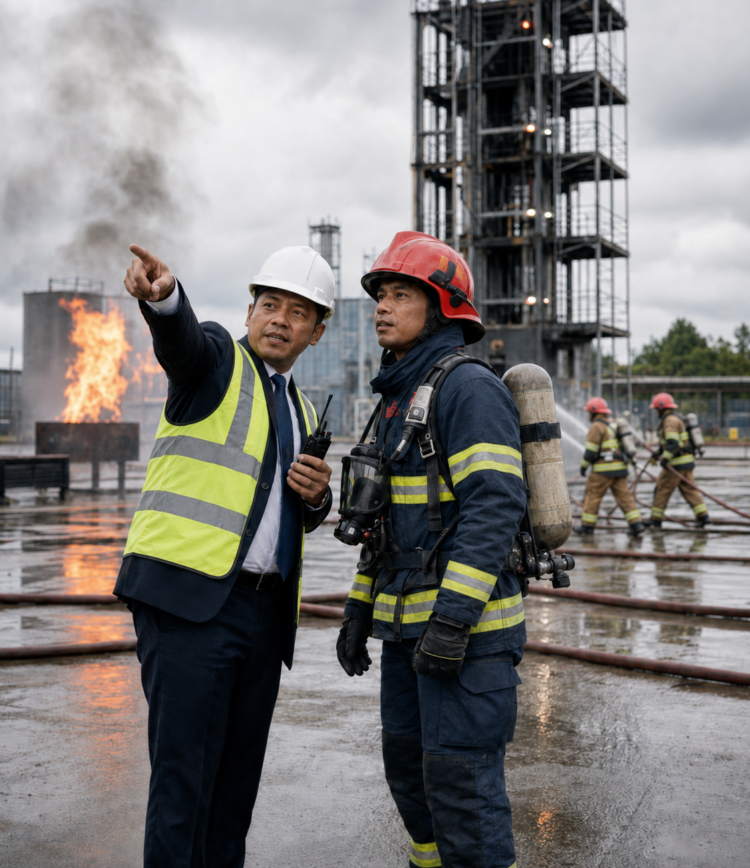
Preparing for FSM & FSO Requirements: What Building Owners and Employers Should Know
Fire safety compliance in Malaysia is becoming increasingly important for building owners, employers, facility managers and organisations responsible for managing designated premises.
One major area organisations should understand is the requirement for qualified Fire Safety Managers (FSM) and Fire Safety Officers (FSO) as part of an effective Fire Safety Organisation or Organisasi Keselamatan Kebakaran (OKK).
Rather than waiting until compliance requirements affect Fire Certificate matters or building operations, organisations should begin identifying suitable personnel, reviewing their current fire safety structure and preparing employees for the necessary competency training.
This guide explains what building owners and employers should know and how they can start preparing.
Understanding FSM & FSO Requirements in Malaysia
The establishment of a Fire Safety Organisation is provided for under Malaysia’s fire safety regulatory framework.
Under Regulation 6B of the Fire Services (Fire Certificate) Regulations, as amended in 2020, the owner, occupier or person having full management of a designated premise is required to establish a Fire Safety Organisation.
The regulation specifies that the organisation must consist of:
- One Fire Safety Manager (FSM)
- At least three Fire Safety Officers (FSO)
The appointed FSM and FSOs must also be certified by the Director General of the Fire and Rescue Department of Malaysia (JBPM).
This means fire safety management is not simply about having extinguishers, alarms and emergency exits. Organisations must also ensure that competent personnel are available to manage, monitor and coordinate fire safety responsibilities.
What Is an Organisasi Keselamatan Kebakaran (OKK)?
An Organisasi Keselamatan Kebakaran (OKK) is an organised internal fire safety structure established within a designated premise.
Its purpose is to ensure that fire prevention, emergency preparedness, inspection, coordination and fire safety responsibilities are properly managed.
Basic OKK Structure
At minimum, the structure includes:
Fire Safety Manager (FSM)
Responsible for managing and coordinating the overall fire safety function.
Fire Safety Officers (FSO)
Support the FSM in carrying out fire safety activities, monitoring conditions and maintaining operational readiness.
Depending on the size, activities and fire risk of the organisation, the fire safety structure may also work closely with:
- Emergency Response Team members
- Fire Wardens
- Safety and Health personnel
- Facility Management teams
- Engineering and Maintenance teams
- Security personnel
- Department supervisors
An effective OKK should not exist only on paper. It should function as part of the organisation’s daily fire prevention and emergency management system.
Who Should Start Preparing for FSM & FSO?
Building owners and employers responsible for designated premises should pay close attention to FSM and FSO requirements.
This is particularly important for organisations managing premises that are subject to Fire Certificate requirements or have significant fire safety responsibilities.
Organisations That Should Review Their Readiness
Examples may include organisations operating or managing:
- Commercial buildings
- Industrial facilities
- Factories
- Warehouses
- Shopping complexes
- Hotels
- Healthcare facilities
- High-occupancy buildings
- Public-access premises
- Other premises classified as designated premises under applicable fire safety requirements
The exact requirements applicable to a particular building should always be confirmed against its classification and the latest requirements issued by Jabatan Bomba dan Penyelamat Malaysia (JBPM).
What Is a Fire Safety Manager (FSM)?
A Fire Safety Manager is the individual responsible for coordinating and managing the overall fire safety programme of the premise.
The FSM normally operates at a management and coordination level and plays an important role in connecting management, employees, emergency teams and relevant authorities.
Key Responsibilities of an FSM
Depending on the premise and applicable requirements, an FSM may be involved in:
- Managing the organisation’s fire safety programme
- Coordinating the Fire Safety Organisation
- Monitoring fire safety compliance
- Reviewing fire hazards and corrective actions
- Coordinating inspections of fire protection systems
- Maintaining relevant fire safety documentation
- Planning emergency preparedness activities
- Coordinating fire drills
- Reviewing evacuation procedures
- Coordinating training and awareness programmes
- Reporting fire safety issues to management
- Supporting Fire Certificate compliance activities
- Liaising with relevant authorities where required
The FSM therefore requires more than theoretical knowledge. The individual should be capable of coordinating people, systems, documentation and emergency preparedness activities effectively.
What Is a Fire Safety Officer (FSO)?
A Fire Safety Officer supports the implementation of fire safety requirements at the operational level.
FSOs work closely with the FSM to ensure that fire prevention measures and emergency preparedness activities are properly carried out.
Key Responsibilities of an FSO
An FSO may assist with:
- Routine fire safety inspections
- Identifying unsafe conditions
- Checking fire safety equipment and facilities
- Monitoring escape routes and emergency exits
- Reporting fire hazards
- Supporting evacuation procedures
- Assisting during fire drills
- Maintaining fire safety records
- Supporting emergency response arrangements
- Promoting fire safety awareness among employees
- Following up on corrective actions
The FSO therefore plays an important role in maintaining day-to-day fire safety readiness.
FSM vs FSO: What Is the Main Difference?
Although FSM and FSO work together, their responsibilities are different.
| Area | Fire Safety Manager (FSM) | Fire Safety Officer (FSO) |
|---|---|---|
| Main Role | Management and coordination | Operational support |
| Responsibility Level | Overall fire safety management | Day-to-day implementation |
| OKK Position | Leads or manages fire safety activities | Supports implementation |
| Documentation | Coordinates and reviews | Assists with records and checks |
| Emergency Planning | Coordinates planning | Supports implementation |
| Inspections | Oversees and coordinates | Conducts or assists routine checks |
| Management Reporting | Higher responsibility | Reports findings to FSM |
Both positions are important. A strong fire safety system requires both management-level coordination and effective implementation on the ground.
What Should Building Owners and Employers Do Now?
Preparing early can help organisations avoid rushing to identify candidates or complete training when compliance requirements become more urgent.
1. Determine Whether Your Premise Is Affected
Start by reviewing your building classification and Fire Certificate requirements.
Management should determine whether the building is considered a designated premise and whether an OKK is required.
Where there is uncertainty, clarification should be obtained from the relevant JBPM authority.
2. Review Your Existing Fire Safety Organisation
Many organisations already have:
- Safety committees
- Emergency Response Teams
- Fire Wardens
- Safety and Health Officers
- Facility teams
- Security teams
However, these existing arrangements should not automatically be assumed to fulfil FSM or FSO requirements.
Review the existing structure and determine how FSM and FSO positions can be formally incorporated.
3. Identify Potential FSM Candidates
Building owners and employers should begin identifying employees who have suitable qualifications, experience and organisational responsibility.
Potential candidates may come from departments such as:
- Safety and Health
- HSE
- Facility Management
- Engineering
- Maintenance
- Emergency Response
- Building Management
- Operations
Candidate eligibility should be reviewed against the latest JBPM requirements before registration.
4. Identify At Least Three Potential FSO Candidates
Because an OKK is required to include at least three Fire Safety Officers, organisations should avoid preparing only one employee.
Consider identifying several suitable employees who are actively involved in facility operations, safety, emergency response or building management.
Having additional trained personnel may also strengthen operational coverage across different shifts or departments.
5. Review Candidate Qualifications
Before sending employees for training, organisations should prepare and review relevant documentation.
This may include:
- Identification documents
- Academic qualifications
- Employment information
- Relevant work experience
- Appointment information
- Previous fire safety training certificates
- Emergency Response Team experience
- Relevant technical or safety qualifications
Eligibility requirements can differ between FSM and FSO candidates, so organisations should check the latest criteria before confirming enrolment.
Training Is an Important Part of FSM & FSO Preparation
FSM and FSO responsibilities require specific knowledge and competency.
JBPM has continued developing training standards and competency arrangements for FSM and FSO personnel, including programmes designed to strengthen the competency of trainers and training providers.
Therefore, organisations should ensure that employees attend the appropriate programme through an authorised or recognised training provider in accordance with the latest JBPM requirements.
What Participants Should Expect to Learn
Depending on the approved programme structure, training may cover areas such as:
- Malaysian fire safety legislation
- Responsibilities of FSM and FSO
- Fire prevention
- Fire protection systems
- Building fire safety management
- Fire risk identification
- Inspection procedures
- Emergency planning
- Evacuation procedures
- Fire safety documentation
- Fire drills
- Incident preparedness
- Organisasi Keselamatan Kebakaran management
The objective is not simply to obtain a certificate. Participants must understand how to apply fire safety management principles within an actual workplace.
Common Mistakes Organisations Should Avoid
One of the biggest mistakes is waiting until the last minute before identifying candidates.
Organisations should also avoid assuming that an existing Safety Officer, SHO, ERT member or Fire Warden automatically qualifies as an FSM or FSO.
Other common mistakes include:
- Sending employees for training without checking eligibility
- Training only one employee
- Failing to establish a proper OKK structure
- Treating FSM and FSO as the same position
- Focusing only on certificates rather than competency
- Failing to maintain fire safety records
- Not providing management support to appointed personnel
- Assuming fire safety is solely the responsibility of the safety department
Fire safety requires cooperation between management, employees and competent fire safety personnel.
Why Employers Should Prepare Early
Early preparation gives organisations more time to identify suitable candidates and avoid disruption to normal operations.
It also allows management to:
- Budget for training
- Plan employee availability
- Prepare supporting documents
- Review qualification requirements
- Strengthen existing emergency arrangements
- Identify gaps in fire safety management
- Establish a clearer OKK structure
- Improve communication between management and operational teams
Most importantly, early preparation helps organisations shift from reactive compliance to proactive fire safety management.
Fire Safety Is More Than Compliance
Appointing an FSM and FSOs should not be viewed simply as another administrative requirement.
A well-managed Fire Safety Organisation can help an organisation identify hazards earlier, maintain emergency readiness and improve coordination when incidents occur.
Equipment alone cannot manage an emergency.
People must know:
- What to inspect
- What hazards to report
- Who is responsible
- How to evacuate
- How to communicate
- How to respond
- What documentation must be maintained
That is why competent FSM and FSO personnel are an important part of an organisation’s overall fire safety strategy.
Frequently Asked Questions
Does Every Building Need an FSM and FSO?
Not necessarily. The requirement relates particularly to designated premises and applicable Fire Certificate requirements.
Building owners should verify the classification of their premises and current requirements with JBPM.
How Many FSM and FSO Are Required?
Under Regulation 6B, a Fire Safety Organisation for a designated premise consists of one Fire Safety Manager and at least three Fire Safety Officers.
Additional personnel may be necessary depending on the building size, operating conditions and fire risk.
Can an Existing SHO Become an FSM?
Having Safety and Health experience may provide useful background, but an SHO should not automatically be considered a certified FSM.
The individual must still meet the applicable eligibility, training, assessment and certification requirements.
Can ERT Members Become FSO?
ERT members may be suitable candidates because they already have experience in emergency preparedness.
However, they must still meet the applicable FSO eligibility and certification requirements.
Should Companies Wait Until Enforcement Before Training Employees?
Waiting may create difficulties if many organisations attempt to register employees at the same time.
Early preparation allows companies to review candidate eligibility, budget for training and develop their OKK structure more systematically.
Prepare Your Organisation for FSM & FSO Requirements
Building owners and employers should begin reviewing their fire safety structure now.
Start by determining whether your premise is affected, identifying suitable FSM and FSO candidates, reviewing their qualifications and planning the necessary competency training.
FERA Training Center can assist organisations in preparing their personnel for Fire Safety Manager (FSM) and Fire Safety Officer (FSO) competency training.
Whether you are a building owner, facility manager, employer, Safety and Health professional or part of an Emergency Response Team, our team can help you understand the training pathway and prepare suitable personnel.
Get Ready Before Compliance Becomes Urgent
Prepare your FSM & FSO team with FERA Training Center.
Contact us today for:
- FSM Training
- FSO Training
- Corporate and group registration
- Candidate eligibility enquiries
- Training schedules
- HRD Corp claim information
- Fire safety training consultation
FERA Training Center Sdn Bhd
Fire Emergency Rescue Academy
Website: https://www.fera.com.my
Email: [email protected]
WhatsApp: https://wa.me/60122730893