
What Is a Fire Hose Reel and When Should It Be Used?
A fire hose reel is an important piece of firefighting equipment. It is commonly installed in offices, factories, warehouses, shopping centres and commercial buildings.
The system provides a continuous supply of water. Therefore, trained users can use it to control a small fire during its early stage.
However, a fire hose reel is not suitable for every type of fire. Users must understand when it is safe to use and when they should evacuate instead.
What Is a Fire Hose Reel?
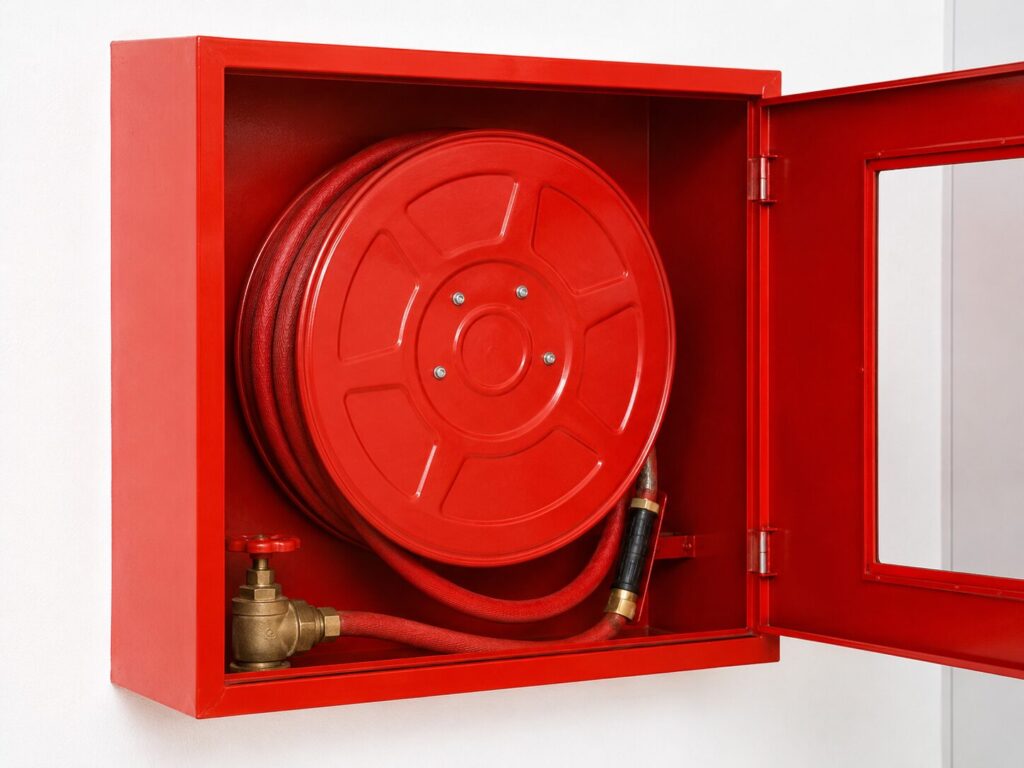
A fire hose reel is a fixed firefighting system. It consists of a long hose wound around a circular drum.
The system connects directly to a pressurised water supply. It is usually installed inside a clearly marked cabinet or in an accessible area of a building.
When a user opens the control valve, water flows through the hose. The water then exits through an adjustable nozzle.
Unlike a portable fire extinguisher, a fire hose reel provides a continuous flow of water. It can continue operating as long as the water supply and fire pump remain available.
What Are the Main Parts of a Fire Hose Reel?
A fire hose reel system has several important parts.
Hose Reel Drum
The drum stores the hose in a neat position. It also allows users to pull out the hose during an emergency.
Fire Hose
The hose carries water from the building’s water supply to the nozzle.
It should be long enough to reach the protected area without becoming twisted or trapped.
Control Valve
The control valve allows water to enter the hose. Users may need to open it manually before pulling out the hose.
Nozzle
The nozzle controls the water flow. Some nozzles allow users to select a direct jet or spray pattern.
Water Supply and Fire Pump
The building’s water supply provides water to the hose reel. Meanwhile, the fire pump helps maintain suitable water pressure.
How Does a Fire Hose Reel Work?
A fire hose reel delivers a steady stream of water to the burning material.
The general process is:
- Raise the fire alarm.
- Warn people nearby.
- Call the Fire and Rescue Department.
- Check whether the fire is safe to approach.
- Open the hose reel control valve.
- Pull the hose towards the fire.
- Test the nozzle.
- Aim the water at the base of the fire.
- Keep a safe exit behind you.
The exact steps may vary between systems. Therefore, employees should receive practical training before using a fire hose reel.
What Type of Fire Can a Hose Reel Be Used On?
A fire hose reel is mainly suitable for small Class A fires.
Class A fires involve ordinary solid materials.
Examples of Suitable Materials
A hose reel may be used on burning materials such as:
- Paper
- Cardboard
- Wood
- Fabric
- Furniture
- Some types of plastic
- General office materials
- Packaging materials
Water cools the burning material. As a result, the temperature drops and the fire may stop spreading.
When Should a Fire Hose Reel Be Used?
A fire hose reel should only be used when the conditions are safe.
The Fire Is Small
Use the hose reel only during the early stage of a fire.
Do not use it when the flames have spread across a large area or reached the ceiling.
The Material Is Suitable for Water
The burning material should involve paper, wood, fabric or another suitable Class A material.
The User Has Received Training
A trained user is more likely to select the correct equipment and maintain a safe distance.
An untrained person may make the situation more dangerous.
A Safe Escape Route Is Available
Always keep an exit behind you.
Never allow the fire to move between you and the exit.
The Area Is Not Filled With Smoke
Heavy smoke can reduce visibility and contain harmful gases.
Therefore, evacuate immediately when the area becomes smoky or difficult to see.
Emergency Services Have Been Contacted
Using a hose reel must not delay the emergency call.
Always raise the alarm and contact the Fire and Rescue Department first.
When Should a Fire Hose Reel Not Be Used?
Water is not suitable for every fire. In fact, using water on the wrong hazard can make the situation worse.
Live Electrical Equipment
Never use a fire hose reel on live electrical equipment.
Examples include:
- Switchboards
- Electrical panels
- Wiring
- Electrical machinery
- Computers and servers
- Energised appliances
Water can conduct electricity. Therefore, it may expose the user to electric shock.
Flammable Liquids
Do not use a hose reel on petrol, diesel, solvents, paint or other flammable liquids.
The water may spread the burning liquid across a wider area.
Cooking Oil and Fat
Never spray water onto burning cooking oil or fat.
Water may react violently with hot oil and spread the fire.
Instead, use a suitable wet chemical extinguisher or fire blanket.
Flammable Gas
Gas fires require specialised emergency action.
Raise the alarm, evacuate the area and contact emergency services. Only an authorised person should isolate the gas supply.
Large or Spreading Fires
Do not attempt to fight a fire that is growing quickly.
You should also evacuate when:
- Smoke becomes heavier.
- The heat becomes intense.
- Flames spread to other areas.
- The fire blocks the exit.
- The water supply is not sufficient.
Personal safety must always come first.
How to Use a Fire Hose Reel Safely
The following steps provide general guidance. However, they do not replace practical training.
Step 1: Raise the Alarm
Activate the nearest fire alarm call point.
Next, warn everyone in the surrounding area.
Step 2: Call Emergency Services
Contact the Fire and Rescue Department.
Provide clear information about the location and type of emergency.
Step 3: Assess the Fire
Before using the hose reel, check that:
- The fire is small.
- The burning material is suitable for water.
- No live electrical hazard is present.
- No chemical hazard is present.
- The area is not filled with smoke.
- A safe exit is available.
Do not continue when you cannot confirm these conditions.
Step 4: Open the Control Valve
Turn the valve fully into the open position.
Some hose reel systems may release water automatically when the hose is pulled out.
Step 5: Pull Out the Hose
Hold the nozzle and pull the hose towards the fire.
Make sure the hose is not twisted, trapped or caught around any object.
Step 6: Test the Water Flow
Open the nozzle briefly from a safe position.
This step confirms that water is flowing correctly.
Step 7: Maintain a Safe Position
Approach the fire only when it is safe.
Always keep the exit behind you.
Step 8: Aim at the Base of the Fire
Direct the water towards the burning material.
Do not aim only at the top of the flames.
Move the water stream steadily across the affected area.
Step 9: Stop When Conditions Change
Stop using the hose reel and evacuate when:
- The fire becomes larger.
- Smoke increases.
- The heat becomes too strong.
- The hose loses pressure.
- The fire spreads.
- Your escape route is threatened.
Close the door behind you when it is safe to do so. This action may slow the spread of smoke and fire.
Fire Hose Reel vs Fire Extinguisher
A fire hose reel and a fire extinguisher both help control small fires. However, they have different functions.
| Feature | Fire Hose Reel | Fire Extinguisher |
|---|---|---|
| Extinguishing agent | Water | Depends on extinguisher type |
| Supply | Continuous water supply | Limited contents |
| Best suited for | Class A fires | Depends on extinguisher type |
| Installation | Fixed | Portable |
| Operating range | Long extendable hose | Shorter discharge range |
| Main limitation | Not suitable for electrical, oil or liquid fires | Limited discharge time |
Users must select equipment based on the type of fire.
Why Is Fire Hose Reel Training Important?
Providing a hose reel does not mean every employee knows how to use it.
Without proper training, an employee may:
- Select the wrong equipment.
- Use water on an electrical fire.
- Stand too close to the flames.
- Block their own escape route.
- Struggle to control the hose.
- Continue fighting a fire that is too large.
Practical training helps employees understand the equipment. It also allows them to practise handling the hose and nozzle safely.
Most importantly, training teaches employees when to stop and evacuate.
Who Should Attend Fire Hose Reel Training?
Fire hose reel training is useful for:
- Emergency Response Team members
- Fire Wardens
- Fire Safety Officers
- Fire Safety Managers
- Security personnel
- Facility teams
- Maintenance teams
- Safety and Health Committee members
- Building management personnel
- Employees assigned to firefighting duties
Other employees should also know how to raise the alarm, report the emergency and evacuate safely.
Fire Hose Reel Inspection and Maintenance
A fire hose reel must remain accessible and ready for use.
Regular checks should confirm that:
- The hose reel is clearly visible.
- Access is not blocked.
- The cabinet opens easily.
- The hose is properly wound.
- The hose has no cracks or damage.
- The nozzle is available.
- The valve works correctly.
- There are no water leaks.
- Water pressure is sufficient.
- Operating instructions are readable.
- Maintenance records are updated.
A competent person should carry out formal inspection, testing and maintenance.
The work should follow applicable requirements, approved procedures and the manufacturer’s instructions.
Common Fire Hose Reel Mistakes
Failing to Raise the Alarm
Some people try to control the fire before informing others.
This mistake may delay evacuation and emergency assistance.
Using Water on the Wrong Fire
Never use water on live electrical equipment, burning oil, gas or flammable liquids.
Pulling the Hose Incorrectly
A twisted or trapped hose may reduce water flow.
It can also make the nozzle harder to control.
Standing Too Close
Heat and smoke can increase quickly.
Always maintain a safe distance from the fire.
Blocking the Escape Route
Never position yourself where the fire can block your exit.
Continuing When the Fire Grows
A hose reel is designed for small, early-stage fires.
It does not replace the Fire and Rescue Department.
Frequently Asked Questions
Can Anyone Use a Fire Hose Reel?
A trained employee, Fire Warden or Emergency Response Team member should operate the hose reel.
An untrained person may not understand the hazards or equipment limitations.
Can a Fire Hose Reel Be Used on an Electrical Fire?
No.
Do not use a fire hose reel on electrical equipment that is still energised. Water may cause electric shock.
Can a Fire Hose Reel Be Used on a Cooking Oil Fire?
No.
Water may spread burning oil. Use a suitable wet chemical extinguisher or fire blanket instead.
Is a Fire Hose Reel Suitable for Every Workplace?
Not necessarily.
The requirement depends on the building type, size, occupancy, fire risk and approved fire safety design.
How Often Should a Fire Hose Reel Be Inspected?
Workplaces should carry out regular visual checks.
A competent person should also complete formal inspection and maintenance according to the applicable requirements.
Should I Fight the Fire or Evacuate?
Evacuation is always the priority.
Only use firefighting equipment when:
- The fire is small.
- You have received training.
- The equipment is suitable.
- The area is safe.
- A clear escape route is available.
Conclusion
A fire hose reel provides a continuous supply of water for controlling small Class A fires.
It is suitable for materials such as paper, wood, cardboard and fabric.
However, it must not be used on:
- Live electrical equipment
- Flammable liquids
- Cooking oil
- Gas fires
- Large or spreading fires
Only trained personnel should operate a fire hose reel. They must also know when to stop, evacuate and wait for emergency services.
Regular inspection, maintenance and practical training help ensure that the equipment is ready during an emergency.
Improve Your Team’s Fire Emergency Readiness
FERA Training Center provides practical fire safety and emergency response training for commercial buildings, workplaces and industrial facilities.
Our programmes include:
- Basic Fire Safety Training
- Basic Firefighting and Rescue
- Fire Warden and Management
- Emergency Response Team Training
- Fire Drill Management
- Active and Passive Fire System Training
- Fire Safety Manager Training
- Fire Safety Officer Training
Equip your employees with the practical knowledge and confidence to respond safely during a fire emergency.
Contact FERA Training Center today to arrange a suitable fire safety training programme for your organisation.