

What to Do When Someone Is Choking
Choking is a life-threatening emergency that can happen anytime and anywhere. It occurs when an object blocks the airway, preventing a person from breathing properly. Quick action and proper first aid can save lives before emergency medical services arrive.
Understanding what to do when someone is choking is an essential life-saving skill for parents, teachers, workers, caregivers, and the general public.
What Is Choking?
Choking happens when food or another object becomes stuck in the throat or windpipe, blocking airflow into the lungs. A choking victim may struggle to breathe, cough, or speak.
Without immediate assistance, choking can quickly lead to unconsciousness, brain injury, or death.
Common Causes of Choking
Several situations may cause choking, including:
Food-Related Choking
- Meat
- Candy
- Grapes
- Nuts
- Bones
- Large food pieces
Small Objects
Children are especially at risk from:
- Coins
- Toys
- Buttons
- Batteries
- Pen caps
Medical Conditions
Some medical conditions can increase choking risk:
- Stroke
- Swallowing disorders
- Neurological conditions
- Alcohol intoxication
Signs Someone Is Choking
Recognizing choking symptoms early is critical.
Mild Choking
A person may:
- Cough forcefully
- Gag
- Speak or answer questions
- Breathe with difficulty
Encourage them to continue coughing if they can still breathe or speak.
Severe Choking
A person may:
- Be unable to speak
- Clutch their throat
- Make silent sounds
- Turn blue around the lips
- Panic or collapse
- Lose consciousness
This requires immediate first aid intervention.
What to Do When Someone Is Choking
Step 1 – Ask if They Are Choking
If the person is conscious, ask:
“Are you choking?”
If they cannot answer, cough, or breathe, act immediately.
Step 2 – Encourage Coughing
If the airway is only partially blocked:
- Encourage strong coughing
- Do not hit their back unnecessarily
- Monitor their condition closely
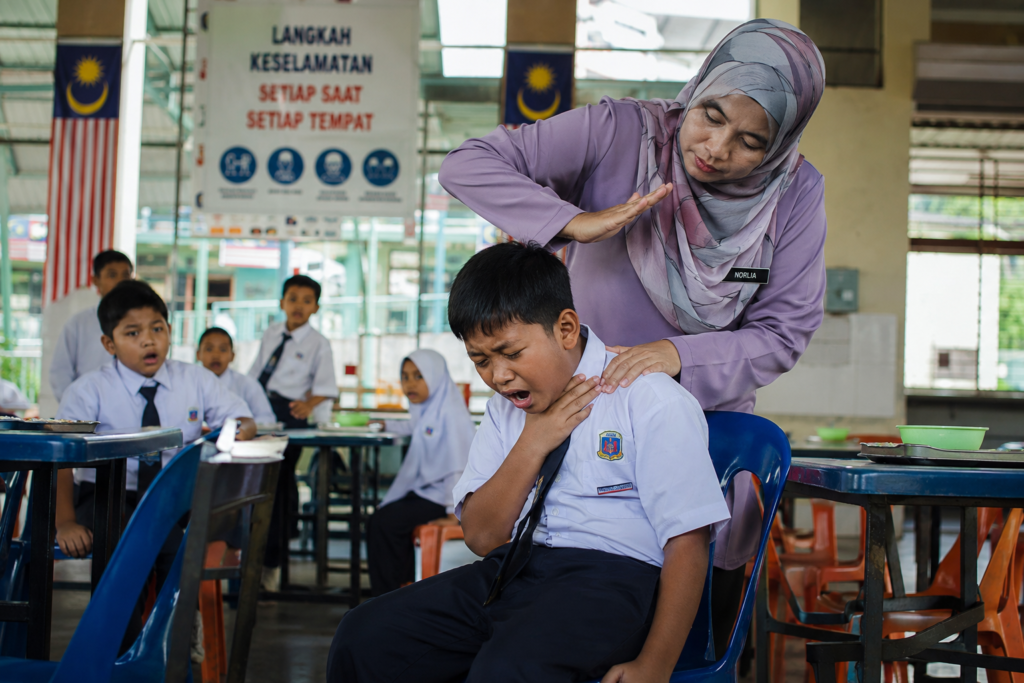
Step 3 – Give Back Blows
For severe choking:
- Stand beside and slightly behind the person
- Support their chest with one hand
- Lean them forward
- Deliver 5 firm back blows between the shoulder blades using the heel of your hand
Check after each blow if the blockage is cleared.
Step 4 – Perform Abdominal Thrusts (Heimlich Maneuver)
If back blows do not work:
- Stand behind the person
- Wrap your arms around their waist
- Make a fist just above the belly button
- Grasp the fist with your other hand
- Pull inward and upward quickly
Repeat until the object comes out or the person becomes unconscious.
Choking First Aid for Infants
Infants require a different technique.
For Babies Under 1 Year Old
- Hold the baby face down along your forearm
- Support the head and neck
- Deliver 5 gentle back blows
- Turn the baby over
- Give 5 chest thrusts using two fingers
Do not perform abdominal thrusts on infants.
What to Do If the Person Becomes Unconscious
If the choking victim collapses:
- Call emergency services immediately
- Begin CPR if trained
- Continue until help arrives
- If you see the object in the mouth, remove it carefully only if visible
Never blindly sweep inside the mouth.
When to Call Emergency Services
Call emergency medical services immediately if:
- The person cannot breathe
- They become unconscious
- Choking cannot be cleared quickly
- The victim is an infant or elderly person
- The person has underlying medical conditions
In Malaysia, call:
- 999
- 112 (mobile emergency line)
How to Prevent Choking
Prevention is always better than emergency treatment.
Safety Tips for Adults
- Chew food slowly
- Avoid talking while eating
- Cut food into smaller pieces
- Avoid excessive alcohol during meals
Safety Tips for Children
- Keep small objects away
- Supervise mealtime
- Avoid giving hard candy or whole grapes to toddlers
- Teach children to sit while eating
Why First Aid Training Matters
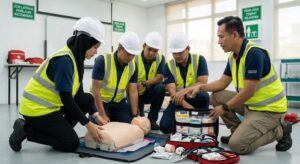
Knowing choking first aid can save lives in homes, workplaces, schools, factories, and public places. Proper hands-on training helps individuals respond confidently during emergencies.
Professional first aid courses also teach:
- CPR
- AED usage
- Bleeding control
- Emergency response procedures
- Workplace emergency preparedness
Conclusion
Choking emergencies happen suddenly and require immediate action. Recognizing the warning signs and applying the correct first aid techniques can prevent serious injury or death.
Everyone should learn basic choking response skills because a quick response during the first few minutes can save a life.
Equip yourself and your team with practical life-saving knowledge through our professional first aid, CPR, AED, and emergency response training programmes.
HRD Corp Claimable
Certified & Experienced Trainers
Practical Hands-On Training
Suitable for Workplace, Schools & Industries
WhatsApp: +60 12-273 0893
Visit our website: FERA Training Center