
How to Treat Bleeding and Wounds with First Aid
Bleeding and wounds can happen anytime at workplaces, homes, construction sites, or public areas. Knowing the correct first aid treatment can help reduce complications, prevent infections, and potentially save lives before medical professionals arrive.
Proper first aid response is essential for controlling bleeding, protecting the injured person, and improving recovery outcomes.
Understanding Different Types of Bleeding
Not all bleeding injuries are the same. The severity of the wound determines the type of treatment required.
Minor Bleeding
Minor bleeding usually comes from small cuts, scrapes, or abrasions. The bleeding is typically slow and manageable with basic first aid treatment.
Examples include:
- Paper cuts
- Small kitchen knife cuts
- Minor falls and scratches
Severe Bleeding
Severe bleeding can become life-threatening if not controlled immediately.
Signs include:
- Continuous heavy blood flow
- Blood soaking through bandages
- Deep wounds or punctures
- Blood spurting from the wound
In these situations, emergency medical assistance should be called immediately.
First Aid Steps to Treat Bleeding and Wounds
Step 1 – Ensure Scene Safety
Before helping the injured person:
- Check for any danger around the area
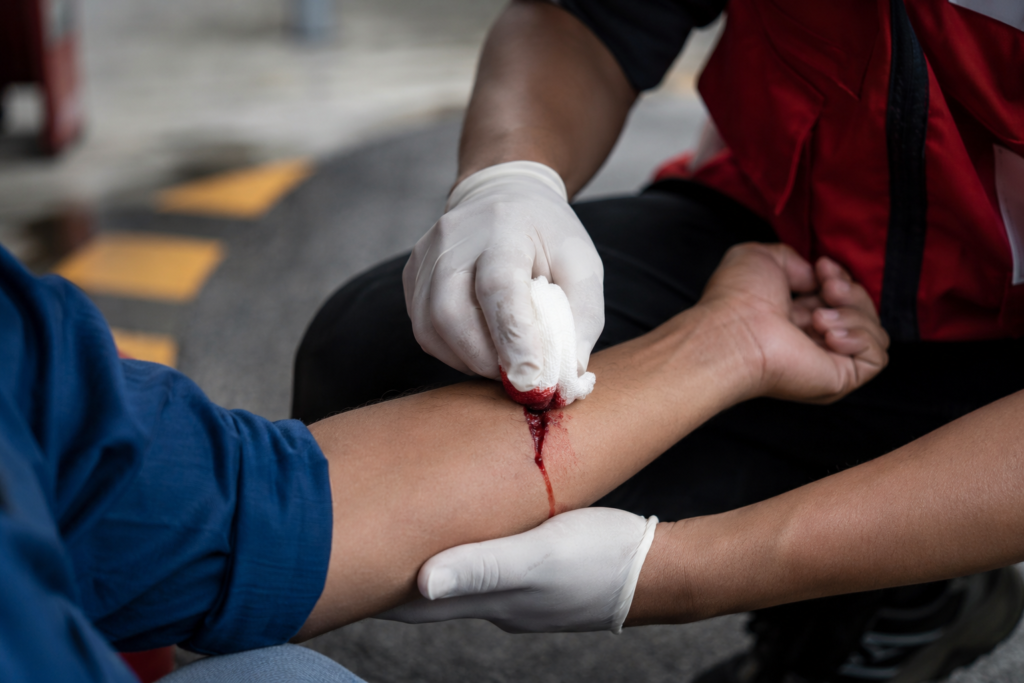
- Wear gloves if available
- Avoid direct contact with blood whenever possible
Safety for both the responder and victim is important during first aid treatment.
Step 2 – Apply Direct Pressure
Use a clean cloth, sterile gauze, or bandage to apply firm pressure directly onto the wound.
This helps:
- Slow blood loss
- Encourage clotting
- Control bleeding faster
Maintain steady pressure until the bleeding reduces.
Step 3 – Elevate the Injured Area
If possible, raise the injured body part above heart level.
This may help:
- Reduce blood flow
- Slow down bleeding
- Minimise swelling
Avoid moving the injured area if fractures are suspected.
Step 4 – Clean the Wound Properly
For minor wounds:
- Rinse with clean water
- Remove dirt carefully
- Avoid harsh chemicals directly inside the wound
Cleaning helps reduce infection risk and supports healing.
Step 5 – Cover the Wound
Apply a sterile dressing or clean bandage to protect the wound.
A proper dressing:
- Keeps bacteria away
- Reduces contamination
- Protects healing tissue
Change dressings regularly if needed.
When to Seek Emergency Medical Help
Immediate medical attention is required if:
- Bleeding does not stop
- The wound is very deep
- Bone is visible
- The injury was caused by machinery or sharp objects
- The person feels dizzy or loses consciousness
Heavy bleeding can lead to shock and requires urgent professional treatment.
Common Mistakes During First Aid Treatment
Removing Deeply Embedded Objects
Do not remove objects stuck inside the wound. This may worsen bleeding.
Instead:
- Stabilise the object carefully
- Wait for medical professionals
Using Dirty Materials
Avoid using unclean cloths or contaminated materials as they can introduce infection into the wound.
Always use clean or sterile dressings whenever possible.
Ignoring Minor Wounds
Even small wounds can become infected if untreated. Proper cleaning and dressing are important for all injuries.
Importance of First Aid Training
Learning proper first aid techniques helps individuals respond confidently during emergencies.
Workplaces and organisations benefit from trained personnel who can:
- Provide immediate assistance
- Reduce injury severity
- Improve emergency preparedness
- Support workplace safety compliance
Professional first aid training also includes CPR, AED usage, and emergency response procedures.
Be Prepared Before Emergencies Happen
Every home, office, factory, and facility should have:
- A complete first aid kit
- Trained first aiders
- Emergency contact procedures
- Regular safety training
Preparedness can make a major difference during critical incidents.
Equip yourself and your team with practical first aid knowledge through professional safety training by FERA Training Center.
HRD Corp Claimable Programs
Hands-On Practical Training
Conducted by Experienced Industry Trainers
Suitable for Workplace & Industrial Environments
Email: [email protected]
WhatsApp: https://wa.me/60122730893
Website: FERA Training Center Official Website