
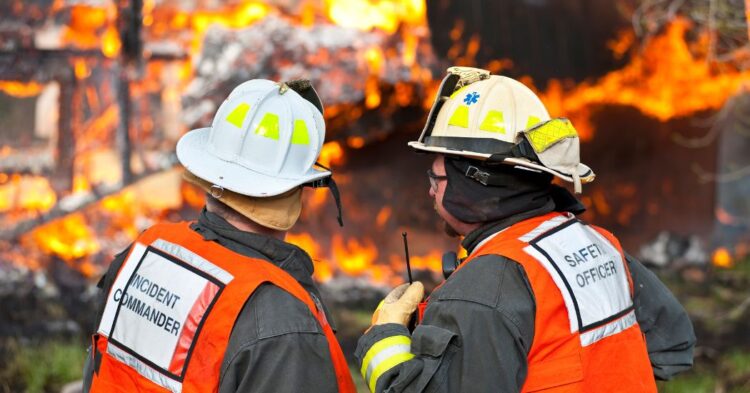
Every week, building managers and HR teams across Malaysia receive Bomba notices, face delayed Fire Certificate renewals, or discover during an audit that their premises should have appointed a certified Fire Safety Manager (FSM) long ago. The frustrating part most of them never knew the requirement applied to their building in the first place.
If you manage, own, or operate a commercial building, industrial facility, hotel, hospital, or educational institution in Malaysia, this guide answers the question directly. It explains exactly which buildings must appoint an FSM under Malaysian law, what the consequences of non-compliance look like, what the FSM must actually do once appointed, and how FERA Training Center gets your people certified quickly and correctly.
What Is a Fire Safety Manager (FSM)?
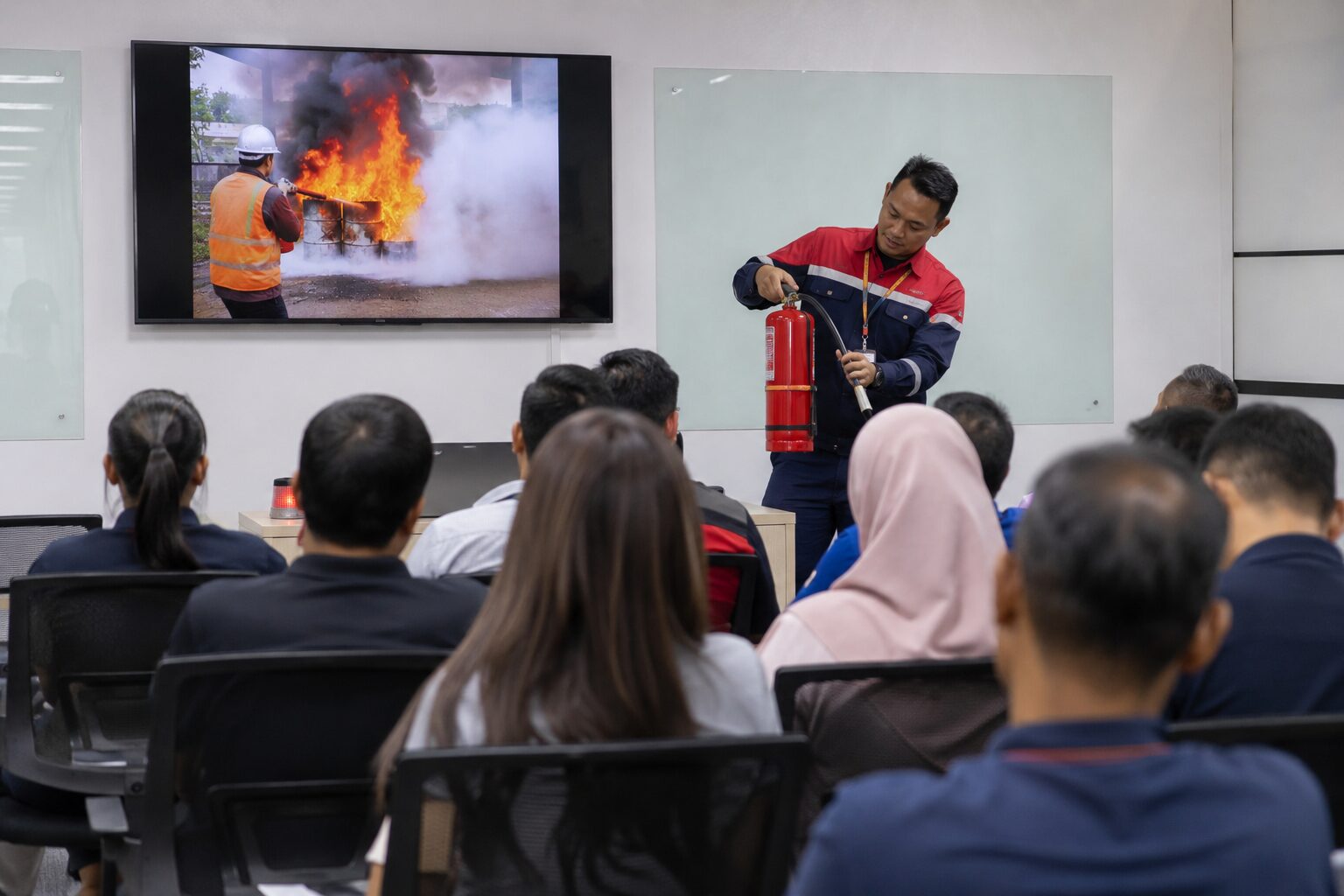
Before addressing who needs to appoint one, understanding what a Fire Safety Manager actually is matters. An FSM is a formally certified individual who carries statutory responsibility for managing the entire fire safety system of a building or premises.
The FSM does not simply attend a training course and collect a certificate. Specifically, the role requires the FSM to actively own, operate, and continuously improve the building’s fire safety management system from risk assessments and emergency planning through to staff training, equipment maintenance, and direct coordination with Bomba.
In short, the FSM is the person Bomba holds accountable when something goes wrong with fire safety in your building. Consequently, the appointment carries genuine legal weight and must be filled by someone who holds a current, recognised FSM certification.
For a full breakdown of FSM duties versus Fire Safety Officer responsibilities, read our guide: Fire Safety Manager vs Fire Safety Officer — Key Differences.
The Legal Basis — Which Laws Require FSM Appointment in Malaysia?
Three pieces of legislation collectively create the legal obligation for FSM appointment in Malaysia. Every building manager needs to understand all three.
Fire Services Act 1988
The Fire Services Act 1988 is the primary legislation governing fire safety in Malaysian buildings. Under this Act, Bomba holds the authority to designate certain premises as gazetted buildings and gazetted buildings carry a mandatory obligation to appoint a certified Fire Safety Manager.
The Act also empowers Bomba to issue Fire Certificates for regulated premises, conduct inspections, and take enforcement action including stopping operations against buildings that fail to meet fire safety requirements. Furthermore, Bomba officers have the authority to enter any gazetted premises at any time to inspect fire safety compliance records, including FSM appointment documentation.
Occupational Safety and Health Act 1994 (OSHA 1994)
Under Section 15 of OSHA 1994, every employer must ensure as far as practicable the safety, health, and welfare of all employees. This duty directly includes fire safety planning, trained emergency response personnel, and documented evacuation procedures.
Additionally, OSHA 1994 supports Bomba’s FSM requirement by placing independent legal obligations on employers to maintain trained safety personnel at the management level. DOSH can enforce these obligations separately from Bomba meaning a building without an FSM potentially faces enforcement from two regulatory bodies simultaneously.
Uniform Building By-Laws 1984 (UBBL 1984)
The Uniform Building By-Laws 1984 set out construction and occupancy standards for buildings in Malaysia, including minimum fire safety system requirements tied to building type and occupancy load. Buildings that meet certain size, height, or occupancy thresholds under the UBBL automatically trigger fire safety obligations including, in many cases, the requirement to appoint an FSM.
———
Key Point: FSM appointment in Malaysia is not a single-law obligation. The Fire Services Act 1988, OSHA 1994, and UBBL 1984 work together to create a layered compliance framework. Failing to meet any one of them exposes your organisation to enforcement from multiple authorities simultaneously.
Which Buildings Must Appoint a Fire Safety Manager?
Bomba requires FSM appointment for gazetted premises buildings that fall within specific categories based on occupancy type, building height, floor area, and risk profile. Here is a clear breakdown of which building types typically require a certified FSM under Malaysian law:
High-Rise Commercial Buildings and Office Towers
Any commercial building that exceeds the height threshold defined under UBBL 1984 and Bomba’s gazetted premises guidelines must appoint a certified FSM. In practice, this covers most purpose-built office towers, mixed commercial developments, and multi-storey office blocks in Malaysia’s major cities and business districts.
The higher the building, the more complex the fire safety management obligation and the more critical a competent FSM becomes.
Shopping Complexes and Retail Malls
Shopping complexes attract high public occupancy, involve multiple tenants with varying activities, and present complex fire risk profiles cooking operations, flammable goods storage, electrical systems across large floor plates, and high pedestrian density at peak hours.
Consequently, Bomba requires all shopping complexes and retail malls above specified occupancy thresholds to appoint a certified FSM. The FSM must ensure that the fire safety management system accounts for every tenancy zone, every loading bay, and every public circulation area within the complex.
Hotels and Serviced Apartments
Hotels present a unique fire safety challenge a significant proportion of building occupants are unfamiliar with the premises, may be asleep at night, and cannot be expected to self-direct during an evacuation without clear, practised guidance.
Under Bomba’s requirements, hotels and serviced apartments above specified guest room counts or floor area thresholds must appoint a certified FSM. The FSM carries responsibility for ensuring guest evacuation procedures, staff fire safety training, and all fire protection systems meet Bomba compliance standards at all times.
Hospitals and Private Medical Centres
Hospitals contain patients who cannot evacuate independently, staff working around highly flammable materials and oxygen systems, and complex building layouts with restricted access zones. Fire safety in a hospital environment demands the highest level of ongoing management.
Accordingly, all hospitals and private medical centres above specified bed counts or floor areas must appoint a certified FSM. Additionally, the Emergency Response Team (ERT) in a hospital setting must be trained to manage fire response alongside clinical operations making coordination between the FSM and ERT critical.
Educational Institutions
Universities, colleges, polytechnics, and large secondary schools carry a duty to protect students, staff, and visitors who spend extended periods within the building. Bomba requires educational institutions above specified occupancy and floor area thresholds to appoint a certified FSM.
In practice, this includes most private universities and colleges in Malaysia, as well as large government educational campuses with multiple buildings and high daily occupancy.
Industrial Facilities and Manufacturing Plants
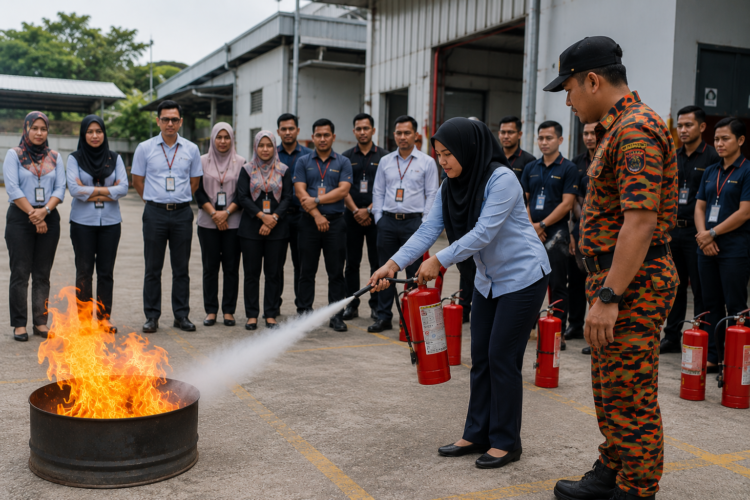
Industrial and manufacturing premises present fire risks that go far beyond those of typical commercial buildings flammable materials, chemical storage, heavy machinery, and large enclosed spaces with complex ventilation and suppression requirements.
Any industrial facility or manufacturing plant above specified floor area thresholds must appoint a certified FSM. Furthermore, premises that handle hazardous materials (HAZMAT) carry additional obligations under the CIMAH Regulations 1996 — and the FSM must coordinate fire safety management with HAZMAT response planning.
Government Buildings and Public Facilities
Government-owned or government-operated buildings above specified size and occupancy thresholds fall under Bomba’s gazetted premises requirements. This includes municipal offices, courthouses, public libraries, community halls, and sports complexes with significant daily occupancy.
Any Premises Specifically Designated by Bomba
Beyond the categories above, Bomba retains the authority to designate any specific premises as requiring FSM appointment based on its assessment of the building’s risk profile, occupancy, and fire safety history. Receiving such a designation creates an immediate legal obligation to appoint and certify an FSM regardless of whether the building falls within the standard categories listed above.
How to Check If Your Building Requires an FSM
If you are unsure whether your specific premises falls under the mandatory FSM appointment requirement, here is a practical checklist to guide your assessment:
Step 1 — Check your Fire Certificate. If your building holds a Fire Certificate issued by Bomba, review its conditions carefully. Many Fire Certificates explicitly state the requirement to appoint a certified FSM as a condition of certificate validity.
Step 2 — Review your building category. Cross-reference your building type, floor area, height, and maximum occupancy against the categories above. If your premises matches any of the listed types and exceeds relevant size or occupancy thresholds, FSM appointment almost certainly applies.
Step 3 — Contact Bomba directly. Bomba’s district offices can confirm definitively whether your specific premises falls under the gazetted buildings requirement. Ask specifically about FSM appointment obligations when you contact them.
Step 4 — Speak to FERA. FERA’s team assists building managers in assessing their compliance obligations before they face an inspection. Contact FERA for a preliminary assessment based on your building type and profile.
What Must an Appointed FSM Actually Do?
Appointing an FSM is not the end of the obligation it is the beginning. Once appointed, the certified FSM must actively fulfil a defined set of responsibilities to keep the building compliant. Specifically, the FSM must:
- Develop and maintain the Fire Emergency Response Plan (FERP) — a documented, tested, and regularly updated plan covering every emergency scenario relevant to the building
- Manage all fire protection systems — ensuring suppression systems, detection and alarm systems, emergency lighting, and evacuation signage all remain operational and serviced on schedule
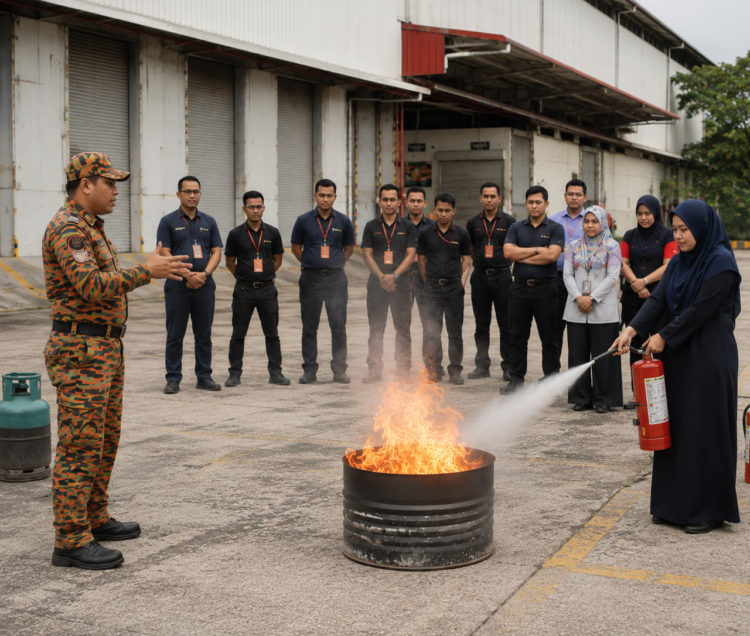
- Plan and conduct fire drills — at least annually for most premises, twice annually for high-risk sites — and document outcomes for Bomba review
- Supervise Fire Safety Officers and fire wardens — ensuring every member of the fire safety team understands their role and executes it correctly
- Liaise with Bomba — during inspections, Fire Certificate renewals, and any incident investigations involving the premises
- Maintain complete fire safety records — inspection logs, drill records, equipment service histories, training certificates, and incident reports must all be current and accessible for audit
- Conduct or commission fire risk assessments — identifying and controlling fire hazards before they become incidents
- Train and brief building occupants — coordinating with the FSO and fire wardens to ensure all staff and regular visitors understand evacuation procedures
An FSM who holds certification but does not actively perform these duties creates the same compliance risk as having no FSM at all. Bomba inspectors review records and test systems — a passive appointment does not satisfy the requirement.
What Happens If Your Building Does Not Appoint a Certified FSM?
The consequences of failing to appoint a certified FSM for premises that legally require one are serious — and they compound over time.
Bomba enforcement: Bomba can issue a non-compliance notice requiring immediate remediation. Continued non-compliance leads to Fire Certificate non-renewal and a commercial building operating without a valid Fire Certificate faces potential shutdown.
DOSH action: DOSH can issue enforcement action independently under OSHA 1994, including fines of up to RM50,000 per offence and stop-work orders for serious violations.
Criminal prosecution: Under the Fire Services Act 1988, building owners who persistently fail to meet fire safety requirements including FSM appointment face criminal prosecution and potential imprisonment.
Insurance liability: Malaysian commercial property and liability insurers increasingly require evidence of certified fire safety personnel as a condition of coverage. In the event of a fire incident, the absence of a certified FSM significantly increases the likelihood of a disputed or voided insurance claim.
Human consequences: Beyond the legal and financial penalties, a building fire without trained fire safety leadership produces the worst possible outcomes delayed evacuation, incorrect emergency response, and preventable casualties.
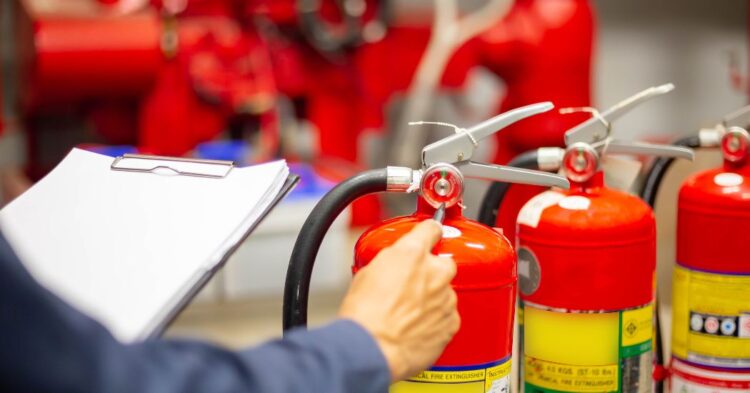
How to Get Your FSM Certified with FERA
FERA Training Center delivers FSM and FSO certification programmes for building managers and designated safety personnel across Malaysia. Our training directly addresses what Bomba inspectors look for, what the Fire Services Act 1988 requires, and what real fire safety management demands in Malaysian building environments.
FERA’s FSM training programme covers:
- Legal framework — Fire Services Act 1988, OSHA 1994, UBBL 1984, and Bomba enforcement guidelines
- Fire risk assessment methodology for commercial and industrial premises
- FERP development, testing, and maintenance
- Fire drill planning, execution, and Bomba-standard documentation
- Fire protection system management and compliance
- FSO and fire warden supervision
- Fire Certificate compliance and Bomba inspection preparation
Additionally, FERA delivers FSO training, fire warden training, ERT training, HAZMAT training (NFPA 472), and NFPA-accredited certification — meaning your entire fire safety team can be built and certified through one trusted provider.
Furthermore, FERA holds active HRDCorp registration making FSM and FSO certification fully claimable under the SBL-Khas scheme for eligible employers.
Frequently Asked Questions
Q1: How do I know if my building is gazetted and requires an FSM?
Check your Fire Certificate conditions, review your building type and size against Bomba’s gazetted premises categories, and contact your nearest Bomba district office for a definitive confirmation. Alternatively, contact FERA for a preliminary compliance assessment based on your building profile.
Q2: What happens if my appointed FSM leaves the company?
You must appoint and certify a replacement FSM as quickly as possible. A gap in FSM appointment puts your Fire Certificate compliance at risk. Contact FERA to discuss fast-track FSM certification for replacement appointments.
Q3: Can my existing safety officer become the FSM without additional training?
No. The FSM role requires specific, recognised certification. An existing safety officer — regardless of experience — must complete a formal FSM training programme and obtain the relevant certification before they can be formally appointed as the building’s FSM for Bomba compliance purposes.
Q4: How often must the FSM renew their certification?
Certification renewal requirements vary. Contact Bomba or FERA directly for current certification validity periods and renewal requirements applicable to your premises and location.
Q5: Is FSM training HRDCorp claimable in Malaysia?
Yes. FERA holds active HRDCorp registration. Contact FERA to confirm the claimable status for your specific programme and get assistance with the SBL-Khas claims process.
Q6: Does a small office building need to appoint an FSM?
It depends on the building’s height, floor area, occupancy, and whether it falls under Bomba’s gazetted premises designation. Many small office buildings do not require a formal FSM appointment — but all workplaces still carry fire safety obligations under OSHA 1994. Contact Bomba or FERA to confirm your specific obligations.
Do Not Wait for a Bomba Notice — Act Now
The most common reason buildings find themselves non-compliant is not negligence it is simply not knowing the requirement applied to them until Bomba arrives. Now that you know, acting quickly protects your building, your occupants, your Fire Certificate, and your organisation’s legal standing.
FERA Training Center is ready to help. Whether you need to appoint your first FSM, replace a departing one, or build a complete fire safety team from the ground up, FERA delivers the certified FSM and FSO training your building needs fast, practical, and fully aligned with Bomba requirements.