- Why It Matters: Workplace emergencies like cardiac arrest, choking, severe bleeding, burns, or collapse can happen suddenly, the first few minutes often determine survival.
- First Aid: Immediate help before medical professionals arrive, focused on preserving life, preventing worsening, and promoting recovery. Common workplace cases include bleeding, burns/electrical injuries, heat exhaustion, choking, and fainting/unconsciousness.
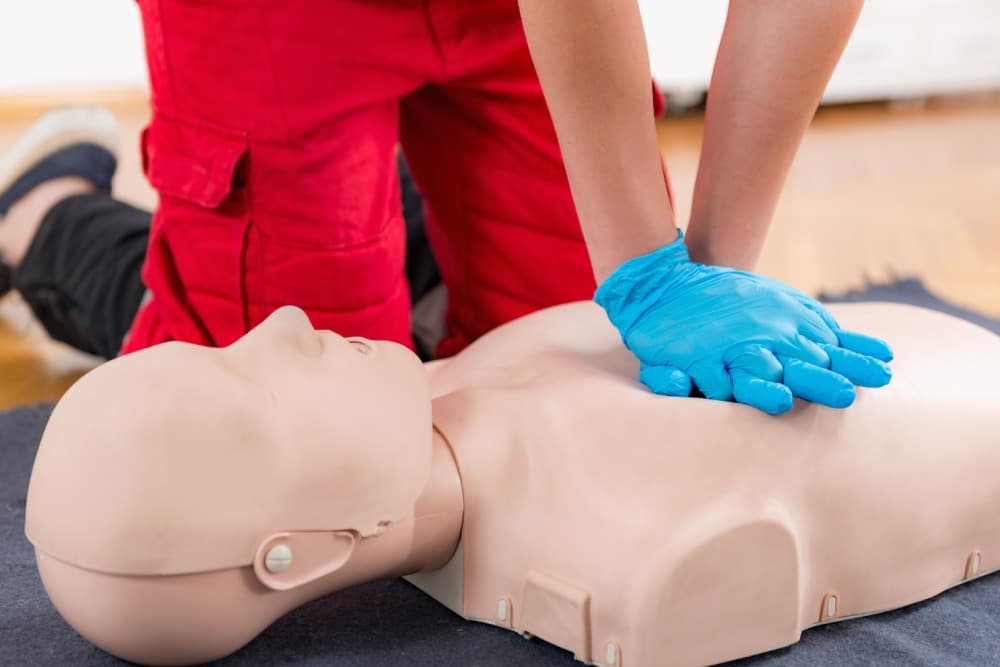
- CPR (Cardiopulmonary Resuscitation): A lifesaving technique when the heart stops pumping effectively. Brain injury may begin within minutes, and survival decreases quickly without action. CPR supports circulation and oxygen until advanced care arrives.
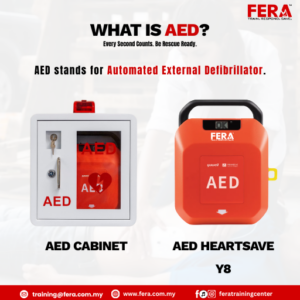
- AED (Automated External Defibrillator): A portable device that analyzes heart rhythm and gives a shock when needed. Modern AEDs guide users with voice/visual prompts, making them safer and easier to use.
- Best Outcome: Early CPR + early AED use significantly increases survival rates in cardiac arrest cases.
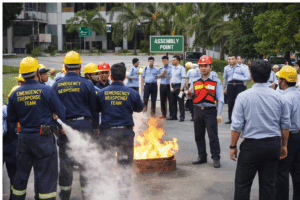
- Workplace Preparedness Benefits: Faster response, reduced injury severity, improved survival outcomes, and a stronger safety culture, especially with trained Emergency Response Teams (ERT).
- Who Should Train: HSE officers, facilities teams, security, HR/admin, educators, industrial staff, event organizers, and any public-facing workplace (malls, hotels, gyms, offices).
- Key Training Covers: BLS principles, adult CPR, AED operation, choking management, bleeding control, scene assessment, and legal/safety considerations built through practical simulations.
- Key Takeaway: Prepared people don’t panic, they respond. Preparedness is not an expense; it’s an investment in human life.
First Aid, CPR & AED: Why Every Workplace Must Be Prepared
Emergencies do not wait for instructions. Whether it is a sudden cardiac arrest, choking incident, severe bleeding, or unconscious collapse, the first few minutes determine survival.
At FERA Training Center, we believe preparedness is not optional, it is a professional responsibility. First Aid, CPR, and AED knowledge empower individuals and organizations to respond confidently, reduce complications, and save lives before professional medical help arrives.
What is First Aid?
First Aid is the immediate assistance given to an injured or ill person before professional medical services take over. It focuses on:
-
Preserving life
-
Preventing the condition from worsening
-
Promoting recovery
In workplace environments, common emergencies include:
-
Cuts and severe bleeding
-
Burns and electrical injuries
-
Heat exhaustion
-
Choking
-
Fainting or unconsciousness
Having trained personnel ensures faster response and better outcomes.
Understanding CPR (Cardiopulmonary Resuscitation)
CPR is a lifesaving technique used when a person’s heart has stopped beating effectively.
When sudden cardiac arrest happens:
-
The heart stops pumping blood.
-
The brain begins to suffer damage within 4–6 minutes.
-
Survival chances decrease by approximately 7–10% for every minute without intervention.
CPR works by:
-
Delivering chest compressions to maintain blood circulation.
-
Providing rescue breaths to supply oxygen.
High-quality CPR keeps oxygen flowing to the brain and vital organs until advanced medical care arrives.
What is an AED (Automated External Defibrillator)?
An AED is a portable device designed to analyze heart rhythm and deliver an electric shock if needed to restore a normal heartbeat.
Modern AEDs:
-
Provide voice and visual prompts.
-
Guide rescuers step-by-step.
-
Are designed for safe use by trained responders and even laypersons.
Combining CPR with early AED use significantly increases survival rates in cardiac arrest cases.
Why Workplaces Must Have First Aid & AED Preparedness
Every organization carries a duty of care toward employees, visitors, and stakeholders.
Workplace risks may include:
-
Electrical hazards
-
High physical activity
-
Stress-related cardiac events
-
Industrial or manufacturing risks
Preparedness ensures:
-
Faster response time
-
Reduced severity of injury
-
Improved survival outcomes
-
Stronger safety culture
Organizations with trained Emergency Response Teams (ERT) demonstrate professionalism and compliance with safety standards.
Who Should Be Trained?
First Aid, CPR & AED training is essential for:
-
Health & Safety Officers
-
Facilities Management Teams
-
Security Personnel
-
HR and Administration
-
Teachers and Trainers
-
Industrial & Manufacturing Staff
-
Event Organizers
-
Public-facing businesses (malls, hotels, gyms, offices)
In reality, anyone can become a first responder. The goal is to ensure someone nearby knows what to do when every second counts.
Key Components of Professional Training
At FERA Training Center, structured training programs typically include:
-
Basic Life Support (BLS) principles
-
Adult CPR techniques
-
AED operation and safety
-
Choking management
-
Severe bleeding control
-
Emergency scene assessment
-
Legal and safety considerations
Training is conducted using practical simulations to build confidence and muscle memory.
The Golden Minutes Matter
During sudden cardiac arrest:
-
Brain damage may begin within minutes.
-
Emergency medical services may take time to arrive.
-
Immediate action determines survival.
Prepared individuals do not panic.
They respond.
And that response can be the difference between life and death.
Building a Safer Community Through Preparedness
Safety is not just about compliance,,it is about culture.
Organizations that invest in First Aid, CPR & AED training:
-
Protect their workforce.
-
Reduce liability risks.
-
Strengthen public trust.
-
Demonstrate leadership in safety standards.
Preparedness is not an expense.
It is an investment in human life.