

Every building in Malaysia that falls under the Fire Services Act 1988 carries a legal obligation and that obligation lands squarely on two key appointments: the Fire Safety Manager (FSM) and the Fire Safety Officer (FSO). Yet despite how critical these roles are, many Malaysian employers remain unclear about what each position actually requires, who needs to appoint one, and what happens if they do not.
Whether you manage a commercial building, run a manufacturing facility, oversee a hospital, or work in facilities management, this guide clarifies exactly what FSM and FSO mean in the Malaysian context, what their legal duties cover, how the two roles differ, and how your organisation gets the right people properly certified.
What Is a Fire Safety Manager (FSM)?
A Fire Safety Manager carries the highest level of fire safety responsibility within a building or facility. In Malaysia, the FSM role exists as a statutory appointment under the Fire Services Act 1988 and Bomba’s enforcement guidelines for gazetted premises.
The FSM bears overall accountability for the entire fire safety management system of a building from fire protection equipment maintenance and evacuation planning to staff training and Bomba compliance. Critically, the FSM does not simply supervise others. The FSM personally ensures that every fire safety obligation the law places on a building owner or occupier actually gets met.
In practical terms, the Fire Safety Manager takes charge of:
- Developing, implementing, and reviewing the building’s Fire Emergency Response Plan (FERP)
- Ensuring all fire protection systems — suppression, detection, emergency lighting, signage — stay operational and properly maintained
- Planning and overseeing fire drills and evacuation exercises to Bomba standards
- Maintaining complete fire safety records for Bomba inspection
- Coordinating fire safety training for all building occupants and appointed Fire Safety Officers
- Liaising with Bomba during inspections, audits, incident investigations, and Fire Certificate renewal processes
- Managing the building’s Fire Certificate compliance obligations under the Fire Services Act 1988
The FSM role suits senior facilities managers, building managers, HSE managers, and designated safety personnel who carry organisation-wide fire safety accountability.
What Is a Fire Safety Officer (FSO)?
A Fire Safety Officer operates at the operational level of fire safety management. While the FSM holds strategic and overall accountability, the FSO implements, monitors, and enforces fire safety procedures on a day-to-day basis within the building or facility.
Think of the relationship this way the FSM sets and owns the fire safety management system, while the FSO runs it on the ground every day.
Specifically, the Fire Safety Officer is responsible for:
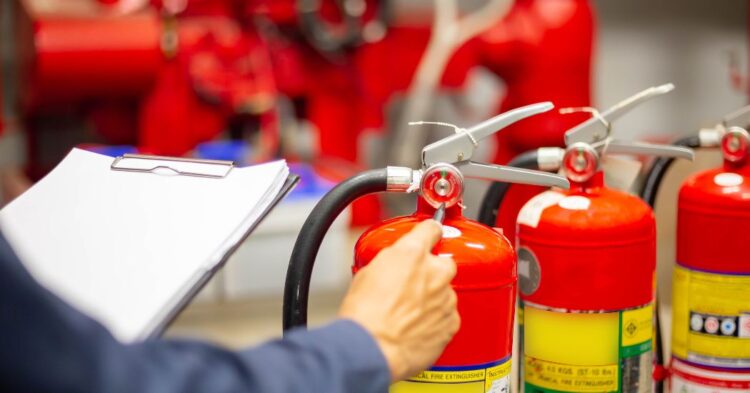
- Conducting regular fire safety inspections of the premises — checking exits, extinguishers, alarm systems, escape routes, and fire doors
- Identifying fire hazards and reporting them to the FSM for action
- Supervising fire wardens and ensuring they understand their evacuation responsibilities
- Assisting in the planning and execution of fire drills
- Maintaining fire safety inspection logs, equipment service records, and drill documentation
- Delivering basic fire safety briefings to new staff and visitors
- Reporting fire safety non-compliance issues to the FSM immediately
The FSO role typically suits safety coordinators, facility supervisors, appointed safety personnel, and team leaders who carry hands-on responsibility for day-to-day fire safety compliance within a specific building, floor, or zone.
FSM vs FSO — Key Differences at a Glance
Many Malaysian employers confuse these two roles or treat them as interchangeable. They are not. Here is a clear comparison:
| Fire Safety Manager (FSM) | Fire Safety Officer (FSO) | |
| Level | Strategic and managerial | Operational and supervisory |
| Accountability | Overall building fire safety system | Day-to-day fire safety compliance |
| Reporting | Reports to building owner or top management | Reports to Fire Safety Manager |
| Key duties | FERP development, Bomba liaison, training oversight, Fire Certificate compliance | Daily inspections, hazard identification, warden supervision, drill assistance |
| Certification | FSM certification required | FSO certification required |
| Typical role holder | Facilities manager, HSE manager, building manager | Safety coordinator, facility supervisor, team safety lead |
Both roles carry legal weight. Accordingly, both require formal, documented certification — and both certifications must stay current to satisfy Bomba inspection requirements.
Who Is Legally Required to Appoint an FSM and FSO in Malaysia?
Under the Fire Services Act 1988 and Bomba’s enforcement framework, certain categories of premises must appoint a certified Fire Safety Manager. These premises include:
- High-rise commercial buildings and office towers
- Shopping complexes and retail malls
- Hotels and serviced apartments above specified occupancy thresholds
- Hospitals and private medical centres
- Educational institutions — universities, colleges, and large schools
- Industrial facilities and manufacturing plants above specified floor area
- Government buildings and public facilities
- Any gazetted premises that Bomba designates as requiring FSM appointment
For premises that fall under this requirement, the FSM appointment is not optional. Bomba officers check FSM appointment records during Fire Certificate inspections and renewal audits. Furthermore, a building without a certified FSM on record faces the risk of Fire Certificate non-renewal — which can trigger operational shutdown for commercial premises.
The FSO appointment supports the FSM in managing day-to-day fire safety operations, and larger premises typically appoint multiple FSOs to cover different zones, floors, or shifts.
If you are unsure whether your premises fall under the mandatory FSM appointment requirement, contact Bomba directly or speak to FERA for a compliance assessment.
What Does FSM and FSO Training Cover?
FERA’s FSM and FSO training programme prepares participants to fulfil their statutory roles with genuine competency — not just theoretical awareness. The programme directly addresses what Bomba inspectors look for, what the Fire Services Act 1988 requires, and what real fire safety management demands in Malaysian workplace environments.
FSM Training — What Participants Learn
The Fire Safety Manager training programme covers the full scope of FSM responsibilities under Malaysian law:
- Legal framework — Fire Services Act 1988, OSHA 1994, and Bomba enforcement guidelines for gazetted premises
- Fire risk assessment — Systematic methodology for identifying, evaluating, and controlling fire hazards in commercial and industrial premises
- Fire protection systems — How suppression systems, detection and alarm systems, emergency lighting, and evacuation signage work — and what maintenance compliance requires
- Fire Emergency Response Plan (FERP) — How to develop, document, test, and update a FERP that satisfies Bomba requirements
- Fire drill planning and execution — How to plan realistic drills, brief fire wardens, conduct post-drill debriefs, and document outcomes to Bomba standards
- Fire Certificate compliance — Understanding Fire Certificate conditions, managing renewal timelines, and preparing for Bomba inspection
- FSO and fire warden management — How to structure, supervise, and develop the fire safety team within the building
- Post-incident management — Incident reporting, investigation, and corrective action documentation
FSO Training — What Participants Learn
The Fire Safety Officer training programme focuses on operational competency:
- Daily fire safety inspection procedures and checklists
- Fire hazard identification – common hazards in Malaysian commercial and industrial buildings
- Fire protection equipment – how to check, record, and escalate maintenance issues for extinguishers, hose reels, sprinkler systems, and alarm panels
- Fire warden coordination – how FSOs supervise and support fire wardens during drills and real emergencies
- Evacuation procedure management – primary and secondary routes, assembly point control, and headcount procedures
- Documentation and record-keeping requirements for Bomba audits
- Escalation protocols — when and how to report fire safety issues to the FSM and, if necessary, directly to Bomba
Why FSM and FSO Certification Matters Beyond Legal Compliance
Many building managers treat FSM and FSO certification as a checkbox — something to obtain and file away. In reality, a properly trained FSM and FSO deliver far more than compliance documentation. Here is what genuine FSM and FSO competency achieves for your organisation:
Faster, more effective emergency response. When a fire starts, a certified FSM and FSO know exactly what to do — and more importantly, they know what not to do. Their training eliminates hesitation, prevents dangerous improvisation, and ensures the evacuation runs exactly as practiced.
Reduced insurance exposure. Malaysian insurance underwriters increasingly scrutinise fire safety management records when assessing commercial property and liability policies. A building with current FSM and FSO certifications, complete inspection logs, and documented fire drills presents a demonstrably lower risk profile — which directly affects premium calculations and claim outcomes.
Proactive hazard control. A trained FSO catching a blocked fire exit or an overdue extinguisher service today prevents a potential catastrophe tomorrow. Regular, documented inspections create a culture of fire safety awareness that permeates the entire building — not just the safety team.
Stronger Bomba relationship. Buildings with certified, active FSMs and FSOs consistently perform better in Bomba inspections. Inspectors recognise when a building’s fire safety management system operates properly — and that recognition translates into smoother Fire Certificate renewals and fewer enforcement notices.
What Happens If Your Building Has No Certified FSM or FSO?
Failing to appoint a certified FSM or FSO for premises that require one carries serious consequences under Malaysian law:
- Bomba can issue a Fire Certificate non-compliance notice
- Fire Certificate renewal can be withheld or delayed until a certified FSM is in place
- Building owners face potential prosecution under the Fire Services Act 1988
- DOSH can issue enforcement action under OSHA 1994 if the absence of qualified safety personnel contributes to a workplace safety failure
- In the event of a fire incident, the absence of a certified FSM or FSO significantly increases the building owner’s legal and insurance liability exposure
Beyond the legal consequences, the human cost of an unmanaged fire emergency in a building without trained fire safety leadership can be devastating. Evacuation failures, delayed Bomba notification, and improper use of fire suppression equipment are far more likely when no certified FSM or FSO is present.
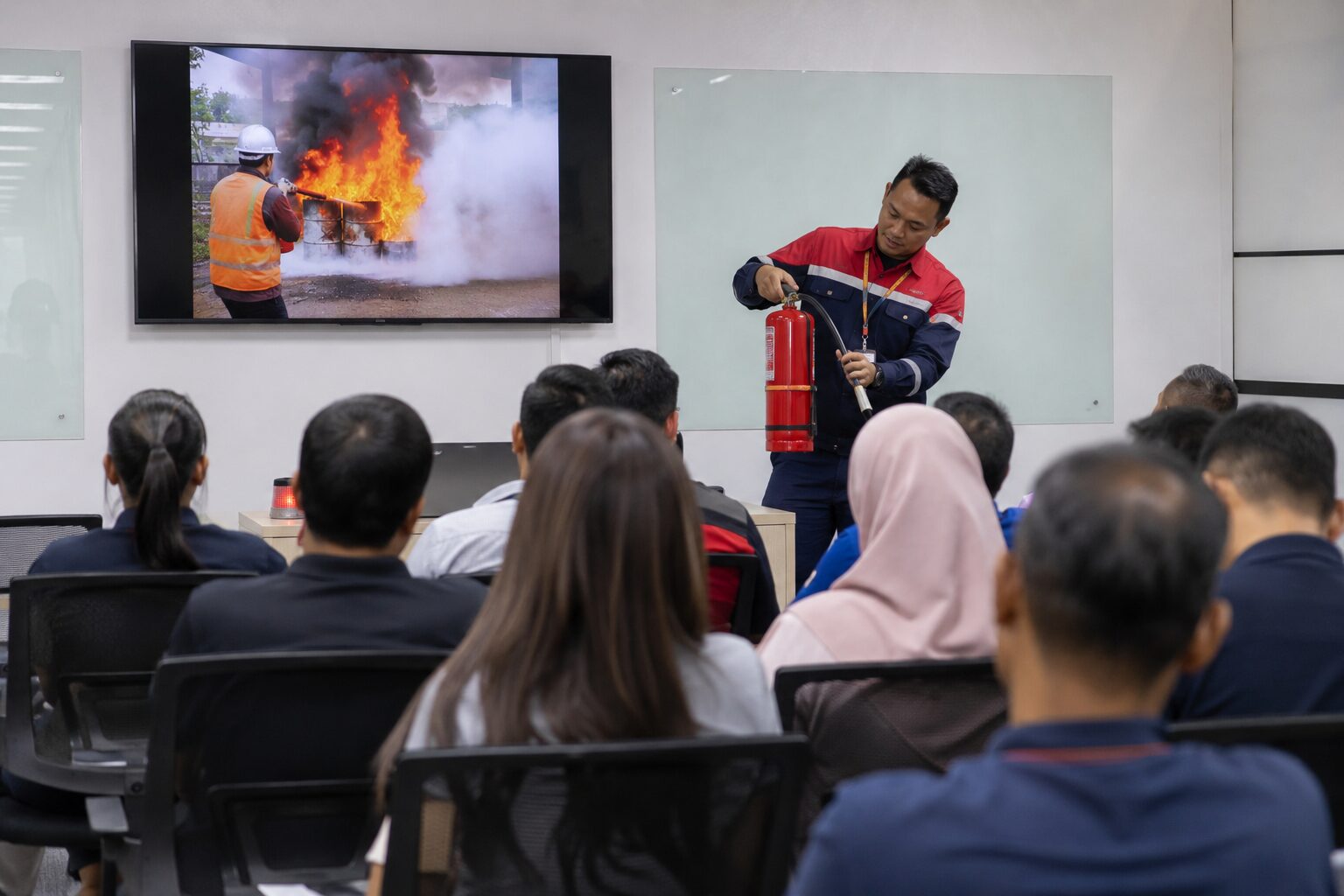
How to Get FSM and FSO Certified With FERA
FERA Training Center delivers FSM and FSO training for building managers, safety personnel, and facilities teams across Malaysia. Our programme combines the full legal and regulatory framework with practical, scenario-based learning — preparing participants not just to pass a certification, but to genuinely manage fire safety in their buildings.
FERA’s FSM and FSO programme is suitable for:
- Facilities managers and building managers at commercial and high-rise properties
- HSE managers and Safety and Health Officers in industrial and manufacturing environments
- Hotel management and operations teams
- Hospital facilities and safety teams
- University and school facilities officers
- Any appointed fire safety personnel at gazetted premises
Furthermore, FERA’s FSM and FSO training connects directly to our broader fire safety and emergency response training ecosystem — meaning your FSM and FSO certifications sit within a comprehensive fire safety training structure that also covers fire warden training, ERT training, HAZMAT training, and NFPA-accredited programmes.
Programme Update: Contact FERA directly for the latest intake schedule, programme duration, fees, and HRDCorp claimable status.
Frequently Asked Questions — FSM and FSO in Malaysia
Q1: Is appointing a Fire Safety Manager compulsory in Malaysia?
Yes, for gazetted premises under the Fire Services Act 1988. This includes high-rise buildings, shopping complexes, hotels, hospitals, universities, and major industrial facilities. Bomba checks FSM appointment records during Fire Certificate inspections. Buildings without a certified FSM on record risk non-renewal of their Fire Certificate and potential prosecution under the Fire Services Act 1988.
Q2: What is the difference between a Fire Safety Manager and a Fire Safety Officer?
The FSM holds overall strategic accountability for the building’s entire fire safety management system including FERP development, Bomba liaison, and Fire Certificate compliance. The FSO operates at the day-to-day level, conducting inspections, supervising fire wardens, maintaining records, and implementing the fire safety procedures the FSM establishes. Both roles require separate, formal certification.
Q3: Can the same person hold both FSM and FSO roles?
In smaller premises, one person may fulfil both functions, provided they hold the relevant certifications for both roles. However, in larger buildings with multiple floors, zones, or shifts, separate FSM and FSO appointments are strongly recommended to ensure adequate coverage and clear accountability.
Q4: How long does FSM and FSO training take?
Programme duration varies. Contact FERA directly for the current programme schedule and duration for both FSM and FSO certifications.
Q5: Is FSM and FSO training HRDCorp claimable?
FERA is a registered HRDCorp training provider. Contact FERA to confirm the current HRDCorp claimable status for the FSM and FSO programme and to discuss the claims process for your organisation.
Q6: What happens if our Fire Safety Manager leaves the company?
You must appoint and certify a replacement FSM as quickly as possible. A gap in FSM appointment puts your building’s Fire Certificate compliance at risk. FERA can fast-track FSM training for replacement appointments contact us to discuss your timeline.
Register for FSM and FSO Training With FERA
FERA Training Center stands as a certified fire safety and emergency response training provider in Malaysia, delivering FSM and FSO programmes alongside fire safety training, ERT training, HAZMAT training (NFPA 472), and NFPA-accredited certification for organisations across Peninsular Malaysia.
Our trainers bring real Bomba experience, fire protection industry knowledge through AITO, and decades of practical fire safety management expertise to every session.
Do not wait for a Bomba inspection notice or a Fire Certificate renewal deadline to act. Contact FERA today and get your FSM and FSO properly certified.