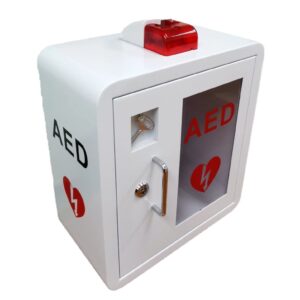
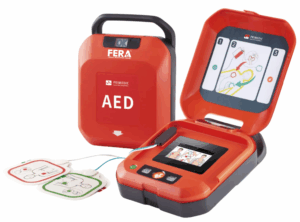
Sudden Cardiac Arrest can strike anyone, anywhere, and without warning. In such emergencies, early defibrillation using an Automated External Defibrillator (AED) is the most critical factor for survival. The AED is designed to deliver fast, reliable, and user-friendly lifesaving support making it an ideal AED for workplaces, public areas, industrial sites, and community facilities.
What Is an AED?
An AED is a small, portable device used during a cardiac emergency.
It can:
-
Check the heart rhythm
-
Decide if a shock is needed
-
Give a safe electrical shock
Anyone can use an AED, even without medical training.
Why AEDs Save Lives
When the heart stops, every minute counts.
For each minute without help, the chance of survival drops quickly.
Ambulances take time to arrive.
An AED lets people help immediately.
How to Use an AED (Very Simple)
Using an AED is easy. Just follow the voice:
-
Turn on the AED
Open the lid. The device starts talking. -
Attach the pads
Place the pads on the bare chest as shown. -
Stand clear
The AED checks the heart rhythm. -
Press the shock button if told
The device will guide you. -
Continue CPR if instructed
Follow the AED’s voice prompts.
You do not decide what to do, the AED tells you.
Where AEDs Should Be
AEDs should be placed where people gather:
-
Offices and factories
-
Schools and universities
-
Shopping malls and hotels
-
Gyms and sports centers
-
Mosques and community buildings
The closer the AED, the better the chance of survival.
Easy to Care For
AEDs are:
-
Easy to use
-
Strong and reliable
-
Always ready
-
Low maintenance
Simple checks keep them ready for emergencies.
Training Helps, But Is Not Required
AEDs are safe to use without training.
However, basic CPR and AED training helps people act faster and with confidence.
A Small Device That Makes a Big Difference
An AED gives ordinary people the power to save a life.
It turns fear into action when every second matters.
Having an AED nearby can save a life, maybe one you care about.