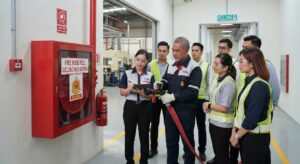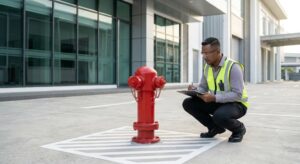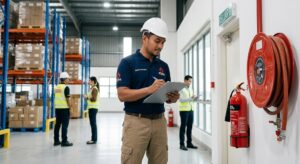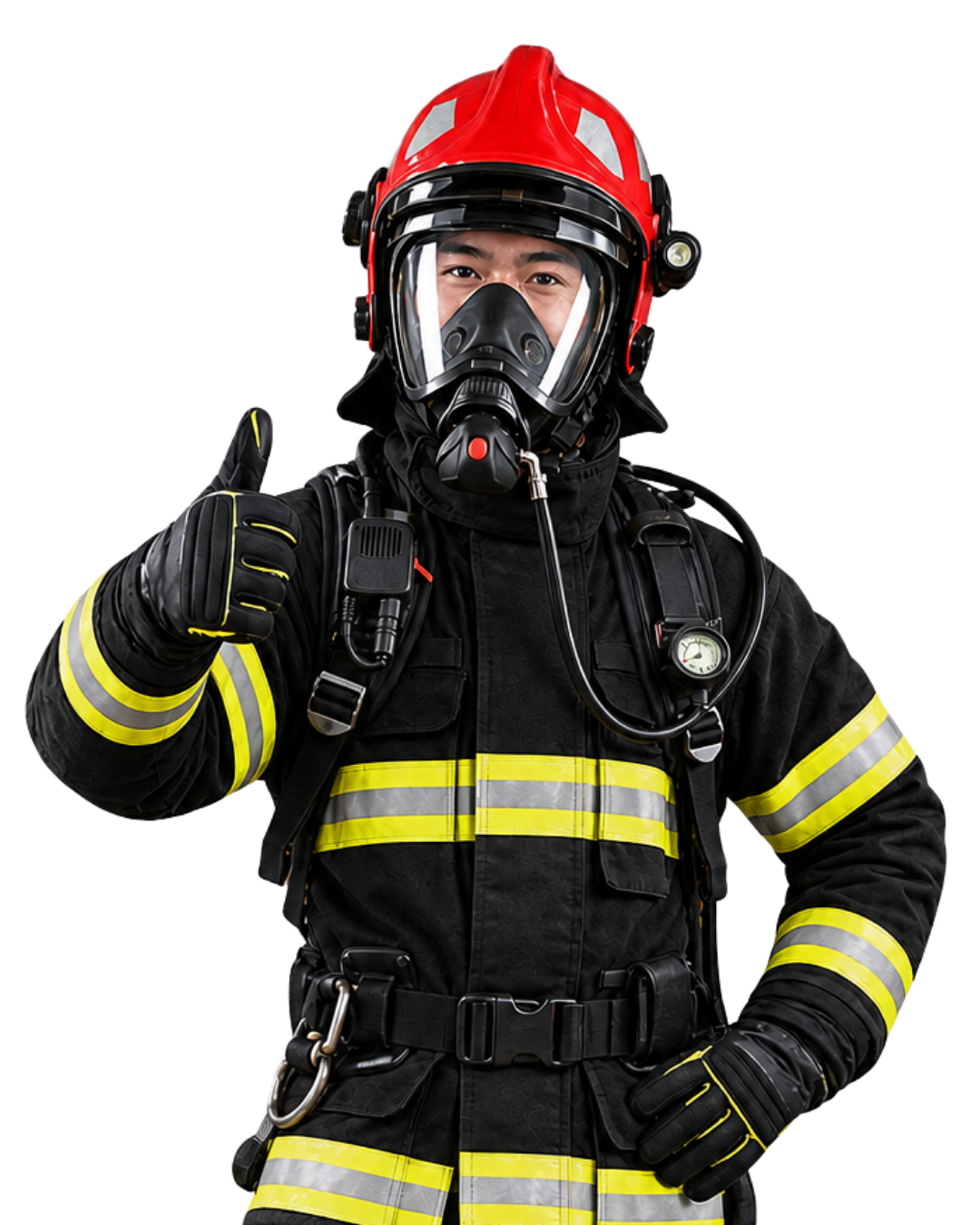

A fire hose reel can be an important piece of firefighting equipment in a workplace. However, having one available does not mean every employee should attempt to use it during a fire.
Employees need to understand when an initial firefighting response may be appropriate and, more importantly, when they should stop and evacuate.
This is why fire hose reel training in Malaysia should focus on more than operating the equipment. Proper training also helps employees understand fire behaviour, personal safety, escape routes and the limits of an initial response.
At FERA Training Center, practical fire safety training helps participants understand how firefighting equipment fits into a wider workplace emergency response plan.
What Is a Fire Hose Reel?
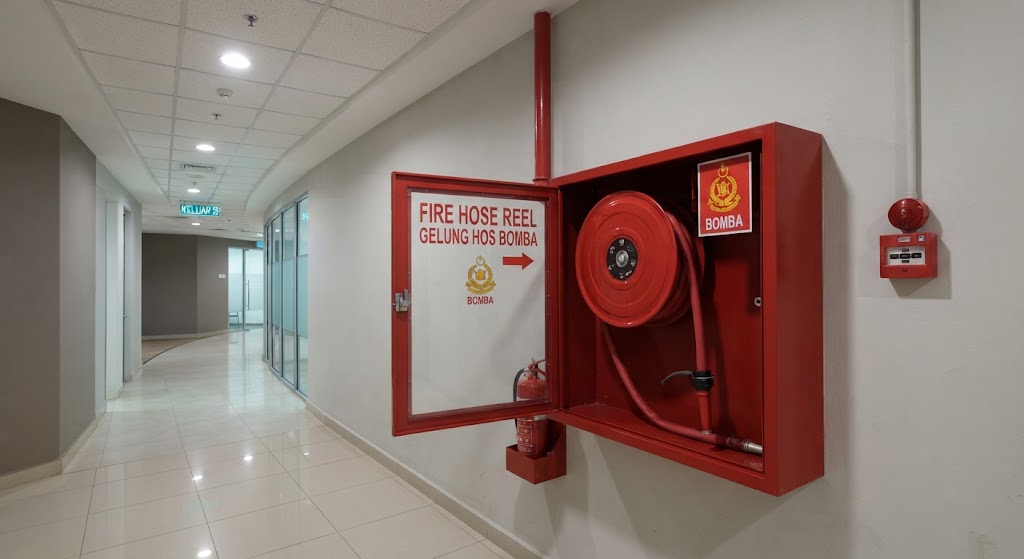
A fire hose reel is a fixed firefighting installation that provides a controlled supply of water through a hose.
It is designed to support an initial response to certain types of fire while conditions are still manageable.
Unlike a portable fire extinguisher, a hose reel can provide a continuous water supply. Therefore, the person using it must understand both its advantages and its limitations.
A hose reel should never be treated as equipment that can be used on every fire.
Instead, employees need to understand the type of fire, surrounding hazards and whether they have a safe way to retreat.
Why Fire Hose Reel Training Matters
During a fire emergency, employees may have very little time to make a decision.
Without training, a person may approach the fire too closely, use the wrong firefighting method or continue trying to control the fire when conditions have already become unsafe.
Practical fire hose reel training helps employees understand how to react more safely.
FERA’s Basic Fire Safety course includes initial firefighting response using equipment such as portable fire extinguishers, fire hose reels and fire blankets.
The purpose of this type of training is not to turn employees into professional firefighters.
Instead, it helps designated personnel develop basic firefighting awareness and recognise when evacuation should become the priority.
Who May Need Fire Hose Reel Training?
Not every employee needs the same level of firefighting training.
However, practical hose reel awareness can be useful for personnel who have defined emergency responsibilities.
These may include:
- Emergency Response Team members
- Fire wardens
- Safety and health personnel
- Facility teams
- Security personnel
- Supervisors
- Building management teams
- Industrial employees
- Warehouse personnel
FERA’s industrial fire safety training also includes practical fire hose reel operation as part of its workplace training programme.
When Should Employees Consider Using a Fire Hose Reel?
Employees should only consider an initial firefighting response when conditions remain manageable and their own safety is not compromised.
Several factors should be considered first.
The Fire Is Still Small
Initial firefighting equipment is intended for an early-stage fire.
If flames are already spreading quickly or affecting a larger area, employees should not remain in the danger zone simply to continue firefighting.
Instead, they should follow the workplace emergency procedure and evacuate.
The Employee Has Received Training
A person should understand how to operate the equipment before attempting to use it during an emergency.
Training helps employees become familiar with the hose, water supply and basic operating procedures.
It also helps them understand how to maintain a safe position while responding to the fire.
FERA’s wider fire safety training courses include programmes for employees, emergency teams and workplace safety personnel.
There Is a Safe Escape Route
Anyone attempting an initial firefighting response should always maintain a clear escape route.
The fire should never be allowed to come between the employee and the exit.
Conditions can change quickly. Therefore, employees must be ready to stop firefighting and withdraw immediately if smoke, heat or flames begin to increase.
The Fire Is Suitable for Water
A hose reel uses water.
However, water is not suitable for every type of fire.
Employees therefore need basic knowledge of fire classes and extinguishing methods before using firefighting equipment.
Understanding this distinction is an important part of basic firefighting training.
When Should Employees Not Use a Fire Hose Reel?
Knowing when not to use a hose reel is just as important as knowing how to operate one.
Employees should never feel pressured to fight a fire when conditions are unsafe.
Life safety must remain the priority.
When the Fire Is Spreading Quickly
A hose reel is intended for an initial response.
If flames are increasing rapidly or spreading to nearby materials, employees should evacuate.
Continuing to fight a developing fire can delay evacuation and expose the person to dangerous heat and smoke.
When Heavy Smoke Is Present
Smoke can reduce visibility very quickly.
It may also make breathing difficult and hide hazards within the area.
Employees without specialised firefighting equipment and training should not enter a smoke-filled area simply to reach or operate a hose reel.
If smoke conditions are worsening, evacuation should take priority.
When Electrical Equipment May Be Energised
Water should not be directed towards energised electrical equipment.
This may include electrical panels, machinery, switchboards or other powered equipment.
Employees should never guess whether electrical equipment has been isolated.
Instead, they should follow the site’s emergency procedures and use the appropriate firefighting method for the hazard.
When Flammable Liquids Are Involved
Water may not be suitable for certain fires involving flammable liquids.
Incorrect application can make the situation worse.
Workplaces that store fuels, solvents or hazardous chemicals may therefore require more specialised emergency response training.
FERA also provides Firefighting and HAZMAT training for organisations that require greater emergency response capability.
When the Employee Is Not Trained
Seeing a hose reel on the wall does not mean every employee should use it.
An untrained person may not know how to operate the equipment or recognise dangerous conditions.
They may also remain too long in the area instead of evacuating.
For many employees, the safest action may be to raise the alarm, leave the building and follow instructions from trained emergency personnel.
Fire Hose Reel Training Should Be Practical
Fire hose reel operation is difficult to understand fully from theory alone.
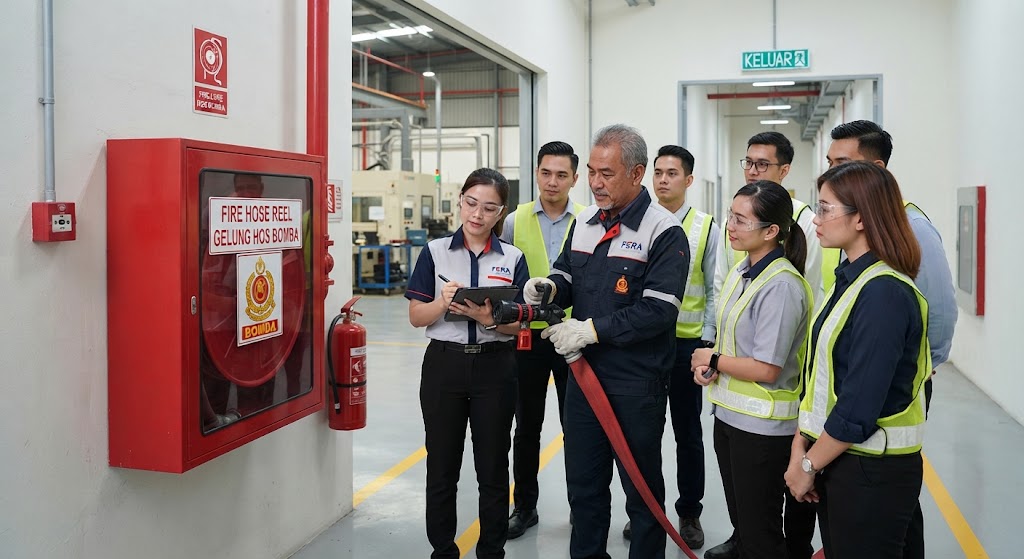
Practical training allows participants to experience how the hose behaves, how to control it and how to communicate with other team members.
It also gives trainers an opportunity to correct unsafe techniques.
This practical approach can help employees build confidence before a real emergency happens.
FERA’s training programmes include hands-on fire safety activities, and its Fire Safety Officer course also includes practical hose and hose reel operation drills.
Fire Hose Reel Training for Emergency Response Teams
Emergency Response Team members may have additional responsibilities during a fire emergency.
Depending on the workplace, these may include initial firefighting, evacuation support, communication and incident coordination.
Therefore, ERT members may benefit from practical training that covers:
- Basic fire behaviour
- Classes of fire
- Hose reel operation
- Safe approach techniques
- Communication between team members
- Escape route awareness
- Conditions that require withdrawal
- Emergency escalation procedures
The training level should always match the role expected from the team.
Fire Warden Roles Are Different
Fire wardens play an important role during workplace emergencies.
However, fire warden duties are usually centred on evacuation and occupant safety.
Their responsibilities may include:
- Guiding employees towards exits
- Supporting evacuation
- Checking designated areas
- Managing assembly points
- Assisting with headcounts
- Reporting conditions to the emergency controller
- Preventing unsafe re-entry
A fire warden should not automatically be expected to fight a fire unless that role has been defined and suitable training has been provided.
Organisations can strengthen these capabilities through FERA’s fire safety and emergency response programmes.
Hose Reel Training Should Support the Emergency Response Plan
Fire hose reel operation should not exist as an isolated skill.
Instead, it should support the organisation’s overall emergency response plan.
For example, while trained personnel assess whether an initial response is possible, other employees may be evacuating the building.
At the same time, fire wardens may be directing occupants towards exits while another team conducts a headcount at the assembly point.
Therefore, each role should support the others.
Good emergency preparedness depends on coordination rather than individual action.
Include Hose Reel Awareness in Fire Drills
A workplace fire drill usually focuses on evacuation.
However, organisations with trained ERT members can also use practical exercises to review how different emergency roles work together.
A drill may cover:
- Alarm activation
- Emergency communication
- ERT mobilisation
- Evacuation
- Fire warden duties
- Assembly point management
- Headcount
- Emergency service communication
- Post-drill review
FERA also offers fire drill management training as part of its wider fire safety training programmes.
Common Fire Hose Reel Mistakes
Some mistakes can increase risk during an emergency.
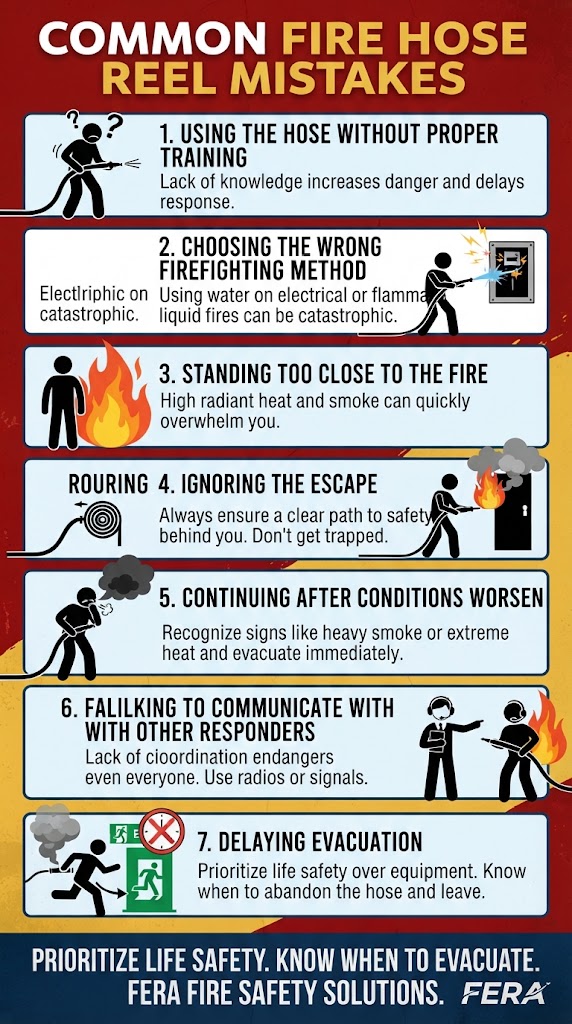
For example, an employee may approach the fire too closely or fail to keep an escape route behind them.
Others may continue firefighting even when smoke or heat is increasing.
Common mistakes include:
- Using the hose without proper training
- Choosing the wrong firefighting method
- Standing too close to the fire
- Ignoring the escape route
- Continuing after conditions worsen
- Failing to communicate with other responders
- Delaying evacuation
Practical training helps participants recognise these mistakes before they happen in a real emergency.
Equipment Readiness Still Matters
Employee training is only one part of workplace fire preparedness.
Firefighting equipment must also remain accessible and ready for use.
A hose reel should not be blocked by stock, furniture, equipment or temporary storage.
Employees should also report any visible damage or accessibility problems through the workplace safety reporting process.
However, technical servicing, repair and system maintenance should be handled by suitable competent parties.
The focus of FERA training is employee competency, fire safety awareness and emergency readiness rather than supplying or installing fire hose reel systems.
Why Decision-Making Matters More Than Fighting the Fire
One of the most important lessons in firefighting training is knowing when to stop.
Successful emergency response does not always mean extinguishing the fire.
Sometimes, the safest decision is to evacuate immediately.
Employees should be trained to recognise warning signs such as:
- Rapidly increasing flames
- Heavy smoke
- Extreme heat
- Poor visibility
- Unknown hazardous materials
- Electrical hazards
- Blocked escape routes
- Loss of control of the situation
If these conditions appear, employees should withdraw and follow the emergency evacuation procedure.
Build Workplace Fire Readiness with FERA
Fire safety equipment is only effective when people understand how to respond around it.
Practical training can help employees, fire wardens and Emergency Response Team members become more familiar with workplace fire hazards and initial emergency actions.
FERA provides fire safety training for employees at different levels, including practical firefighting, emergency response and workplace safety programmes.
If your organisation wants to strengthen practical fire response skills, explore FERA’s fire safety training courses and identify the programme that best matches your workplace risk and employee responsibilities.
Conclusion
Fire hose reels can support an initial response to certain workplace fires. However, employees must understand that using the equipment is only appropriate when conditions remain safe.
Proper fire hose reel training in Malaysia helps employees understand how the equipment works, which situations may be suitable for an initial response and when evacuation should become the priority.
For Emergency Response Team members, fire wardens and workplace safety personnel, this knowledge can improve both confidence and decision-making during an emergency.
Most importantly, fire safety training should never encourage employees to take unnecessary risks.
The goal is to help people recognise hazards, respond appropriately and protect life.
Organisations that want practical workplace fire safety training can contact FERA Training Center to discuss a suitable programme for their team.
Questions & Answers
What is fire hose reel training?
Fire hose reel training teaches participants how the equipment works, how to operate it safely and when it may or may not be appropriate to use it.
Should every employee use a fire hose reel?
No. Employees should follow their workplace emergency procedures. Those expected to provide an initial firefighting response should receive suitable training.
When should a fire hose reel not be used?
Employees should not use a hose reel when conditions are unsafe, the fire is spreading rapidly, heavy smoke is present or water is not suitable for the hazard.
Can a fire hose reel be used on electrical equipment?
Water should not be directed towards energised electrical equipment. Employees should use an appropriate firefighting method and follow workplace emergency procedures.
Who should attend fire hose reel training?
ERT members, fire wardens, safety personnel, facility teams, security personnel and other designated workplace responders may benefit from practical hose reel training.
Does FERA provide practical fire hose reel training?
Yes. FERA’s Basic Fire Safety training includes practical initial firefighting response using equipment such as fire extinguishers, fire hose reels and fire blankets.
Is hose reel training enough for workplace fire preparedness?
No. It should be combined with evacuation planning, fire drills, communication procedures, fire warden responsibilities and a clear workplace emergency response plan.