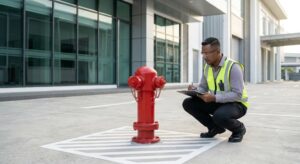

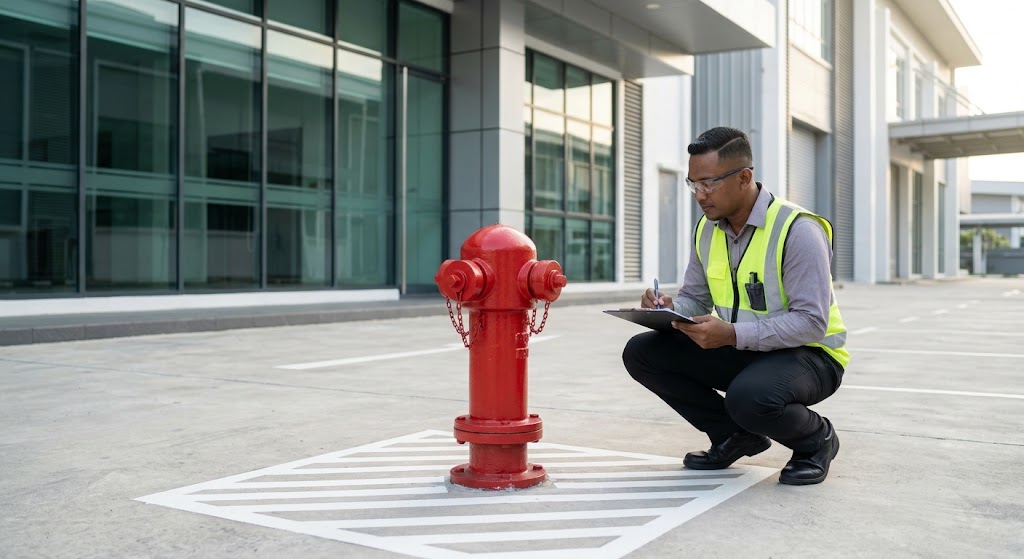
Regular fire hydrant inspection Malaysia workplaces conduct helps ensure that firefighting teams can access a dependable water supply during an emergency. A hydrant may appear ready from the outside, but damaged valves, low pressure, corrosion or blocked access can reduce its effectiveness.
Therefore, businesses should not treat hydrants as permanent equipment that requires no attention. Management must include them in the organization’s fire protection inspection and maintenance programme.
Employees should also recognize hydrant locations and keep the surrounding area clear. However, only trained and authorised personnel should operate the system during testing or an emergency.
Organizations can strengthen their overall readiness through FERA’s fire safety and emergency response training programmes.
What Is a Fire Hydrant System?
A fire hydrant system provides firefighters with access to a water supply for firefighting operations.
Depending on the building or facility, the system may include hydrant pillars, landing valves, pipework, pumps, water tanks and control equipment. These components must work together to deliver sufficient water during an emergency.
External hydrants usually allow firefighters to connect hoses outside a building or industrial facility. Meanwhile, internal systems may provide landing valves at selected floors or protected areas.
The system supports professional fire and rescue operations. It does not replace fire alarms, portable extinguishers, sprinklers or evacuation procedures.
Why Fire Hydrant Inspection Malaysia Businesses Need Matters
A hydrant system may remain unused for long periods. Nevertheless, it must operate immediately when an emergency occurs.
Without regular inspection, an organization may not notice deterioration until the system fails during a critical incident.
Common problems include corrosion, damaged caps, leaking valves, low water pressure and blocked access. Construction work, parked vehicles or stored materials may also prevent firefighters from reaching the hydrant quickly.
Regular inspection helps management identify these problems earlier. It also supports better maintenance planning and workplace fire safety documentation.
Most importantly, inspection protects the system’s operational readiness. A visible hydrant does not necessarily mean that the water supply, valves and pumps remain functional.
Main Components That Require Attention
A fire hydrant system contains several parts that require different inspection and testing methods.
The hydrant pillar or landing valve provides the connection point for firefighting hoses. Inspectors should check whether the body shows corrosion, impact damage or leakage.
Caps and chains should remain secure and easy to access. Missing or damaged components may allow dirt and moisture to enter the connection.
In addition, the surrounding pipework should not show obvious signs of leakage or physical damage. The system’s water tank, pump and control equipment must also remain operational.
Technical inspections may include pressure and flow testing. A competent provider should conduct these tests using suitable equipment and procedures.
Employees should not open valves or attempt testing without authorization. Incorrect operation can damage the system, cause water loss or create workplace hazards.
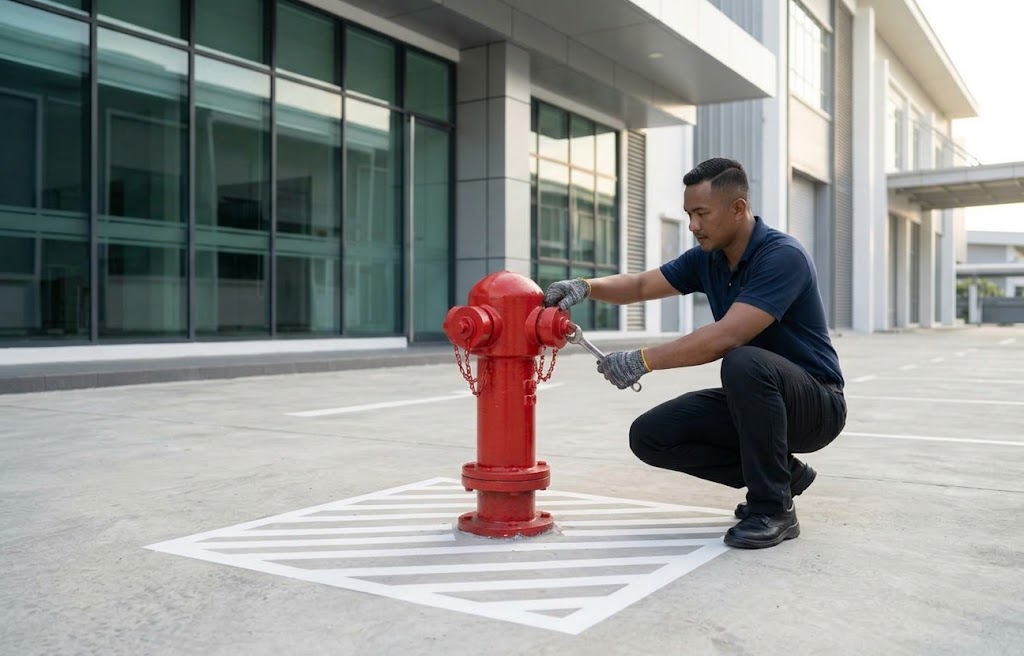
Fire Hydrant Colour Codes and Identification
Colour markings help identify fire hydrants and may provide information about the system or water supply.
However, organizations should not repaint a hydrant based only on online photographs or assumptions. The correct identification should follow the approved system design, relevant requirements and instructions from a qualified fire protection provider.
FERA’s guide to the types and colour codes of fire hydrants explains why proper identification supports faster recognition during an emergency.
Paint also protects exposed metal against weather and corrosion. Therefore, faded, peeling or heavily damaged coatings should be assessed during maintenance.
Clear signage can further improve visibility. Vegetation, temporary structures and advertising materials should not hide the hydrant.
What Should a Routine Visual Inspection Check?
Employees can conduct basic visual checks as part of a workplace fire safety inspection. However, this activity does not replace technical maintenance by a competent provider.
A routine inspection should confirm that:
- The hydrant remains visible and accessible
- Vehicles, stock and equipment do not block it
- The body does not show serious corrosion, leakage or impact damage
- Caps, chains, signs and identification markings remain in place
- The surrounding ground remains safe and stable
Management should record any defect and assign a deadline for corrective action.
For example, the organization should not simply note that a vehicle blocks the hydrant. It should introduce parking controls, markings or barriers that prevent the problem from happening again.
Fire Hydrant Access and Clearance
Emergency responders need enough space to connect hoses and operate the hydrant safely.
Therefore, businesses should keep the area around each hydrant free from parked vehicles, pallets, waste bins, landscaping and temporary storage.
The organization should also consider access routes for fire and rescue vehicles. A clear hydrant provides limited value when emergency vehicles cannot reach the area.
During renovation or construction, contractors may place materials near hydrants without understanding the risk. Management should include fire system protection within contractor briefings and site inspections.
Clear ground markings and identification signs can reduce accidental obstruction. Security and facilities teams should also report repeated access problems.
Water Pressure and Flow Testing
Visual inspections cannot confirm whether a hydrant provides the required water performance.
Technical testing may assess water pressure, flow and system operation. The provider may also inspect pumps, valves, tanks and control panels connected to the hydrant system.
Low performance may result from several causes. These may include pump faults, closed valves, pipe leakage, inadequate water supply or system deterioration.
Therefore, businesses should use a competent fire protection provider for technical testing and maintenance.
Management should retain all test reports. The records should explain what the provider inspected, what problems it found and what corrective work the organization completed.
These documents help management monitor recurring faults and demonstrate that the organization actively manages its fire protection systems.
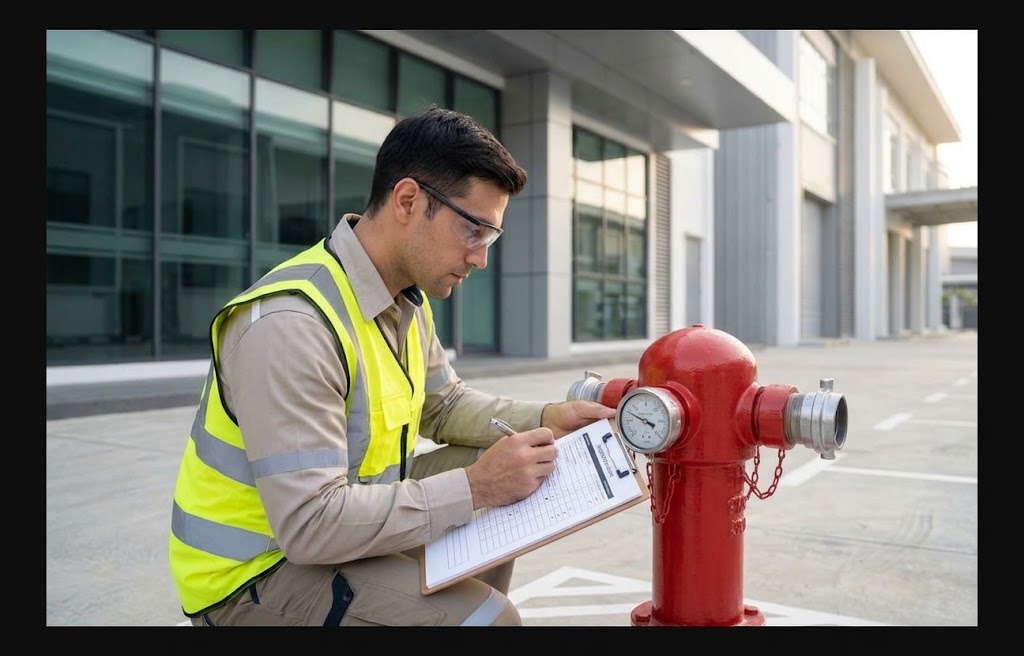
Signs That a Fire Hydrant Needs Maintenance
Some defects remain visible during a routine inspection. Others only appear during technical testing.
Management should arrange further assessment when the hydrant shows persistent leakage, heavy corrosion, damaged connections or missing components.
A hydrant may also require attention when employees notice unusual pump warnings, water supply issues or changes to the surrounding ground.
Additionally, businesses should review the system after building renovation, vehicle impact or nearby excavation work. These activities may affect underground pipework or hydrant alignment.
Organizations should never ignore a defect because the hydrant has not been used recently. Long periods without operation can increase the importance of proper testing rather than reduce it.
Fire Hydrants and Other Fire Protection Systems
A fire hydrant forms one part of a wider fire protection arrangement.
A workplace may also use portable extinguishers, fire alarms, hose reels, sprinklers, emergency lighting and fire doors. Each system performs a different function.
For example, an alarm warns occupants. A sprinkler may control fire growth within an affected area. Meanwhile, the hydrant provides a water connection for firefighting operations.
These systems must support the organization’s emergency response plan. Employees should know how to raise the alarm, evacuate and report to the assembly point.
FERA’s basic fire safety training helps employees understand fire hazards, equipment awareness and safe emergency actions.
Who Is Responsible for Fire Hydrant Readiness?
Management holds responsibility for ensuring that workplace fire protection systems receive suitable attention.
However, several departments may support the process.
Facilities personnel may coordinate inspections and technical servicing. Security teams may monitor access and prevent vehicles from blocking hydrants. Safety personnel may review records, report defects and include hydrants within workplace inspections.
Emergency Response Team members should also recognize hydrant locations. Nevertheless, the organization should clearly define who may operate the system.
A trained ERT can support communication, evacuation and initial emergency actions while waiting for professional responders.
FERA provides Emergency Response Team training for organizations that need clearer roles, practical exercises and stronger team coordination.
What Employees Should Do During a Fire Emergency
Most employees should not attempt to operate a fire hydrant.
Instead, they should raise the alarm, follow the evacuation procedure and move towards the designated assembly point.
Appointed employees may contact emergency services, guide responders to the correct entrance and provide information about hydrant locations.
The person making the emergency call should clearly explain the workplace address, affected area and known hazards.
The official Fire and Rescue Department of Malaysia provides national fire and rescue services and public fire safety information.
Employees should never delay evacuation while trying to retrieve equipment or investigate the source of smoke.
Fire Hydrant Training for Emergency Response Teams
ERT members do not automatically become professional firefighters after attending a general course.
However, practical training can help them understand hydrant systems, hose equipment, emergency communication and operational limitations.
A suitable programme should reflect the workplace’s actual equipment and risks. Factory teams may require different exercises from office or warehouse employees.
Training should also reinforce the importance of incident command. Team members should not begin uncoordinated actions without understanding who controls the response.
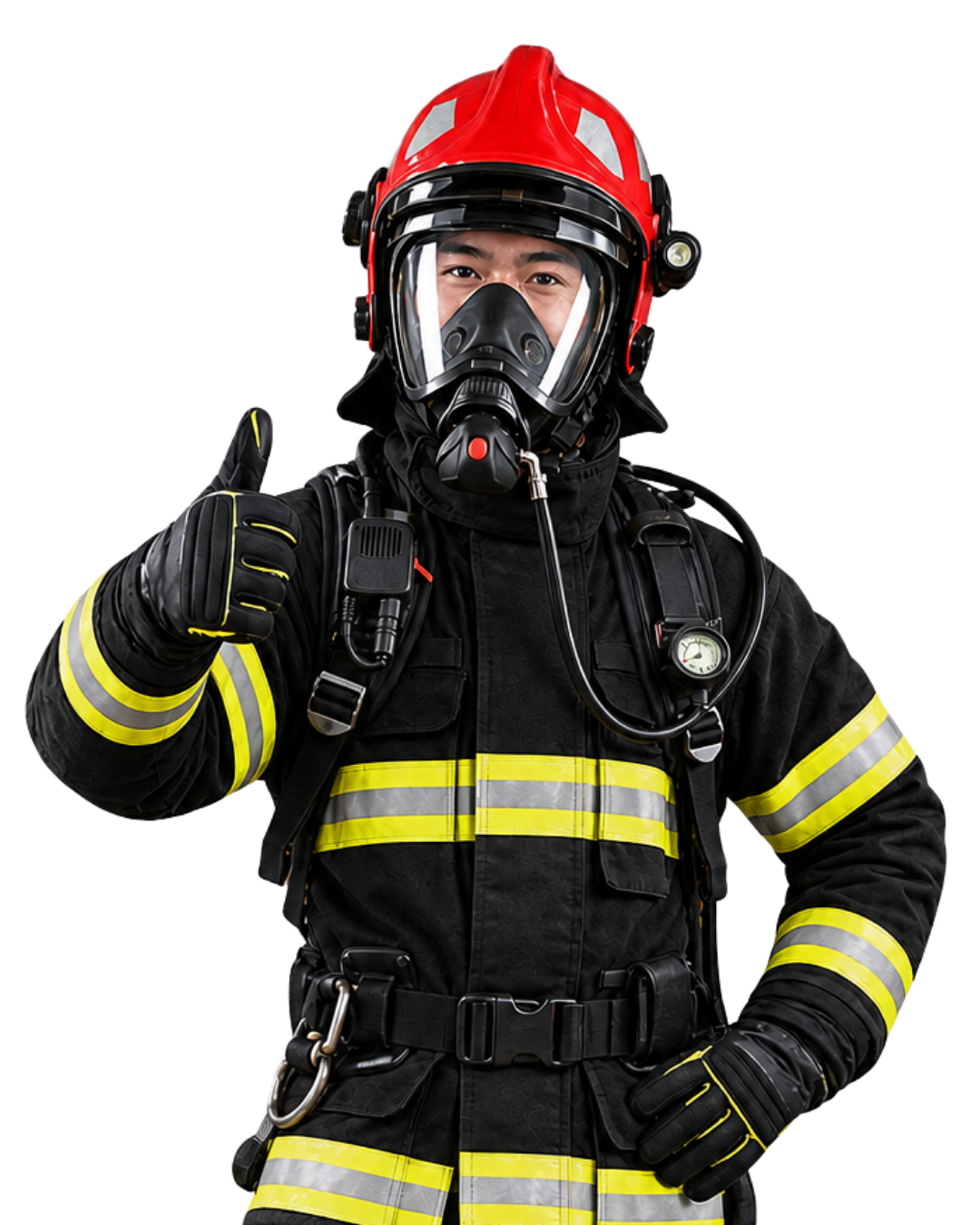
For workplaces that require practical equipment knowledge, FERA offers firefighter training in Malaysia and advanced emergency response programmes.
Fire Hydrant Inspection Records
Good records turn inspections into a manageable safety process.
The organization should record the hydrant location, inspection date, visible condition and any defects identified. It should also record the responsible person and completion date for each corrective action.
Technical reports should remain available for future reference. Management can use them to compare system performance and identify repeated maintenance problems.
Photographs may support the report, especially when access problems or physical damage require corrective work.
However, documentation alone does not improve safety. Management must close every important action and verify that the hydrant has returned to a serviceable condition.
Fire Hydrant Inspection Malaysia 2
Common Fire Hydrant Management Mistakes
One common mistake involves focusing only on the hydrant’s appearance. Fresh paint does not confirm that water pressure and valves remain satisfactory.
Another mistake involves allowing vehicles to park near the hydrant. Even temporary obstruction can delay emergency operations.
Some businesses also complete maintenance but fail to retain reports. As a result, management cannot confirm what the provider tested or whether previous defects returned.
Finally, organizations may train only one employee to manage fire safety matters. When that person takes leave or changes jobs, important inspections may stop.
A stronger system assigns clear responsibilities, maintains records and provides backup personnel.
Build Better Fire Emergency Readiness with FERA
A fire hydrant can support critical firefighting operations, but only when responders can find, access and operate it successfully.
Therefore, organizations should combine visual inspections with scheduled technical testing and maintenance. Management should also protect access routes and correct defects without unnecessary delay.
Employees need fire safety awareness, while appointed responders require practical training that reflects their workplace responsibilities.
FERA provides firefighting, fire warden, first aid and Emergency Response Team training for organizations across Malaysia.
Explore FERA’s workplace safety courses or contact FERA to discuss training for your employees and emergency response team.
Frequently Asked Questions About Fire Hydrant Inspection Malaysia
What is the purpose of a fire hydrant?
A fire hydrant provides a water connection that supports professional firefighting operations. It forms part of the building or facility’s wider fire protection system.
How often should a fire hydrant be inspected?
The appropriate schedule depends on the system design, workplace requirements and maintenance recommendations. Businesses should conduct routine visual checks and arrange technical testing through a competent provider.
Can employees test a fire hydrant?
Only trained and authorized personnel should operate or test the system. Incorrect operation may damage components, create water loss or expose employees to hazards.
Why must the area around a hydrant remain clear?
Firefighters need fast access and enough working space to connect hoses. Vehicles, stock, landscaping or temporary structures can delay the response.
Does repainting a fire hydrant count as maintenance?
No. Paint can improve visibility and protect the surface, but it does not confirm water pressure, flow, valve condition or pump performance.
What should a company do when a hydrant leaks?
The company should report the defect, restrict the area where necessary and arrange an assessment by a competent fire protection provider.
Do workplace ERT members replace BOMBA firefighters?
No. Workplace ERT members perform assigned initial response duties within their training. They do not replace professional fire and rescue services.
Where can companies arrange firefighting and ERT training?
Companies can explore FERA’s fire safety training programmes or contact FERA to discuss a customized workplace course.