Every year, hundreds of Malaysian companies face DOSH inspections, Bomba audits, and insurance reviews and many fail not because their premises are unsafe, but because their staff lack proper, documented safety training. Choosing the right safety course provider in Malaysia therefore carries far more weight than most employers realise.
FERA Training Center stands as one of Malaysia’s most recognised certified fire safety and emergency response training providers, delivering practical, regulation-compliant programmes that meet OSHA 1994, CIMAH 1996, Bomba, and NFPA standards. In this guide, you will find out exactly what safety courses FERA offers, who needs them, and why leading Malaysian organisations consistently choose FERA as their training partner.
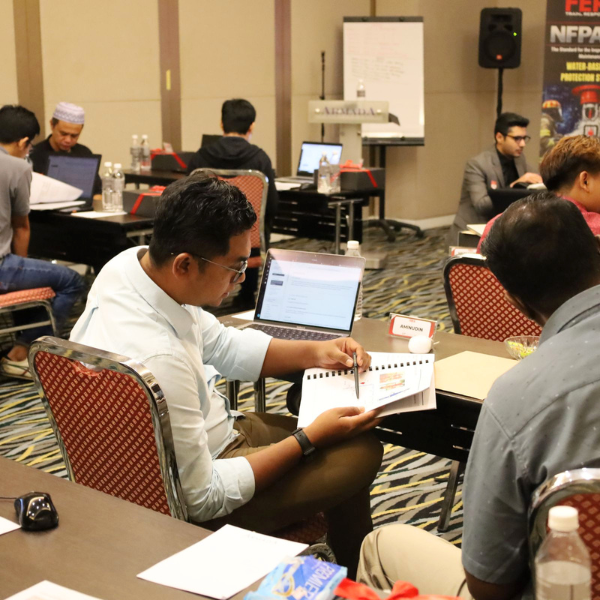
What Is a Safety Course and Why Does Your Organisation Need One?
A safety course equips employees with the knowledge, skills, and certified competency to prevent accidents, respond to emergencies, and comply with Malaysian workplace safety laws. More importantly, it protects lives.
Under the Occupational Safety and Health Act 1994 (OSHA 1994), every Malaysian employer carries a legal duty to provide adequate safety training for all employees. This duty covers fire hazards, chemical exposure, emergency response, and evacuation procedures. Failing to meet this obligation exposes your organisation to fines of up to RM50,000 per offence, stop-work orders, and in serious cases, criminal prosecution.
Furthermore, DOSH and Bomba conduct unannounced inspections at workplaces across Malaysia. During these visits, inspectors review training records, check that appointed safety personnel hold valid certifications, and assess whether staff can demonstrate practical safety knowledge. Without current, documented training, your organisation fails inspection regardless of how safe your physical premises appear.
Beyond legal compliance, safety training reduces workplace accidents, lowers insurance premiums, protects your reputation, and builds employee confidence. In short, it is one of the most cost-effective investments any Malaysian employer can make.
Key Point: Safety training in Malaysia is not a box-ticking exercise. It is a legal requirement under OSHA 1994 and the consequences of skipping it range from heavy fines to workplace fatalities.
Safety Courses Offered by FERA Training Center
FERA delivers a comprehensive range of certified safety courses covering fire safety, emergency response, hazardous materials, and specialist industry programmes. Here is a full overview of what we offer:
1. Fire Safety Training — For All Staff Levels
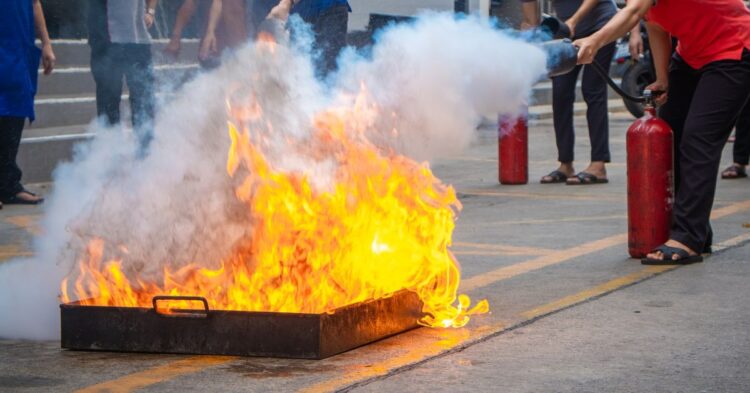
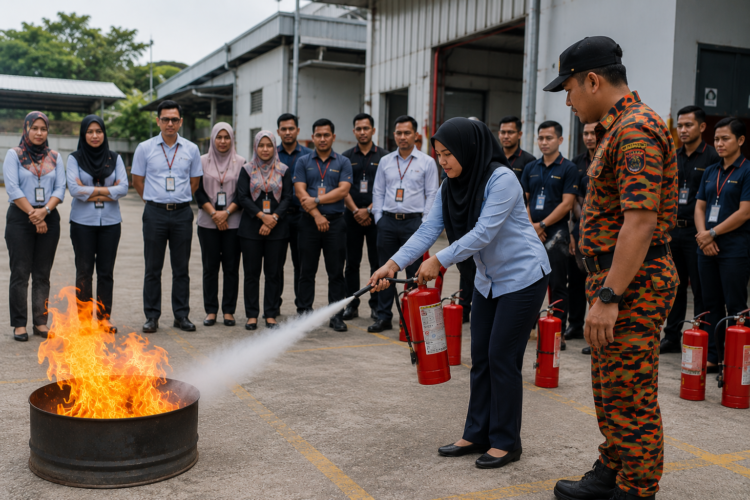
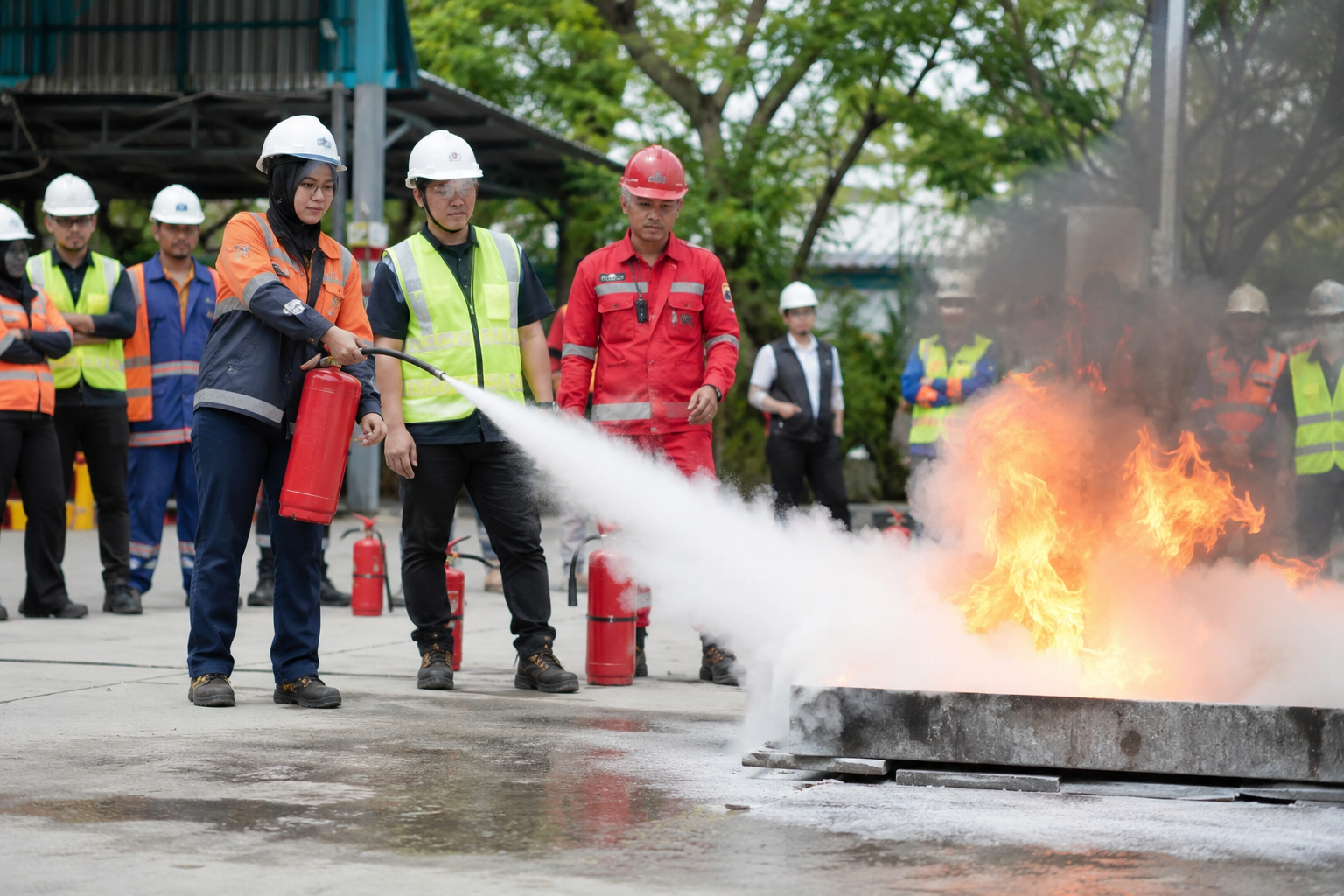
Every employee in Malaysia regardless of role or industry needs a foundational understanding of fire safety. FERA’s fire safety training programme covers fire prevention, the fire triangle, fire classification, evacuation procedures, fire warden roles, and practical fire extinguisher handling using the PASS method.
This programme suits annual staff refreshers, new employee inductions, and compliance training for DOSH and Bomba audits. Additionally, it qualifies as a fully HRDCorp claimable programme under the SBL-Khas scheme.
Specifically, participants learn:
- How fires start and how to prevent them in Malaysian workplace environments
- The correct fire extinguisher to use for each fire class — A, B, C, D, and K
- How to raise the alarm, initiate evacuation, and reach the assembly point safely
- The legal responsibilities of employers and employees under OSHA 1994
2. Fire Warden Training — For Appointed Wardens and Safety Personnel
A fire warden carries specific legal responsibilities during a fire emergency responsibilities that require dedicated training beyond general staff awareness. FERA’s fire warden training prepares appointed wardens to lead evacuations confidently, conduct floor sweeps, assist mobility-impaired colleagues, and coordinate with Bomba on arrival.
Under Malaysian law, every workplace must appoint a sufficient number of fire wardens relative to building occupancy and floor area. Furthermore, these wardens must hold documented, up-to-date training certificates to satisfy Bomba inspection requirements.
FERA’s fire warden programme covers:
- Legal duties and liability of appointed fire wardens under OSHA 1994
- Evacuation leadership — floor sweeps, headcounts, and assembly point management
- Communication protocols between wardens, the emergency coordinator, and Bomba
- Handling staff who refuse to evacuate or require physical assistance
- Post-evacuation reporting and corrective action documentation
3. Emergency Response Team (ERT) Training — For Designated Responders
An Emergency Response Team (ERT) forms the first line of defence in any workplace emergency fire, chemical spill, medical emergency, or structural incident. FERA’s ERT training programme builds a competent, confident team that can respond effectively before Bomba arrives.
This programme suits manufacturing facilities, oil and gas companies, chemical plants, hospitals, large commercial buildings, and any site operating under CIMAH 1996 requirements. Consequently, it represents one of FERA’s most in-demand corporate training programmes across Peninsular Malaysia.
Participants gain competency in:
- ERT structure, roles, and chain of command
- Fire suppression techniques for industrial environments
- First aid and casualty management at the emergency scene
- HAZMAT awareness and initial response for chemical incidents
- Coordination with Bomba, DOSH, and hospital emergency units
- Post-incident documentation and debriefing procedures
4. HAZMAT Training (NFPA 472) — For High-Risk Industry Workers
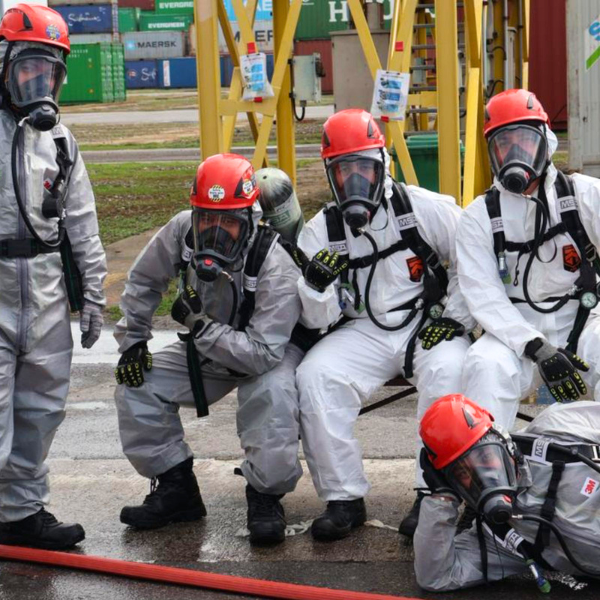
Any worker who handles, stores, transports, or may encounter hazardous materials requires formal HAZMAT training under OSHA 1994 and CIMAH 1996. FERA delivers HAZMAT training at all three NFPA 472 competency levels Awareness, Operations, and Technician/Specialist.
This programme serves workers in petrochemical, manufacturing, logistics, healthcare, and agriculture sectors — industries where HAZMAT incidents carry potentially catastrophic consequences. Moreover, FERA’s HAZMAT trainers bring real-world experience from Malaysia’s Fire and Rescue Department (Bomba) and major industrial HAZMAT response operations.
Training covers the 9 HAZMAT classes, Malaysian regulations (CIMAH 1996, EQA 1974, OSHA 1994), PPE selection (Levels A through D), incident response procedures, and full decontamination protocols.
5. FSM and FSO Training — For Fire Safety Managers and Officers
The FSM (Fire Safety Manager) and FSO (Fire Safety Officer) training programme prepares designated safety personnel to manage fire safety systems, conduct fire risk assessments, and maintain full regulatory compliance across their organisations.
In Malaysia, large commercial buildings, high-rise developments, shopping complexes, hotels, and major industrial facilities are legally required to appoint a certified Fire Safety Manager or Fire Safety Officer. This requirement stems from the Fire Services Act 1988 and Bomba enforcement guidelines for gazetted premises.
FERA’s FSM and FSO training programme covers:
- Legal framework — Fire Services Act 1988, OSHA 1994, and relevant Bomba regulations
- Fire risk assessment methodology for commercial and industrial premises
- Fire safety system inspection — suppression systems, detection systems, emergency lighting, and signage
- Development and maintenance of Fire Emergency Response Plans (FERP)
- Conducting and documenting fire drills to Bomba standards
- Liaising with Bomba during inspections, audits, and post-incident reviews
- Record-keeping requirements for FSM and FSO compliance files
Update: FERA’s FSM and FSO training programme details are currently being updated with the latest regulatory requirements. Contact FERA directly for the current programme schedule, intake dates, and fees.
6. NFPA-Accredited Certification Programmes
FERA holds the distinction of delivering NFPA-accredited training programmes in Malaysia a credential that places FERA among a very small number of providers in the country certified to deliver internationally recognised fire safety qualifications.
FERA currently delivers programmes accredited under:
- NFPA 472 — Competence of Responders to Hazardous Materials Incidents
- NFPA 1081 — Fire Brigade Member Professional Qualifications
- NFPA 1041 — Fire and Emergency Services Instructor Professional Qualifications
These internationally recognised certifications carry weight beyond Malaysian borders, making them particularly valuable for multinational companies, oil and gas operators, and organisations with global safety reporting requirements.
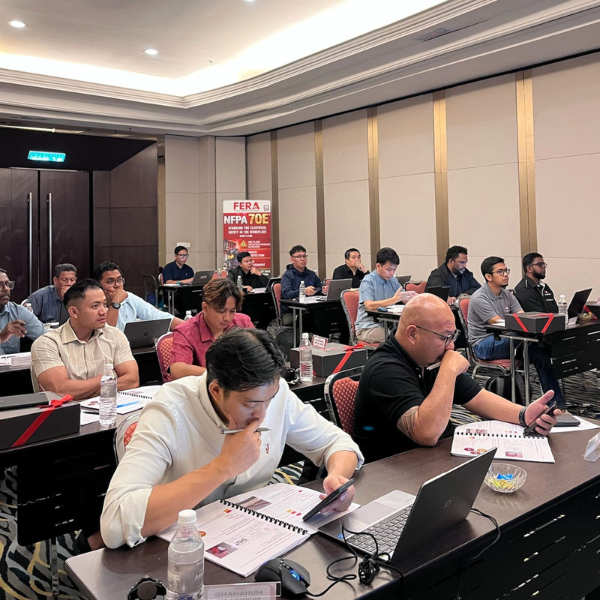
Who Should Attend FERA Safety Courses?
FERA’s programmes serve a wide range of industries and roles. Specifically, the following groups benefit most directly from FERA’s safety training portfolio:
- HR Managers and Training Coordinators — responsible for scheduling, budgeting, and documenting annual safety training for their workforce
- Safety and Health Officers (SHO) — required by DOSH to maintain current competency and plan workplace safety training programmes
- Fire Wardens — legally appointed staff who need certified warden training to fulfil their role during evacuations
- Emergency Response Team (ERT) Members — designated responders who require structured, practical training beyond general awareness
- Factory Managers and Supervisors — responsible for operational safety in manufacturing, chemical, and industrial environments
- Facilities Managers — managing building fire safety systems, evacuation procedures, and compliance documentation for commercial premises
- Fire Safety Managers (FSM) and Fire Safety Officers (FSO) — appointed personnel at gazetted premises who hold statutory fire safety responsibilities
If your organisation falls under any of these categories, FERA has a programme that directly addresses your compliance obligations and training needs.
Why Choose FERA? 8 Reasons Malaysian Companies Trust FERA Training Center
Dozens of safety training providers operate across Malaysia. However, not all providers deliver the same standard of training, hold the same certifications, or bring the same real-world experience to the classroom. Here is why organisations across Malaysia consistently choose FERA:
1. NFPA-Accredited — Internationally Recognised Certification
FERA carries official NFPA accreditation — the National Fire Protection Association, the world’s leading fire safety standards body. Very few training providers in Malaysia hold this accreditation. Consequently, FERA-certified participants receive qualifications that international companies, multinational corporations, and global insurance underwriters recognise and accept.
2. Trainers With Real Bomba and Industry Experience
FERA’s training team includes former officers from Malaysia’s Fire and Rescue Department (Bomba) with decades of frontline emergency response experience. Additionally, our trainers bring expertise from petrochemical, manufacturing, and industrial safety sectors across Malaysia and internationally.
This real-world background means every FERA training session goes far beyond PowerPoint slides. Participants engage with trainers who have personally managed fire emergencies, HAZMAT incidents, and mass evacuation operations — and who bring those experiences directly into the training room.
3. HRDCorp Registered — Fully Claimable Training
FERA is a registered HRDCorp training provider. This means all eligible programmes qualify for SBL-Khas claims under the HRDCorp levy scheme, allowing Malaysian employers to recover the full cost of training. For most organisations, this makes FERA’s programmes a zero out-of-pocket investment — removing the most common barrier to regular, consistent safety training.
4. Programmes Aligned With OSHA 1994, CIMAH 1996, and Bomba Requirements
Every FERA programme directly aligns with Malaysian regulatory requirements. Specifically, our training content covers OSHA 1994 provisions, CIMAH 1996 obligations, Fire Services Act 1988 requirements, and current Bomba inspection standards. Participants therefore leave each session with training records that satisfy DOSH and Bomba audit requirements.
5. In-House Training Available Across Peninsular Malaysia
FERA delivers in-house training at your premises — eliminating travel time, reducing disruption to operations, and allowing us to tailor content specifically to your workplace environment, hazard profile, and industry context. Our team travels across Peninsular Malaysia to deliver on-site programmes for factories, office buildings, hospitals, warehouses, and industrial facilities.
6. Practical, Hands-On Training — Not Just Theory
FERA’s training methodology prioritises practical competency over passive learning. Every programme includes hands-on components — live fire extinguisher operation, simulated HAZMAT response, evacuation drill facilitation, and real equipment handling. Participants build genuine skills, not just theoretical awareness.
7. Comprehensive Training Records and Certification
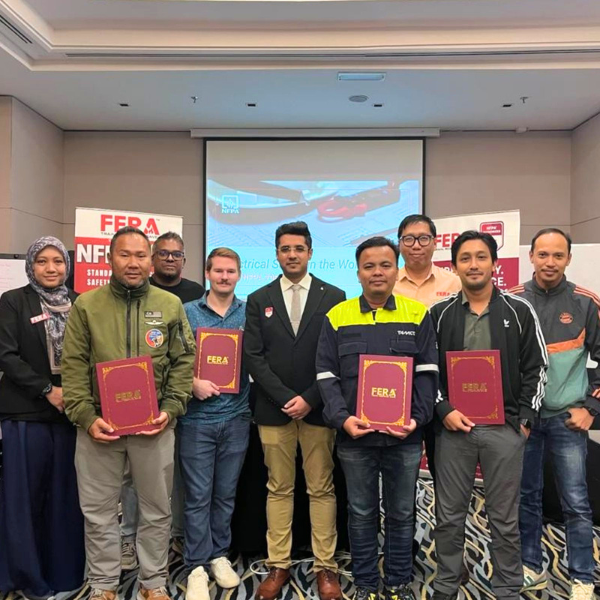
Every participant who completes a FERA programme receives a formal certificate of completion. Furthermore, FERA maintains comprehensive training records that clients can use as supporting documentation during DOSH inspections, Bomba audits, insurance reviews, and ISO certification processes.
8. Trusted by Leading Malaysian Organisations
FERA has delivered safety training programmes for organisations across manufacturing, oil and gas, healthcare, logistics, education, government, and commercial sectors in Malaysia. Our client base includes multinational corporations, government-linked companies, SMEs, and public institutions reflecting the breadth and consistency of our training quality.
How Much Do Safety Courses Cost in Malaysia?
The cost of safety courses in Malaysia varies based on the programme type, duration, number of participants, and whether training takes place at FERA’s facility or on-site at your premises.
As a general guide:
- Public intake programmes — participants attend at FERA’s training centre on scheduled dates
- In-house corporate programmes — FERA delivers training at your premises for your entire team, typically offering better value for groups of 15 or more participants
- HRDCorp claimable programmes — eligible employers recover the full training cost through their HRDCorp levy, making the net cost zero
For an accurate quote based on your specific programme needs, team size, and location, contact FERA directly. Our team will provide a full breakdown within one business day.
Are FERA Safety Courses HRDCorp Claimable?
Yes. FERA Training Center holds active HRDCorp registration, and the majority of our fire safety, ERT, HAZMAT, FSM, FSO, and NFPA certification programmes qualify for SBL-Khas claims.
To claim, your organisation must:
- Confirm your HRDCorp levy contribution status with HRDCorp
- Submit the training application through the HRDCorp e-TRiS system before the training date
- Attend and complete the programme
- Submit the claim with FERA’s invoice and participant attendance records
FERA’s team assists clients throughout this process from programme selection to claim documentation. Contact us before booking to confirm HRDCorp eligibility for your specific programme.
Frequently Asked Questions About Safety Courses in Malaysia
Q1: What safety courses are legally required in Malaysia? Under OSHA 1994, employers must provide adequate safety training for all employees. Mandatory programmes for most workplaces include fire safety awareness training, fire warden training for appointed wardens, and emergency response training for ERT members. High-risk workplaces under CIMAH 1996 additionally require HAZMAT training and formal emergency response planning. Large commercial and high-rise premises must appoint and train a certified FSM or FSO under the Fire Services Act 1988.
Q2: How do I know if my employees need a safety course? If your organisation operates in Malaysia and employs staff, you carry a legal obligation under OSHA 1994 to provide safety training. The specific programmes your employees need depend on their roles, the hazards present in your workplace, and whether your premises fall under CIMAH 1996 or the Fire Services Act 1988. Contact FERA for a free training needs assessment.
Q3: Can FERA deliver safety training at our premises? Yes. FERA delivers in-house corporate training programmes at client premises across Peninsular Malaysia. In-house delivery allows us to tailor the training content to your specific workplace environment, hazard profile, and regulatory requirements. Contact FERA to discuss scheduling and logistics.
Q4: How long does a safety course take? Programme duration varies by course type. Fire safety awareness training typically runs between half a day and one full day. Fire warden and ERT training programmes generally span one to two days. HAZMAT training (NFPA 472) and NFPA certification programmes run between two and five days depending on the competency level. Contact FERA for specific programme schedules.
Q5: Does FERA issue certificates after completing a safety course? Yes. Every participant who successfully completes a FERA programme receives a formal certificate of completion. NFPA-accredited programmes carry internationally recognised certification. FERA also maintains training records that clients use for DOSH inspection documentation, Bomba audits, and insurance compliance purposes.
Q6: Why should we choose FERA over other safety training providers in Malaysia? FERA holds NFPA accreditation one of very few providers in Malaysia to do so. Our trainers bring real Bomba and industrial experience to every session. All programmes align directly with OSHA 1994, CIMAH 1996, and Bomba requirements. We are HRDCorp registered, deliver in-house training across Peninsular Malaysia, and issue recognised certificates that satisfy DOSH and Bomba audit requirements. Simply put, FERA delivers training that genuinely prepares your team — not just training that ticks a compliance box.
Contact FERA — Book Your Safety Course Today
Whether you need annual fire safety training for your entire workforce, specialist ERT certification, HAZMAT training, FSM and FSO programmes, or NFPA-accredited qualifications, FERA Training Center has the programme, the trainers, and the regulatory alignment to meet your needs.
Enhance Your Organization’s Safety Standards with FERA Looking for professional safety certification courses or expert emergency response services for your facility? FERA offers a comprehensive list of programs, ranging from Fire Fighting Operation to Rescue Operation. If your company is ready to train your employees, you can register immediately via the Student Registration page. For future planning, check slot availability through our monthly course schedules (such as the schedules for October 2026, November 2026, and December 2026)
Do not wait for a DOSH inspection or a Bomba notice to take action. Contact FERA today and let our team build a training plan that keeps your organisation compliant, your staff safe, and your records audit-ready all year round.
WhatsApp: 019-303 4001
Email: [email protected]
Website: fera.com.my