

How Fire Alarm Systems Protect Lives and Property
Fire can spread quickly and cause serious damage to people, buildings, equipment, and business operations. Therefore, early fire detection is essential.
A properly designed and maintained fire alarm system is one of the first lines of defence in a building. It detects signs of fire, alerts occupants, supports evacuation, and allows emergency action to begin quickly.
Whether installed in an office, factory, warehouse, hotel, hospital, school, or commercial building, a reliable fire alarm system is an important part of an effective fire safety strategy.
What Is a Fire Alarm System?
A fire alarm system is a network of devices designed to detect signs of fire and provide an early warning.
Depending on the system, it may detect:
- Smoke
- Heat
- Flames
- Manual activation by an occupant
Once activated, the system may trigger alarms, visual warning devices, control panels, emergency notifications, or other connected fire protection systems.
The main purpose is simple. A fire alarm system provides early warning so people can respond and evacuate before conditions become more dangerous.
How Fire Alarm Systems Protect Lives
1. Providing Early Fire Detection
Early detection is one of the most important functions of a fire alarm system.
Smoke detectors, heat detectors, and other devices can identify possible signs of fire before the situation becomes more serious.
As a result, building occupants may have more time to:
- Recognise the emergency
- Begin evacuation
- Alert the Emergency Response Team
- Contact the Fire and Rescue Department
- Take appropriate initial emergency action
Even a small amount of additional evacuation time can be valuable during an emergency.
2. Alerting Building Occupants Quickly
A fire may start in an area that is not immediately visible.
For example, it could begin inside:
- An electrical room
- A storage area
- A kitchen
- A server room
- A warehouse
- An unoccupied office
Without an alarm system, people in other areas may not realise that a fire has started.
Therefore, fire alarms provide audible and visual warnings throughout the building. This helps occupants recognise the emergency and begin evacuation procedures.
3. Supporting an Organised Evacuation
Confusion and delayed action can increase risk during a fire emergency.
A clear fire alarm signal tells occupants that immediate action is required. When combined with proper procedures and trained personnel, the system supports a more organised evacuation.
Fire alarm systems should work together with:
- Emergency Response Plans
- Evacuation procedures
- Fire wardens
- Emergency Response Teams
- Clearly marked escape routes
- Regular fire drills
The alarm provides the warning. However, trained people and clear procedures determine how effectively an organisation responds.
How Fire Alarm Systems Protect Property
1. Enabling a Faster Emergency Response
The longer a fire continues without detection, the greater the potential damage.
Early alarm activation allows building management, emergency personnel, and the Fire and Rescue Department to respond sooner.
A faster response may help reduce damage to:
- Buildings
- Machinery
- Equipment
- Stock and inventory
- Important documents
- Information technology systems
- Business operations
A fire alarm system does not extinguish a fire. However, it plays an important role in starting the emergency response process.
2. Reducing Business Disruption
A serious fire can cause more than physical damage.
Businesses may also experience:
- Operational downtime
- Loss of equipment
- Damage to stock
- Temporary closure
- Financial losses
- Disruption to employees and customers
- Reputational damage
Therefore, early warning can support faster action and help reduce the overall impact of a fire emergency.
Effective fire protection is not only about protecting buildings. It is also about protecting business continuity.
3. Supporting Integrated Fire Protection Systems
Modern fire alarm systems may connect with other fire safety and building systems.
Depending on the building design, fire alarm activation may:
- Activate warning devices
- Monitor fire protection equipment
- Support smoke control systems
- Release certain access-controlled doors
- Communicate emergency information
- Activate other building safety procedures
As a result, an integrated system can support a more coordinated emergency response.
Common Types of Fire Alarm Systems
Different buildings require different types of fire alarm systems. The correct system depends on the building size, design, occupancy, and operational requirements.
Conventional Fire Alarm System
A conventional fire alarm system divides a building into detection zones.
When a device is activated, the control panel identifies the affected zone. Therefore, responders can determine the general location of the alarm.
These systems are commonly used in smaller or less complex buildings.
Addressable Fire Alarm System
An addressable fire alarm system gives each connected device a unique address.
Therefore, the control panel can identify the exact detector or device that has been activated.
This feature supports faster investigation and emergency response, especially in larger buildings.
Automatic Fire Alarm System
An automatic fire alarm system uses devices such as smoke or heat detectors to identify signs of fire automatically.
The system can activate an alarm without waiting for someone to use a manual call point.
Automatic detection is especially important in areas where a fire may develop before occupants notice it.
Analogue Addressable Fire Alarm System
An analogue addressable system provides detailed information from connected detection devices.
The system continuously monitors device conditions and sends information to the fire alarm control panel.
Therefore, these systems are often suitable for larger facilities that require advanced monitoring and control.
Key Components of a Fire Alarm System
A typical fire alarm system includes several important components.
Fire Alarm Control Panel
The control panel acts as the central control point of the system.
It receives information from detection devices and shows the current status of the fire alarm system.
Smoke Detectors
Smoke detectors detect the presence of smoke that may indicate a developing fire.
Different detector technologies may be used depending on the environment and fire risks.
Heat Detectors
Heat detectors respond when temperatures reach specific conditions.
They may be suitable for environments where smoke detectors are not appropriate.
Manual Call Points
Manual call points allow occupants to activate the fire alarm after discovering a fire or emergency.
They are usually installed along escape routes and near exits.
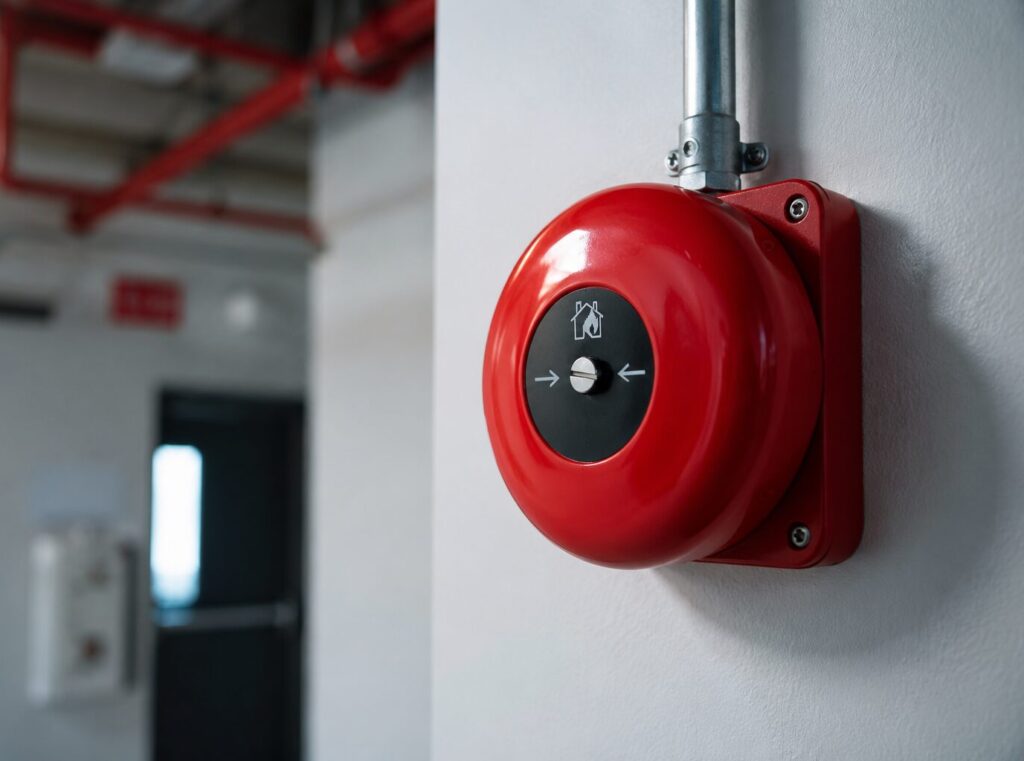
Alarm Bells, Sounders and Visual Indicators
These devices alert building occupants when the fire alarm system is activated.
Visual indicators can also support occupants who may not be able to rely only on audible alarms.
Why Fire Alarm Maintenance Is Important
Installing a fire alarm system is only the beginning.
A damaged, poorly maintained, or faulty system may fail when it is needed most.
Regular inspection, testing, and maintenance help ensure that:
- Detection devices remain operational
- Alarm signals activate correctly
- Faults are identified early
- Control panels operate properly
- Warning devices remain functional
- System records are properly maintained
Therefore, organisations should ensure that competent personnel maintain their fire alarm systems according to applicable requirements.
People Must Know How to Respond
Technology alone cannot guarantee an effective emergency response.
Employees and building occupants must know what to do when a fire alarm activates.
They should understand:
- The meaning of the alarm
- The nearest emergency exit
- The correct evacuation route
- The designated assembly point
- Who coordinates the emergency response
- Why alarms should never be ignored
Regular fire safety training and evacuation drills help turn an alarm signal into effective emergency action.
The Role of Fire Safety Training
Fire safety training helps employees understand fire prevention and emergency response.
Depending on the organisation’s needs, training may include:
- Fire Safety Awareness
- Basic Occupational First Aid
- Basic Fire Fighting
- Emergency Response Team Training
- Fire Warden Training
- Fire Drill Management
- Active and Passive Fire Protection Systems
- Fire Safety Manager and Fire Safety Officer Programmes
Practical training can help participants understand emergency procedures, fire protection equipment, evacuation responsibilities, and workplace fire risks.
Build a Stronger Fire Safety Culture
A reliable fire alarm system is an important part of protecting lives and property. However, it should never operate as a standalone safety measure.
Effective fire protection requires:
- Proper fire detection
- Reliable alarm systems
- Suitable fire protection equipment
- Regular inspection and maintenance
- Clear emergency procedures
- Trained personnel
- Regular fire drills
When these elements work together, organisations are better prepared to respond to fire emergencies.
Prepare Your Organisation with FERA Training Center
FERA Training Center provides practical fire safety and emergency response training to help organisations improve workplace preparedness.
Our programmes are suitable for companies, factories, warehouses, commercial buildings, institutions, and other organisations that want to strengthen fire safety awareness and emergency response capabilities.
Strengthen your organisation’s fire safety knowledge and emergency readiness with professional training from FERA Training.
Email: [email protected]
Phone: +6012-273 0893 / +6012-414 0893
Website: www.fera.com.my