
What Is HAZMAT? A Complete Guide to Hazardous Materials Classification and Safety
Every day, millions of workers handle materials that can injure, kill, or cause lasting environmental damage if managed incorrectly. These substances carry the label “hazardous materials” — or HAZMAT — and understanding them forms the first step toward a safer, legally compliant workplace.
Whether you are a safety officer, an HR manager, or a frontline worker in an industrial facility in Malaysia, this guide covers everything you need to know. Specifically, it explains what HAZMAT is, how the 9 classes work, which Malaysian laws apply, and how your organisation responds to HAZMAT incidents effectively.
By the end, you will know not only what HAZMAT stands for, but also why certified training carries legal weight — and how FERA Training Center can help your team stay safe and compliant.
HAZMAT Meaning : What Does HAZMAT Stand For?
HAZMAT stands for Hazardous Materials. In short, the term covers any substance or material that poses a potential risk to health, safety, property, or the environment when someone handles, stores, or transports it incorrectly.
The United States Department of Transportation (DOT) originally coined the term, classifying dangerous goods under Title 49 of the Code of Federal Regulations (49 CFR). Today, however, regulators worldwide use it universally including Malaysia’s Department of Safety and Health (DOSH), the Fire and Rescue Department (Bomba), and the Department of Environment (DOE).
You may also encounter the term dangerous goods, particularly in transportation, logistics, and aviation contexts. Although both terms cover the same regulated substances, “HAZMAT” remains the standard term in workplace safety and emergency response settings.
Key Point: The meaning of HAZMAT is straightforward any material that can harm people, property, or the environment if someone handles it incorrectly. From a petrol station forecourt to a hospital laboratory, HAZMAT exists in nearly every industry.
The 9 Classes of Hazardous Materials With Real-World Examples
Internationally, regulators group hazardous materials into 9 classes based on physical and chemical properties. Each class carries specific handling, labelling, and transportation requirements. Knowing which class applies to your workplace is essential for compliance and safety.
Class 1 — Explosives
Class 1 covers materials capable of detonation, deflagration, or producing hazardous levels of heat, gas, sound, or light. Six sub-divisions exist within this class, each reflecting a different type and severity of explosion risk.
- Dynamite, ANFO (ammonium nitrate fuel oil), TNT
- Fireworks, flares, and distress signals
- Ammunition, blasting caps, and detonating cords
As a result, Class 1 materials require special transport permits, pre-planned routes, and strict storage conditions under Malaysian law.
Class 2 — Gases
Any compressed, liquefied, or dissolved gas falls under Class 2. This includes flammable gases such as propane and butane, non-flammable gases such as helium and oxygen, and toxic gases such as chlorine and carbon monoxide.
Across Malaysia, Class 2 materials appear regularly in manufacturing plants, hospitals, and oil and gas facilities. Indeed, improper handling of compressed gases has caused fatal incidents at several industrial sites in recent years.
Class 3 — Flammable Liquids
Globally, Class 3 ranks as the most widely transported HAZMAT category. Flammable liquids ignite at temperatures low enough to pose a danger during normal handling and transport.
- Petrol, diesel, kerosene, and jet fuel
- Acetone, benzene, turpentine, and alcohol
- Paint thinners, lacquers, and adhesives
Consequently, workers in warehousing, manufacturing, and oil and gas sectors encounter Class 3 materials daily. Proper storage, adequate ventilation, and strict no-smoking policies therefore become essential.
Class 4 — Flammable Solids
Class 4 covers solid materials that ignite easily or contribute to fire through friction, moisture reaction, or spontaneous combustion. Unlike flammable liquids, these solids can ignite without an open flame under certain conditions.
- Matches, metallic sodium, potassium, and magnesium powder
- Self-reactive substances that decompose when heat reaches them
Importantly, workers must store Class 4 materials dry and away from heat sources at all times. Furthermore, combining them with Class 5 oxidisers triggers rapid, uncontrolled fires.
Class 5 — Oxidising Agents and Organic Peroxides
Oxidisers accelerate burning in other materials, even without a direct flame present. Similarly, organic peroxides remain thermally unstable and can combust spontaneously if someone stores them incorrectly.
- Hydrogen peroxide, ammonium nitrate, and chlorine bleach
- Benzoyl peroxide and methyl ethyl ketone peroxide (MEKP)
In Malaysia specifically, textile factories, swimming pool chemical suppliers, and agricultural fertiliser storage facilities commonly stock these materials — making proper HAZMAT training essential for all staff.
Class 6 — Toxic and Infectious Substances
Class 6 covers two distinct sub-divisions: poisonous substances (Division 6.1) and infectious biological materials (Division 6.2).
- Division 6.1 — Arsenic, nicotine, pesticides, and cyanide
- Division 6.2 — Medical waste, diagnostic specimens, and COVID-19 test samples
Hospitals, laboratories, agricultural facilities, and pest control companies across Malaysia regularly handle Class 6 HAZMAT. For this reason, workers in these settings need both awareness-level training and appropriate personal protective equipment.
Class 7 — Radioactive Materials
Any material that emits ionising radiation above a specified threshold falls under Class 7. Notably, even low-level items such as tritium exit signs and certain smoke detectors fall under this classification.
In Malaysia, the Atomic Energy Licensing Board (AELB) governs all radioactive materials under the Atomic Energy Licensing Act 1984. Therefore, organisations handling Class 7 materials must secure proper licensing, use lead shielding, and put workers through dosimetry monitoring.
Class 8 — Corrosive Materials
Corrosives destroy living tissue and cause severe damage to metals upon direct contact. Even a brief skin exposure can cause permanent injury, which makes strict handling protocols mandatory for all workers.
- Sulphuric acid (battery acid), hydrochloric acid, and nitric acid
- Sodium hydroxide (caustic soda) and potassium hydroxide
- Common in manufacturing plants, automotive workshops, battery facilities, and electroplating operations
Accordingly, anyone managing Class 8 HAZMAT needs chemical-resistant PPE, proper ventilation systems, accessible eyewash stations, and clear neutralisation procedures.
Class 9 — Miscellaneous Dangerous Goods
Class 9 catches hazardous materials that do not fit the other eight classes but still carry risks during transport or handling.
- Lithium batteries — increasingly common in logistics and electric vehicle shipments
- Dry ice (solid carbon dioxide) — poses an asphyxiation risk in enclosed spaces
- Magnetised materials, elevated temperature substances, and environmentally hazardous goods
Lithium battery fires, in particular, have become a serious concern globally. In Malaysia, Bomba has attended multiple warehouse fires that improperly stored lithium battery shipments caused in recent years.
Where Are HAZMAT Materials Commonly Found in the Workplace?
HAZMAT does not only exist in chemical plants or nuclear facilities. In fact, hazardous materials appear in many everyday working environments across Malaysia:
- Oil and gas — Petronas refineries, offshore platforms, LNG terminals, and pipeline operations
- Manufacturing — Factories in Selangor, Johor, and Penang that handle paints, solvents, cleaning agents, and industrial chemicals
- Healthcare — Hospitals and clinics that manage toxic pharmaceuticals, sterilisation chemicals, and infectious biological waste
- Construction — Asbestos-containing materials, cement dust, welding gases, and waterproofing chemicals
- Logistics and warehousing — Batteries, aerosols, flammable goods, and compressed gas cylinders at Port Klang and major distribution centres
- Agriculture — Pesticides, herbicides, and fertilisers, particularly ammonium nitrate
Consequently, if your workplace handles any of the above, Malaysian law requires you to maintain a HAZMAT management plan — along with properly trained personnel to execute it.
HAZMAT Regulations in Malaysia — What Employers Must Know
Malaysia maintains a strong legal framework governing hazardous materials across all industries. Non-compliance can bring stop-work orders, heavy fines, and criminal prosecution. Here are the three key regulations every employer must understand.
CIMAH 1996 — Control of Industrial Major Accident Hazards
The CIMAH Regulations 1996 apply to industrial sites that store or use dangerous substances above specified threshold quantities. Under this regulation, affected facilities must:
- Identify all major accident hazards on site
- Conduct formal, documented risk assessments
- Prepare and submit a Safety Report to DOSH
- Develop an on-site Emergency Response Plan (ERP)
- Coordinate with Bomba and local authorities for off-site emergency planning
DOSH enforces CIMAH through inspections and audits. Importantly, failing to comply constitutes a criminal offence under Malaysian law — not merely an administrative oversight.
OSHA 1994 — Occupational Safety and Health Act
Under Section 15 of the Occupational Safety and Health Act 1994, every employer must ensure — as far as practicable — the safety, health, and welfare of all employees. This duty covers providing safe systems of work, adequate training, and proper supervision for anyone who handles hazardous substances.
Additionally, the Chemical Health Risk Assessment (CHRA) applies as a mandatory requirement for any workplace where workers face exposure to hazardous chemicals. A registered Occupational Hygienist must conduct the CHRA, and employers must review it every five years.
EQA 1974 — Environmental Quality Act
The Environmental Quality Act 1974 governs how companies dispose of and release hazardous wastes into the environment. Organisations that generate scheduled wastes — as the Scheduled Wastes Regulations 2005 defines — must obtain disposal licences, follow prescribed methods, and maintain detailed waste records.
Malaysia Law: DOSH conducts unannounced inspections at industrial sites. Common violations include missing Safety Data Sheets (SDS), untrained workers handling hazardous chemicals, and inadequate HAZMAT storage labelling. Each violation can bring a compound fine or criminal prosecution.
What Happens During a HAZMAT Incident?
When a HAZMAT incident occurs whether a chemical spill, gas leak, fire involving dangerous goods, or a transport accident — trained personnel must lead an immediate, controlled response. Without proper preparation, even a minor release can escalate rapidly into a serious emergency.
The standard HAZMAT response follows five clearly defined stages:
- Identification — Use hazard placards, Safety Data Sheets (SDS), or emergency databases such as CAMEO to identify the substance. Never enter the hazard zone before confirming the material.
- Isolation — Establish a safety perimeter based on the Emergency Response Guidebook (ERG). Remove all non-essential personnel from the area immediately.
- Notification — Alert Bomba (dial 994), DOSH, and the Department of Environment if an environmental release occurs. Also notify your internal emergency coordinator.
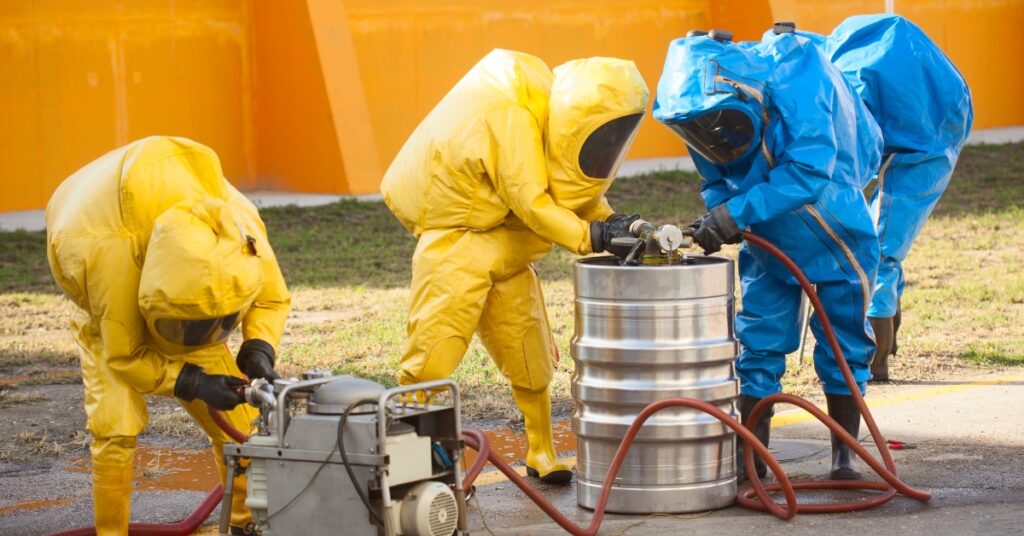
- Protection — ERT members and first responders must put on the correct PPE level — A, B, C, or D — before attempting any intervention. Never approach the hazard zone without proper protection.
- Control and Decontamination — Contain the release, neutralise where possible, and fully decontaminate all affected personnel before they leave the hot zone.
This five-stage process highlights precisely why every HAZMAT workplace needs a trained Emergency Response Team (ERT) on site. Without trained personnel, a minor spill can quickly escalate into a mass casualty event.
Levels of HAZMAT Protection — PPE Classes A, B, C and D
The right level of personal protective equipment (PPE) depends on the substance and the degree of exposure risk. Choosing the wrong level is not just a compliance failure — it can be fatal. Four internationally recognised PPE protection levels exist for HAZMAT response:
Level A — Maximum Protection
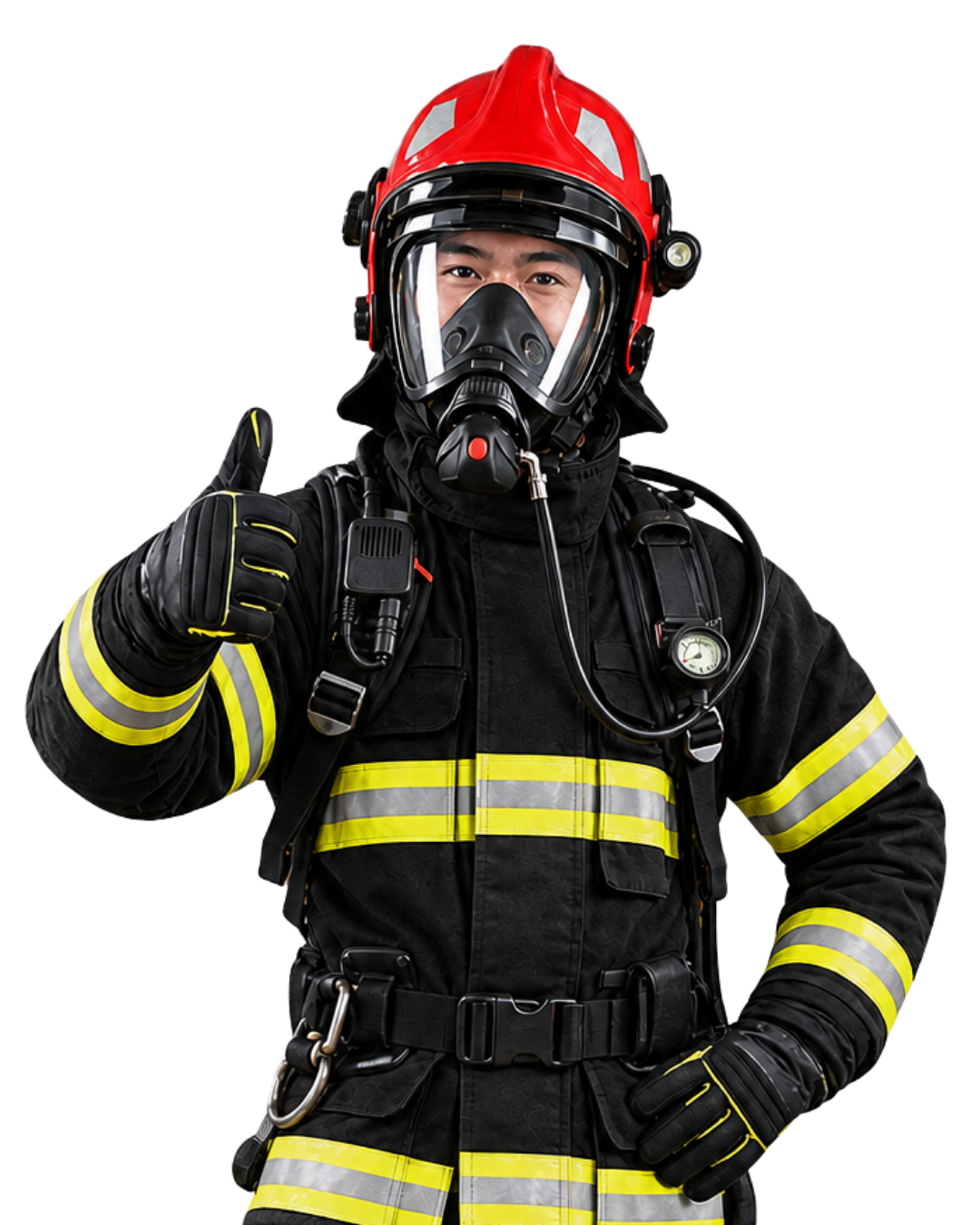
Level A combines a fully encapsulated, vapour-tight chemical suit with a Self-Contained Breathing Apparatus (SCBA). Responders use this level when the substance is unknown, highly toxic by skin absorption, or present at high concentration. This is the highest and most protective level available.
Level B — High Splash Protection
Level B pairs full SCBA respiratory protection with a hooded, splash-resistant chemical suit. Although the suit is not fully encapsulated, it provides strong liquid splash protection. Responders choose Level B when they identify the substance but the vapour hazard is lower and splash risk remains.
Level C — Air-Purifying Respirator
Level C combines a standard chemical-resistant suit with an air-purifying respirator (APR) rather than SCBA. Responders use this level when they know both the substance and its concentration fall within safe limits for air-purifying filtration.
Level D — Standard Work Uniform
Level D offers minimum protection — standard work clothes with safety boots and gloves. Workers use this level only in areas where no HAZMAT risk exists and tests confirm atmospheric hazards are absent. Under no circumstances does Level D suit an active HAZMAT response.
FERA Training: Choosing the wrong PPE level in a HAZMAT situation can be fatal. FERA’s HAZMAT training programme covers PPE selection, correct donning and doffing procedures, and full decontamination protocols — practical skills that save lives in real emergencies.
Who Needs HAZMAT Training and What Does It Cover?
Under Malaysian law, any worker who may encounter, handle, transport, or respond to hazardous materials must complete formal HAZMAT training. This requirement covers a wide range of roles:
- Factory operators and supervisors in chemical, oil and gas, and manufacturing sectors
- Safety officers and Occupational Safety and Health Coordinators (OSHC)
- Emergency Response Team (ERT) members at any HAZMAT-designated site
- Logistics and warehouse staff who handle or store HAZMAT shipments
- First responders, security personnel, and facility management teams
The NFPA 472 framework the Standard for Competence of Responders to Hazardous Materials Incidents — structures HAZMAT training into three distinct competency levels:
- Awareness Level — Workers learn to recognise HAZMAT, understand the risks, avoid exposure, isolate the area, and notify the correct authorities. This level suits general employees who may encounter HAZMAT incidentally.
- Operations Level — Trainees learn to respond defensively, protecting people and the environment without entering the hot zone. This is the core level for all ERT members.
- Technician and Specialist Level — Advanced training for dedicated HAZMAT responders, covering offensive response, hot-zone entry, containment, and full decontamination operations.
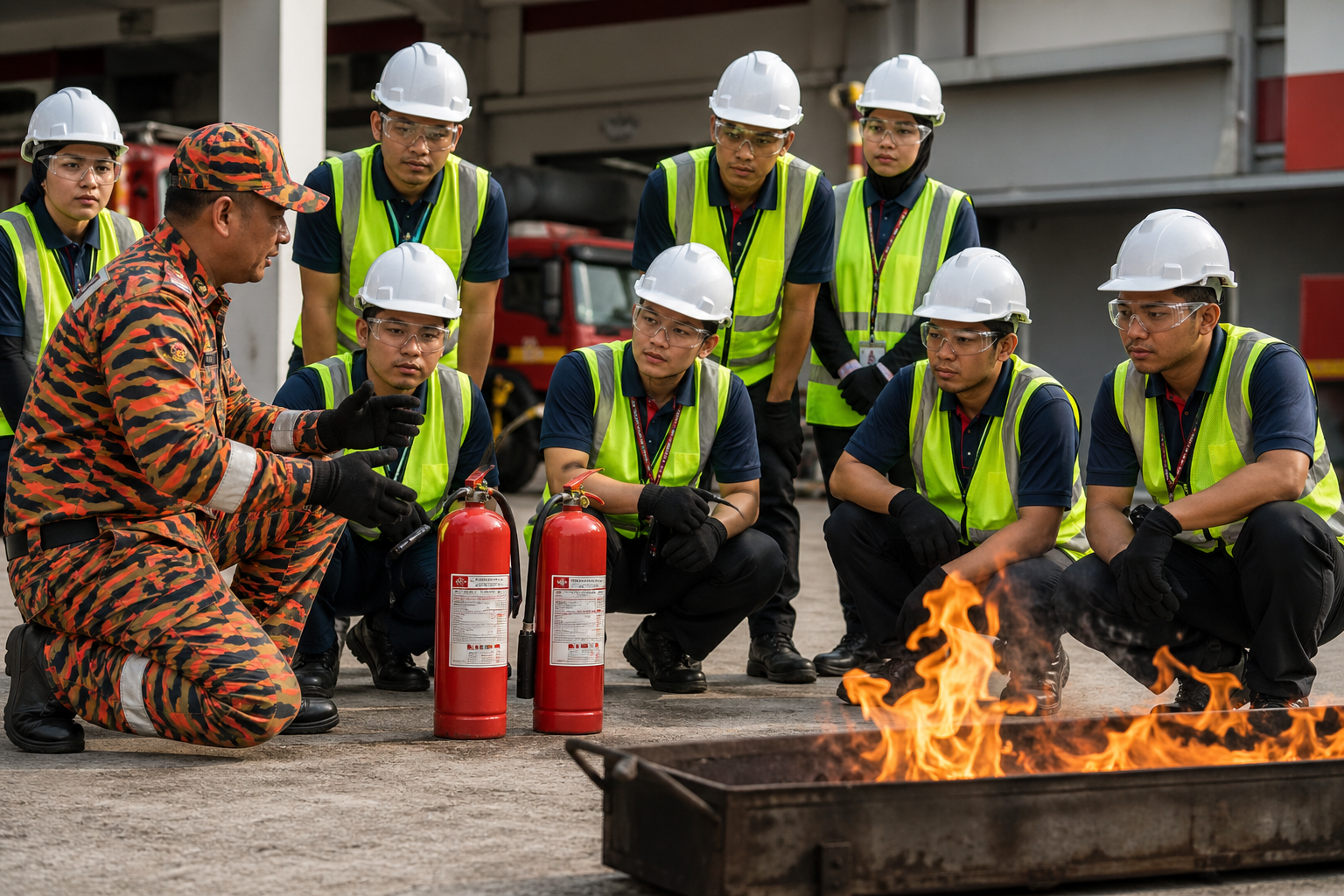
All three levels are available through FERA Training Center. Furthermore, our trainers — certified under NFPA 472 with real-world experience from Malaysia’s Fire and Rescue Department (Bomba) — deliver hands-on, practical training specifically for Malaysian workplace conditions.
Frequently Asked Questions About HAZMAT
Q1: What does HAZMAT stand for? HAZMAT stands for Hazardous Materials. Specifically, the term covers any substance that poses a risk to health, safety, property, or the environment when someone handles, stores, or transports it incorrectly. Emergency services, government regulators, and industries worldwide use it — including Malaysia’s DOSH and Bomba.
Q2: How many classes of HAZMAT are there? Nine internationally recognised classes of hazardous materials exist, ranging from Class 1 (Explosives) to Class 9 (Miscellaneous Dangerous Goods). Moreover, several classes divide further into sub-categories based on the specific nature of the hazard. Both international standards and Malaysian law regulate all 9 classes.
Q3: Is HAZMAT training compulsory in Malaysia? Yes, HAZMAT training carries a legal requirement in Malaysia. The Occupational Safety and Health Act 1994 (OSHA 1994) and CIMAH Regulations 1996 require employers to ensure workers who handle or face exposure to hazardous materials receive adequate training. Additionally, DOSH enforces these requirements through regular workplace inspections.
Q4: What is the difference between HAZMAT and dangerous goods? Both terms cover the same category of substances, but regulators use them in different contexts. Specifically, “HAZMAT” applies in workplace safety and emergency response settings. In contrast, “dangerous goods” appears in transportation and logistics regulations — including IATA (air), IMDG (sea), and ADR (road) frameworks.
Q5: What qualifications should a HAZMAT trainer have? A qualified HAZMAT trainer must hold internationally recognised certifications such as NFPA 472. Furthermore, practical field experience matters far more than classroom knowledge alone. FERA’s trainers carry NFPA 472 certification and bring decades of real-world experience with Malaysia’s Fire and Rescue Department (Bomba) and industrial HAZMAT operations across multiple sectors.
Get Your Team HAZMAT-Ready with FERA Training Center
FERA Training Center stands as a certified fire safety and health training provider in Malaysia, accredited by HRDCorp and Bomba, and recognised by UiTM and international certification bodies. Our HAZMAT training programmes follow NFPA 472 standards and full adaptation to Malaysian workplace regulations.
We offer a complete range of HAZMAT training and support services:
- HAZMAT Awareness, Operations, and Technician Training (NFPA 472)
- In-house corporate HAZMAT training — fully HRDCorp claimable
- Emergency Response Team (ERT) training for HAZMAT scenarios
- HAZMAT Operation and Rescue services for industrial clients
- On-site HAZMAT risk assessment and consultation
Our training team includes former Bomba officers, industrial safety professionals with over 33 years of combined experience, and certified NFPA instructors. Every programme delivers practical, regulation-compliant training that works under real Malaysian conditions.
Ready to get your team certified? Contact FERA today to discuss a HAZMAT training programme that fits your organisation, industry, and budget.
📞 WhatsApp: 019-303 4001 📧 Email: [email protected] 🌐 Website: fera.com.my/hazmat-operation