

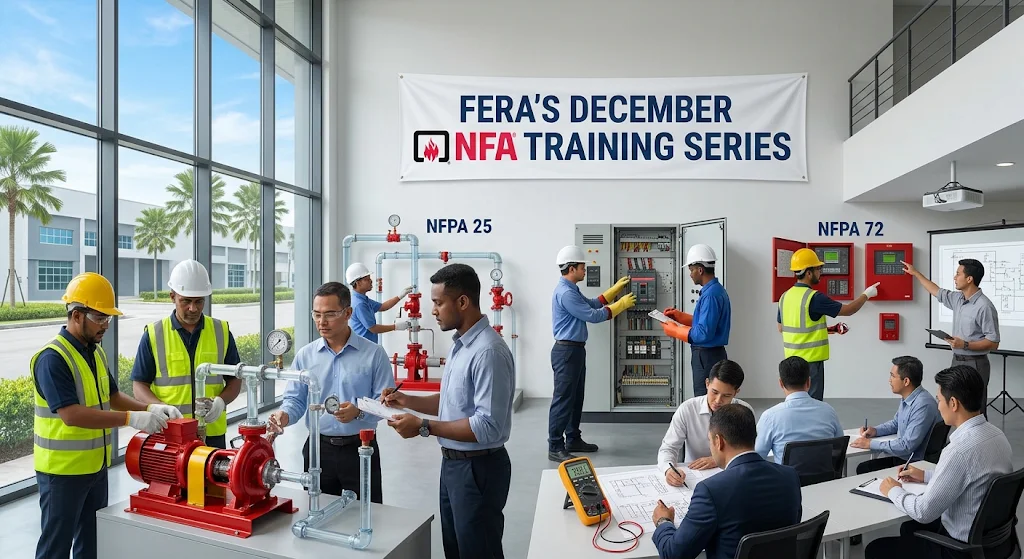
Completing Fire Safety Manager or Fire Safety Officer training can provide an important foundation for workplace and building fire safety.
However, professional development does not necessarily stop after completing FSM or FSO training.
Depending on their responsibilities, FSMs, FSOs, engineers, facility personnel, maintenance teams and HSE professionals may need deeper technical knowledge of the systems and hazards they manage.
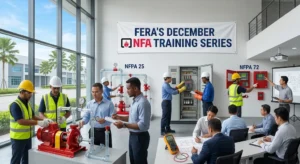
FERA Training Center is conducting five specialised NFPA training programmes from 1 to 6 December 2026.
The first programme begins on 1 December 2026. Therefore, organisations interested in this intake now have a relatively short period to identify participants and complete registration arrangements.
Participants who have already completed or are progressing through FSM & FSO statutory training can consider these NFPA programmes as a pathway towards more specialised technical competency.
Five NFPA Training Programmes Available in December 2026
The upcoming training series covers five different technical areas.
Rather than attending every course, participants should select the programme that best matches their workplace responsibilities.
NFPA 70E – Electrical Safety in the Workplace
Date: 1–2 December 2026
Duration: 2 days
HRD Corp Claimable
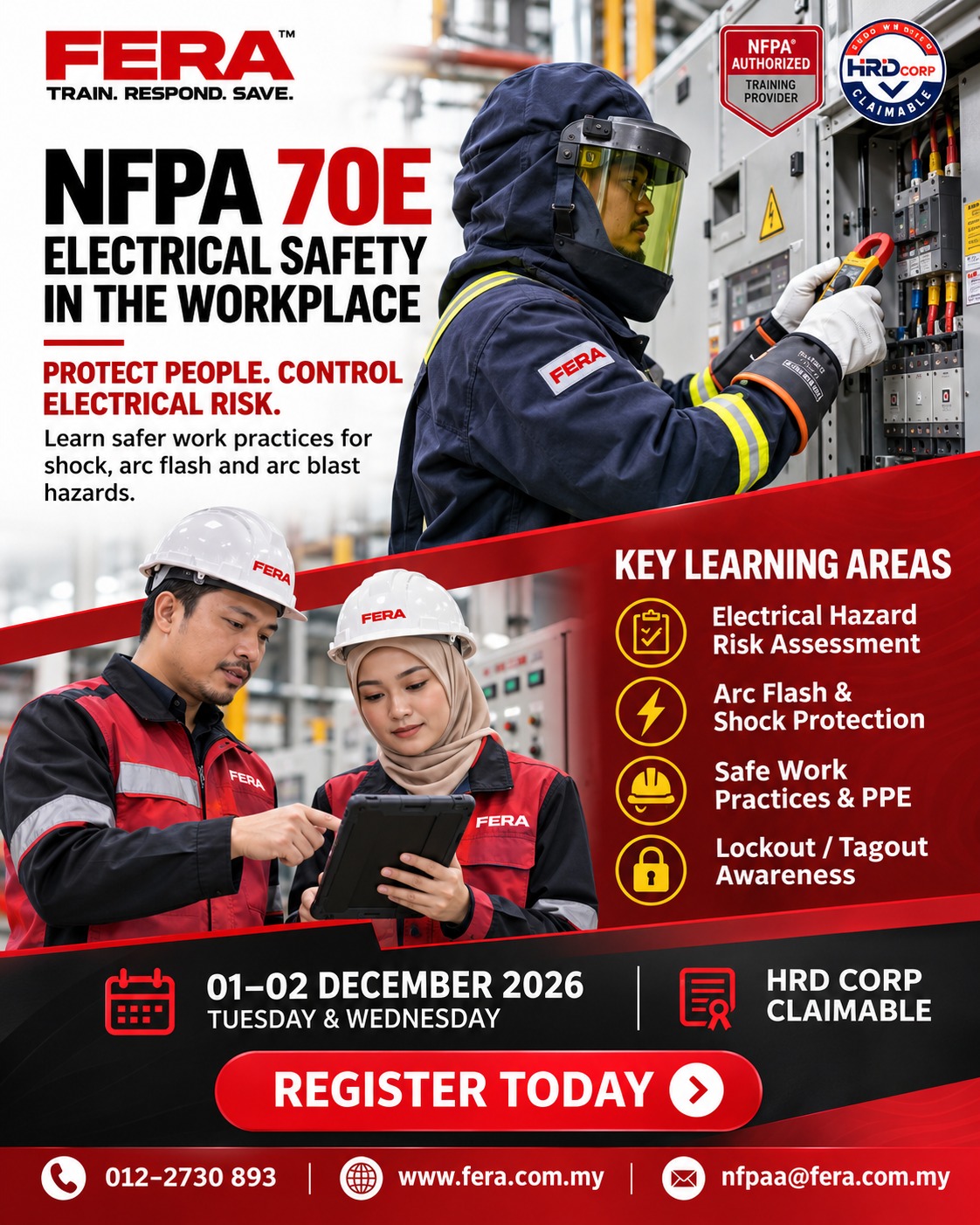
NFPA 70E focuses on electrical safety-related work practices and protecting personnel who work on or near electrical equipment.
Key learning areas highlighted in the programme include:
- Electrical hazard risk assessment
- Arc flash and shock protection
- Safe work practices
- Personal protective equipment
- Lockout and tagout awareness
This programme can be especially relevant to electrical engineers, electricians, maintenance personnel, facility teams, technical supervisors and HSE professionals.
FSMs and FSOs working in factories, plants, data centres or other electrically intensive premises may also benefit from understanding how electrical hazards can affect wider workplace and fire safety.
The official NFPA 70E standard focuses on safe work practices that help reduce exposure to major electrical hazards, including shock and arc flash.
NFPA 25 – Water-Based Fire Protection Systems
Date: 3 December 2026
Duration: 1 day
HRD Corp Claimable
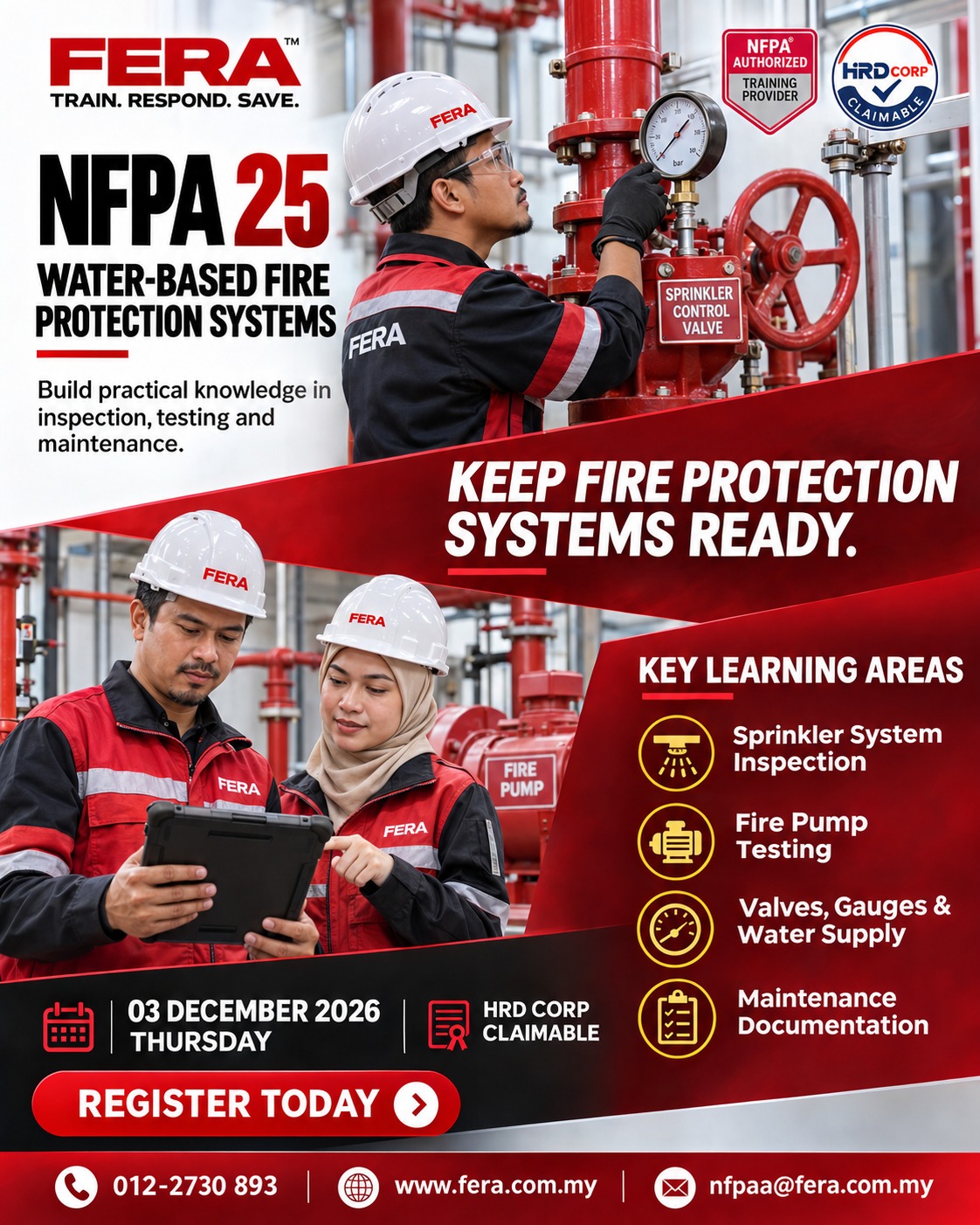
NFPA 25 focuses on inspection, testing and maintenance principles for water-based fire protection systems.
The programme covers areas such as:
- Sprinkler system inspection
- Fire pump testing
- Valves and gauges
- Water supply
- Maintenance documentation
This can be particularly useful for FSMs, FSOs, facility managers and building personnel who need to understand the readiness of active fire protection systems.
An FSM or FSO does not become a fire pump technician simply by attending the programme.
Instead, stronger technical awareness can help fire safety personnel understand inspection findings, recognise deficiencies and communicate more effectively with facility teams and competent contractors.
NFPA 25 provides the recognised framework for inspection, testing and maintenance of water-based fire protection systems.
Participants responsible for designated premises can also read FERA’s FSM and FSO requirements for Fire Certificate premises.
NFPA 70B – Electrical Equipment Maintenance
Date: 4 December 2026
Duration: 1 day
HRD Corp Claimable
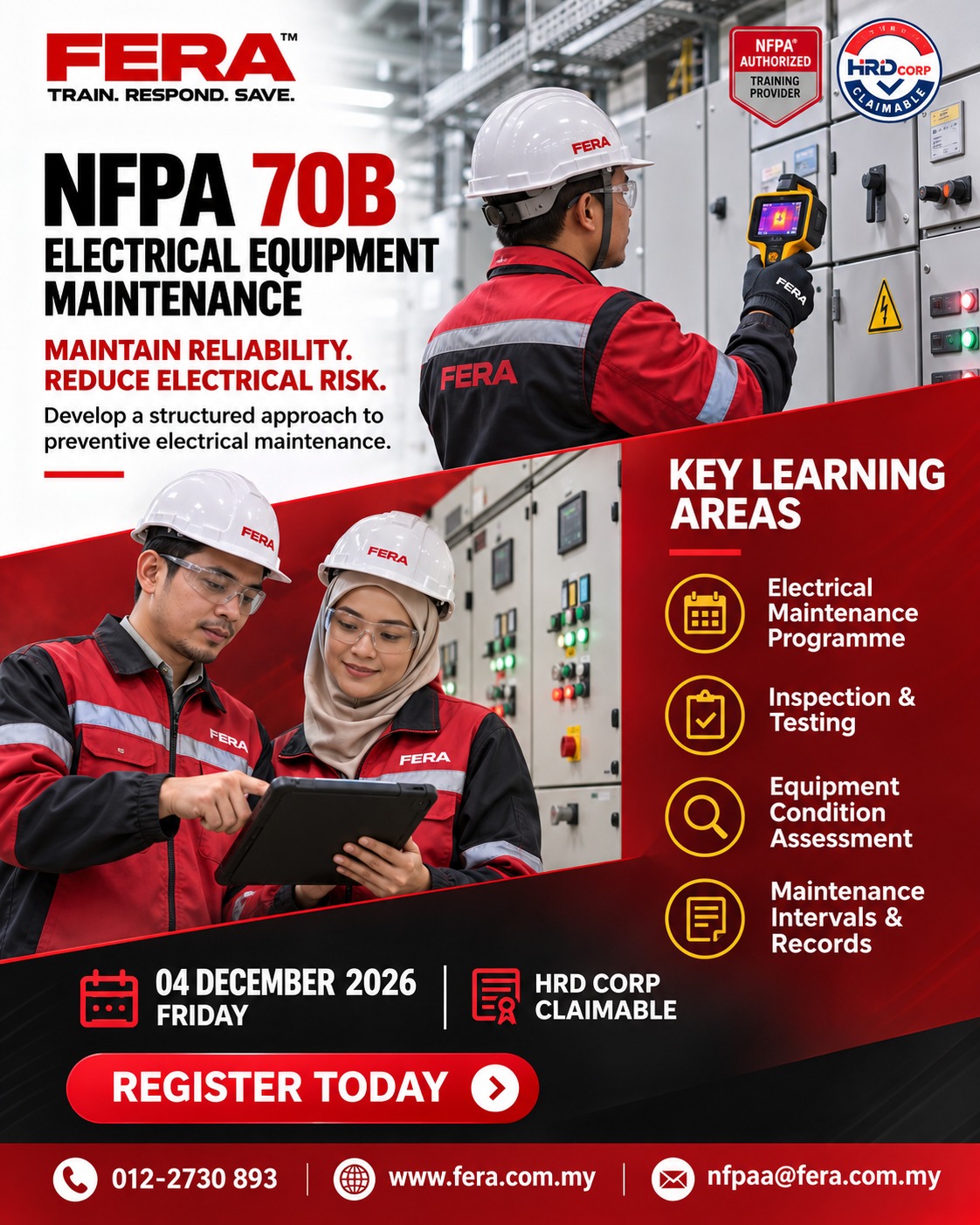
NFPA 70B focuses on structured electrical equipment maintenance.
The programme highlights:
- Electrical maintenance programmes
- Inspection and testing
- Equipment condition assessment
- Maintenance intervals
- Maintenance records
-
NFPA 70B and NFPA 70E address different parts of electrical safety.
-
NFPA 70E focuses strongly on protecting personnel during electrical work.
-
NFPA 70B focuses more on maintaining electrical equipment in a safe and reliable condition.
This makes the programme particularly relevant to maintenance, facilities and engineering personnel.
FSMs and FSOs who regularly coordinate with these teams may also benefit from understanding why electrical equipment condition and maintenance records matter.
NFPA 72 – National Fire Alarm and Signaling Code
Date: 5 December 2026
Duration: 1 day
HRD Corp Claimable
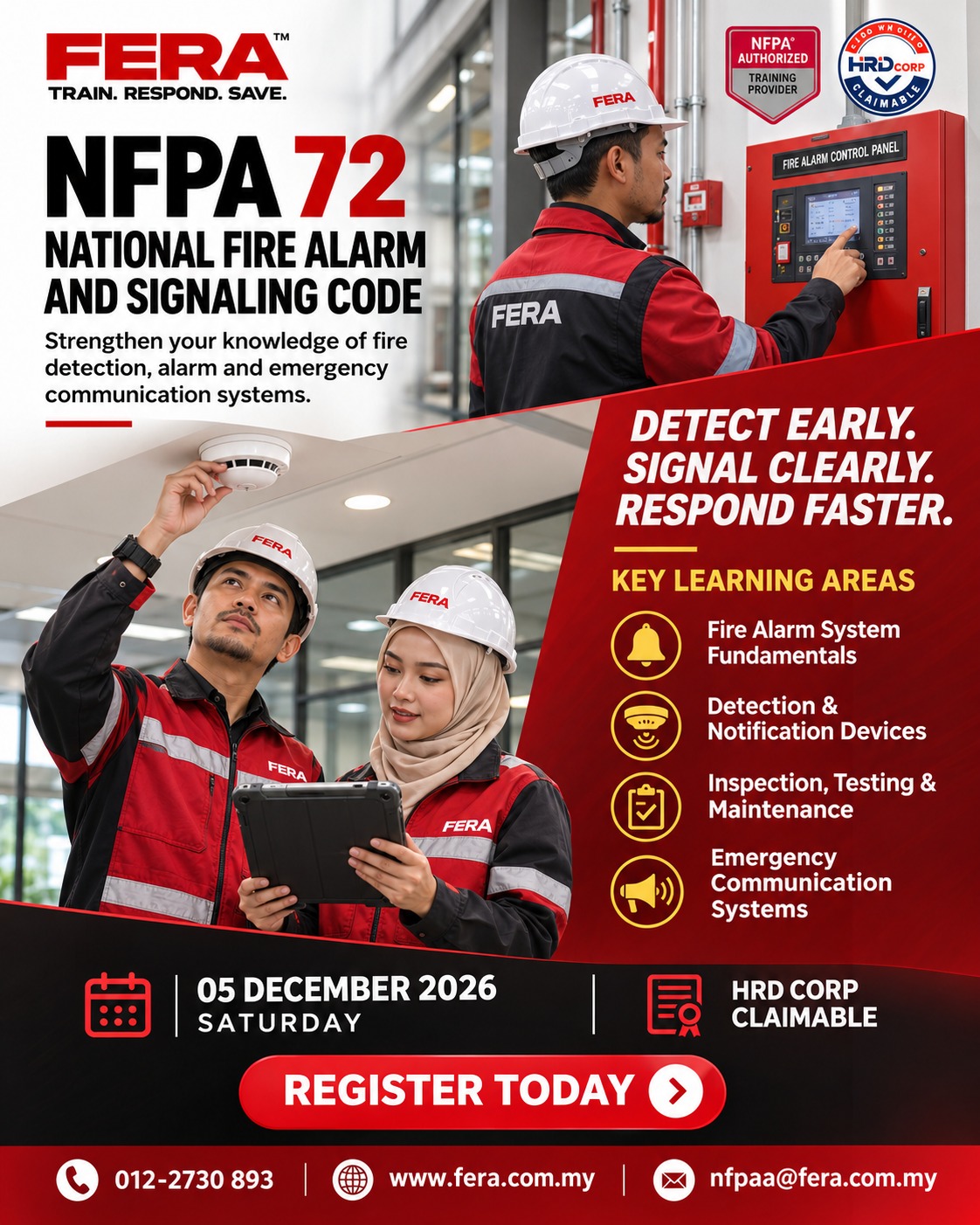
NFPA 72 focuses on fire alarm, detection, notification and emergency communication systems.
Key learning areas include:
- Fire alarm system fundamentals
- Detection devices
- Notification devices
- Inspection, testing and maintenance
- Emergency communication systems
This programme can be particularly relevant to FSMs, FSOs, facility teams and safety personnel involved in building fire safety.
Fire alarm and detection systems support early warning and occupant response.
Therefore, understanding how these systems function can also strengthen wider emergency preparedness.
NFPA 72 covers fire detection, signalling and emergency communication requirements.
NFPA 70 – National Electrical Code
Date: 4–6 December 2026
Status: According to demand
HRD Corp Claimable
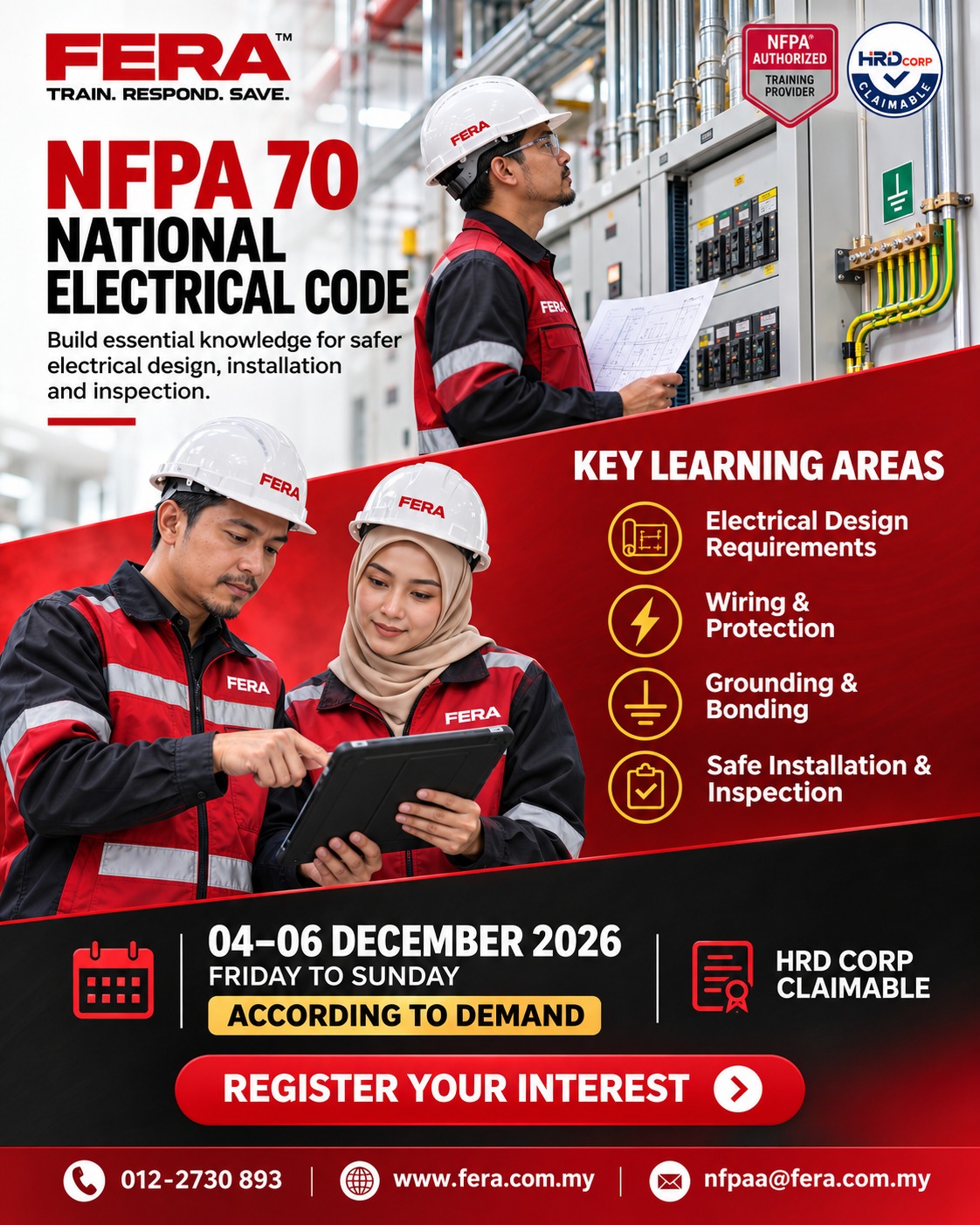
NFPA 70 provides broader technical knowledge related to electrical design, installation and inspection.
The programme highlights:
- Electrical design requirements
- Wiring and protection
- Grounding and bonding
- Safe installation
- Inspection
Compared with the other programmes, this course has a stronger electrical engineering and installation focus.
Therefore, it may be particularly relevant to engineers, electrical personnel and technical facility teams.
FSMs or FSOs with relevant engineering responsibilities may also consider the programme according to their actual job scope.
Which NFPA Course Should an FSM or FSO Consider?
The best programme depends on actual responsibility.
FERA’s Fire Safety Manager and Fire Safety Officer guide provides useful context on the wider responsibilities of FSM and FSO personnel before moving into more specialised technical training.
A simple way to choose is:
- Electrical workplace safety → NFPA 70E
- Water-based fire protection → NFPA 25
- Electrical equipment maintenance → NFPA 70B
- Fire alarm and signalling → NFPA 72
- Electrical design and installation → NFPA 70
Not every FSM or FSO needs all five programmes.
Training should address a real competency requirement rather than simply adding another certificate.
Explore FERA’s NFPA Standards Training programmes for the available technical learning pathways.
For the current December 2026 intake, contact FERA Training Center to confirm programme suitability, availability and registration.
Phone: 012-2730 893
Email: [email protected] or
WhatsApp FERA
Why Specialised Training Can Support FSM and FSO Roles
FSMs and FSOs may need to coordinate with several technical teams.
Depending on the premises, these can include:
- Facility management
- Engineering
- Maintenance
- Electrical personnel
- HSE teams
- Fire protection contractors
- Emergency Response Teams
- Building management
Complex premises may also contain several active fire and electrical systems.
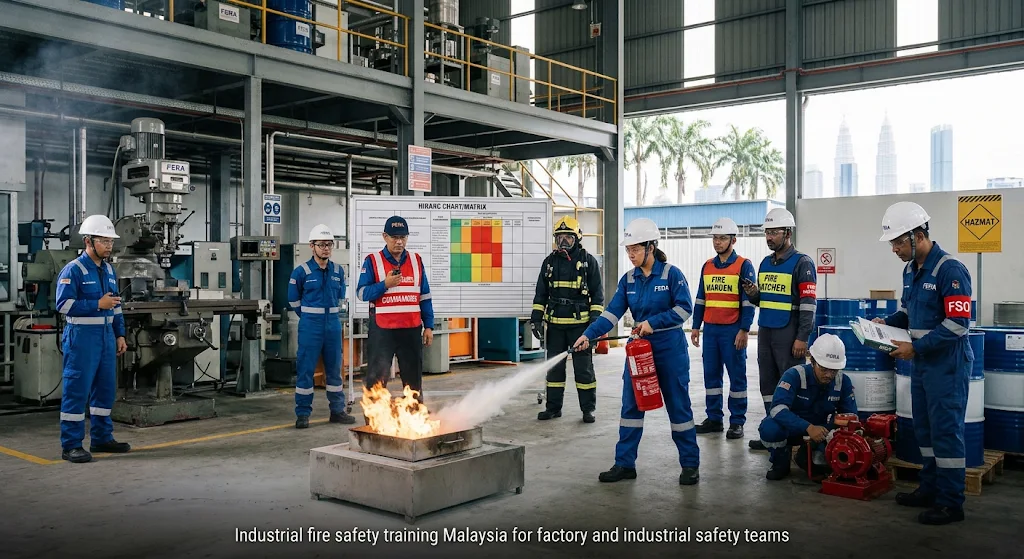
FERA’s guide to FSM and FSO responsibilities in hotels, hospitals, factories and malls provides further context for these environments.
An FSM does not need to personally perform every technical activity.
However, understanding the systems being managed can support better oversight, communication and decision-making.
Who Should Consider the December NFPA Training Series?
Depending on the course, participants may include:
- Fire Safety Managers
- Fire Safety Officers
- HSE and SHE personnel
- Facility managers
- Maintenance personnel
- Engineers
- Electrical personnel
- Building managers
- Fire protection personnel
- Safety coordinators
- Technical supervisors
The correct programme should match the participant’s responsibilities.
Why Organisations Should Act Now
The first programme begins on 1 December 2026.
Organisations planning to participate therefore have limited time to:
- Identify the right employees
- Choose the appropriate NFPA programme
- Obtain management approval
- Review HRD Corp arrangements where applicable
- Complete registration
- Confirm programme availability
Waiting until the training week may make these arrangements more difficult.
Register for the December 2026 NFPA Training Intake
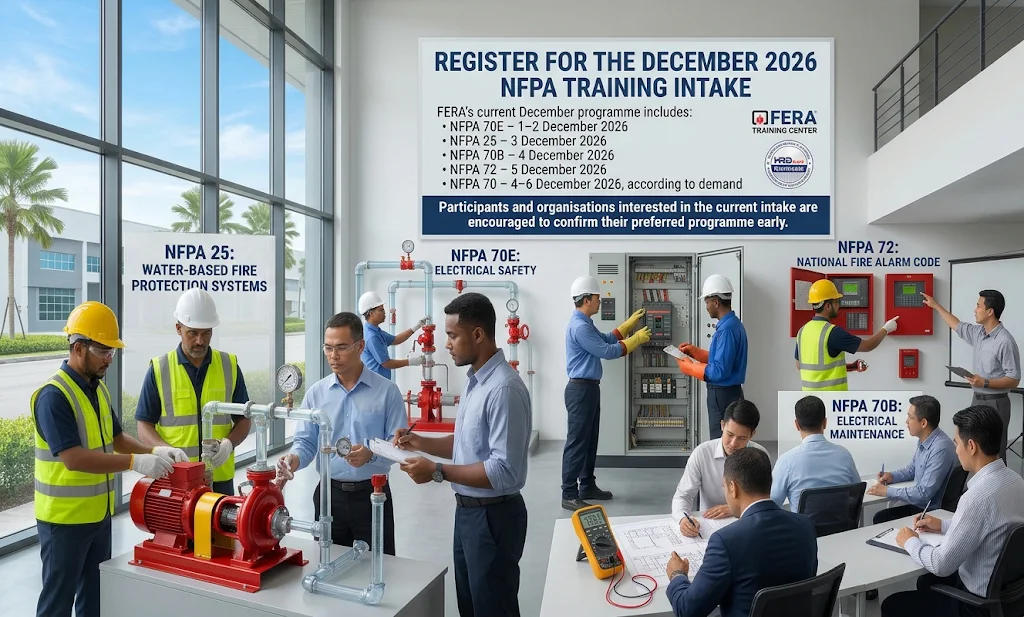
FERA’s current December programme includes:
- NFPA 70E – 1–2 December 2026
- NFPA 25 – 3 December 2026
- NFPA 70B – 4 December 2026
- NFPA 72 – 5 December 2026
- NFPA 70 – 4–6 December 2026, according to demand
Participants and organisations interested in the current intake are encouraged to confirm their preferred programme early.
Explore FERA’s NFPA Standards Training programmes for the available technical learning pathways.
For the current December 2026 intake, contact FERA Training Center to confirm programme suitability, availability and registration.
Phone: 012-2730 893
Email: [email protected] or
WhatsApp FERA
Participants who have not yet completed their core fire safety pathway can also review FERA’s FSM & FSO statutory training programme.
Do not wait until the training week to decide.
Identify the competency your team needs and contact FERA to confirm the current intake.
Conclusion
FSM and FSO training can provide a strong foundation for structured fire safety management.
However, different workplaces require different technical competencies.
NFPA 70E, NFPA 25, NFPA 70B, NFPA 72 and NFPA 70 address different areas of electrical safety, fire protection, equipment maintenance and technical system knowledge.
The December 2026 NFPA series gives FSMs, FSOs, engineers, facility teams and safety professionals an opportunity to develop knowledge that is more closely aligned with their workplace responsibilities.
With the first programme beginning on 1 December, organisations interested in this intake should identify suitable participants and complete registration arrangements promptly.
Questions & Answers
Can FSM and FSO participants attend NFPA training?
Yes. Participants can consider NFPA programmes that are relevant to their job scope and workplace responsibilities.
Must every FSM or FSO attend all five NFPA programmes?
No. Training should be selected according to the participant’s actual competency requirements.
Which NFPA course focuses on electrical workplace safety?
NFPA 70E focuses on electrical safety-related work practices, including electrical shock and arc flash hazards.
Which NFPA programme covers fire pumps and sprinklers?
NFPA 25 focuses on inspection, testing and maintenance principles for water-based fire protection systems.
Which NFPA course covers fire alarm systems?
NFPA 72 focuses on fire alarm, detection, notification and emergency communication systems.
What does NFPA 70B focus on?
NFPA 70B focuses on electrical equipment maintenance, inspection, condition assessment and structured maintenance programmes.
When does the December 2026 intake begin?
The first programme, NFPA 70E, is scheduled for 1–2 December 2026.
Are the programmes HRD Corp Claimable?
The current programme posters identify the courses as HRD Corp Claimable, subject to applicable eligibility and approval requirements.