

Choosing an NFPA course should start with one question:
What responsibility do you actually have at work?
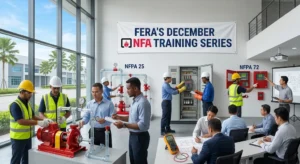
FERA Training Center’s December 2026 NFPA training series covers five different areas of professional competency.
The programmes include electrical workplace safety, water-based fire protection, electrical equipment maintenance, fire alarm systems and electrical installation.
For Fire Safety Managers, Fire Safety Officers, facility personnel, engineers, maintenance teams and safety professionals, these programmes can provide a useful next stage of technical development.
However, the five courses are not interchangeable.
Each one focuses on a different workplace responsibility.
With FERA’s December training series running from 1 to 6 December 2026, participants interested in the remaining intake should review the programmes and identify the most relevant course as soon as possible.
Participants who are still building their core fire safety competency can first review FERA’s FSM & FSO Training programme.
For those who have already completed FSM or FSO training, the next step should be selected according to actual workplace responsibilities rather than simply choosing the most technical course.
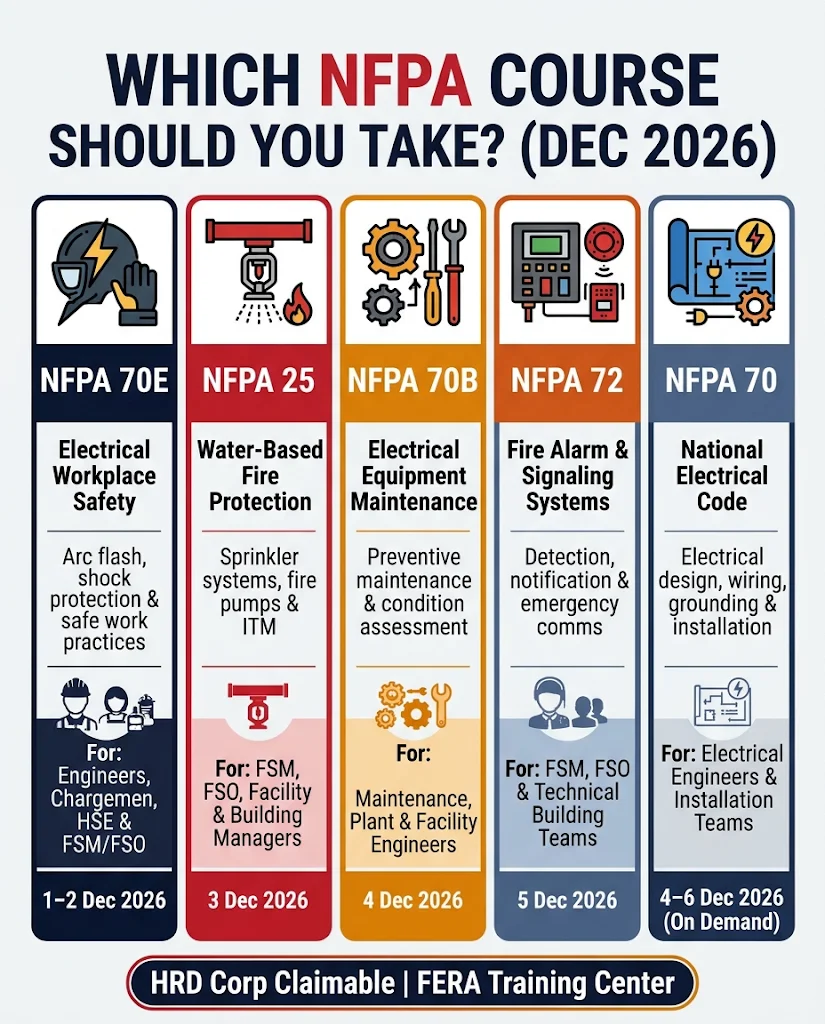
Five NFPA Courses in the December 2026 Training Series
FERA’s December schedule includes:
- NFPA 70E – Electrical Safety in the Workplace
- NFPA 25 – Water-Based Fire Protection Systems
- NFPA 70B – Electrical Equipment Maintenance
- NFPA 72 – National Fire Alarm and Signaling Code
- NFPA 70 – National Electrical Code
These programmes can complement the wider knowledge developed through Fire Safety Manager and Fire Safety Officer training.
However, the right programme depends on the participant’s actual role.
Why FSM and FSO Participants May Need More Specialised Knowledge
Fire Safety Managers and Fire Safety Officers help organisations manage workplace and building fire safety.
Their responsibilities may bring them into contact with:
- Fire protection systems
- Fire alarm systems
- Electrical hazards
- Facility maintenance
- Emergency planning
- Inspection records
- Contractors
- Technical personnel
An FSM or FSO does not need to personally repair every system.
However, stronger technical knowledge can help them understand what they are seeing, recognise when something requires attention and communicate more effectively with competent technical personnel.
FERA’s existing FSM and FSO content explains how both roles contribute to structured fire safety management.
For participants working in complex premises, specialist NFPA learning can build on that foundation.
Choose NFPA 70E for Electrical Workplace Safety
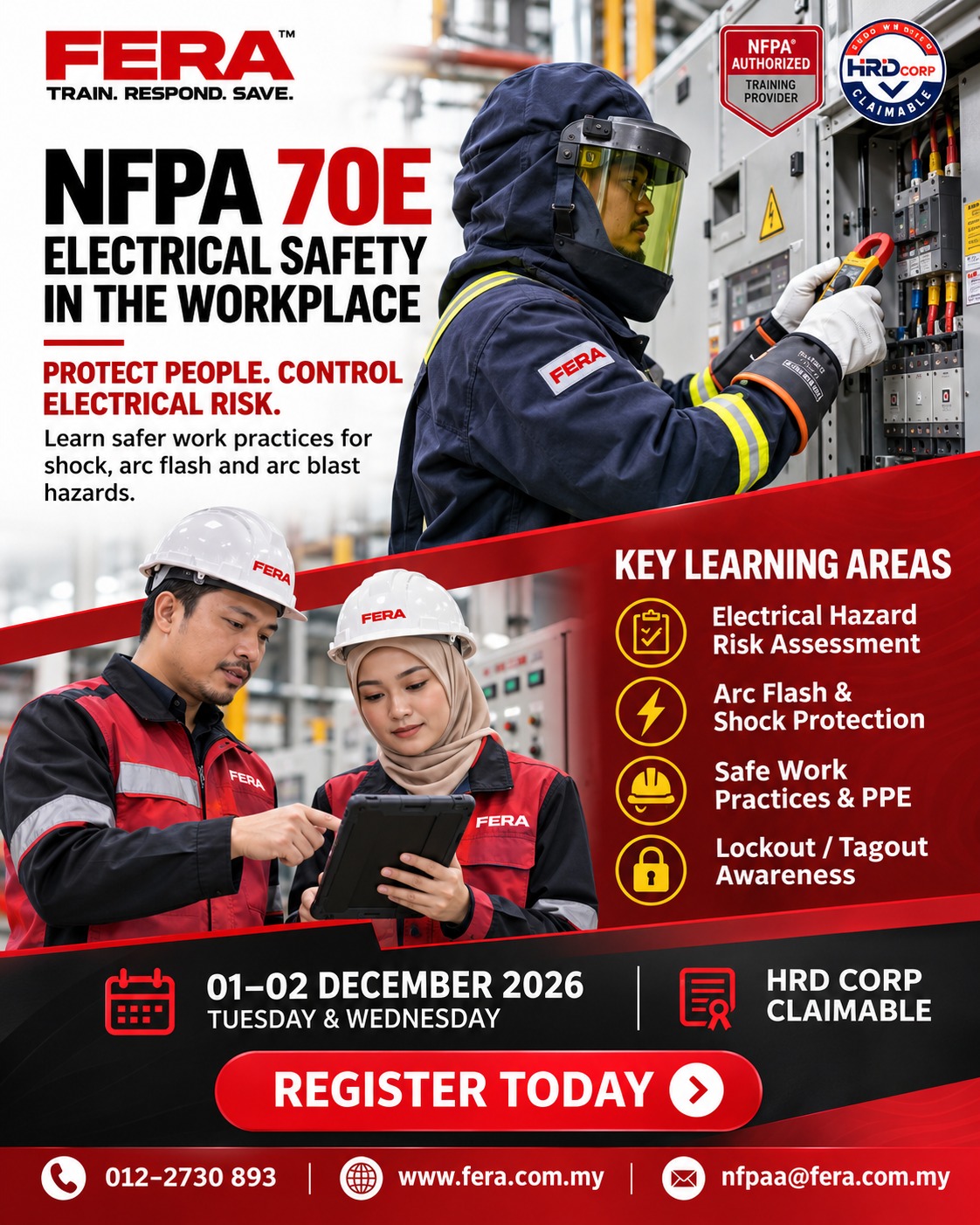
NFPA 70E focuses on electrical safety in the workplace.
FERA’s December 2026 intake is scheduled for:
1–2 December 2026
The programme highlights several important learning areas:
- Electrical hazard risk assessment
- Arc flash protection
- Shock protection
- Safe electrical work practices
- Personal protective equipment
- Lockout and tagout awareness
This programme is strongly relevant to personnel who work on or around electrical equipment.
Who Should Consider NFPA 70E?
Potential participants may include:
- Electrical engineers
- Electricians
- Chargemen
- Facility personnel
- Maintenance technicians
- HSE personnel
- Safety officers
- Technical supervisors
FSMs and FSOs working in factories, data centres, plants or other electrically intensive facilities may also find the knowledge useful.
The purpose is not to convert a Fire Safety Manager into an electrician.
Instead, the training can strengthen understanding of electrical hazards and the controls used to protect personnel.
Arc Flash Is More Than an Electrical Engineering Issue
Arc flash can expose personnel to extreme heat, pressure, molten material and other serious hazards.
Therefore, organisations managing electrical work need more than technical equipment knowledge.
They also need safe work practices.
This is why NFPA 70E can be relevant to electrical, maintenance and safety teams working together.
An FSM or FSO who understands the basic principles can also communicate more effectively when electrical hazards affect wider fire and workplace safety.
For further reference, the official NFPA 70E standard focuses on electrical safety-related work practices designed to reduce exposure to hazards such as electric shock and arc flash.
Choose NFPA 25 for Water-Based Fire Protection Systems
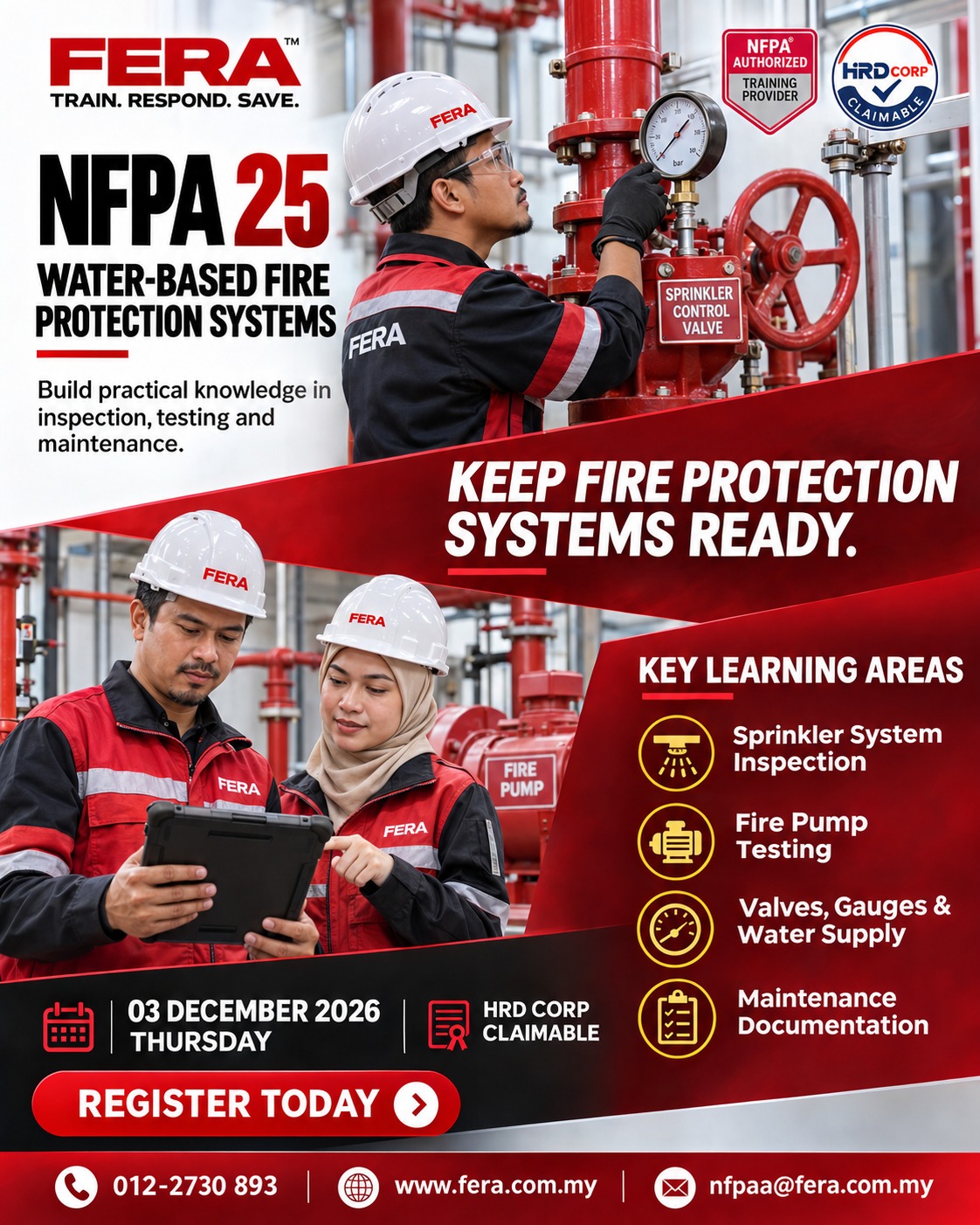
NFPA 25 training is scheduled for:
3 December 2026
The course focuses on water-based fire protection systems and the principles associated with inspection, testing and maintenance.
FERA’s programme highlights:
- Sprinkler system inspection
- Fire pump testing
- Valves
- Pressure gauges
- Water supply
- Maintenance documentation
This can be highly relevant to facility personnel and fire safety professionals responsible for premises that depend heavily on sprinkler, hydrant or other water-based fire protection arrangements.
Who Should Consider NFPA 25?
Possible participants include:
- Fire Safety Managers
- Fire Safety Officers
- Facility managers
- Building managers
- Maintenance teams
- Engineers
- Fire protection personnel
- HSE professionals
Again, completing the training does not automatically make a participant a technical fire protection contractor.
The value is in understanding how these systems support fire readiness and why inspection, testing and maintenance matter.
Why NFPA 25 Can Support Fire Safety Management
A sprinkler system or fire pump may remain unused for long periods.
That does not mean it can simply be forgotten.
Fire protection systems need to remain available when an emergency occurs.
FSMs and FSOs may therefore need to understand:
- Why inspection records matter
- Why unresolved defects require follow-up
- Why blocked or isolated systems create risk
- Why maintenance documentation must remain organised
- When specialist attention is required
This knowledge can strengthen coordination between fire safety and facilities teams.
The official NFPA 25 standard covers inspection, testing and maintenance of water-based fire protection systems.
FSMs and FSOs working in designated premises can also refer to FERA’s guide on FSM and FSO requirements for Fire Certificate premises.
Choose NFPA 70B for Electrical Equipment Maintenance
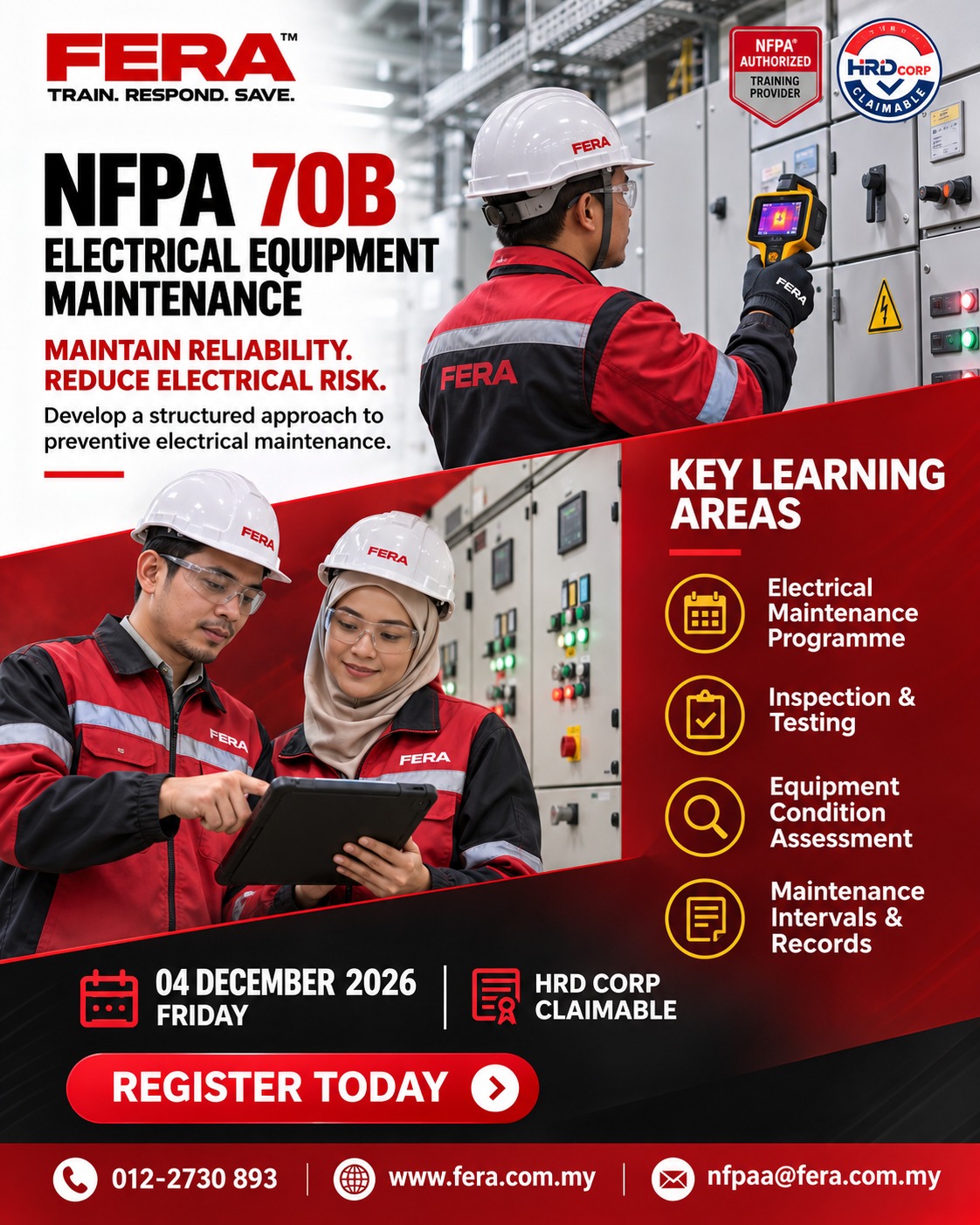
NFPA 70B training is scheduled for:
4 December 2026
The programme focuses on developing a more structured approach to electrical equipment maintenance.
Key learning areas shown in FERA’s programme include:
- Electrical maintenance programmes
- Inspection and testing
- Equipment condition assessment
- Maintenance intervals
- Maintenance records
NFPA 70B is particularly relevant when the concern is not only safe electrical work, but also the condition and reliability of the electrical equipment itself.
Who Should Consider NFPA 70B?
The programme may be useful for:
- Maintenance engineers
- Facility teams
- Electrical personnel
- Plant engineers
- Technical supervisors
- Safety professionals
- Personnel managing preventive maintenance
FSMs and FSOs who coordinate closely with facility or maintenance departments may also benefit from understanding how maintenance supports wider electrical and fire safety.
NFPA 70E and NFPA 70B Work from Different Angles
These two programmes are related, but they should not be treated as the same course.
NFPA 70E focuses strongly on people and electrical safety-related work practices.
NFPA 70B focuses on equipment maintenance.
In simple terms:
NFPA 70E asks:
How do we protect people working around electrical hazards?
NFPA 70B asks:
How do we maintain electrical equipment in a safe and reliable condition?
Some organisations may need competency in both areas.
Choose NFPA 72 for Fire Alarm and Signaling Systems
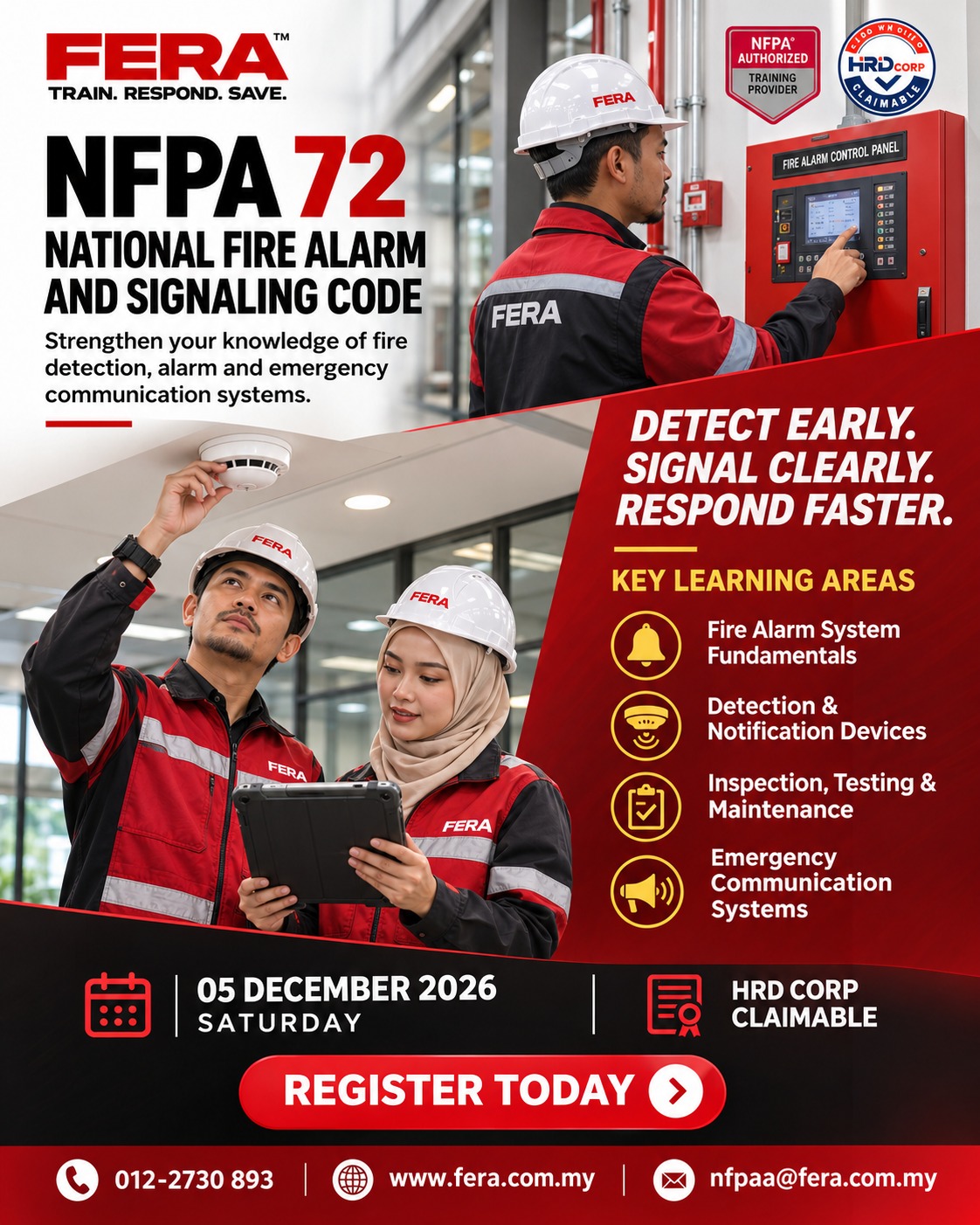
NFPA 72 training is scheduled for:
5 December 2026
This programme focuses directly on systems involved in detecting and communicating a fire emergency.
Key learning areas include:
- Fire alarm system fundamentals
- Detection devices
- Notification devices
- Inspection
- Testing
- Maintenance
- Emergency communication systems
For FSM and FSO personnel, this is one of the programmes most directly connected with building fire safety operations.
Who Should Consider NFPA 72?
Potential participants include:
- Fire Safety Managers
- Fire Safety Officers
- Facility personnel
- Building managers
- Fire protection personnel
- Technical teams
- HSE personnel
Participants may regularly encounter fire alarm panels, detectors, notification devices and system records.
Understanding the purpose of these systems can help them recognise deficiencies and escalate problems appropriately.
For additional technical reference, the official NFPA 72 code covers fire alarm, detection, signalling and emergency communication systems.
Why Fire Alarm Knowledge Matters
A fire alarm system provides early warning.
However, it also supports wider emergency actions.
When an alarm activates, it can trigger:
- Occupant response
- Fire warden actions
- Evacuation
- ERT activation
- Emergency communication
- Facility response
Therefore, alarm-system awareness supports more than technical maintenance.
It connects directly with emergency preparedness.
Choose NFPA 70 for Electrical Design, Installation and Inspection
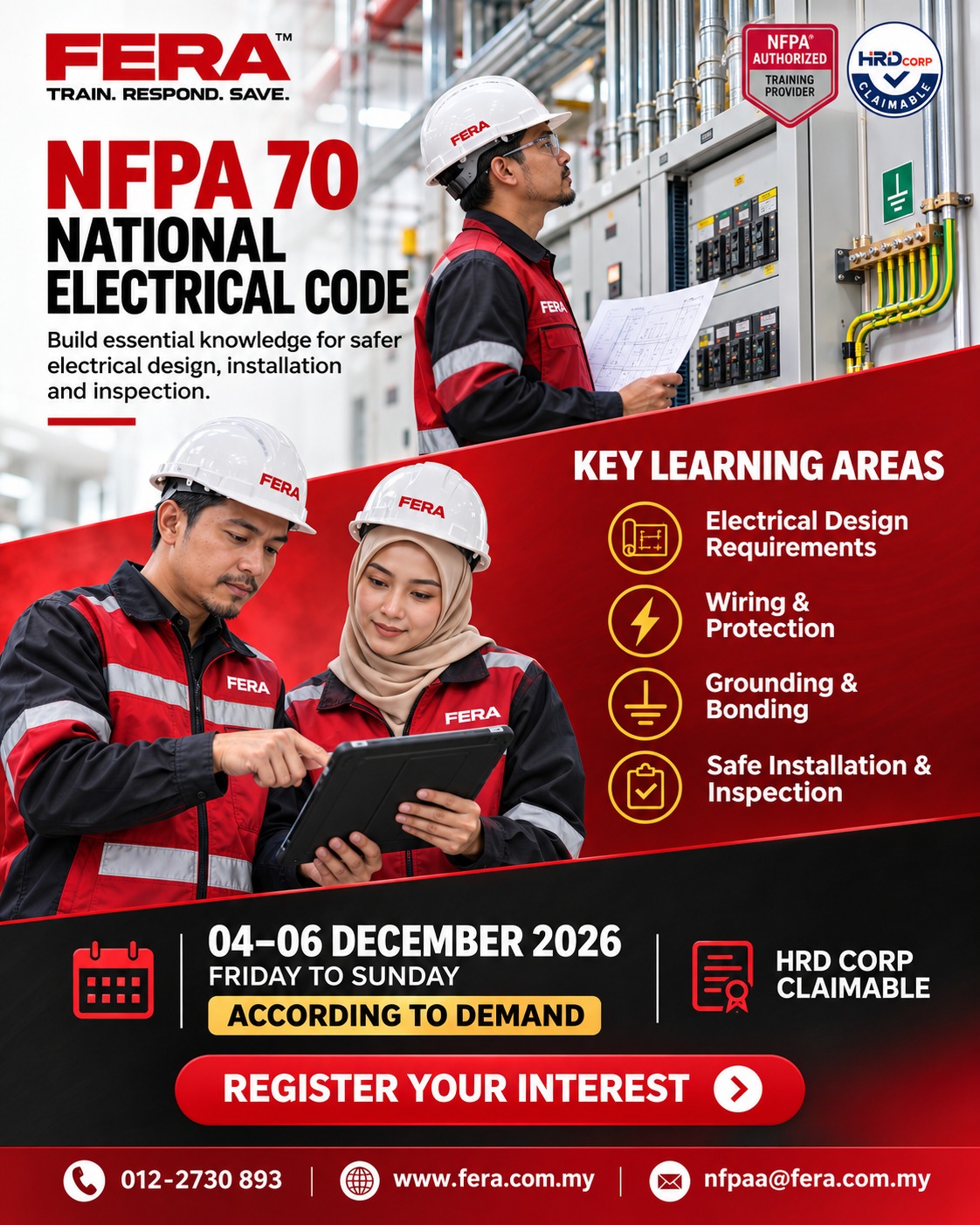
NFPA 70 – National Electrical Code is scheduled for:
4–6 December 2026
The programme is stated as being conducted according to demand.
Key learning areas include:
- Electrical design requirements
- Wiring and protection
- Grounding and bonding
- Safe installation
- Inspection
Compared with the other courses, NFPA 70 has a stronger electrical engineering and installation focus.
Who Should Consider NFPA 70?
The programme may be particularly relevant to:
- Electrical engineers
- Technical personnel
- Electrical supervisors
- Facility engineers
- Personnel involved in installation
- Personnel involved in electrical inspection
FSMs or FSOs with engineering responsibilities may also find the programme useful.
However, fire safety professionals without direct electrical responsibilities may gain greater immediate value from another NFPA pathway.
Which NFPA Course Is Best for FSM?
There is no universal answer.
Fire Safety Managers (FSMs) in large commercial properties might find NFPA 25 and NFPA 72 valuable, as fire protection and alarm systems are integral to daily building safety. For those in industrial plants with serious electrical risks, NFPA 70E can be especially beneficial. Additionally, FSMs who collaborate frequently with maintenance teams may also find NFPA 70B useful.
The choice should reflect the actual premises.
FERA’s Fire Safety Manager and Fire Safety Officer guide provides useful context on the wider responsibilities of both roles before participants move into more specialised technical training.
Which NFPA Course Is Best for FSO?
FSOs often have operational responsibilities.
They may conduct inspections, identify deficiencies and report problems to the FSM.
Therefore, NFPA 25 or NFPA 72 may be especially relevant where an FSO regularly monitors building fire protection systems.
However, an FSO working in an electrically intensive workplace may also benefit from NFPA 70E awareness.
Again, job scope should guide the decision.
Which Courses Are Best for Facility Teams?
Facilities teams may have the broadest technical exposure.
Their responsibilities may involve:
- Fire pumps
- Sprinkler systems
- Alarm panels
- Electrical distribution
- Preventive maintenance
- Contractors
Depending on job scope, facility personnel may benefit from several programmes over time.
A possible pathway may include:
- NFPA 25 for water-based fire protection.
- NFPA 72 for alarm and signalling systems.
- NFPA 70B for electrical maintenance.
- NFPA 70E for safe electrical work.
The organisation does not necessarily need to send every team member to every course.
Which Courses Are Best for Electrical Teams?
Electrical teams should look closely at:
- NFPA 70E
- NFPA 70B
- NFPA 70
These programmes address different parts of electrical safety.
- NFPA 70E focuses on safe work.
- NFPA 70B focuses on maintenance.
- NFPA 70 focuses on design and installation requirements.
Together, they provide different layers of technical knowledge.
Build a Training Plan Instead of Collecting Certificates
Professional development works best when training supports actual responsibilities.
Before nominating participants, organisations can ask:
- What systems does this person manage?
- What hazards do they encounter?
- What decisions do they make?
- Which technical teams do they coordinate?
- What competency gap currently exists?
The answer should guide course selection.
A participant who never works around electrical systems may not need the same training as an electrical engineer.
Likewise, a facility manager responsible for sprinkler and fire pump readiness may gain greater value from NFPA 25.
How These Courses Complement FSM and FSO Training
FSM and FSO programmes establish broader fire safety roles and responsibilities.
Specialised NFPA programmes can then provide deeper understanding of selected technical areas.
This creates a useful competency pathway:
FSM / FSO foundation
↓
Identify workplace responsibility
↓
Choose specialist NFPA training
↓
Apply knowledge within the person’s actual role
This is more valuable than treating every course as compulsory for everyone.
Five Courses, Five Different Competency Areas
A simple summary is:
- NFPA 70E
- Best fit: electrical workplace safety.
- NFPA 25
- Best fit: sprinkler, fire pump and water-based system readiness.
- NFPA 70B
- Best fit: electrical equipment maintenance.
- NFPA 72
- Best fit: fire alarm, detection and emergency communication systems.
- NFPA 70
- Best fit: electrical design, installation and inspection.
Participants can then compare these areas with their actual work responsibilities.
December Training Dates Are Very Close
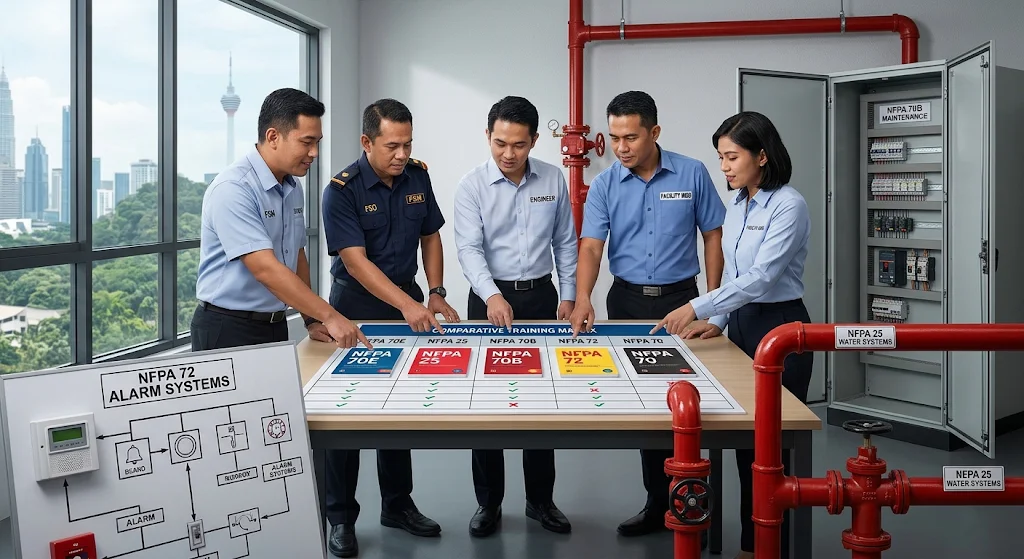
The December training series runs from 1 to 6 December 2026.
Current schedule:
- NFPA 70E: 1–2 December
- NFPA 25: 3 December
- NFPA 70B: 4 December
- NFPA 72: 5 December
- NFPA 70: 4–6 December, according to demand
Therefore, organisations planning to send participants should complete their course selection and registration arrangements promptly.
HRD Corp Claimable Programmes
FERA’s course posters identify the December programmes as HRD Corp Claimable.
Eligible employers may therefore wish to review their internal HRD Corp claim process when arranging employee participation.
Claim eligibility and approval remain subject to the applicable HRD Corp requirements.
Organisations should allow sufficient time for internal nomination and documentation.
Continue Your Professional Development with FERA
FERA provides training for professionals involved in fire safety, emergency response, facilities, engineering and workplace safety.
Participants who have completed FSM or FSO training can use specialised NFPA programmes to strengthen knowledge in areas directly relevant to their responsibilities.
Explore FERA’s NFPA training pathway:
https://fera.com.my/nfpa-standards-training/
Participants who are still beginning their FSM or FSO journey can also review FERA’s Fire Safety Manager and Fire Safety Officer training programmes.
Ready to Choose Your NFPA Course?
FERA’s December 2026 NFPA intake is approaching quickly.
If you are still deciding which programme is most relevant, start with your actual job responsibilities:
Electrical workplace safety → NFPA 70E
Water-based fire protection → NFPA 25
Electrical maintenance → NFPA 70B
Fire alarm and signalling → NFPA 72
Electrical design and installation → NFPA 70
Explore FERA’s NFPA Standards Training programmes for the available technical learning pathways.
For the current December 2026 intake, contact FERA Training Center to confirm programme suitability, availability and registration.
Phone: 012-2730 893
Email: [email protected] or
WhatsApp FERA
Do not choose simply based on the course title.
Choose the programme that helps you perform your actual workplace responsibilities more effectively.
If you have not yet completed your core fire safety training, you can also review FERA’s FSM & FSO Training programme.
Conclusion
The five NFPA programmes offered by FERA in December 2026 cover different but connected areas of workplace safety.
- NFPA 70E focuses on electrical safety-related work practices.
- NFPA 25 covers water-based fire protection systems.
- NFPA 70B focuses on electrical equipment maintenance.
- NFPA 72 covers fire alarm and signalling systems.
- NFPA 70 focuses on electrical installation requirements.
For FSMs, FSOs, facility personnel, engineers and safety professionals, the strongest training choice depends on the systems, hazards and responsibilities they manage.
With the December programmes running from 1 to 6 December, participants interested in this intake should confirm their training pathway and registration arrangements as soon as possible.
Questions & Answers
Which NFPA course is most suitable after FSM or FSO training?
It depends on the participant’s responsibilities. NFPA 25 and NFPA 72 may suit building fire safety roles, while electrical personnel may prioritise NFPA 70E, NFPA 70B or NFPA 70.
Can an FSM attend more than one NFPA course?
Yes. Participants may consider several programmes when their responsibilities cover multiple technical areas.
Which course covers fire pumps and sprinkler systems?
NFPA 25 focuses on water-based fire protection systems, including inspection, testing and maintenance principles.
Which course covers fire alarm systems?
NFPA 72 focuses on fire alarm, detection, notification and emergency communication systems.
Which NFPA course focuses on arc flash and electrical shock?
NFPA 70E focuses on electrical workplace safety, including arc flash, shock hazards and safer work practices.
What is NFPA 70B for?
NFPA 70B focuses on structured electrical equipment maintenance, inspection, testing and condition assessment.
What is NFPA 70 for?
NFPA 70 covers electrical design, wiring, protection, grounding, installation and inspection principles.
Are FERA’s December NFPA courses HRD Corp Claimable?
The programme posters identify the courses as HRD Corp Claimable, subject to the applicable eligibility and approval requirements.
When are the December 2026 NFPA programmes?
The current programme schedule runs from 1 to 6 December 2026.