


Fire Safety Organization Structure for Factories & Commercial Buildings
Fire safety is a critical part of managing factories, offices, shopping malls, and commercial buildings. Every organization should have a clear fire safety organization structure to ensure that emergency actions can be carried out quickly and effectively.
A well-defined structure ensures that every person knows their responsibilities during a fire emergency. This includes evacuation procedures, first response actions, and coordination with emergency services.
Without a proper fire safety organization structure, confusion can occur during emergencies, increasing the risk of injuries, property damage, and loss of life.
What Is a Fire Safety Organization Structure
A fire safety organization structure refers to the arrangement of roles and responsibilities assigned to individuals within a building or workplace to manage fire safety.
This structure ensures that trained personnel are responsible for prevention, preparedness, and response during fire emergencies.
In Malaysia, many organizations establish this structure as part of the Organisasi Keselamatan Kebakaran (OKK) framework recommended by safety authorities.
Through this system, every member understands their role during emergencies such as:
• directing evacuation procedures
• assisting occupants during emergencies
• operating fire extinguishers and fire equipment
• coordinating emergency response activities
A clear fire safety organization structure improves both preparedness and response capabilities.
Example of Fire Safety Organization Structure
Below is a common fire safety organization structure for factories and commercial buildings.
Premises Management or Employer
The top management or employer holds overall responsibility for fire safety within the premises.
Their responsibilities include:
• establishing fire safety policies
• providing training and resources
• ensuring compliance with safety regulations
• supporting fire safety programs
Management plays a crucial role in ensuring the fire safety organization structure functions effectively.
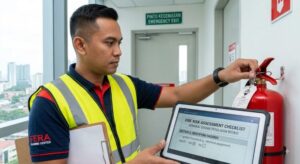
Fire Safety Manager (FSM)
The Fire Safety Manager (FSM) oversees the entire fire safety management system within the premises.
Key responsibilities include:
• planning fire drills and emergency exercises
• supervising fire safety programs
• ensuring compliance with fire safety regulations
• coordinating the fire safety organization
The FSM acts as the central coordinator for all fire safety activities.
Fire Safety Officer (FSO)
The Fire Safety Officer (FSO) assists the Fire Safety Manager in implementing fire safety programs.
Their responsibilities include:
• inspecting fire safety equipment
• monitoring workplace safety practices
• assisting during fire drills
• supporting emergency preparedness activities
FSOs play an important role in ensuring fire safety procedures are consistently followed.
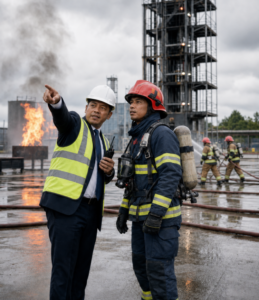
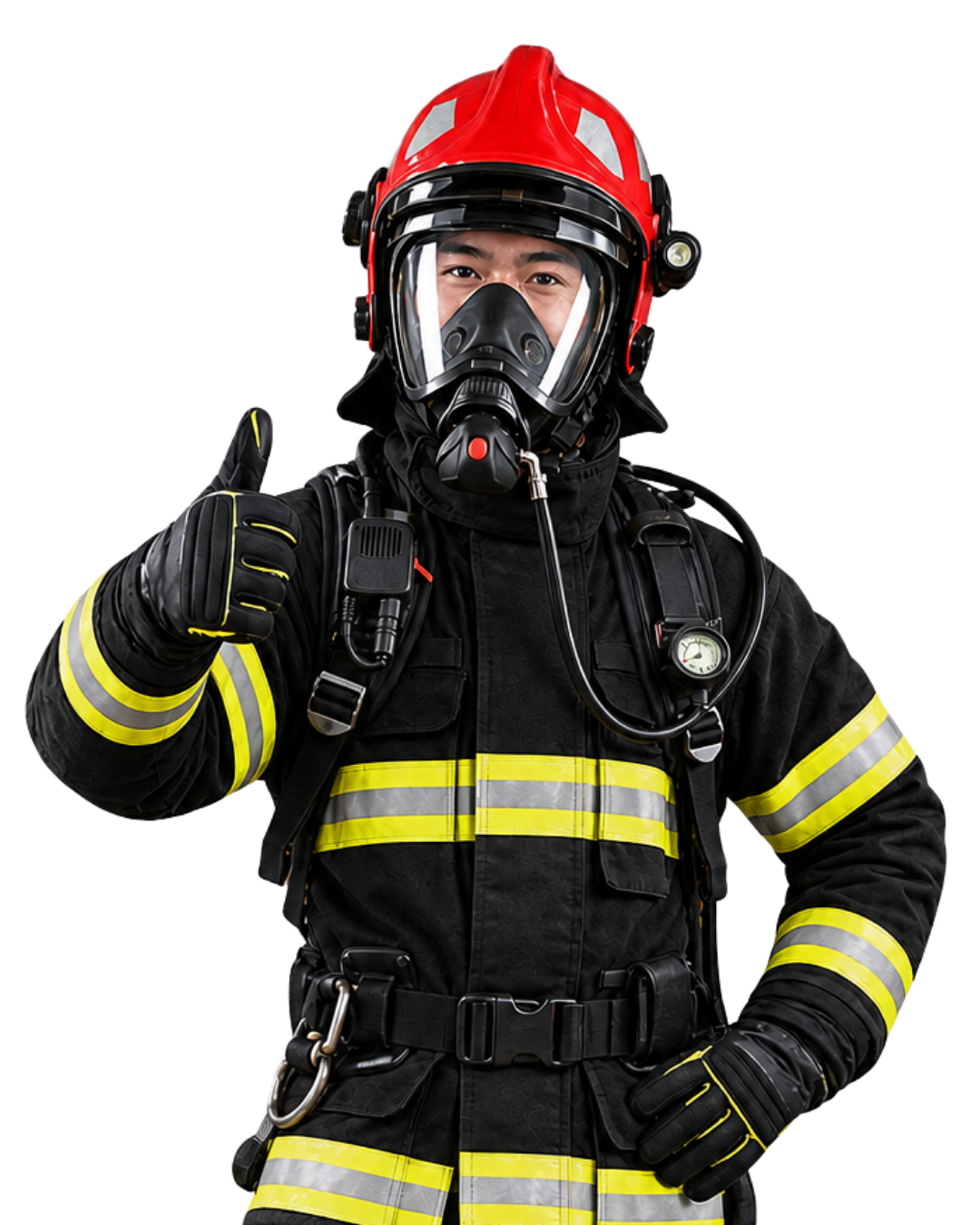
Emergency Response Team (ERT)
The Emergency Response Team (ERT) is a trained group responsible for taking immediate action during emergencies.
Their duties include:
• conducting initial firefighting actions
• assisting in evacuation procedures
• providing basic emergency assistance
• controlling hazards before emergency services arrive
ERT members are usually trained in firefighting, first aid, and emergency response procedures.
Fire Warden
A Fire Warden is responsible for managing evacuation within specific areas of a building.
Their responsibilities include:
• guiding occupants to evacuation routes
• checking assigned areas during evacuation
• ensuring no one is left behind
• directing occupants to assembly points
Fire Wardens ensure that evacuation procedures run smoothly during emergencies.
Importance of Fire Safety Organization Structure
A clear fire safety organization structure provides several benefits to organizations.
These include:
• faster and more organized emergency response
• improved evacuation coordination
• reduced risk of injuries or fatalities
• increased fire safety awareness among employees
Organizations with a structured fire safety system are also better prepared to handle emergencies and comply with safety regulations.
Regular training and fire drills help ensure that all members of the fire safety organization understand their responsibilities.
Conclusion
A fire safety organization structure is essential for factories and commercial buildings to manage fire emergencies effectively.
By assigning clear roles such as Fire Safety Manager, Fire Safety Officer, Emergency Response Team, and Fire Warden, organizations can improve preparedness and ensure a coordinated emergency response.
Organizations are encouraged to establish a clear fire safety structure and conduct regular training to maintain a safe working environment.
Related Articles
Difference Between OKK and Emergency Response Team (ERT)
https://fera.com.my/difference-between-okk-and-emergency-response-team-ert/
Validity Period of FSM & FSO Certificates
https://fera.com.my/validity-period-of-fsm-fso-certificates/
Train Your Fire Safety Team Today
FERA Training Center provides professional courses including:
FSM Training
FSO Training
OKK Training
Emergency Response Team (ERT) Training
Basic Fire Fighting Training
These programs help organizations strengthen workplace fire safety and emergency preparedness.
Contact us today:
https://wa.me/60122730893
Train. Respond. Save.